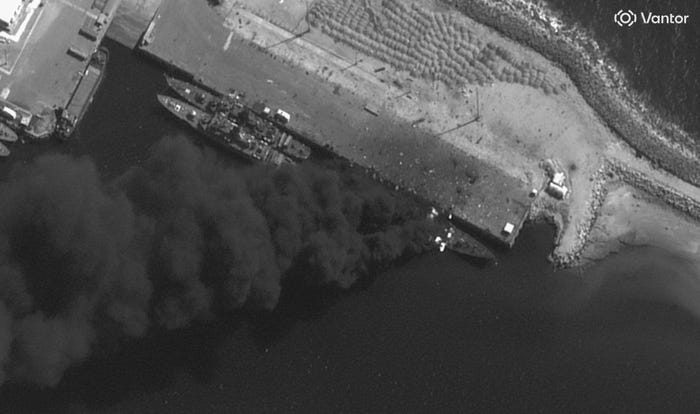
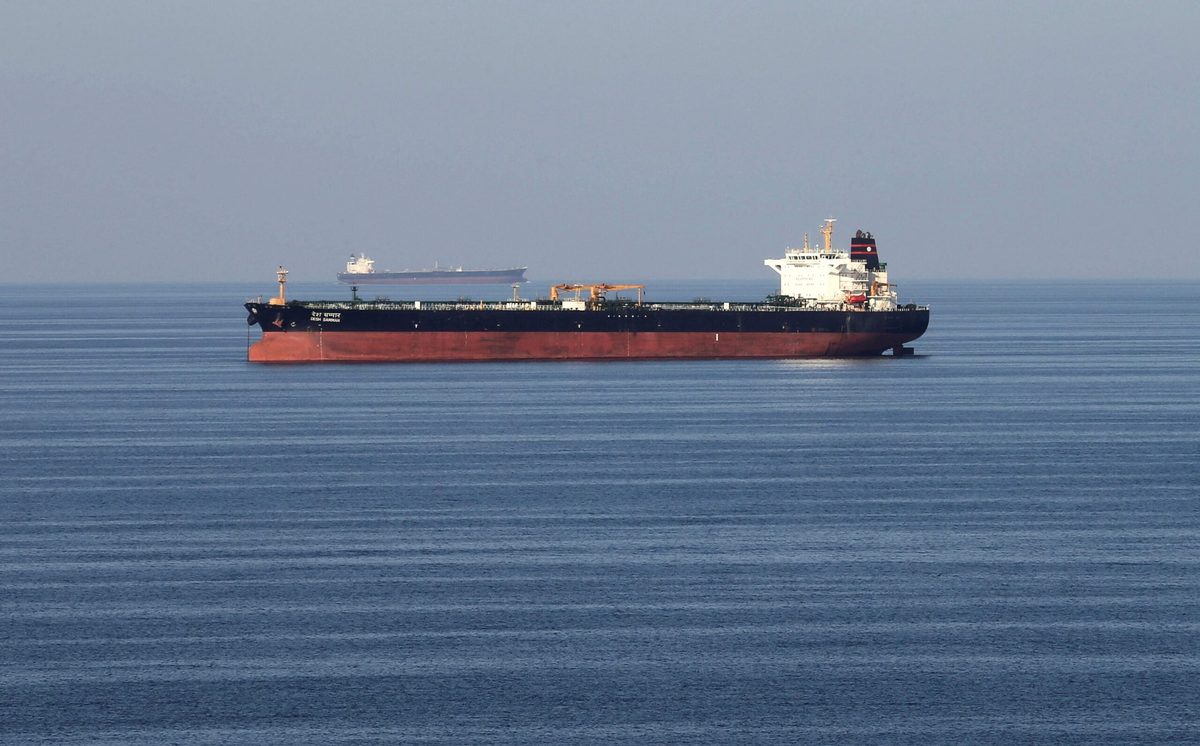
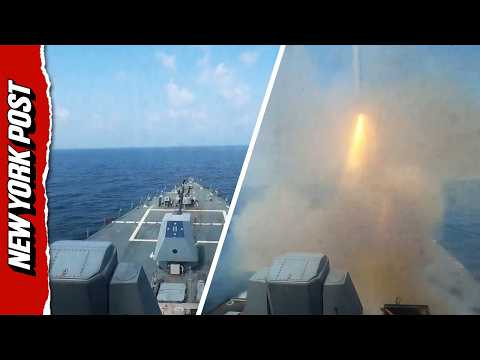
The last time the United States sank Iranian warships was April 18, 1988. Thirty-eight years later, American forces destroyed nine Iranian naval vessels in a single day and demolished the country's naval headquarters at Chabahar, on the Gulf of Oman. The strikes came after Iran attempted to blockade the Strait of Hormuz, the 21-mile passage that carries roughly one-fifth of the world's oil supply.
The naval destruction is part of Operation Epic Fury, a joint US-Israeli campaign launched February 28. The campaign has killed Supreme Leader Ali Khamenei, eliminated senior military commanders, and struck nuclear and military targets across 24 of Iran's 31 provinces. In September, the US destroyed 13 Iranian oil tankers to enforce a blockade of Iranian oil exports. Iran responded by firing ballistic missiles at a US base in Jordan and claiming attacks on two US vessels and eight oil tankers in the Strait of Hormuz. Brent crude has climbed above $99 a barrel, and the world's most critical energy chokepoint is now an active combat zone.
Why it matters
A six-month war over the Strait of Hormuz has pushed oil above $99 and threatens the supply that powers global economies.
Questions about this story
Free account needed to ask — your question is kept and asked for you right after sign-up. Answers are public.
No questions yet — be the first to ask.
Key Indicators
9
Iranian warships destroyed
Including Jamaran-class corvettes, Iran's most capable domestically built surface combatants, sunk on February 28
13
Iranian oil tankers destroyed in September
Three on September 5, five on September 8, and five more on September 9, as the US enforced a blockade of Iranian oil exports
$99.35
Brent crude per barrel
Up from roughly $73 before the war, a 36 percent jump; briefly hit $99.46 on September 8 and crossed $100 in Asian trading on September 9
~150
Tankers halted near the Strait in March
Roughly 70 percent of normal strait traffic stopped after Iran's blockade attempt; limited transits now continue under US escort
20M bbl/day
Oil normally transiting Hormuz
Approximately 20 percent of global petroleum consumption, with 84 percent destined for Asian markets
3
US service members killed
Five more seriously wounded in Iranian counterattacks on US positions in Kuwait on February 28
22 events
Latest: 3 days ago
Showing 8 of 22
JK to step
Tap a bar to jump to that date
Jump to
September 2026
Iran fires ballistic missiles at US base in Jordan
LatestMilitary
Jordan's military said it intercepted 18 ballistic missiles; two others fell in uninhabited areas. No casualties were reported.
IRGC claims attacks on two US vessels and eight oil tankers in Hormuz
Military
Iran's Revolutionary Guards said they attacked two US vessels, eight oil tankers and 10 'non-compliant vessels' in the Strait of Hormuz, state media reported.
Brent crude tops $99 as tanker war escalates
Economic
Benchmark Brent rose 1.5 percent to $99.35 a barrel in Asian trading after briefly touching $99.46 a day earlier.
IRGC warns tanker crews near Kuwait and Bahrain to evacuate
Military
Iran's Revolutionary Guard Navy warned crews of oil tankers near Kuwaiti and Bahraini ports to leave their vessels immediately, saying the ships could be targeted in retaliation for US attacks on Iranian tankers. It accused Kuwait and Bahrain of hosting US forces and assisting in the attacks.
US sanctions two dozen Iranian airlines
Policy
The Trump administration sanctioned more than two dozen commercial and private airlines and foreign cargo carriers, part of its push to isolate Iran's economy.
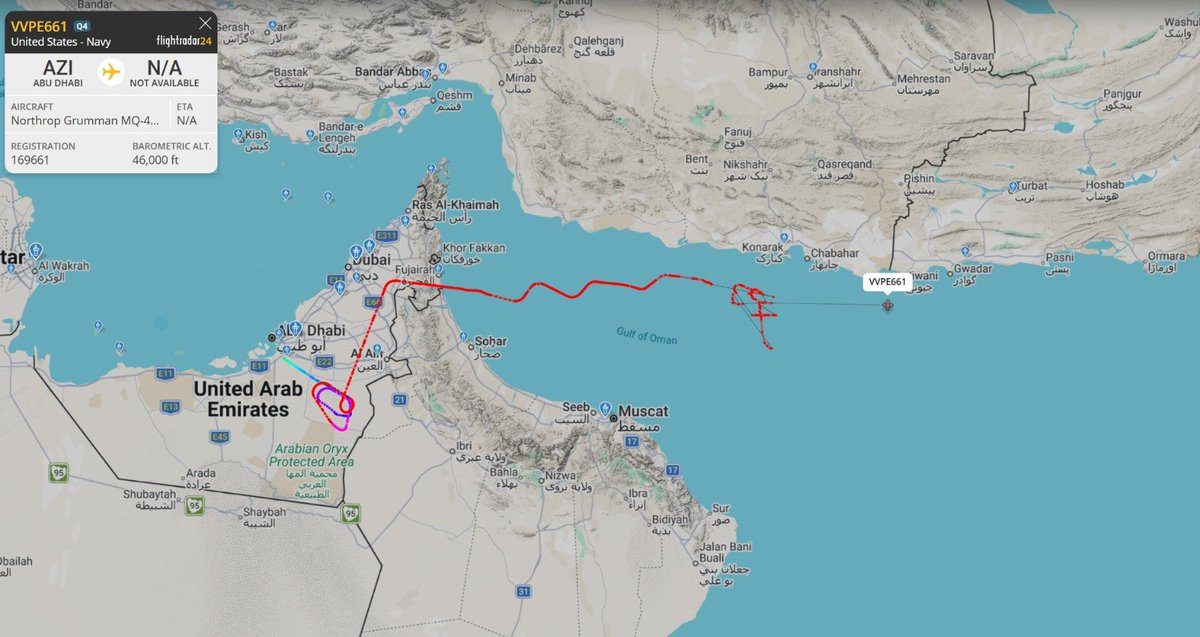
Iran's navy claims seizure of uncrewed US submarine
Military
Hours before the US tanker strikes, Iran's navy said it seized an uncrewed US submarine in the Strait of Hormuz, state media reported.
Iran announces 'exclusion zone' near Strait of Hormuz
Military
After US strikes destroyed three tankers, Iran said it planned to announce a new 'exclusion zone' near the Strait of Hormuz aimed at vessels intending to transit.
March 2026
US sinks nine Iranian warships, destroys naval headquarters
Military
CENTCOM confirms sinking a Jamaran-class corvette at Chabahar and Trump announces a total of nine Iranian naval vessels destroyed along with Iran's naval headquarters. The strikes target Iran's ability to enforce its Hormuz blockade. CENTCOM calls on Iranian forces to lay down their arms.
IRGC strikes three oil tankers near Hormuz
Military
Iran's Revolutionary Guard Navy attacks three tankers near the strait, injuring crew members aboard the tanker Skylight. The attacks demonstrate that Iran retains asymmetric capability to threaten shipping despite the loss of its conventional fleet.
Oil prices surge as Hormuz traffic halts
Economic
Brent crude jumps roughly 10 percent to $80 per barrel. Maersk suspends all Hormuz crossings. Goldman Sachs forecasts prices could reach $110; JP Morgan predicts $120-$130 if the disruption persists.
February 2026
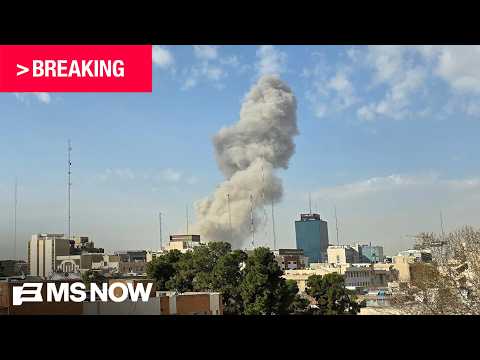
Operation Epic Fury begins; Khamenei killed
Military
US and Israeli forces launch coordinated strikes across Iran, hitting military, nuclear, and leadership targets in 24 of 31 provinces. Supreme Leader Ali Khamenei is killed in a strike on his Tehran compound alongside several senior military commanders.
Iran broadcasts Strait of Hormuz closure to shipping
Military
Iranian naval vessels transmit warnings on emergency radio channels that the Strait of Hormuz is closed and no commercial vessel is allowed to pass. Approximately 150 tankers halt near the strait.
Iran retaliates against US bases across the Gulf
Military
Iran fires missiles and drones at US and allied military facilities in Bahrain, Kuwait, Qatar, and the UAE, and strikes Israel. Three US service members are killed in Kuwait. The UAE intercepts most of 165 ballistic missiles and 541 drones.
Third round of nuclear talks ends without a deal
Diplomatic
After three rounds of negotiations in Muscat and Geneva, the US and Iran remain deadlocked on core demands. Iran's foreign minister calls the talks 'the most serious and longest' but no agreement is reached.
Indirect US-Iran nuclear talks begin in Muscat
Diplomatic
The first post-war negotiations are held in Oman, with the US demanding zero enrichment and full dismantlement and Iran insisting on its right to enrich uranium. Talks are indirect, mediated by Oman's foreign minister.
January 2026
Trump warns 'massive Armada is heading to Iran'
Statement
Trump demands Iran come to the negotiating table or face consequences worse than Operation Midnight Hammer, as the US begins assembling its largest Middle East military presence since 2003.
December 2025
Largest Iranian protests since 1979 erupt
Domestic
Nationwide protests break out across more than 100 Iranian cities, driven by the collapse of the rial and economic devastation following the war and sanctions. The regime responds with lethal force, killing thousands.
June 2025
Ceasefire ends the Twelve-Day War
Diplomatic
Israel and Iran agree to a US-brokered ceasefire after 12 days of strikes and counterstrikes.
US bombs Iran's nuclear sites in Operation Midnight Hammer
Military
Seven B-2 stealth bombers fly 18-hour missions from Missouri, dropping bunker-buster bombs on the Fordow, Natanz, and Isfahan nuclear facilities. A Pentagon assessment later concludes Iran's nuclear program is set back two years.
Israel launches surprise strikes on Iran
Military
Israel hits nuclear facilities, military bases, and senior commanders across Iran, killing IRGC Commander Hossein Salami and Armed Forces Chief Mohammad Bagheri in the opening hours of the Twelve-Day War.
February 2025
Trump reinstates maximum pressure on Iran
Policy
Trump signs a presidential memorandum reimposing sanctions aimed at reducing Iranian oil exports to zero and demanding full dismantlement of Iran's nuclear program.
April 1988
Operation Praying Mantis: last US-Iran naval battle
Military
After USS Samuel B. Roberts struck an Iranian mine, the US Navy sank Iranian frigate Sahand, crippled frigate Sabalan, and destroyed two oil platforms — the largest American surface naval engagement since World War II.
Scenarios
1
US secures the Strait, shipping resumes within days
Possible
Discussed by: Goldman Sachs analysts, CENTCOM background briefings, and former US Navy officials interviewed by Naval News
With Iran's surface fleet destroyed and its command structure decapitated by Khamenei's death, the remaining IRGCN forces prove unable to sustain a blockade against two US carrier strike groups. Minesweeping operations clear the shipping lanes within a week. Tanker traffic resumes under US naval escort, oil prices stabilize below $90, and the Hormuz crisis becomes a contained chapter within the broader conflict. This outcome depends on Iran's submarines and mine-laying capacity being neutralized quickly and on the IRGCN's command chain collapsing without Khamenei.
2
Asymmetric warfare keeps the Strait disrupted for weeks
Likely
Discussed by: Middle East Institute naval analysts, Lloyd's List maritime intelligence, and the International Energy Agency
Iran's conventional navy is gone, but its Revolutionary Guard retains hundreds of fast attack boats, an estimated 5,000-6,000 naval mines, coastal anti-ship missile batteries, and explosive drone boats. Even a few successful mine-laying sorties or tanker attacks force insurers to suspend coverage for Hormuz transit, effectively closing the strait to commercial shipping regardless of military outcomes. Oil prices climb toward $120 or higher. Asian economies dependent on Gulf crude — China, India, Japan, South Korea — face supply shortages. This scenario is the one most maritime risk analysts consider probable in the near term.
3
Hormuz crisis triggers global recession as disruption persists
Possible
Discussed by: JP Morgan commodities research, International Monetary Fund scenario modeling, and energy security analysts at the Atlantic Council
If Iran sustains Hormuz disruption for more than two to three weeks through mines, submarine attacks, and drone boat swarms, global oil markets face a shortfall that cannot be offset by OPEC+ spare capacity or strategic petroleum reserves. Brent crude exceeds $130. Asian manufacturing slows as refineries cut throughput. Global supply chains, still fragile from pandemic-era disruptions, face a new shock. Central banks are forced to choose between fighting inflation and preventing recession. The pipeline alternatives — the Trans-Arabian Pipeline and Abu Dhabi Crude Oil Pipeline — can replace at most 5 million of the 20 million barrels per day normally transiting Hormuz.
4
Iran's interim leadership seeks ceasefire to preserve the regime
Uncertain
Discussed by: Brookings Institution Iran scholars, European diplomatic sources cited by Reuters, and Oman's foreign ministry
With Khamenei dead, dozens of senior commanders killed, the nuclear program struck again, and the conventional military shattered, Iran's surviving leadership — led by President Pezeshkian and the interim council — faces a choice between continued escalation and regime survival. Oman, which mediated the failed February talks, offers a channel. If hardliners in the IRGC lose their institutional patron (Khamenei) and face the prospect of total military destruction, pragmatists may prevail. A ceasefire would likely require Iran to accept nuclear disarmament terms far harsher than anything previously discussed.
5
Tanker war widens as Iran threatens shipping near Kuwait and Bahrain
Possible
Resolves by Oct 31, 2026
Discussed by: IRGC Navy statements, maritime security analysts at Lloyd's List
After the US destroyed eight Iranian tankers in September, the IRGC Navy warned tanker crews near Kuwait and Bahrain ports to evacuate, saying the vessels would be targeted because those countries host US forces. If Iran follows through, the conflict expands beyond the Strait of Hormuz to the upper Gulf, threatening ports that load much of the region's crude. Kuwait and Bahrain are major oil exporters; attacks there would remove more supply from the market than the Hormuz disruption alone.
6
Iran attacks tankers in Kuwaiti and Bahraini ports
Possible
Resolves by Q3 2026
Discussed by: IRGC Navy statements, maritime security analysts at Lloyd's List
The IRGC Navy has warned crews to evacuate tankers near Kuwait and Bahrain ports, saying the vessels will be targeted because those countries host US forces. If Iran follows through, the conflict expands beyond the Strait of Hormuz to the upper Gulf, threatening ports that load much of the region's crude. Kuwait and Bahrain are major oil exporters; attacks there would remove more supply from the market than the Hormuz disruption alone.
Historical Context
3 moments from history that rhyme with this story — and how they unfolded.
1 of 3
1984-1988
The Tanker War (1984-1988)
During the Iran-Iraq War, both sides attacked commercial shipping in the Persian Gulf to damage each other's oil revenue. Iraq struck 283 vessels and Iran struck 168, for a total of roughly 411 merchant ships hit over four years. The United States intervened in 1987 with Operation Earnest Will, reflagging Kuwaiti tankers under the American flag and escorting them through the Gulf — the largest naval convoy operation since World War II.
Then
Despite hundreds of ships being attacked, the Strait of Hormuz never fully closed. Oil prices spiked during individual incidents but the sustained flow of crude continued, partly because both Iran and Iraq needed oil revenue to fund their war.
Now
The Tanker War established the precedent that the US would use military force to keep the Strait of Hormuz open. It also demonstrated that even sustained attacks on shipping could not fully close the strait — but that disruption alone could roil global energy markets.
Why this matters now
The current crisis tests whether Iran can succeed where it failed in the 1980s: actually closing the Strait. Iran's asymmetric arsenal is far more sophisticated than in 1988, but it faces a US Navy that has spent decades preparing for exactly this scenario. The economic stakes are higher — global oil dependency on the Gulf has not declined since the 1980s despite decades of rhetoric about energy independence.
2 of 3
April 1988
Operation Praying Mantis (1988)
After the frigate USS Samuel B. Roberts struck an Iranian mine in the Persian Gulf, injuring 10 sailors, the US Navy retaliated four days later. American forces sank the Iranian frigate Sahand, crippled the frigate Sabalan, destroyed two oil platforms, and sank several smaller combatants. It was the US Navy's largest surface engagement since World War II and effectively halved Iran's operational fleet.
Then
Iran's navy was severely weakened and could no longer contest the Gulf militarily. The Tanker War wound down within months, and a UN-brokered ceasefire ended the Iran-Iraq War in August 1988.
Now
Iran shifted its naval doctrine away from conventional surface warfare toward asymmetric capabilities — fast boats, mines, coastal missiles — designed to make any future confrontation costly for a superior navy. That doctrinal shift directly shapes the threat Iran poses today even after losing its surface fleet again.
Why this matters now
The March 2026 strikes echo Praying Mantis almost exactly: US forces destroying Iranian warships at pier and at sea in response to Iranian threats to Gulf shipping. The critical difference is scale — nine ships versus two in 1988 — and the simultaneous decapitation of Iran's political and military leadership, which 1988 did not attempt.
3 of 3
August 1990 - February 1991
Iraq's invasion of Kuwait and Gulf War oil shock (1990-1991)
When Iraq invaded Kuwait on August 2, 1990, roughly 4.3 million barrels per day of oil production was suddenly removed from global markets. Oil prices doubled from $21 to $46 per barrel within weeks. The US assembled a 35-nation coalition and launched Operation Desert Storm in January 1991, which included the rapid destruction of Iraq's navy in the Persian Gulf.
Then
Saudi Arabia increased production to offset most of the lost supply, and strategic petroleum reserves were released for the first time. Prices retreated after the coalition's quick victory.
Now
The crisis demonstrated that Gulf oil supply disruptions transmit instantly to global economies and that Saudi spare capacity is the world's primary shock absorber — a dynamic that remains unchanged in 2026.
Why this matters now
The 1990 shock removed 4.3 million barrels per day from markets. A sustained Hormuz closure would remove up to 20 million — nearly five times as much. Saudi Arabia's spare capacity, then and now, cannot come close to replacing that volume. OPEC+'s March 1 production increase of 206,000 barrels per day underscores the gap between available spare capacity and the scale of potential disruption.