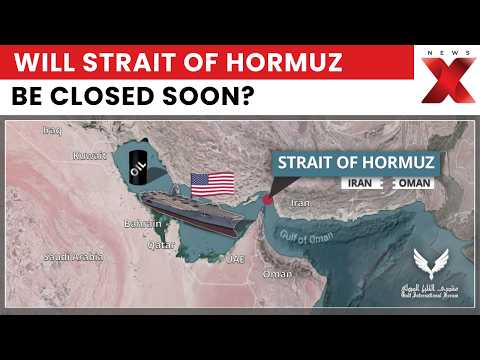
Iran conflict shuts down the world's most important oil chokepoint
Force in Play
Trump calls ceasefire 'massive life support' after rejecting Iran's response to US 14-point proposal; IRGC attacks US destroyers in May escalation; Mojtaba Khamenei absent 60-plus days due to injuries; Brent near $103 on Day 73
Trump calls ceasefire 'massive life support' after rejecting Iran's response to US 14-point proposal; IRGC attacks US destroyers in May escalation; Mojtaba Khamenei absent 60-plus days due to injuries; Brent near $103 on Day 73
The Iran-US war reached its 73rd day with talks at a deadlock. Trump called Iran's May 10 response 'garbage' and declared the ceasefire on 'massive life support'.
The US 14-point proposal demands Iran halt uranium enrichment for 12 years and transfer 440 kilograms of enriched uranium. Iran wants war reparations, sanctions relief, and full Hormuz sovereignty. Iran's Revolutionary Guard attacked US destroyers twice in early May while Brent crude peaked above $115 before settling near $103.
US intelligence says Mojtaba Khamenei has been absent for over 60 days due to injuries. US officials told CNN they cannot reliably reach him. His inaccessibility is a core obstacle to any binding deal.
Why it matters
Closure of the world's most critical oil chokepoint is driving the largest energy shock in history, threatening global recession and food supplies.
Questions about this story
Free account needed to ask — your question is kept and asked for you right after sign-up. Answers are public.
No questions yet — be the first to ask.
Key Indicators
~$103
Brent crude level
Brent peaked above $115 in early May as IRGC attacks escalated, then fell more than 7% on May 6 when Trump cited 'great progress' in talks, before settling near $103 after he rejected Iran's proposal. Still roughly 45% above pre-conflict levels.
14M bpd
Global oil offline
IEA estimates put global supply offline at approximately 14 million barrels per day; Saudi Aramco CEO Amin Nasser said roughly 100 million barrels are being lost each week the strait remains closed.
Near-zero
Strait commercial transit
Only 191 vessels crossed in all of April, down from thousands transiting monthly in normal conditions. The IRGC has imposed a mandatory routing system through Iranian-designated corridors, with threats to fire on unauthorized vessels.
6 months
Mine clearance estimate
Pentagon's six-month estimate stands. US forces began limited mine clearance under Operation Project Freedom in early May, but comprehensive demining requires the war to end first. Iran has continued deploying additional mines throughout.
Massive life support
Ceasefire status
Trump's words on May 11 after rejecting Iran's response to the US 14-point proposal. A fourth round of talks in Oman on May 8 was described as 'difficult but constructive' but produced no agreement. Mojtaba Khamenei's 60-day absence from public view adds a separate obstacle to any binding deal.
400M barrels
G7/IEA emergency release
The 400-million-barrel IEA release covering roughly three weeks of demand is approaching exhaustion as the conflict enters its third month. Saudi Aramco CEO warns market normalization will not happen until 2027 if the strait stays closed past mid-June.
56 events
Latest: May 11th, 2026 · 4 months ago
Showing 8 of 56
JK to step
Tap a bar to jump to that date
Jump to
May 2026
Trump declares ceasefire on 'massive life support'; Iran says US demands are unreasonable
LatestDiplomacy
Trump declared the ceasefire on 'massive life support' after calling Iran's proposal 'simply unacceptable.' Iran's Foreign Ministry said the US is making unreasonable demands, and no new talks were scheduled.
Iran submits response to US 14-point proposal via Pakistan; Trump calls it 'garbage'
Diplomacy
Iran delivered its formal response to the US 14-point proposal through Pakistan's mediation channel. Trump immediately rejected it as 'totally unacceptable' and accused Tehran of 'playing games'; the proposal requires Iran to halt enrichment for 12 years and transfer 440 kilograms of enriched uranium.
Fourth round of US-Iran talks held in Oman; described as 'difficult but constructive'
Diplomacy
A fourth round of high-level talks was held in Oman. Both sides described the discussions as 'difficult but constructive' and agreed to continue negotiations.
US intelligence reveals Mojtaba Khamenei has been absent 60-plus days due to injuries
Diplomacy
CNN reported that US intelligence says Khamenei has been absent from public view for over 60 days after sustaining serious injuries. US officials told CNN they cannot reliably reach him, which they say is a core obstacle to any binding deal.
US disables two Iranian tankers; Trump imposes sanctions on 12 companies selling Iranian oil to China
Military
US forces disabled the Iranian tankers M/T Sea Star III and M/T Sevda with precision munitions during blockade enforcement. Trump simultaneously imposed sanctions on 12 companies and individuals facilitating Iranian crude sales to China.
IRGC fires eight cruise missiles and 24 suicide drones at three US destroyers; US strikes Iranian coast
Military
Iran's Revolutionary Guard fired eight cruise missiles and 24 suicide drones at three US destroyers in its largest single naval attack of the conflict. US forces struck Iranian coastal installations at Bandar Khamir, Sirik, and Qeshm Island in response.
Trump pauses Operation Project Freedom on 'great progress'; oil drops more than 7%; French container ship struck
Diplomacy
Trump paused the convoy escort operation, citing 'very good talks'; oil prices fell more than 7% on deal hopes. US F/A-18s disabled the Iranian tanker M/T Hasna with cannon fire to its rudder. A French container ship was struck in a separate escalation near the strait.
The US-Israeli joint military campaign Operation Epic Fury reached its official end date. Oil prices surged and Brent climbed toward $115 as violence at the strait intensified.
IRGC attacks two US destroyers; Fujairah oil zone struck; US sinks six Iranian boats
Military
Iranian forces fired missiles at two US destroyers and launched a drone strike that sparked a fire at the Fujairah Oil Industry Zone. US naval forces sank six Iranian boats during the exchange.
Trump announces Operation Project Freedom to escort ships through Hormuz
Military
Trump announced the US would begin escorting commercial vessels through the Strait of Hormuz starting May 4, applying pressure on Iran ahead of renewed talks.
April 2026
Araghchi meets Putin in St. Petersburg; Russia pledges strategic support for Iran
Diplomacy
Iranian Foreign Minister Abbas Araghchi met President Putin at the Boris Yeltsin Presidential Library in St. Petersburg. Putin praised Iran's 'courage' and reaffirmed Russia's strategic partnership as Iran sought a diplomatic channel outside the collapsed Pakistan framework.
Trump cancels Witkoff/Kushner Pakistan trip at last minute; Araghchi departs for Moscow
Diplomacy
President Trump abruptly canceled plans for special envoys Steve Witkoff and Jared Kushner to travel to Pakistan for Iran peace talks, posting on Truth Social: 'Too much time wasted on traveling, too much work!' Iran's Foreign Minister Abbas Araghchi had briefly returned to Islamabad for talks before departing—first leaving Pakistan and then traveling to Moscow—signaling Tehran is seeking alternative diplomatic channels through Russia.
Iran's lead negotiator Ghalibaf ousted by IRGC; Pentagon prepares Hormuz strike contingency plans
Diplomacy
Iran's Parliament Speaker and lead peace negotiator Mohammad Bagher Ghalibaf was forced out by IRGC hard-liners, deepening the rift between the Guard and civilian foreign ministry. Simultaneously, CNN reported the Pentagon was developing strike plans targeting Iran's Hormuz defenses—fast-attack boats, mine-laying vessels, and coastal missile batteries—if the ceasefire fails. Options also include targeting individual Iranian military leaders. Brent crude topped $105 on the combined news.
Pentagon tells Congress mine clearance will take six months; Iran deploys additional mines
Military
Pentagon officials told Congress that clearing Iranian naval mines from the Strait of Hormuz would take approximately six months even under active operations. Separately, U.S. intelligence sources told Axios that Iran was continuing to deploy additional mines in the strait, compounding the clearance timeline and extending the window during which commercial transit remains unsafe.
Trump extends ceasefire indefinitely, cites Iran's 'seriously fractured' government
Diplomacy
President Trump extended the U.S. ceasefire with Iran pending a 'unified proposal' from Tehran, citing open infighting between IRGC generals and civilian negotiators. The U.S. naval blockade and mine-clearing operations continued uninterrupted. An adviser to Iran's parliament called the extension 'a ploy to buy time for a surprise strike.'
USS Spruance fires on Iranian cargo ship Touska; Iran condemns as ceasefire violation
Military
U.S. destroyer USS Spruance disabled the Iranian cargo ship Touska by firing into its engine room during enforcement of the naval blockade. Iran condemned the action as a ceasefire violation. Oil prices jumped as both sides traded accusations of breaking the Pakistan-brokered truce.
Iran re-closes Strait of Hormuz in response to U.S. naval blockade
Military
Iran's IRGC closed the Strait of Hormuz to all foreign commercial shipping in direct retaliation for the U.S. naval blockade of its ports, recreating the dual blockade that has since reduced transit through the waterway to near-zero. Iran had briefly opened the strait during the ceasefire period.
U.S. launches full naval blockade of Iran after Islamabad talks fail in 21 hours
Military
After direct U.S.-Iran negotiations in Islamabad collapsed on April 11–12 without agreement despite 21 hours of talks, President Trump announced a full naval blockade of Iran, barring Iran-linked vessels from Gulf ports. U.S. Navy mine clearance operations in the Strait also began. Oil prices climbed back toward $100 per barrel on the announcement.
Pakistan brokers two-week ceasefire; Iran agrees to open Strait
Diplomacy
President Trump announced a Pakistan-mediated two-week ceasefire halting U.S.-Israeli strikes on Iran; Tehran agreed to reopen the Strait of Hormuz to commercial shipping and enter direct negotiations in Islamabad. Iran rejected an earlier 45-day framework proposed on April 5, instead submitting its own 10-point plan covering sanctions relief, war reparations, nuclear issues, and reconstruction.
Israel strikes Iran's South Pars petrochemical plant, hitting half of national output
Military
Israel's Defense Minister Israel Katz confirmed strike on South Pars plant at Asaluyeh (50% of Iran's petrochemical production), a key revenue source for war effort. Iran responded with missile strikes on Israel and Gulf neighbors as mediators circulate 45-day ceasefire proposal.
March 2026
Global stocks plunge as U.S. Iran energy strike deadline expires in 48 hours; Tehran rejects talks
Economic
S&P 500 futures drop 0.7%, VIX surges 41% to 26.95 as markets react to Iran's Foreign Minister Abbas Araghchi dismissing negotiations; Trump's March 23 five-day delay on power plant strikes nears end amid ongoing Hormuz blockade.
IEA declares global energy crisis worse than 1970s oil shocks combined
Economic
International Energy Agency Executive Director Fatih Birol declares the world faces an energy crisis worse than the twin oil shocks of 1973 and 1979 combined, with 11 million barrels per day removed from global supply. Global stock selloff extends as Brent crude surges above $110 and WTI trades near $100.
Iran launches coordinated strikes on energy sites in Qatar, Kuwait, Saudi Arabia, UAE
Military
Retaliating for Israel's South Pars strike, Iran hits Qatar Ras Laffan LNG (20% global supply), Kuwait Mina Al-Ahmadi/Abdullah refineries, Saudi Samref Yanbu refinery, UAE Habshan gas/Bab field; UAE shuts facilities as precaution.
Trump calls reopening Hormuz 'small endeavor,' seeks warships from China, NATO allies
Military
President Trump downplays challenges of clearing Strait amid IRGC asymmetric threats (drones, speedboats, mines); urges China, France, Japan, South Korea, UK to deploy warships as Iranian oil exports to China continue at ~1M bpd.
Trump announces U.S. strikes on Kharg Island, Navy escorts 'soon'
Military
President Trump states U.S. heavily bombed military targets on Iran's Kharg Island oil hub and Navy will escort tankers through Hormuz 'soon, very soon' if blockade continues.
Iranian drone debris sparks fire at UAE Fujairah oil port
Military
Fire at Fujairah storage facilities after intercepted Iranian drone debris partially suspends oil loading at key Gulf hub handling 1.8M bpd; Iran warns of strikes on U.S.-linked regional energy sites.
U.S. officials confirm Hormuz escorts imminent; oil dips below $100
Economic
Trump officials state Navy escorts 'soon' pending air superiority; crude drops below $100 despite war entering day 14 amid reserve release hopes.
Mojtaba Khamenei makes first public statement; vows to maintain Hormuz blockade
Diplomacy
Iran's new Supreme Leader Mojtaba Khamenei delivers first public remarks via state media, vowing to continue using the Strait of Hormuz blockade as 'leverage,' calling on Gulf states to expel U.S. bases, and pledging to avenge martyrs. Oil surges past $100/barrel on the statement.
The International Energy Agency announces that 32 member countries will release 400 million barrels from strategic reserves to stabilize markets. Crude oil surges past $100/barrel on March 12 morning (reached $117 earlier in week). Export volumes operating at less than 10% of pre-conflict levels.
IRGC strikes continue; Source Blessing hit near Basra; U.S. escort operations delayed
Military
IRGC strikes hit at least three vessels overnight, including German-chartered Source Blessing struck by projectile shrapnel near Basra (fire extinguished, crew safe). U.S. Energy Secretary Chris Wright confirms escort operations are 'not ready' and will take weeks, contradicting earlier claims of successful tanker escort on March 10.
Iran maintains 1.5M bpd oil loading to China despite blockade enforcement
Economic
Intelligence data shows Iran continues loading approximately 1.5 million barrels of crude daily in March while China receives about 1.25 million barrels daily, maintaining its own export corridor while enforcing blockade on international shipping.
Coordinated Iranian attacks on three vessels; U.S. destroys 16 minelayers; 140 U.S. troops wounded reported
Military
IRGC launched coordinated wave of drone and missile attacks on at least three commercial vessels in Strait of Hormuz (Mayuree Naree, ONE Majesty, Star Gwyneth); U.S. military confirmed Iran planting naval mines and destroyed 16 Iranian minelayers; Pentagon disclosed approximately 140 U.S. service members wounded in first 10 days of operations; Iranian drones also struck Dubai International Airport, injuring four people.
France deploys escort mission; international coalition forms for Strait protection
Diplomacy
French President Emmanuel Macron announced France is deploying a dozen ships to the Middle East under Operation Aspides, a 'purely defensive, purely support' escort mission for merchant vessels. Britain, Germany, and Italy are coordinating to support commercial shipping through the Strait of Hormuz.
Iran threatens U.S./Israeli-linked banks; warns civilians to evacuate
Military
Iranian military spokesperson Ebrahim Zolfaqari announced Iran will begin targeting banks across the Middle East linked to the U.S. and Israel, warning civilians to stay at least one kilometer away from financial centers in the region.
Italy's Meloni questions legality of U.S.-Israeli strikes; Greece caps prices
Diplomacy
Italian Prime Minister Giorgia Meloni told parliament that U.S. and Israeli military actions may have violated international law, calling for swift accountability for civilian casualties including 168 children killed in a school strike. Greece announced three-month caps on profit margins for gasoline and foodstuffs to prevent price surging.
Sri Lanka orders return of 84 Iranian soldiers' bodies from submarine attack
Incident
A Sri Lankan court ordered the return of bodies of 84 Iranian soldiers killed when the U.S. submarine-launched torpedo struck the Iranian warship IRIS Dena off Sri Lanka's coast on March 5. Thirty-two crew members survived the attack.
Trump signals potential U.S. takeover of Strait of Hormuz; oil plunges 8%
Military
President Trump tells CBS News ships are still transiting Hormuz, war will end 'very soon,' and he is considering U.S. takeover if Iran interferes further; WTI drops to $87, Brent to $91. IRGC sets new conditions for passage requiring expulsion of U.S./Israeli ambassadors; U.S. Defense Sec. Hegseth warns of harsher strikes if oil flow blocked.
Iranian forces launched coordinated missile and drone attacks on tankers exiting Persian Gulf, prompting insurers to declare strait unpassable; only one Iranian bulk carrier transited amid de facto blockade entering day 7. Brent surged past $115 (24% daily), WTI hit $120 (30-40% weekly), stranding 1,000+ vessels.
IRGC drones strike tankers Prima and Louise P near Strait of Hormuz
Military
Iran’s Islamic Revolutionary Guard Corps claims drone attacks on the oil tanker Prima in the Persian Gulf and the U.S.-linked tanker Louise P in the Strait of Hormuz, highlighting continued risks to commercial shipping amid the blockade.
Record weekly oil surge as Hormuz blockade strands hundreds of ships
Market
West Texas Intermediate crude posts a record 36% weekly gain and climbs above $90 per barrel as more than 350 commercial vessels remain stranded in and around the Strait of Hormuz and Iraq shuts around 1.5 million barrels per day of output due to storage limits.
IRGC declares complete control of Strait of Hormuz; traffic at standstill
Military
IRGC announced the strait under 'complete control of the Islamic Republic's Navy,' halting all tanker traffic which carries 20-30% of global oil and gas. VLCC freight rates hit record $423,736/day as insurers withdraw Gulf coverage. Brent crude surged past $82/barrel.
U.S. futures extended selloff with Dow down 494 points (1%), S&P 500 futures -1.05%, Nasdaq -1.33%; Brent crude hit $78.41/barrel highest since June 2025; gold rallied to $5,270/oz as safe-haven buying intensified amid Hormuz fears.
Oil surges 13%, stocks sell off on first trading day after strikes
Market
Brent crude jumps as much as 13% to over $82 before settling around $78. The Dow drops 282 points, the S&P 500 loses 0.5%, and the Nasdaq declines 0.4%. Defense stocks surge while airlines and travel stocks plunge. Gold rises nearly 2% and the VIX hits its highest level of 2026.
Iran retaliates with missiles across the region
Military
Iran launches roughly 170 ballistic missiles at Israel, U.S. bases in the UAE, Qatar, Kuwait, Bahrain, Jordan, and Saudi Arabia. At least three people killed in the UAE and eight in Israel. The IRGC claims it targeted 27 U.S. military installations and the USS Abraham Lincoln.
IRGC warns vessels away from Strait of Hormuz; tankers struck
Incident
The IRGC broadcasts radio warnings that no ships may pass through the Strait of Hormuz and strikes at least three tankers, including one off Oman that catches fire. Tanker traffic drops approximately 70%. Maersk and other major shippers suspend all Gulf transits.
OPEC+ approves larger-than-expected production increase
Economic
OPEC+'s V8 group agrees to a 206,000 barrel-per-day production increase for April, above the 137,000 bpd analysts had forecast but far below the 400,000–500,000 bpd some said was needed. Analysts warn the increase is meaningless if oil cannot transit the Strait of Hormuz.
February 2026
Operation Epic Fury: U.S. and Israel strike Iran, Khamenei killed
Military
Joint U.S.-Israeli strikes hit over 1,000 sites across Iran using Tomahawk cruise missiles, B-2 stealth bombers, and attack drones. Supreme Leader Khamenei and senior military commanders are killed during a national security council meeting. Three U.S. service members are killed.
IRGC gunboats attempt to seize U.S.-flagged tanker
Incident
Six IRGC Navy gunboats approach the U.S.-flagged tanker M/V Stena Imperative in the Strait of Hormuz and order it to stop. The tanker accelerates and the guided-missile destroyer USS McFaul escorts it to safety.
January 2026
USS Abraham Lincoln arrives in Gulf amid largest U.S. buildup since 2003
Military
The USS Abraham Lincoln carrier strike group reaches the Gulf as part of the largest U.S. military deployment to the Middle East since the Iraq invasion, including a second carrier group led by the USS Gerald R. Ford.
June 2025
Ceasefire ends Twelve-Day War
Diplomacy
A U.S.- and Qatari-mediated ceasefire takes effect. Iran reports at least 610 citizens killed; Israel reports 28 deaths. The ceasefire holds into 2026 despite early violations.
U.S. bombs three Iranian nuclear sites
Military
On Trump's orders, the U.S. strikes the Fordow and Natanz enrichment facilities and the Isfahan nuclear technology center with bunker-buster munitions.
Israel launches strikes on Iran; Twelve-Day War begins
Military
Israel begins Operation Rising Lion, striking military leaders, nuclear scientists, and nuclear facilities across Iran. The scheduled sixth round of U.S.-Iran talks is indefinitely suspended.
International Atomic Energy Agency finds Iran non-compliant
Investigation
The IAEA declares Iran in non-compliance with its Nuclear Non-Proliferation Treaty safeguards agreement for the first time since 2005, citing a stockpile of over 408 kilograms of uranium enriched to 60% purity.
April 2025
U.S.-Iran nuclear negotiations begin in Muscat
Diplomacy
The first round of Omani-mediated nuclear talks opens in Muscat, followed by a second round in Rome on April 19.
March 2025
Trump sends letter to Khamenei with two-month deadline
Diplomacy
Trump sends a letter to Supreme Leader Khamenei demanding full nuclear disarmament and an end to support for proxy groups, offering sanctions relief in exchange. Iran initially calls it 'a deception,' but reverses course weeks later.
February 2025
Trump reinstates maximum pressure on Iran
Policy
President Trump signs executive memorandum restoring maximum sanctions on Iran, directing Treasury to impose maximum economic pressure and State Department to drive Iranian oil exports to zero.
Scenarios
1
U.S. Navy clears strait, tanker traffic resumes within weeks
Possible
Discussed by: Atlantic Council analysts and U.S. Central Command briefings suggesting the U.S. Navy is already engaging IRGC naval assets
The U.S. Navy, which has already sunk at least nine Iranian warships according to Axios, establishes a protected corridor through the Strait of Hormuz and provides convoy escorts for commercial tankers. Insurance markets adjust, major shippers resume transits, and oil prices settle in the $75–85 range. This outcome depends on the U.S. neutralizing Iran's coastal anti-ship missile batteries and the IRGC running out of capacity to threaten commercial shipping. In this scenario, the price spike is sharp but short-lived—weeks, not months.
2
Prolonged strait disruption pushes oil past $100, threatens global recession
Possible
Discussed by: BloombergNEF models projecting $91/barrel by late 2026 under sustained disruption; Barclays and UBS analysts modeling $100–$120 scenarios
Iran's mine-laying capability, coastal missile batteries, and drone arsenal prove harder to neutralize than expected. Tanker insurance rates soar, keeping commercial traffic away even as the U.S. Navy operates in the area. Iran's 1.6 million barrels per day of exports—mostly to China—go offline. With 20% of seaborne oil effectively bottlenecked, Brent climbs past $100, gasoline exceeds $4 per gallon across the U.S., and the inflationary shock tips a fragile global economy toward recession. This is the scenario that makes the 1973 and 1979 oil crises the relevant historical comparisons.
3
New Iranian leadership seeks de-escalation, energy flows normalize
Uncertain
Discussed by: Chatham House analysts and diplomatic correspondents covering Iran's interim leadership council
The decapitation of Iran's senior leadership creates a power vacuum that new leaders use to pivot toward survival rather than escalation. The interim leadership council—formed March 1 with members of the Guardian Council, judiciary, parliament, and presidency—prioritizes regime continuity over retaliation. The IRGC quietly stops enforcing the Hormuz blockade, perhaps in exchange for a ceasefire. Oil markets calm over weeks as the existential threat recedes. This outcome depends on whether Iran's fractured leadership can assert control over the IRGC, which has historically operated with significant autonomy.
4
Conflict spreads across Gulf, multiple oil producers disrupted
Unlikely
Discussed by: Council on Foreign Relations analysis; Al Jazeera and TIME reporting on Iranian strikes already hitting UAE, Qatar, Bahrain, and Saudi Arabia
The conflict has already spread beyond Iran's borders: Iranian missiles struck targets in at least seven Gulf states on March 1. If sustained attacks damage oil infrastructure in Saudi Arabia, the UAE, or Kuwait—which collectively produce over 13 million barrels per day—the supply shock expands far beyond Iran's own exports. This is the catastrophic tail-risk scenario in which the world's primary oil-producing region becomes an active war zone. Brent could spike well above $120 and global supply chains face disruption on a scale not seen since World War II.
5
International escort coalition stabilizes corridor, oil prices settle $85-95
Possible
Discussed by: French, British, German, and Italian defense officials coordinating Operation Aspides and Strait protection efforts
France, Britain, Germany, and Italy deploy coordinated escort missions that establish a protected corridor through the Strait of Hormuz for commercial tankers. The multinational presence, combined with U.S. Navy operations, creates sufficient deterrence against further Iranian attacks. Insurance markets adjust downward, major shippers resume limited transits, and oil prices stabilize in the $85-95 range within 2-3 weeks. This outcome depends on Iran choosing not to escalate against a multinational force and the coalition maintaining sustained presence without major casualties.
6
Iranian attacks on Gulf financial infrastructure trigger broader economic crisis
Uncertain
Discussed by: Iranian military command threatening U.S./Israeli-linked banks; analysts warning of systemic financial risk
Iran follows through on threats to attack banks and financial infrastructure across the Gulf, targeting institutions in UAE, Saudi Arabia, Kuwait, and Qatar. Successful strikes on banking centers disrupt regional financial systems, trigger capital flight, and create a secondary economic shock beyond energy markets. Combined with the oil supply disruption, this scenario could accelerate global recession and force emergency central bank interventions. The scenario depends on Iran's capability to execute precision strikes on hardened financial targets and the willingness to accept escalatory consequences.
7
Oil stabilizes $95-105 as emergency reserves flood market
Possible
Discussed by: IEA officials and energy analysts responding to 400M barrel reserve release
The G7/IEA emergency release of 400 million barrels provides sufficient supply cushion to prevent further price escalation. Combined with U.S. Navy escort operations launching within weeks, oil prices stabilize in the $95-105 range as market confidence partially recovers. This outcome depends on the reserve release being perceived as credible and sustained, and the IRGC not escalating attacks in response.
Discussed by: Iranian military commanders and analysts tracking new leadership's strategic direction
The new supreme leader, emboldened by his first public statement and seeking to consolidate power, authorizes intensified attacks on tankers and threatens strikes on Gulf financial infrastructure. Oil prices surge past $120 as markets price in prolonged disruption and the possibility of broader regional conflict. This outcome depends on Khamenei prioritizing retaliation over regime survival and the IRGC maintaining operational capacity despite U.S. strikes.
9
Strait remains closed beyond 4 weeks, oil prices test $120-150 range
Possible
Discussed by: Bloomberg energy analysts, market commentary on March 23 noting binary outcomes for Brent ($80 vs $150)
If the Strait of Hormuz remains effectively closed beyond the fourth week of disruption, emergency reserve releases (400M barrels = 3 weeks demand, 1.4B barrels total = 10 weeks demand) will be exhausted. Markets are pricing in two distinct scenarios: Strait reopens within a month (Brent $80) or remains closed (Brent $150). The latter would force global recession, accelerate energy diversification away from Middle East dependence, and trigger emergency central bank interventions.
10
IRGC veto locks in prolonged stalemate; dual blockade persists for months
Possible
Discussed by: CNN, Iran International, and Axios reporting on IRGC's forced removal of lead negotiator Ghalibaf and the internal Iranian power struggle; Goldman Sachs Global Institute president Jared Cohen
With the IRGC having sidelined Iran's civilian negotiators and ousted its lead peace negotiator, the Revolutionary Guard now effectively controls Iran's diplomatic posture. Hard-liners may prefer continued confrontation to any deal conceding nuclear or ballistic missile limits. Goldman Sachs's Jared Cohen warned the strait may never fully reopen under the current Iranian regime, since Tehran has discovered how much leverage the closure gives it over the global economy. In this scenario, the ceasefire holds in name while talks go nowhere, the dual blockade persists through at least the six-month mine-clearance window, and Brent climbs back toward $120 as strategic reserve releases approach exhaustion.
11
Goldman Sachs 'sloppy peace': ships transit but Iran keeps a hand on the valve
Possible
Discussed by: Goldman Sachs Global Institute (Jared Cohen); Fortune reporting on Goldman's Strait of Hormuz scenarios, April 25, 2026
Goldman Sachs outlined a settlement in which oil tankers resume transit through the Strait of Hormuz, but Iran retains the unilateral right to close the waterway again at any time and for any reason. Iran would agree not to fire ballistic missiles while keeping 1,000–2,000 of them in reserve. Cohen predicted: 'You may have traffic flowing through, but the Iranians will likely maintain partial or unilateral control.' In this scenario, oil prices settle in the $85–100 range as partial flows resume, but insurance markets never fully normalize and shipping insurers build in a permanent Iran-risk premium. Saudi Arabia's East-West Pipeline diversion and UAE's Fujairah bypass capacity provide a partial buffer.
12
Alternative mediation via Russia or Oman breaks diplomatic logjam
Uncertain
Discussed by: CBS News, NPR, and Fortune reporting on Araghchi's Moscow trip; The National News on Iran-Oman transit fee negotiations
Iran's Foreign Minister traveled to Moscow after the Islamabad framework collapsed, suggesting Tehran is seeking a non-U.S. mediation track. Russia—which maintains ties with Iran and has leverage with Washington—or Oman, which has historically brokered U.S.-Iran back-channel communications, could provide a face-saving framework that sidesteps the IRGC-civilian split. If alternative mediation succeeds, the strait could partially reopen under a monitored transit regime with Iranian toll collection, easing oil prices toward the $85–95 range over several weeks.
Discussed by: CNN intelligence reporting (May 8); US officials cited by The National (May 10); Voice of Emirates analysis of Khamenei's 60-day absence (May 10)
US intelligence says Mojtaba Khamenei has been absent from public view for over 60 days and US officials cannot reliably reach him. Without a supreme leader who can authorize a deal, the IRGC and civilian factions continue operating in parallel with no unified negotiating position. The conflict could extend well beyond the six-month mine-clearance window as neither side has a counterpart capable of making binding commitments. This scenario ends only if Khamenei publicly re-emerges and takes clear control of the negotiating brief, or if Iran's constitution triggers a formal succession process.
Historical Context
3 moments from history that rhyme with this story — and how they unfolded.
1 of 3
October 1973 – March 1974
Arab oil embargo during the Yom Kippur War (1973)
After the United States supported Israel during the Yom Kippur War, Arab members of the Organization of Arab Petroleum Exporting Countries imposed an oil embargo on the U.S. and other nations. Oil prices quadrupled from under $3 per barrel to nearly $12, and Americans faced gas station lines stretching for blocks.
Then
U.S. GDP growth fell from over 5% to negative territory. The Nixon administration imposed fuel rationing and a national 55-mph speed limit.
Now
The crisis created the Strategic Petroleum Reserve, accelerated fuel efficiency standards, and demonstrated that Middle East conflicts could deliver severe economic damage to distant economies through the oil market.
Why this matters now
The 1973 embargo remains the benchmark for a weaponized oil supply disruption triggered by Middle East conflict. The current Strait of Hormuz disruption threatens a similar mechanism—physical denial of oil transit—but at a scale that could affect 20% of global seaborne supply, far exceeding the 1973 embargo's direct impact.
2 of 3
January 1979 – 1980
Iranian Revolution oil crisis (1979)
The overthrow of Shah Mohammad Reza Pahlavi and the establishment of the Islamic Republic under Ayatollah Khomeini disrupted Iranian oil production. Although global supply fell by only about 4%, panic buying and speculative hoarding more than doubled crude prices from roughly $15 to $39.50 per barrel over 12 months.
Then
A second wave of fuel shortages hit the U.S. The Federal Reserve raised interest rates sharply, contributing to the early 1980s recession.
Now
The crisis proved that even modest physical supply disruptions can trigger outsized price swings when markets lose confidence in supply stability—a dynamic visible in the current strait shutdown.
Why this matters now
The parallel is direct: political upheaval in Iran disrupted oil markets far beyond the actual volume of supply lost. The current conflict combines regime decapitation with a physical chokepoint disruption, creating both the political uncertainty of 1979 and a logistics crisis the earlier episode lacked.
3 of 3
August 1990 – January 1991
Gulf War oil price shock (1990–1991)
Iraq's invasion of Kuwait in August 1990 removed roughly 4.3 million barrels per day from global markets. Oil prices doubled from $17 to $33 per barrel within weeks. Coalition forces launched Operation Desert Storm in January 1991, liberating Kuwait after a 42-day air campaign and 100-hour ground war.
Then
Oil prices spiked but fell sharply once the coalition demonstrated quick military success, dropping back below $20 by early 1991.
Now
The episode showed that markets can recover rapidly if military action resolves the supply disruption cleanly—but also that the initial shock can trigger recession, as the U.S. experienced in 1990–91.
Why this matters now
The key question from the Gulf War analogy: can U.S. military dominance quickly restore oil flows, as it did in 1991? The Strait of Hormuz is a harder problem than liberating Kuwait—it requires sustained naval control of a narrow waterway flanked by Iranian missile batteries, not a decisive land campaign.