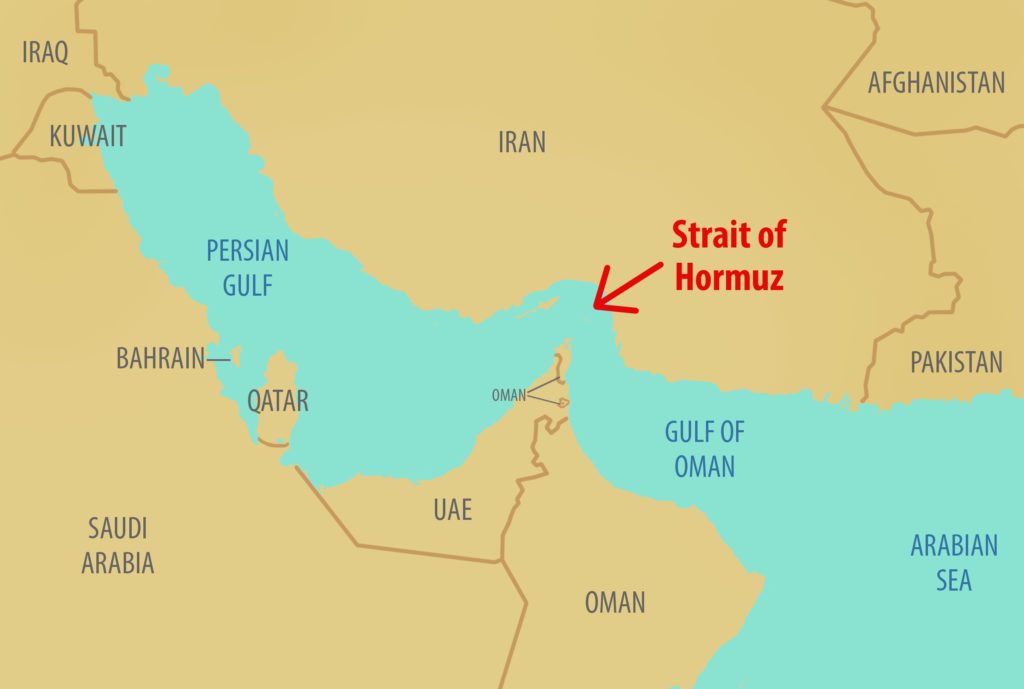
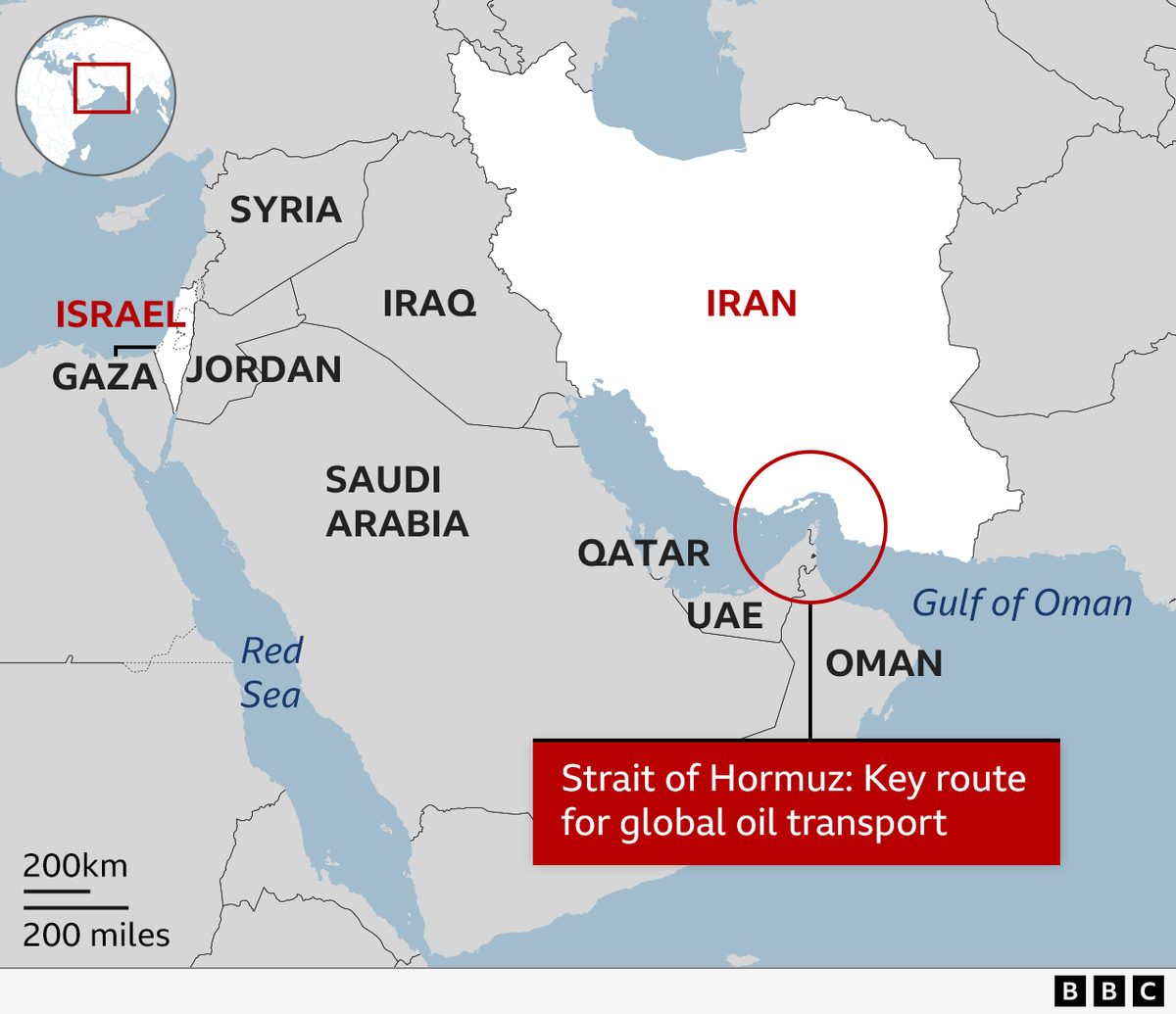
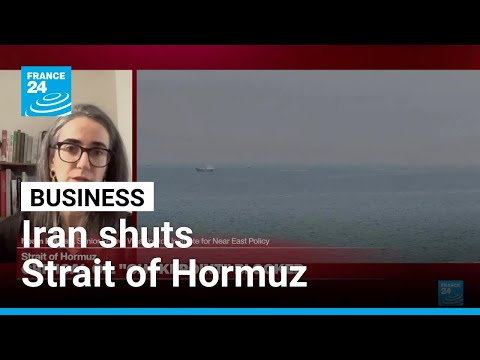
Trump cancelled a massive planned air campaign against Iran on August 1 at the request of Saudi Arabia, the UAE, Qatar and Iran. Oil fell to about $83 as Iran and Oman neared a new Hormuz transit deal, though Tehran denied any direct talks with Washington.
The pause has not produced a deal. Iran's security council says the strait stays shut until the US lifts its naval blockade, drops sanctions, withdraws forces and pays reparations. Weekly Hormuz traffic is about 90% below prewar levels; Brent has climbed back to nearly $97 a barrel.
Why it matters
Whether Hormuz reopens or the standoff resumes will decide if US pump prices keep climbing toward $5 or fall back toward $4.
Questions about this story
Free account needed to ask — your question is kept and asked for you right after sign-up. Answers are public.
No questions yet — be the first to ask.
Key Indicators
~$97 (Brent), ~$92 (WTI)
Crude per barrel
Brent held near $97.47 and WTI near $92.26 on September 7, their highest since late July, as US-Iran tit-for-tat strikes on vessels kept Hormuz flows low and diplomatic progress stalled.
Above $4, rising
U.S. average gasoline price per gallon
The national average is above $4 a gallon and climbing as oil grinds higher. The EIA hiked its price forecasts September 8, and Iowa prices are up nearly 70% since the war began.
Nearly shut — ~90% below prewar traffic
Hormuz status
Weekly commodity crossings through the strait remain about 90% below prewar levels. Fewer than 20 vessels crossed over the August 22-23 weekend. Crude flows recovered to 10.9 million barrels per day in late August, far below the 18 million prewar average.
Stalled — Iran sets conditions for reopening
Deal clock
Iran's Supreme National Security Council says the strait stays shut until Washington lifts its naval blockade and sanctions, withdraws forces, pays war reparations and releases frozen assets. Trump warned Iran on September 4 that it has a 'last chance' to avoid escalating strikes.
Near 6-week highs
Global oil markets
Brent and WTI are near six-week highs after the August diplomatic pause failed to produce a deal. The EIA hiked its oil price outlook September 8, and markets are watching whether US strikes resume.
97 events
Latest: September 4th, 2026 · 1 week ago
Showing 8 of 97
JK to step
Tap a bar to jump to that date
Jump to
September 2026
Trump warns Iran it has a 'last chance' to avoid escalating strikes
LatestPolitical
Trump said negotiators would first seek to reopen the Strait of Hormuz, then address Tehran's nuclear program, and called the talks Iran's 'last chance' to avoid an escalation in US strikes.
Hormuz crude flows recover to ~10.9M b/d but far below prewar
Market
Crude flows through Hormuz reached 10.9 million barrels per day for the week ending August 30, up from the 6 million b/d trough in March-April but still far below the ~18 million b/d pre-conflict level. Brent held near $95 as a tentative pause followed the heaviest US-Iran exchange since July.
Fewer than 20 commodity vessels crossed the strait over the August 22-23 weekend; only four crossed on Sunday. Weekly traffic remains about 90% below prewar levels. The IMO says roughly 6,000 seafarers are stranded in the region and its evacuation plan is suspended.
Trump claims '100% control' of Hormuz, demands Iran pay reparations
Political
Trump said the US has '100% control' of the strait and demanded Iran pay reparations. Pakistan's defense minister Khawaja Asif said the two sides were close to 'some sort of arrangement.' Iran's Supreme National Security Council secretary Mohammad Bagher Zolghadr said the strait won't reopen until Washington lifts its naval blockade and sanctions, withdraws forces, pays war reparations and releases frozen Iranian assets.
Iran denies direct US talks; cargo ship attacked near Oman coast
Diplomacy
Iran's foreign ministry spokesperson Esmaeil Baghaei said 'we currently do not have negotiations with America,' saying Tehran was only discussing a temporary safe route with Oman. A dry bulk ship was struck by an 'unknown projectile' off Oman's coast; the crew abandoned the vessel and one seafarer was missing. Brent rose 2.7% on Tuesday as uncertainty persisted.
Iran denies asking Trump to stand down; Araghchi says Iran-Oman Hormuz deal in 'final stages'
Diplomacy
Iran's Foreign Ministry called Trump's claim that Tehran requested a halt to strikes 'a new lie.' Foreign Minister Araghchi said Iran-Oman negotiations over a new transit corridor through Hormuz were 'on the way to being finalised' — a strictly bilateral arrangement that Oman said no third party would be permitted to manage.
Trump says cancelled strike would have been 'biggest since World War II'; calls deal 'imminent'
Political
Speaking on Air Force One, Trump said the cancelled operation 'would have been the biggest attack since World War II.' He said new talks with Iran would begin August 3 and called a deal 'imminent,' setting no deadline and warning Iran it had a 'last chance' to sign.
State Department warns US citizens across the Middle East to consider departing
Political
US embassies in Saudi Arabia, UAE, Qatar, Oman, Iraq, Jordan, Israel, Kuwait, Bahrain, and Egypt issued security alerts urging Americans to consider leaving immediately, citing a potential for 'unforeseen escalation' as US strike plans against Iran advanced.
Kuwait intercepts Iranian drones for second consecutive day
Military
Kuwaiti air defenses intercepted Iranian drones in a second consecutive dawn attack, with the wave striking a government facility in the north and damaging civilian vehicles on Bubiyan Island.
MBS calls Trump urging restraint; Trump cancels planned massive Iran strike on Truth Social
Military
Saudi Crown Prince Mohammed bin Salman called Trump to stress the need to 'prioritise dialogue' and prevent a wider conflict. Hours later, Trump posted on Truth Social cancelling the air campaign at the request of Saudi Arabia, UAE, Qatar, and Iran because 'the perimeters of a deal has been agreed to'; Israel also joined in the commitment.
July 2026
IRGC strikes two tankers transiting under US air escort; Brent hits $90
Military
The IRGC said it hit two oil tankers attempting to transit Hormuz via an unauthorized route under US air cover; four other vessels turned back. Brent rose to $90.12 and WTI closed at $84.67.
Trump weighs strikes on Iranian energy infrastructure within days
Military
Trump told a Cabinet meeting 'we will be hitting them very hard.' Axios reported he is seriously considering strikes on Iranian energy sites within days, possibly with Israel. Iran threatened retaliation against Israeli targets and US Gulf energy facilities.
Drones hit Egypt's Damietta LNG terminal; first attack on Egyptian territory
Military
Drones struck a regasification ship and a storage vessel at Egypt's Damietta LNG terminal on the Mediterranean, setting both on fire. No group claimed responsibility; Trump called the strike 'Iran-related.'
Saudi Arabia announces 14-nation Multinational Maritime Defense Alliance
Political
Saudi Arabia and 13 partner countries established the Multinational Maritime Defense Alliance to protect shipping through the Red Sea, Gulf of Aden, and Bab al-Mandeb. Oil prices dipped on the announcement.
CENTCOM launches 'heavy wave' of strikes across southern Iran
Military
US Central Command hit dozens of IRGC targets including command centers, missile and drone facilities, and coastal defenses across Qeshm and Kish islands, Bushehr, and Khuzestan province.
IRGC fires ballistic missiles at US forces in attempted 'surprise attack'
Military
Iran's IRGC launched multiple ballistic missiles at US military positions in the Middle East in what the Pentagon called an attempted surprise attack. All projectiles were intercepted.
CENTCOM runs five-hour strike campaign across six Iranian port cities
Military
US Central Command struck Iranian coastal defenses, missile sites, and maritime infrastructure in Bushehr, Bandar Abbas, Chah Bahar, Jask, Konarak, and Abu Musa, targeting Iran's capacity to attack commercial shipping in the strait and Persian Gulf.
Iran fires on US bases in Bahrain and Jordan; US naval blockade formally resumes
Military
Iran launched drone and missile strikes against US military positions in Bahrain and Jordan in retaliation for the CENTCOM campaign. The US naval blockade on Iranian port traffic formally resumed at 4 PM ET under Trump's order.
Trump declares US 'guardian' of Hormuz with 20% cargo toll; nuclear talks resume
Political
Trump announced the US would act as 'guardian' of the Strait of Hormuz, reinstating the blockade on Iranian ships and charging all other commercial vessels a fee equal to 20% of their cargo value to cover US security costs. Nuclear talks between Washington and Tehran resumed the same day, though significant disputes over inspection access to bombed nuclear sites and controls on spent reactor fuel have yet to be resolved.
IRGC strikes UAE tankers Mombasa and Al Bahiyah; one Indian crew member killed
Military
Iran's IRGC fired missiles at UAE-flagged tankers Mombasa and Al Bahiyah transiting the southern lane of the Strait of Hormuz, setting both ablaze. One Indian national died aboard the Mombasa; eight others were injured — six Indian crew and two Ukrainian.
Araghchi claims Iran is 'eternal guardian' of Hormuz; IMO calls Trump's 20% toll illegal
Diplomacy
Foreign Minister Araghchi countered Trump's 'guardian' declaration by writing that Iran 'has always been the GUARDIAN of the Strait and will remain so FOREVER,' then said '20% is of course too much. We will be fair.' The International Maritime Organization said the proposed toll has 'no legal basis' under international law.
US hits 140 more Iranian targets (300+ total); IRGC strikes five Gulf nations; Trump reimplements Iranian naval blockade
Military
CENTCOM said it struck approximately 140 Iranian targets — missile and drone sites, naval facilities, ammunition storage, and communication networks — bringing the three-round total past 300. The IRGC responded with drone and missile strikes on Jordan, Kuwait, Bahrain, Qatar, and Oman, claiming it destroyed MQ-9 hangars and a command center at Jordan's Prince Hassan Air Base and a maintenance facility at Qatar's Al Udeid Air Base. Three civilians in Qatar were wounded by interceptor debris. Trump announced the reimposition of the naval blockade on Iranian ships.
IRGC attacks container ship GFS Galaxy; Iran declares Hormuz closed; US launches third strike round
Military
Iran's IRGC struck the Cyprus-flagged container ship M/V GFS Galaxy as it transited eastbound through the strait after departing Jebel Ali, setting the engine room on fire and leaving one Indian crew member missing. Iran declared the Strait of Hormuz closed until further notice. The US launched a new round of strikes on Iranian targets in response.
US pauses strikes; mediators push to restart talks; Trump gives Iran Saturday deadline
Diplomacy
The US temporarily halted offensive strikes as Qatar, Oman, Pakistan, and Turkey worked to de-escalate and revive negotiations. Trump directed his team — including Vice President Vance, special envoy Steve Witkoff, and Jared Kushner — to continue talks, with a round planned in Oman. Trump separately issued a Saturday deadline for Iran to stand down or face new strikes.
US launches second strike round; IRGC hits Jordan, Bahrain, Kuwait; Iran privately signals desire to keep talking; Israel reveals Trump assassination plot
Military
US Central Command conducted a second round of strikes targeting Iranian military capabilities in and around the Strait of Hormuz. The IRGC retaliated with strikes on US military positions in Jordan, Bahrain, and Kuwait — Jordan's military said it intercepted eight Iranian missiles. Separately, Iranian officials privately told Trump administration advisers they 'made a mistake' attacking commercial ships and wanted to keep negotiating. Israel shared intelligence with Washington that Iran had devised a specific new plan to assassinate President Trump.
Trump declares ceasefire 'over' at NATO Ankara summit; threatens naval blockade
Diplomacy
At a press conference with NATO Secretary General Mark Rutte in Ankara, Trump said the MOU is 'over' and called Iran 'scum,' while leaving open the possibility that US negotiators could keep talking. He threatened to reimpose the naval blockade on Iranian ports. European NATO members expressed alarm at the escalation, several having already restricted US access to their airspace for offensive Iran operations.
IRGC strikes three Hormuz tankers; US hits 80+ Iranian targets; sanctions waiver revoked; IRGC claims 85 US sites struck
Military
Iran's IRGC struck three commercial vessels in the Strait of Hormuz — Qatari LNG tanker Al Rekayat (engine-room fire), Saudi supertanker Wedyan, and a third ship east of Oman — in the biggest day of Hormuz attacks since the MOU signing. The US struck over 80 Iranian targets, including more than 60 IRGC small boats plus air defenses, coastal radar, and anti-ship missile systems. The administration also revoked the oil sanctions waiver. The IRGC then claimed strikes on 85 US military targets in Bahrain and Kuwait, including the Fifth Fleet base.
Ali Khamenei state funeral begins; Mojtaba Khamenei barred over assassination risk
Political
Iran began five days of state funeral ceremonies for slain Supreme Leader Ali Khamenei, running across Tehran, Qom, Mashhad, Najaf, and Karbala. His successor Mojtaba Khamenei did not appear; officials barred him over fears of an Israeli assassination attempt. Reports surfaced that Mojtaba may have been wounded in the February 28 strike that also killed his mother and wife, and that he has communicated only through written statements since the war began.
Oil falls to lowest level since before the war; Hormuz traffic at 30-43 daily crossings
Market
Brent crude fell below $71 per barrel — the lowest since Operation Epic Fury began in late February — as Hormuz traffic recovered and Doha talks lifted deal expectations. The trend reversed sharply five days later when the IRGC struck three tankers.
US and Iranian negotiators completed two days of indirect talks in Doha, mediated by Qatar and Pakistan. Qatar's prime minister reported 'positive progress' on Hormuz shipping and MOU implementation. VP Vance said nuclear-issue talks would start soon. Both sides agreed to schedule a next round after Ali Khamenei's state funeral.
June 2026
US and Iran agree to stand-down; commercial vessels cleared through Hormuz; WTI rises to $70.56
Diplomacy
US and Iranian officials agreed to halt offensive action after the weekend's exchange of strikes, with commercial vessels cleared to transit Hormuz freely. A Trump administration official said technical talks remained "on track." WTI crude rose 1.9% to $70.56 per barrel on the news.
Iran threatens to halt talks; US launches second round of strikes; Hormuz traffic slows
Military
Iran threatened a "complete halt" to negotiations after US retaliatory strikes. The US launched a second round of strikes against Iranian targets. A US official said talks remained on track. Hormuz shipping slowed sharply amid the IRGC dispute over whether vessels were transiting Iranian versus Omani waters.
IRGC drone strikes tanker M/T Kiku near Hormuz; US hits 10 Iranian targets; Iran retaliates on Kuwait and Bahrain
Military
An IRGC one-way attack drone struck the Panamanian-flagged M/T Kiku — carrying over 2 million barrels of QatarEnergy crude — off Ras Al Khaimah. The US Navy and Air Force struck 10 Iranian military targets including drone storage facilities, air defense sites, communication systems, and minelayer capabilities. Iran's IRGC then struck US military positions in Kuwait and Bahrain. Freight rates reached a 22-month high on the news.
Oil falls to near pre-war levels; gas avg $3.91 nationally; US launches first retaliatory strikes near Hormuz
Market
Brent crude settled at $71.99 and WTI at $69.23, near pre-war levels, for the fifth consecutive week of gas-price declines at $3.91 nationally. The same day, the US struck Iranian targets near Hormuz after Trump accused Iran of new ceasefire violations.
US-Iran dispute over UN inspector access to bombed nuclear sites clouds deal talks
Diplomacy
The US and Iran fell into a dispute over whether Tehran had agreed to allow UN inspectors to view bombed Iranian nuclear sites. Technical teams continued working on the gap as mediators tried to bridge differing interpretations of the June 17 MOU language.
US and Iran agree on 'roadmap' toward final deal in Switzerland; Iran offers written nuclear guarantee
Diplomacy
The first round of Swiss talks concluded with both sides agreeing to a roadmap for a permanent deal within 60 days. Iran's President Pezeshkian said Tehran would not abandon uranium enrichment but offered a written guarantee that Iran would not build a nuclear weapon.
VP Vance told Fox News that 16 million barrels of oil transited Hormuz in a single day — a record above pre-war volumes — as the US and Iran opened technical talks in Bürgenstock, Switzerland, alongside mediators Qatar and Pakistan. Iranian state media claimed Hormuz had been re-closed, a claim the US disputed. Trump threatened fresh strikes from the sidelines, shaking but not derailing the summit.
US lifts naval blockade on Iranian ports as MOU condition
Military
US forces lifted their blockade on ships entering and exiting Iranian ports and coastal areas, fulfilling a core MOU term and reopening the Persian Gulf to two-way commercial traffic for the first time since late February.
Trump signs 60-day MOU with Iran at Versailles; Pezeshkian signs remotely; WTI at ~$80
Diplomacy
Trump signed the MOU at the Palace of Versailles while Iranian President Masoud Pezeshkian signed remotely. The deal reopens Hormuz for 60 days with no tolls, lifts the US port blockade, issues sanctions waivers, commits to a $300 billion Iranian reconstruction fund, and sets a 60-day window for nuclear talks. WTI crude settled near $80 per barrel.
US and Iran announce initial deal to reopen Hormuz and extend ceasefire; oil falls to ~$83 Brent
Diplomacy
Pakistan's prime minister announced that the US and Iran had finalized a memorandum of understanding, including Hormuz reopening, an end to hostilities in Lebanon, reduction of US military assets, and sanctions relief. Oil prices fell sharply on the news.
Iran suspends all negotiations, threatens complete Hormuz blockade and Bab al-Mandeb activation; oil surges 7%+
Diplomacy
Iran's state-affiliated Tasnim agency reported Tehran would halt all exchanges with the US through mediators and move to completely block the Strait of Hormuz. Iran also threatened to activate the Bab al-Mandeb Strait as a second chokepoint. WTI crude jumped more than 7% to about $92-93 per barrel on the news.
May 2026
Hegseth warns at Shangri-La Dialogue that US is ready to resume full-scale strikes
Military
Defense Secretary Pete Hegseth, speaking at the Shangri-La Dialogue security forum in Singapore, said the US was 'more than capable' of renewing attacks on Iran and that US stockpiles were 'more than suited' for resumed operations. He said any deal must guarantee Iran never gets a nuclear weapon.
Oil falls ~11% from weekly highs as US-Iran deal optimism builds
Market
Brent and WTI fell roughly 11% and 9.6% respectively from their weekly highs as reports of a near-complete 60-day MOU lifted deal expectations. The declines reversed sharply after Iran's June 1 announcement.
US and Iran agree on tentative 60-day MOU; Trump has not yet signed
Diplomacy
US and Iranian negotiators reached a tentative memorandum of understanding. Under its terms, Hormuz would reopen with no tolls, Iran would clear mines, and the US would lift its port blockade and issue sanctions waivers. Trump had not given final approval as of May 28.
US strikes Iranian missile sites and mine-laying boats in 'self-defense' operation
Military
US forces struck missile launch sites and Iranian boats attempting to lay mines near the Strait of Hormuz, calling the action self-defense in response to 24 hours of IRGC missile, drone, and small-boat activity. Iran accused the US of violating the ceasefire and the IRGC warned it retained the right to retaliate.
Trump calls off planned major attack on Iran at Gulf allies' request
Military
Trump announced he had scrapped a 'very major attack' planned for the following day after personal requests from the Qatari emir, Saudi crown prince, and UAE president. He kept US forces on standby for a 'full, large scale assault' if an acceptable deal was not reached.
Trump calls Iran's peace counterproposal 'totally unacceptable'; talks stall on day 71
Diplomacy
Trump rejected Iran's latest submission — demanding Hormuz sovereignty recognition, war reparations, and release of frozen assets — delivered through Pakistan. U.S. gas prices stood at $4.52 per gallon nationally, 52% above pre-war levels, with California above $6.
U.S. Navy fires on and disables two Iranian oil tankers in Hormuz
Military
American warships disabled two Iranian tankers in the strait after an overnight exchange of live fire, with the U.S. military releasing footage of precision strikes on the vessels' smokestacks. Iran's Foreign Minister Araghchi condemned the action as a ceasefire violation, writing: 'Every time a diplomatic solution is on the table, the U.S. opts for a reckless military adventure.'
U.S. strikes Qeshm Island and Bandar Abbas after Iran fires on three Navy destroyers
Military
U.S. Central Command hit missile launch sites, drone facilities, and command nodes at Qeshm Island, Bandar Abbas, and Bandar Kargan after Iran fired on USS Truxtun, USS Rafael Peralta, and USS Mason in the strait. Trump called the strikes 'just a love tap' and said the ceasefire remained in effect.
Oil plunges 8-15% intraday as reports say U.S. and Iran are near a deal
Market
WTI crude fell as much as 15% to $88 per barrel and Brent dropped to $96 after Axios reported the White House believed it was close to a memorandum of understanding with Iran. The S&P 500 hit a record high and the Dow surged 610 points before prices partially recovered as a senior Iranian official appeared to rebuff the proposal.
Trump pauses Project Freedom after Saudi Arabia denies U.S. airspace access
Military
Trump suspended the escort operation citing 'great progress' in peace talks, but the New York Times reported Saudi Arabia had blocked U.S. access to its territory and bases, viewing the operation as poorly planned and likely to escalate tensions with Iran.
Trump launches Project Freedom to escort stranded ships through Hormuz
Military
Trump announced Operation Project Freedom, deploying 100+ aircraft, 15,000 service members, and guided-missile destroyers to escort merchant vessels out of the Persian Gulf. Only two ships transited before the operation was suspended 48 hours later.
Iran submits 14-point peace counterproposal via Pakistan mediators
Diplomacy
Iran delivered a 14-point counterproposal through Pakistani mediators, demanding recognition of Iranian sovereignty over the Strait of Hormuz, war reparations, release of frozen assets, an end to sanctions, and U.S. force withdrawal from the region. Trump said he was 'not satisfied' with the offer.
April 2026
Oil prices post largest single-day drop in nearly six years on ceasefire news
Market
WTI crude fell 15% from $112.95 to $95.85 per barrel, Brent to $103.42—biggest one-day decline since 2020—after US-Iran ceasefire and Hormuz reopening commitment compressed war premium from $14 to $4-6 per barrel. Global equity rally followed de-escalation.
Madagascar declares 15-day national energy emergency over war-driven fuel shortages
Market
Madagascar activated 15-day energy emergency granting exceptional powers to manage fuel supply after Hormuz crisis severed petroleum imports from Oman. Stations faced shortages since mid-March, disrupting power and transport in the import-dependent island nation.
U.S. Energy Information Administration releases wartime energy outlook with revised oil forecasts
Market
EIA released April Short-Term Energy Outlook on schedule, updating oil price and production forecasts amid Hormuz crisis. Brent crude forecasts revised above $95 per barrel for near term, up roughly 50% from start of 2026. U.S. crude production forecast at 13.6 million barrels per day for 2026.
Taiwan Airlines implements 157% fuel surcharge hike on international flights
Market
Taiwan's Civil Aviation Administration enforced 157% increase in airline fuel surcharges effective April 7. Long-haul surcharges jumped from $45.50 to $117; short-haul from $17.50 to $45. Major carriers China Airlines and EVA Air affected. Fuel accounts for roughly 40% of airlines' operating costs; carriers say surcharges still insufficient to cover increased expenses.
Oil prices surge past $109 as markets reopen after Good Friday
Market
U.S. crude surged above $109 per barrel on April 6 as markets reopened, with Brent last at $112.42 on April 3; prices up 60%+ since war began, 10M bpd disrupted amid ongoing Hormuz blockade.
WTI surges 11% to $111.54, Brent +7.8% to $109.03—biggest gains in 6 years
Market
U.S. oil futures posted largest single-day gains since 2020 amid fears of extended Hormuz closure handling 10%+ of global supply; escalation fears drive prices higher as war persists.
Brent surges 7% to $107.47 reversing dip; stocks sell off on renewed oil shock
Brent stabilizes near $116; Dow extends correction as gasoline crosses $4 nationally
Market
Brent crude closed near $116.75 per barrel (55%+ monthly gain) as U.S. national average gasoline price crossed $4.00 per gallon for first time since 2022. Dow fell 0.8% (down 7.2% YTD), S&P 500 lost 0.6% (down 3.4% YTD) for fifth consecutive weekly loss. 10-year Treasury yield held above 4.30% as inflation expectations remain elevated.
Brent surges 3.7% to $116.75; Houthi missiles hit Israel amid record monthly oil gain
Market
Brent crude jumped to $116.75 per barrel (55%+ March gain) as Yemen's Houthis fired missiles at Israel, escalating Red Sea/Hormuz risks; IEA deems crisis 'biggest oil shock in history.'
Philippines declares first national energy emergency over Hormuz oil crisis
Market
President Marcos Jr. activates UPLIFT plan amid 45 days of fuel left; first country to declare emergency response to global supply shock from strait closure.
Trump ultimatum: Obliterate Iranian power plants unless Hormuz reopened in 48 hours
Military
Trump warned of strikes on major energy infrastructure if Strait not fully opened; Iran threatened retaliation on U.S. Gulf energy sites. IDF intensified strikes on missile/nuclear sites; over 100 injured in escalations.
IDF Chief: Operations halfway through toward Passover; Trump calls NATO allies 'cowards'
Military
Lt. Gen. Eyal Zamir said campaign against Iran about halfway done. Trump urged Hormuz users to police strait, criticized NATO for non-involvement after prior rebuffs.
Israel strikes Iran's South Pars gas field; oil surges past $108/barrel
Military
Israel targeted Iran's South Pars gas field and refineries, first upstream hits; Brent jumped 5%+ to $108.66. Iran threatened and struck Qatar gas hub; Middle East output down 7-10M bpd.
U.S. deploys bunker-buster bombs in Strait of Hormuz operations
Military
U.S. forces used bunker-buster munitions amid efforts to counter Iranian control; selective ship transits continue with AIS anomalies suggesting Iranian verification.
U.S. allies including France reject warship contributions; more non-Western tankers (Greek, Chinese, Indian) transit after Iranian clearance, confirming de facto control.
Iran fires 4 new missile salvos at Israel; IDF strikes Hezbollah in Beirut
Military
IRGC launched four ballistic missile salvos at Israel in apparent cluster bomb attack, injuring civilians. IDF responded with fresh airstrikes targeting Hezbollah sites in Beirut and regime infrastructure in Tehran.
Japan releases 80 million barrels from strategic reserves; Brent tops $104
Market
Japan began releasing approximately 80 million barrels from strategic petroleum reserves as Brent crude surged to $104.22 per barrel. IEA projects 8-million-barrel-per-day production decline for March; JPMorgan estimates 12M barrels/day offline by late March.
Trump warns allies: U.S. 'will remember' countries refusing coalition
Diplomacy
Trump escalated pressure on international partners, warning that the U.S. will remember which countries refuse to join the warship coalition. White House signals coalition announcement expected this week.
Energy Secretary Wright confirms U.S. military not ready for escort operations
Military
Energy Secretary Chris Wright stated on March 15 that while escort operations will happen 'relatively soon,' the military is 'simply not ready' to begin them now. Wright claimed the world is 'abundantly supplied with oil and energy' despite strait closure.
Polling shows majority of Americans oppose Iran war
Political
Surveys indicate more than half of Americans oppose Trump's war with Iran, while roughly four in ten support it. Republicans in Congress privately urge White House to end conflict quickly to avoid prolonged economic damage in election year.
Trump calls for global warship coalition to secure Hormuz
Military
President Trump posted on Truth Social urging China, France, Japan, South Korea, UK and others to send warships with U.S. forces to escort tankers and end Iran's strait control; vowed U.S. bombing of shorelines and boats until reopened.
Iran targeted central/southern Israel with seven ballistic salvos injuring civilians via shrapnel; continued Gulf attacks; IDF hit regime infrastructure in western Iran.
IRGC, Araghchi claim Hormuz 'under control' not closed
Shipping
IRGC Navy Cmdr. Tangsiri and FM Araghchi stated strait open except to U.S., Israel, allies; others free to pass amid selective enforcement.
IDF strikes 200+ Iranian targets; 60 wounded in northern Israel by Iranian missiles
Military
Israeli jets hit over 200 regime sites in central/western Iran including missile systems; Iranian barrage injures nearly 60 in northern Israel per Magen David Adom. Sirens sound amid Hezbollah threats.
Trump vows new strikes; claims 90% of Iranian missiles destroyed
Military
President Trump told Brian Kilmeade Show that US has destroyed nearly 90% of Iran's missiles and drone manufacturing, vowing to hit regime 'very hard' with unspecified new strikes. Trump wrote on Truth Social: 'Watch what happens to these deranged scumbags today,' signaling imminent action. Trump confirmed US prepared to escort vessels through Strait of Hormuz if necessary.
Iran allows selective Hormuz passage; Indian LPG carriers transit
Shipping
Iran permitted two Indian-flagged liquefied petroleum gas carriers to transit the Strait of Hormuz, marking first significant shipping flows since blockade began. Turkish transport minister confirmed Iran approved passage of Turkish vessel. Selective enforcement continues: Western-flagged ships remain under attack.
US issues second Russian oil sanctions waiver; eases Venezuelan restrictions
Market
US Treasury issued second temporary waiver for purchase of sanctioned Russian crude (broader than March 1 directive limited to India), covering oil loaded before March 12. Administration also eased restrictions on Venezuelan oil and fertilizer purchases to stabilize global energy markets amid $103+ Brent prices.
Brent crude stabilizes above $103; stocks fall for third straight week
Market
Brent crude closed at $103.14 per barrel (up 2.7%), highest in 3+ years, for second straight session above $100. S&P 500 fell 0.6% (down 3.1% YTD), Dow lost 0.3%, Nasdaq fell 0.9% for third consecutive weekly loss. 10-year Treasury yield rose to 4.28% as inflation expectations mount. Fed rate cut odds fell below 1% ahead of next week's policy meeting.
Mojtaba Khamenei vows continued Hormuz closure; IRGC confirms mines
Military
New supreme leader's first statement demands Hormuz blockade persist as 'leverage'; US officials confirm Iran laying mines; IRGC navy vows 'harshest blows' while enforcing closure.
IEA approves record 400M barrel oil reserve release
Market
IEA members unanimously agree to largest-ever emergency release to counter Hormuz closure and Iran war supply shock; Brent falls below $90 as markets react. Executive Director Fatih Birol calls challenges 'unprecedented in scale.'
Trump warns Iran on Hormuz mines; US strikes minelayers
Military
Trump demands immediate mine removal or faces 'unprecedented' response; US Navy destroys Iranian minelaying vessels. Iran launches largest offensive yet, striking ships in strait per reports.
Israel escalates strikes on IRGC and nuclear-linked sites
Military
IDF targets IRGC headquarters, military airfields, and nuclear program facilities in new phase to 'deepen blow to Iranian terror regime.' Netanyahu signals regime change possible but in Iranian hands.
Bahrain declares force majeure after Iranian refinery strike
Military
Bapco invokes force majeure on shipments after Iranian attack sets Al-Ma'ameer refinery ablaze; joins Qatar/Kuwait in suspending output amid escalating Gulf energy hits.
Oil crosses $100; Mojtaba Khamenei named supreme leader
Market
Brent crude jumped to $101.19 a barrel, crossing the $100 threshold for the first time since July 2022. Dow futures plunged over 900 points. Iran's Assembly of Experts named Mojtaba Khamenei — the slain leader's 56-year-old son — as new supreme leader. Trump called the oil spike 'a very small price to pay.' Reports emerged that the U.S. was considering sending special forces into Iran to seize its stockpile of near-weapons-grade uranium.
Israel strikes Iranian oil infrastructure for the first time
Military
Israeli warplanes hit four oil storage facilities and an oil production transfer center in Tehran and Alborz province, producing thick black smoke over the capital. Iran's IRGC retaliated by striking an oil refinery in Haifa, Israel, with ballistic missiles.
Dow drops 900 points; oil approaches $90
Market
U.S. stocks suffered their worst week in nearly a year as oil prices surged past $90 a barrel and a weak jobs report compounded investor anxiety. The national average gasoline price climbed above $3.30 a gallon.
Strait of Hormuz traffic drops to near zero
Shipping
Tanker traffic through the strait collapsed from roughly 50 daily crossings to near zero. Over 150 ships anchored outside the strait. Iran announced it would allow only Chinese-flagged vessels to pass, citing China's diplomatic stance.
Iran attacks energy infrastructure in Qatar and Saudi Arabia
Military
Iran struck QatarEnergy facilities at Ras Laffan and Mesaieed, halting production at the world's largest liquefied natural gas operation. A fire at Saudi Aramco's Ras Tanura refinery — the kingdom's largest — was caused by debris from intercepted Iranian drones.
Iran retaliates across the region; six U.S. soldiers killed
Military
Iran launched retaliatory missile and drone strikes on U.S. bases, Israel, and Gulf states. Six American soldiers were killed in a single Iranian strike on a base in Kuwait. The IRGC issued warnings prohibiting vessel passage through the Strait of Hormuz.
OPEC+ agrees to modest production increase
Market
OPEC+ approved a 206,000 barrel-per-day increase for April. Saudi Arabia had already quietly added roughly 500,000 barrels per day in anticipation of disruptions. Analysts noted the increase was a fraction of normal Hormuz throughput.
February 2026
Operation Epic Fury begins; Khamenei killed in opening strikes
Military
The U.S. and Israel launched nearly 900 strikes in 12 hours targeting Iran's nuclear sites, air defenses, military infrastructure, and leadership. Supreme Leader Ali Khamenei was killed in an Israeli airstrike on his Tehran compound, along with dozens of senior officials.
Final Geneva nuclear talks end without a deal
Diplomacy
A third round of indirect negotiations in Geneva collapsed after Iran refused to halt uranium enrichment or transfer its stockpile abroad and demanded sanctions relief. Oil was trading around $69 a barrel (Brent).
Trump issues 10-day ultimatum to Iran
Escalation
President Trump gave Iran a 10-day deadline to reach a nuclear deal or face military strikes, while the U.S. amassed aircraft carriers and warships in the region.
U.S.-Iran indirect talks resume in Muscat
Diplomacy
The United States and Iran held indirect nuclear negotiations in Oman, mediated by Oman's foreign minister. No breakthrough was reached.
Scenarios
1
War grinds on, oil stays above $100 through spring
Likely
Discussed by: J.P. Morgan commodity analysts, International Energy Agency, Goldman Sachs
The most commonly discussed scenario. Neither side shows signs of de-escalation; the Strait of Hormuz remains effectively closed for weeks or months. Oil stays above $100 — potentially climbing to $120 or higher — as spare capacity outside Saudi Arabia is negligible and Gulf infrastructure damage compounds supply losses. U.S. gasoline prices push past $4.00 a gallon nationally. The Federal Reserve faces a stagflation dilemma: an oil-driven inflation spike hitting an economy already weakened by trade disruptions. A recession in oil-importing economies becomes increasingly likely the longer the strait stays shut.
2
Ceasefire reached within weeks, prices retreat to $80 range
Possible
Discussed by: European Union diplomats, China's Ministry of Foreign Affairs, some Wall Street strategists
International pressure — particularly from China, which depends heavily on Gulf oil and has been granted exclusive passage through the strait — brokers a ceasefire. The appointment of Mojtaba Khamenei creates a face-saving off-ramp: a new leader can negotiate terms his father could not. If the strait reopens and Gulf energy infrastructure is repaired, crude could fall back to the $75-85 range within weeks. However, the depth of damage to Iranian, Saudi, Qatari, and Kuwaiti facilities means full supply recovery would take months even in an optimistic scenario.
3
Conflict escalates into a ground operation, oil tests $150
Possible
Discussed by: Axios defense reporters, CSIS analysts, retired U.S. military officials
The reported discussions about deploying U.S. special forces to seize Iran's enriched uranium stockpile indicate the conflict could move beyond air strikes. A ground component — even a limited one — would represent a major escalation, likely triggering fiercer Iranian retaliation against Gulf oil infrastructure and possibly drawing in proxies like Hezbollah. Oil could test $140-150 a barrel, rivaling the inflation-adjusted peaks of the 1970s oil crises. Markets would price in a prolonged, multi-front regional war.
4
Strategic reserves and alternative routes cushion the blow
Uncertain
Discussed by: U.S. Senate Democrats (led by Chuck Schumer), International Energy Agency, energy analysts
The U.S. releases oil from the Strategic Petroleum Reserve — currently holding roughly 400 million barrels — while Saudi Arabia maximizes pipeline exports that bypass the Strait of Hormuz, including the East-West pipeline to the Red Sea. Other International Energy Agency members coordinate their own reserve releases. This scenario limits the price spike to the $90-110 range but cannot fully replace the lost Hormuz throughput. Trump has so far resisted calls to tap the reserve, and the Red Sea route faces its own security risks.
5
60-day MOU signed; Hormuz reopens within weeks
Possible
Resolves by Jul 15, 2026
Discussed by: Axios, CNN, Al Jazeera diplomatic reporters; US and Iranian negotiators via Pakistan
Trump signs the 60-day memorandum of understanding agreed by negotiators on May 28. Iran clears mines from the Strait of Hormuz, the US lifts its port blockade and issues sanctions waivers, and shipping resumes. Nuclear talks begin during the 60-day window. Oil falls back toward $70-80 per barrel as transit volumes recover.
6
Dual chokepoint closure: Hormuz and Bab al-Mandeb both blocked; oil tests $150
Possible
Resolves by Aug 1, 2026
Discussed by: Energy News Beat, OilPrice.com; Iran's Tasnim state media threat on June 1
Iran follows through on its June 1 threat to block both the Strait of Hormuz and the Bab al-Mandeb Strait. A dual closure would threaten up to 25% of global oil supply and roughly 30% of container shipping. Rerouting via the Cape of Good Hope would add 10-14 days per voyage. Oil could test $150 per barrel.
7
Permanent nuclear deal reached by mid-August; sanctions fully lifted
Uncertain
Resolves by Aug 16, 2026
Discussed by: Al Jazeera diplomatic reporters; US and Iranian officials at Switzerland talks; Axios
The US and Iran agreed to a 'roadmap' in Switzerland on June 22, and Iran offered a written guarantee it would not build a nuclear bomb. If both sides reach a final agreement before the 60-day MOU expires around August 16, sanctions are lifted permanently, Iran's enriched uranium stockpile is disposed of under IAEA supervision, and oil prices fall further toward $60 as Iran's roughly 3 million bpd of production returns fully to world markets.
8
MOU expires without a permanent deal; conflict resumes; oil spikes past $100 again
Possible
Resolves by Aug 16, 2026
Discussed by: NPR, NBC News; analysts following the UN nuclear inspection dispute
The gap between the US and Iran over UN inspector access to bombed nuclear sites, plus Iran's insistence on retaining uranium enrichment rights, could prevent a final deal within 60 days. If the MOU lapses without a permanent agreement, the ceasefire framework collapses, Iran re-closes Hormuz, and oil spikes back above $100 per barrel — erasing the relief at the pump seen since mid-June.
9
Naval blockade reimposed; oil retests $90-100
Possible
Resolves by Aug 16, 2026
Discussed by: Trump statement at NATO Ankara summit July 8; CNBC energy analysts
Trump threatened July 8 to reimpose the US naval blockade on Iranian ports — the core MOU condition lifted June 18. If the blockade goes back up, combined with the sanctions waiver revocation and renewed IRGC small-boat activity in Hormuz, oil could retest the $90-100 range. The question is whether Trump uses the threat as leverage to restart talks or follows through after calling the ceasefire 'over.'
10
US 'guardian' toll accepted — 20% Hormuz fee becomes embedded in global shipping costs
Uncertain
Resolves by Q3 2026
Discussed by: Bloomberg energy analysts; CNBC commodities reporters; RealClearDefense
If China, Japan, India, and other major oil importers accept Trump's 20% cargo fee as the price of Hormuz access, the toll becomes a structural shipping cost rather than a temporary crisis measure. Oil would settle in the $80–90 range — below wartime highs but well above pre-war levels — as the fee gets embedded in energy prices globally. Whether Iran accepts or actively resists US control of the waterway determines whether the toll operates smoothly or becomes a new flashpoint.
11
US and Israel strike Iranian energy infrastructure; oil retests $100
Possible
Resolves by Aug 15, 2026
Discussed by: Axios, Fortune, ABC News; unnamed US officials cited by multiple outlets
Trump is weighing strikes on Iranian oil and energy targets within days, possibly with Israeli participation for the first time in weeks. Iran has threatened to hit Israeli targets and US Gulf energy facilities in response. A cycle of energy-infrastructure strikes on both sides would send Brent back above $100.
12
Iran-Oman transit deal finalizes; Hormuz reopens without US involvement
Possible
Resolves by Aug 17, 2026
Discussed by: Iranian FM Araghchi, Oman's Foreign Ministry, Al Jazeera and Bloomberg diplomatic reporters
Iran and Oman say they are in 'final stages' of agreeing a new Hormuz maritime transit route distinct from the existing northern and southern lanes. If finalized, it would reopen commercial shipping without the 20% US toll and without acknowledging US authority over the strait. Whether the US accepts the arrangement or insists on its 'guardian' role determines if the deal holds or triggers a new standoff.
13
US resumes strikes; Brent crosses $100
Possible
Resolves by Oct 31, 2026
Discussed by: Fox News, sembr Strait of Hormuz tracker, EIA
Trump's September 4 'last chance' warning and stalled talks make renewed US strikes likely if no deal emerges. Brent at $97 is close to crossing $100; Hormuz crude flows at ~10.9M b/d remain far below the ~18M b/d prewar level.
14
Hormuz stays nearly shut through fall; supply crunch deepens
Likely
Resolves by End of 2026
Discussed by: UBS, International Energy Agency, EIA
If no deal emerges, Hormuz traffic stays at a fraction of prewar levels. UBS estimates crude flows at ~7M b/d; the IMO has ~6,000 seafarers stranded. Oil-importing countries face sustained price pressure through winter.
Historical Context
3 moments from history that rhyme with this story — and how they unfolded.
1 of 3
October 1973 - March 1974
Arab oil embargo (1973-1974)
After the United States provided emergency military aid to Israel during the Yom Kippur War, the Organization of Arab Petroleum Exporting Countries imposed an oil embargo on the U.S. and other Western nations. The price of oil quadrupled from $2.90 to $11.65 a barrel in under four months, producing gas lines, rationing, and a sharp recession.
Then
The U.S. economy entered a deep recession with double-digit inflation and unemployment rising above 8 percent. Congress imposed a national 55-mph speed limit to conserve fuel.
Now
The crisis led to the creation of the Strategic Petroleum Reserve in 1975 and the International Energy Agency to coordinate Western responses to supply disruptions. It permanently ended the era of cheap oil and reshaped American energy policy.
Why this matters now
The 1973 embargo demonstrated what happens when a major oil chokepoint is deliberately closed for geopolitical leverage — the exact mechanism now playing out in the Strait of Hormuz. The difference in scale: the embargo removed roughly 5 million barrels per day from the market. The Hormuz closure threatens roughly 17 million.
2 of 3
August 1990 - February 1991
Gulf War oil shock (1990)
Iraq's invasion of Kuwait on August 2, 1990, removed approximately 4.3 million barrels per day from global supply — the combined output of both countries. Oil prices roughly doubled from $34 to about $77 a barrel within weeks as markets feared Saddam Hussein would invade Saudi Arabia and seize a larger share of global production.
Then
Prices spiked sharply but fell back quickly once the U.S.-led coalition launched Operation Desert Storm in January 1991. Saudi Arabia ramped up production to partially offset the lost Iraqi and Kuwaiti output.
Now
The rapid military resolution limited the economic damage. The episode reinforced that oil shocks tied to Middle Eastern conflicts are measured not just by barrels lost but by how quickly supply can be restored.
Why this matters now
In 1990, Saudi Arabia served as the swing producer that cushioned the shock. In 2026, Saudi facilities themselves are under attack from Iranian drones and missiles — and the kingdom's primary export route through the Strait of Hormuz is the one that's blocked.
3 of 3
September 2019
Abqaiq-Khurais attacks (2019)
Drone and cruise missile strikes — attributed to Iran but claimed by Yemen's Houthis — hit Saudi Arabia's Abqaiq oil processing facility and Khurais oil field on September 14, 2019. The attack temporarily knocked out about 5.7 million barrels per day of Saudi production, roughly half the kingdom's output and 5 percent of global supply.
Then
Oil prices spiked nearly 15 percent in a single day — the largest one-day jump since 1991. But Saudi Aramco restored most production within two weeks, and prices returned to pre-attack levels within a month.
Now
The attack exposed the vulnerability of concentrated energy infrastructure to relatively cheap drone and missile strikes. It demonstrated that sophisticated air defenses could be bypassed and that the margin for disruption in global oil markets was thinner than assumed.
Why this matters now
The 2019 attack showed that Iranian-linked forces could temporarily disrupt Saudi oil production with precision strikes. In 2026, Iran is executing that same playbook at far greater scale — hitting facilities across multiple Gulf states simultaneously, while also closing the strait itself.