
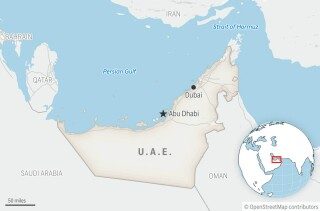
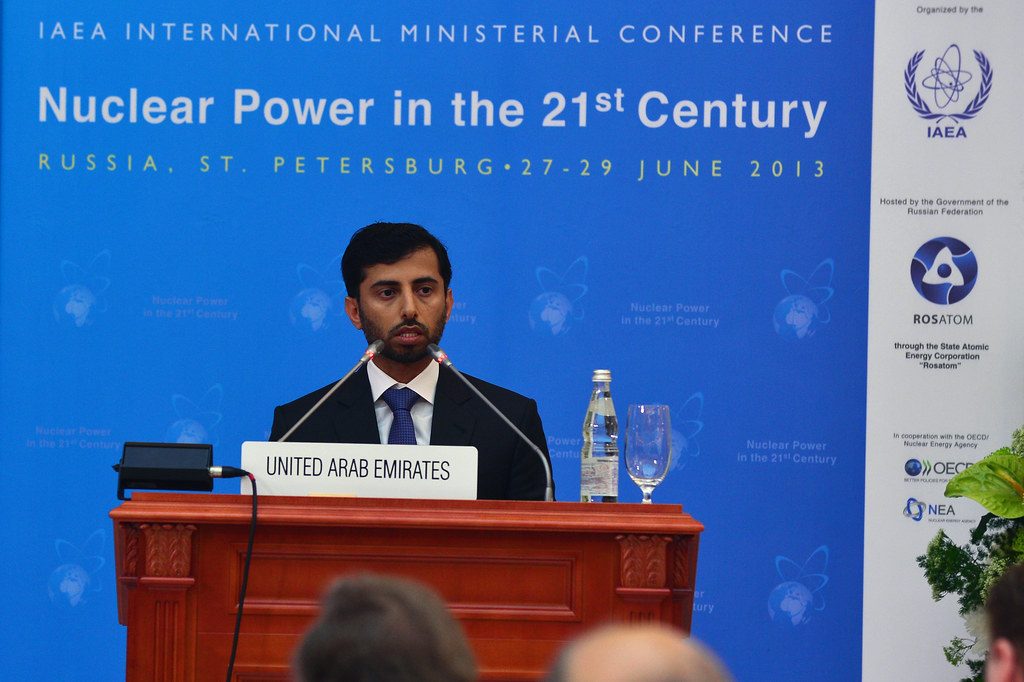

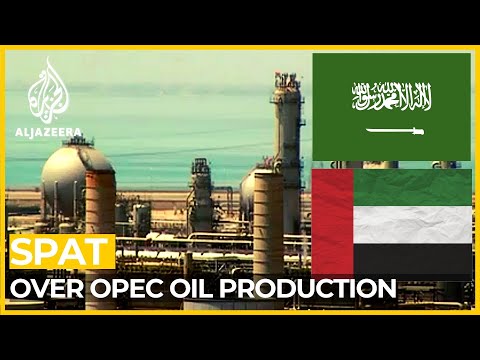

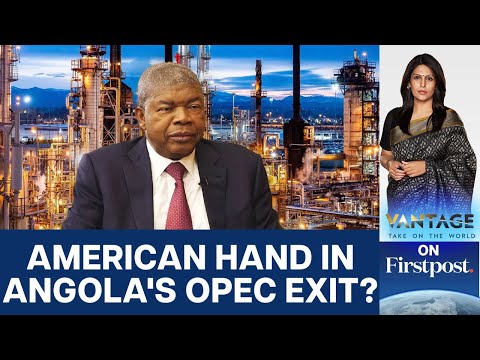
The United Arab Emirates joined OPEC in 1967, when crude sold for under $2 a barrel. On May 1, 2026, after fifty-nine years, it walks out—taking roughly 13% of OPEC's production capacity, according to the International Energy Agency. Officials cite quotas that capped UAE output near 3.2 million barrels a day despite physical capacity at Abu Dhabi National Oil Company (ADNOC) closer to 5 million. The exit is the largest single departure since Angola left in 2024, and it reshapes the strategic balance between Riyadh and Abu Dhabi.
The exit landed into a worsening oil-market shock. Brent crude briefly hit $126 a barrel on April 30—a four-year wartime high—before closing near $114, driven by reports that US military commanders were pitching new air strikes against Iran and President Trump's decision to extend the naval blockade of Iranian ports. The Strait of Hormuz, ordinarily the passage for roughly 20% of global seaborne oil, is operating at approximately 5% of pre-conflict shipping volumes. Just days before the OPEC announcement, UAE central bank officials opened negotiations on a roughly $20 billion emergency dollar swap line with US Treasury Secretary Scott Bessent—a financial pivot toward Washington that analysts see as coordinated with, not incidental to, the cartel exit.
Why it matters
OPEC's coordinated grip on oil prices weakens during a Middle East war—expect sharper price swings at the pump and a less predictable global energy market.
Brent briefly surged to $126 on April 30—a four-year wartime high—before closing near $114, as the US extended its Iranian port blockade and military escalation fears intensified.
Brent briefly hits $126 wartime high before closing at $114
Market Reaction
Oil surged to $126 a barrel intraday—its highest level in four years—on reports US military commanders were pitching additional Iran strikes and Trump signaled an extended naval blockade of Iranian ports. Prices then pulled back sharply, closing near $114.
Trump extends Iran port blockade; US military pitches new strike campaign
Escalation
US President Trump signaled an extended naval blockade of Iranian ports while US military commanders reportedly pitched a campaign of targeted strikes to force Iran back to the negotiating table, triggering the oil price spike.
African OPEC members flagged as facing new competitive squeeze from UAE crude
Analysis
Analysts and African business press noted on April 30 that UAE crude—cheaper to produce and cleaner to refine—will intensify competition for Nigeria, Algeria, Congo, and other African OPEC exporters once ADNOC operates without quota constraints, adding a second dimension to the exit's cartel-fragmentation pressure.
Brent crude reaches $112 on eighth straight daily gain
Market Reaction
Oil markets absorbed the UAE exit with a continued rally; Brent hit approximately $112 per barrel as analysts cited the compounding pressure of the Iran war supply disruption and the loss of coordinated OPEC spare capacity.
Analysts name Nigeria and Venezuela as leading next OPEC exit candidates
Analysis
Following the UAE precedent, CNBC and energy analysts flagged Nigeria—which is redirecting domestic crude to the Dangote refinery and becoming less dependent on global export markets—and Venezuela—whose output is recovering faster than expected amid a more US-aligned political environment—as the most likely next members to leave the cartel.
In written Senate responses published April 29, Federal Reserve chair nominee Kevin Warsh stated the Fed's statutory independence should not fully extend to international policy matters, an interpretation that would give the executive branch—and Treasury Secretary Bessent—greater effective control over any UAE dollar swap line arrangement.
UAE announces OPEC and OPEC+ exit
Announcement
Abu Dhabi confirms departure effective May 1, citing quota constraints; removes 13% of OPEC capacity per IEA.
UAE opens dollar swap line talks with US Treasury at IMF meetings
Financial Diplomacy
UAE Central Bank Governor Khaled Mohamed Balama met Treasury Secretary Scott Bessent and Federal Reserve officials at the IMF/World Bank spring meetings, raising the possibility of a roughly $20 billion dollar swap line to stabilize UAE finances amid Strait of Hormuz disruptions.
Angola exits OPEC
Precedent
Angola departs over quota dispute, immediate predecessor to UAE's move.
Log in to predict. Track your picks, climb the leaderboard.Log inSign Up
1
Saudi Arabia abandons price defense, oil floods global markets
Riyadh concludes that absorbing more cuts to cover UAE's exit and free-riding members is no longer worth it. Saudi Arabia opens taps to discipline rivals and recapture market share, as it did in 1985 and 2014. Brent falls sharply from current war-elevated levels, pressuring US shale and Russian war financing alike. Iran war supply premium partially offsets the price drop.
Discussed by: Energy strategists at Goldman Sachs and S&P Global cited in Bloomberg coverage; analogues to 1985 and 2014 cited by historical OPEC analysts.
Consensus—
2
OPEC+ rebuilds discipline without UAE, holds prices through Iran war
Remaining members tighten coordination, with Saudi Arabia and Russia absorbing additional voluntary cuts to backfill UAE volume. The Iran war's supply disruption helps mask the cartel's reduced share by keeping the market structurally tight. Prices stay above $100 through 2026, but the cartel's longer-term price-setting credibility erodes.
Discussed by: OPEC Secretariat statements; Saudi-aligned analysts at energy consultancies.
Consensus—
3
OPEC fragments further as more members follow UAE out
Iraq, Nigeria, or Kazakhstan—each chronically over-quota—conclude that with UAE gone the political cost of departure has fallen. A cascade leaves OPEC as a smaller Saudi-led core with diminished global share, closer to a producer association than a price-setting cartel.
Discussed by: Cartel-fragmentation analysts cited in CNN and Washington Post coverage; researchers tracking Angola-UAE pattern.
Consensus—
4
UAE returns after concessions on quota baseline
Within 12-18 months, Saudi Arabia offers UAE a substantially higher baseline reflecting actual capacity. Abu Dhabi rejoins under revised terms. Qatar's permanent exit and Angola's continued absence make this the less likely path—the structural complaint is about quota architecture, not relationships.
After years of cutting Saudi production to defend prices while other OPEC members exceeded quotas, oil minister Ahmed Zaki Yamani convinced the kingdom to abandon price defense. Saudi output jumped from 2 million to over 5 million barrels per day. Prices crashed from around $30 to under $10 a barrel within months.
Outcome
Short Term
Cheating members were disciplined as their revenues collapsed alongside Saudi Arabia's. The price shock wiped out high-cost producers, including significant US oil patch bankruptcies.
Long Term
Established the precedent that Saudi patience with free-riders has a limit. Yamani lost his job in 1986, but the strategic logic—flood markets to enforce discipline—has been deployed twice more, in 2014 and 2020.
Why It's Relevant Today
The UAE exit creates exactly the conditions that triggered 1985: Saudi Arabia carrying disproportionate cuts to defend prices while a major Gulf neighbor exits to pump freely. The 1985 playbook is now back on the table.
Qatar's exit (January 2019)
December 2018 - January 2019
What Happened
Qatar announced its OPEC departure in December 2018 after 57 years of membership, effective January 2019. Officials cited a strategic pivot to liquefied natural gas, where Qatar is a global leader, but the move came amid the Saudi-led blockade of Doha that began in 2017.
Outcome
Short Term
Qatar left as a small crude producer (~600,000 b/d), causing minimal market impact but breaking the taboo on Gulf-state OPEC departures.
Long Term
Qatar has not returned. The exit established a template—frame the departure as commercial strategy rather than political rupture—that the UAE now repeats at much larger scale.
Why It's Relevant Today
Qatar showed Gulf states could leave OPEC without consequence. UAE's exit confirms that lesson and amplifies it: a 5-million-barrel producer can do what a 600,000-barrel producer did, but with cartel-altering effects.
Angola's exit (January 2024)
December 2023 - January 2024
What Happened
Angola announced its OPEC departure in December 2023 after a quota dispute in which the cartel cut Angola's baseline from 1.46 million to 1.11 million barrels per day to reflect declining capacity. Luanda rejected the cut and walked.
Outcome
Short Term
Angola's exit removed about 1.1 million barrels per day from cartel coordination but had limited price impact, as the country was already producing below new quota.
Long Term
Established that quota disputes can break the cartel rather than be resolved within it. The UAE exit cites the same mechanism—mismatch between quota and capacity—but in the opposite direction: capacity above quota rather than below.
Why It's Relevant Today
Angola is the immediate precedent. UAE leaders watched OPEC accept that exit without retaliation and concluded the cost of leaving had fallen below the cost of staying capped.