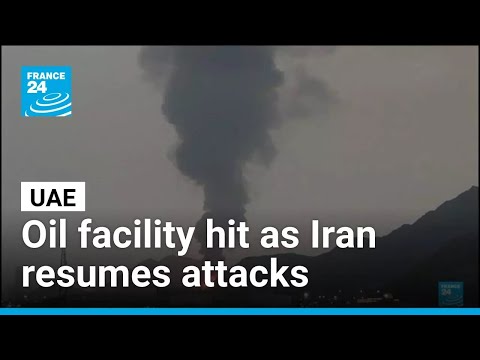
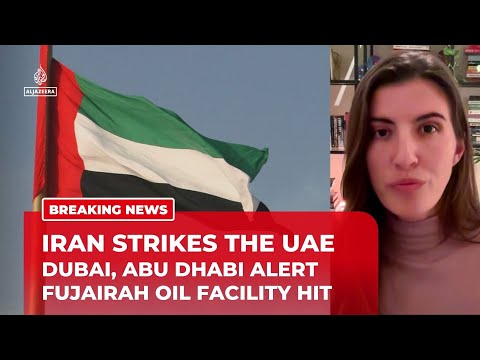
The ceasefire draft that leaked in May became real on June 17, when Trump and Iranian President Masoud Pezeshkian signed a memorandum of understanding by video call, giving both sides 60 days to reach a final deal. Iran agreed not to build nuclear weapons under the pact. The truce broke on July 13: Iran struck two UAE tankers in Omani waters with cruise missiles, killing an Indian crew member, and the US resumed strikes on Iran and reimposed its naval blockade.
The 60-day window expired August 17 with no deal. Trump refused to extend it, telling Iran to 'put up the white flag of surrender,' and posted a map claiming the Strait of Hormuz as 'new US territory.' Ship traffic through the strait has fallen to roughly 10% of pre-war levels, and on August 19 the UAE cut all trade and financial ties with Iran after accusing Tehran of firing missiles at Abu Dhabi.
Why it matters
Hormuz traffic has collapsed to near-record lows, and the US and UAE have cut economic ties with Iran, raising odds of direct confrontation.
Questions about this story
Free account needed to ask — your question is kept and asked for you right after sign-up. Answers are public.
No questions yet — be the first to ask.
Key Indicators
549+
Ballistic missiles intercepted
Cumulative since strikes began February 28; last officially confirmed UAE Ministry of Defence total, as of May 4. Fighting paused for the June-July truce, then resumed July 13.
2,260+
Drones intercepted
UAE air defenses' last officially confirmed cumulative total, as of May 4, before the June-July ceasefire and its later collapse.
922,000
Barrels per day offline
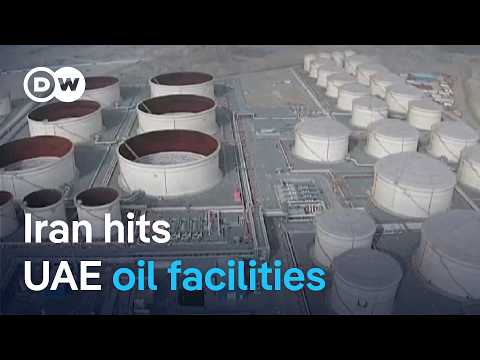
Capacity of the ADNOC Ruwais refinery, idled since March strike damage; Fujairah refinery also remains shut.
13
Deaths to date
Two Emirati military, eleven foreign nationals; 227 injured. Does not include an Indian tanker crew member killed July 13 in Omani waters during the strike on two UAE-flagged vessels.
~10%
Hormuz oil flow vs. pre-war
Ship transits fell to a five-day average of about 13 vessels a day in mid-August, roughly 90% below the pre-war average of 130, per shipping tracker Kpler, as the US-Iran deadline lapsed.
174
Days of strikes
From the opening barrage on February 28 through August 20.
23 events
Latest: August 18th, 2026 · 4 weeks ago
Showing 8 of 23
JK to step
Tap a bar to jump to that date
Jump to
August 2026
Trump claims Hormuz as 'new US territory'; UAE reports Iranian missiles fired at Abu Dhabi
LatestStrike
Trump posted a map on Truth Social labeling the strait 'New US Territory.' The UAE said two Iranian ballistic missiles were fired at the country, the first such attack since May; both fell into the sea and Iran denied responsibility.
60-day US-Iran deadline expires; Trump refuses extension, threatens Oman
Diplomacy
Trump said the US would not extend the memorandum and told Iran to 'put up the white flag of surrender.' He threatened to bomb Oman if it interfered with Hormuz negotiations, and claimed a direct back-channel to the IRGC, which the IRGC denied.
Hormuz ship traffic falls near three-month low
Economic
Transits fell to a five-day average of roughly 13 vessels a day, down about 90% from the pre-war average of 130, as the 60-day MOU deadline approached without a deal.
July 2026
US strikes Iran again after Trump vows to hit 'very hard'
Strike
US Central Command launched further strikes on Iranian targets tied to attacks on Gulf shipping, continuing the campaign begun July 13.
US reimposes naval blockade of Iranian ports
Military
US Central Command resumed its blockade of vessels transiting to and from Iranian ports, effective 4pm ET.
Ceasefire collapses: Iran strikes two UAE tankers, US resumes strikes
Strike
Iranian cruise missiles hit UAE-flagged tankers Mombasa and Al Bahiyah in Omani waters, killing one Indian crew member and injuring eight others. Trump notified Congress that 'limited' US military action against Iran had resumed; oil prices jumped more than 9%.
June 2026
Rubio tours Gulf capitals to sell the MOU
Diplomacy
Secretary of State Marco Rubio visited the UAE, Kuwait, and Bahrain, telling allies the Strait of Hormuz would stay open to all without tolls. Saudi Arabia said it had 'no details' on a proposed $300 billion Iran reconstruction fund.
Trump and Pezeshkian sign 60-day US-Iran memorandum
Diplomacy
The two presidents signed a memorandum of understanding by video call. Iran reaffirmed it would not pursue nuclear weapons and agreed to down-blend its enriched uranium stockpile under IAEA supervision.
May 2026
Trump calls off planned Iran strike at Gulf allies' request
Diplomacy
Trump announced he was postponing a 'scheduled attack of Iran' after Qatar, Saudi Arabia, and the UAE asked for two to three days to finalize a deal with Tehran. He kept US forces on standby 'to go forward with a full, large scale assault of Iran, on a moment's notice.'
US strikes Qeshm Island and Bandar Abbas after Iran attacks US destroyers
Strike
Iran launched missiles, drones, and small boats at USS Truxtun, USS Rafael Peralta, and USS Mason transiting the Strait of Hormuz. No US assets were struck. CENTCOM responded with strikes on IRGC missile and drone launch sites and command facilities at Qeshm Island and Bandar Abbas.
Trump pauses Operation Project Freedom
Military
Trump halted the US Navy's commercial vessel escort mission through the Strait of Hormuz, citing 'great progress' toward a deal with Iran. The pause came one day after the second consecutive day of Iranian strikes on the UAE.
Second day of strikes; UAE shifts schools to remote learning
Strike
UAE air defenses fire again; Ministry of Education closes all schools and universities through Friday. Hegseth says ceasefire still intact; Trump will decide if violated.
US begins escorting commercial vessels through Hormuz
Military
Operation aimed at clearing ships stranded in the Gulf since the April blockade.
Iranian drone ignites Fujairah refinery fire
Strike
First strike on UAE soil since the April 8 ceasefire. UAE intercepts 12 ballistic missiles, 3 cruise missiles, 4 drones; one drone gets through. Three injured.
April 2026
Trump extends ceasefire indefinitely
Diplomacy
Citing 'seriously fractured' Iranian government; no time frame given.
Two-week pause in hostilities; Iran demands sanctions relief and recognition of Hormuz sovereignty, US demands end to nuclear program.
March 2026
UAE revokes Iranian residency permits
Diplomatic
Embassy in Tehran already closed; Iranian schools de-licensed days earlier.
Two Emirati airmen killed
Casualties
Helicopter crashes during air defense operations; first UAE military deaths of the war.
Mojtaba Khamenei named Supreme Leader of Iran
Political
Iran's Assembly of Experts elected Mojtaba Khamenei as the Islamic Republic's new Supreme Leader, reportedly under IRGC pressure. He is the son of the slain Ali Khamenei, who had reportedly opposed dynastic succession.
Ruwais refinery damaged
Strike
ADNOC's flagship 922,000 bpd refinery is hit and idled; recovery estimated at one year.
Dubai International Airport struck
Strike
Iranian missiles target the world's second-busiest international hub. Damage limited; flights suspended.
February 2026
War begins; first Iranian strikes reach UAE
Conflict
US and Israel launch surprise strikes on Iran, killing Supreme Leader Ali Khamenei. Iran returns fire across the region, including on UAE targets.
Scenarios
1
Trump declares ceasefire broken, US strikes Iran directly
Possible
Discussed by: Council on Foreign Relations analysts; Pentagon-aligned commentators on CNN and CNBC
A successful Iranian hit on a US Navy escort, a US-flagged tanker, or a fully-loaded Fujairah storage tank would likely flip the political calculus. Trump's framing—that he alone decides if the ceasefire holds—reads as a deliberately preserved trigger. A US strike package would target IRGC missile and drone production, not population centers, and the immediate Iranian response would aim at US bases in Bahrain and Qatar.
2
Strikes wind down under combined US escort and air-defense weight
Possible
Discussed by: Gulf-based defense analysts; House of Commons Library briefing
The UAE's interception rates are high enough that Iran is paying down its missile inventory for diminishing returns. If US escorts in Hormuz force the IRGC to choose between hitting US warships—and inviting direct retaliation—or accepting the de facto reopening of Gulf shipping, the campaign may taper without a formal end. Pakistan continues quiet mediation.
3
Strait of Hormuz fully closes
Uncertain
Discussed by: EU Council President António Costa; energy market analysts at S&P Global and Goldman Sachs
If Iran shifts from ballistic strikes to mining the Strait or attacking transiting tankers directly, the bypass route through Fujairah—now a proven target—loses its insurance value and shippers stay home. Brent moves on the headline alone. The US escort mission becomes a clearing operation, raising the odds of direct kinetic exchange.
4
Gulf states formalize an integrated air defense pact
Two months of strikes have already produced informal coordination among UAE, Saudi, US, UK, French, and Australian assets. A formal Gulf Cooperation Council (GCC) air defense framework, long discussed and long blocked by intra-Gulf disputes, becomes politically viable when the alternative is taking ballistic missiles alone. This would be the most durable structural change to come out of the war.
5
US and Iran sign framework deal, Hormuz partially reopens
Possible
Resolves by Jun 15, 2026
Discussed by: US Secretary of State Marco Rubio; Qatar, Saudi Arabia, and UAE mediators; Al-Arabiya leaked draft, May 22
The leaked draft calls for an immediate, comprehensive ceasefire and guaranteed freedom of navigation through the Strait of Hormuz, with Iran's nuclear program, enriched uranium stockpile, and missile limits deferred to follow-on talks within seven days. If signed, Brent crude — at $103 on May 22 after falling from a roughly $114 peak — would drop further as Hormuz traffic recovers. Rubio has flagged permanent Iranian Hormuz toll claims as a dealbreaker.
6
Iran mines or blockades Hormuz after declaring a 'fully offensive' posture
Possible
Resolves by Q3 2026
Discussed by: IRGC officials in Iranian state media; Lloyd's List Intelligence shipping analysts
An IRGC commander said Iran's forces have shifted to a more offensive defense of the strait after the MOU expired without a deal. If Iran moves from missile strikes to mining shipping lanes or blocking transits outright, the current 10%-of-normal traffic could drop to zero, cutting off the last trickle of Gulf oil exports.
7
US and Iran return to talks despite the lapsed memorandum
Trump says Washington has a direct line to the IRGC even as he refuses to extend the MOU; the IRGC calls that claim fantasy. Oman has mediated past rounds, but Trump's threat to bomb it if it 'gets in the way' complicates that channel. A new round of talks, formal or informal, could still restart before winter.
Historical Context
3 moments from history that rhyme with this story — and how they unfolded.
1 of 3
1984-1988
Tanker War (1984-1988)
During the Iran-Iraq War, both sides attacked oil tankers in the Persian Gulf. Iran's strikes on Kuwaiti and Saudi shipping prompted Kuwait to ask the US to reflag its tankers under American colors. The US Navy's Operation Earnest Will escorted 259 reflagged tanker convoys through the Gulf and engaged Iranian forces directly in Operation Praying Mantis in April 1988.
Then
Praying Mantis sank or crippled half the Iranian Navy in a single day. Iran accepted a UN ceasefire with Iraq three months later.
Now
Established a 40-year doctrine that the US Navy will escort Gulf shipping under fire, and that Iran loses badly in any direct surface-fleet engagement with the US.
Why this matters now
Trump's May 4 escort order is the same playbook: Operation Earnest Will rebooted. The 1988 precedent is also why Iran's current campaign avoids US warships and targets Gulf-state infrastructure instead—the lesson Tehran took from Praying Mantis.
2 of 3
January-February 1991
Iraqi Scud strikes on Saudi Arabia and Israel (1991)
During the Gulf War, Iraq fired 88 Scud ballistic missiles at Saudi Arabia and Israel, attempting to fracture the US-led coalition by drawing Israel into the war. US-deployed Patriot batteries intercepted some; one Scud killed 28 American soldiers in a Dhahran barracks.
Then
Israel stayed out of the war under intense US pressure. The coalition held.
Now
Cemented ballistic missile defense as a core US security commitment to Gulf partners and demonstrated that wars can be widened—or contained—by who absorbs the missiles silently.
Why this matters now
The 2026 strikes are a deliberate test of whether the UAE will absorb attacks the way Israel did in 1991 or escalate independently. So far, the UAE is absorbing—relying on Western air defense reinforcement rather than launching its own offensive operations against Iran.
3 of 3
September 2019
Abqaiq-Khurais drone attack (September 2019)
Eighteen drones and seven cruise missiles, attributed by US intelligence to Iran, struck Saudi Aramco's Abqaiq processing facility and the Khurais oil field. The strikes briefly took 5.7 million barrels per day offline—roughly 5% of global supply—and exposed how badly Saudi Patriot batteries had missed.
Then
Brent crude jumped roughly 15% on the open, the largest single-day spike on record at the time. Saudi production recovered within weeks.
Now
Triggered the Gulf states' multi-billion-dollar buildout of layered air defenses—THAAD, expanded Patriot, drone interceptors—the same network now absorbing the 2026 strikes.
Why this matters now
Abqaiq is why the UAE is intercepting at the rates it is in 2026. It also set the template Iran is now using on a much larger scale: cheap drones and cruise missiles against fixed energy infrastructure, calibrated to inflict economic damage without crossing thresholds that force a US ground response.