Iranian strikes on Gulf airports expose vulnerability of global aviation's most connected hub
Built World
Iranian strikes continue into third week with March 16 fuel tank attack; Gulf airspace remains partially closed as airlines resume limited service and Strait of Hormuz traffic collapses to single-digit daily transits
Iranian strikes continue into third week with March 16 fuel tank attack; Gulf airspace remains partially closed as airlines resume limited service and Strait of Hormuz traffic collapses to single-digit daily transits
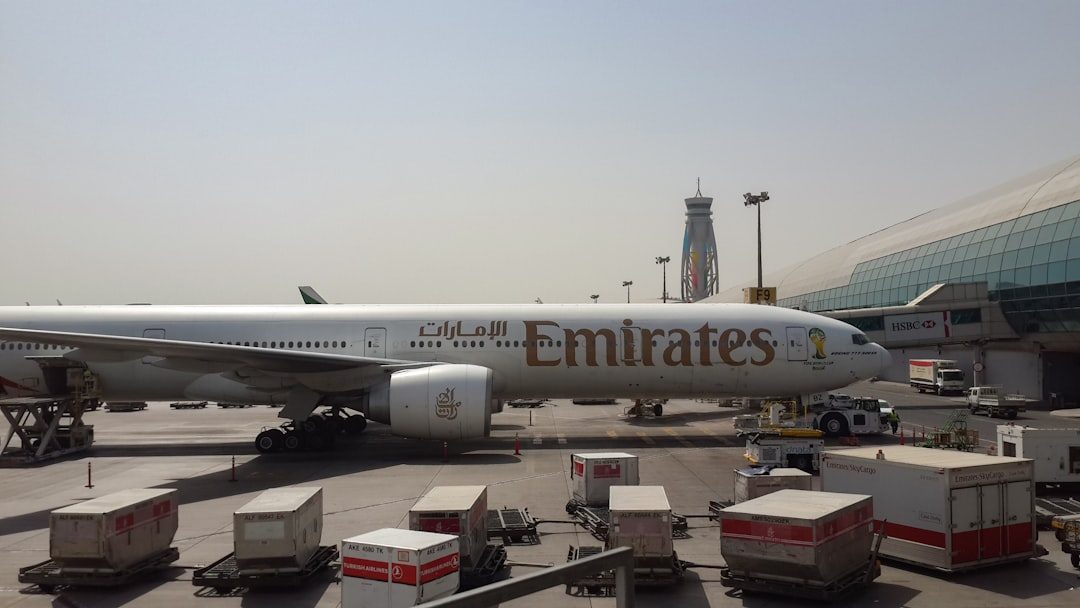
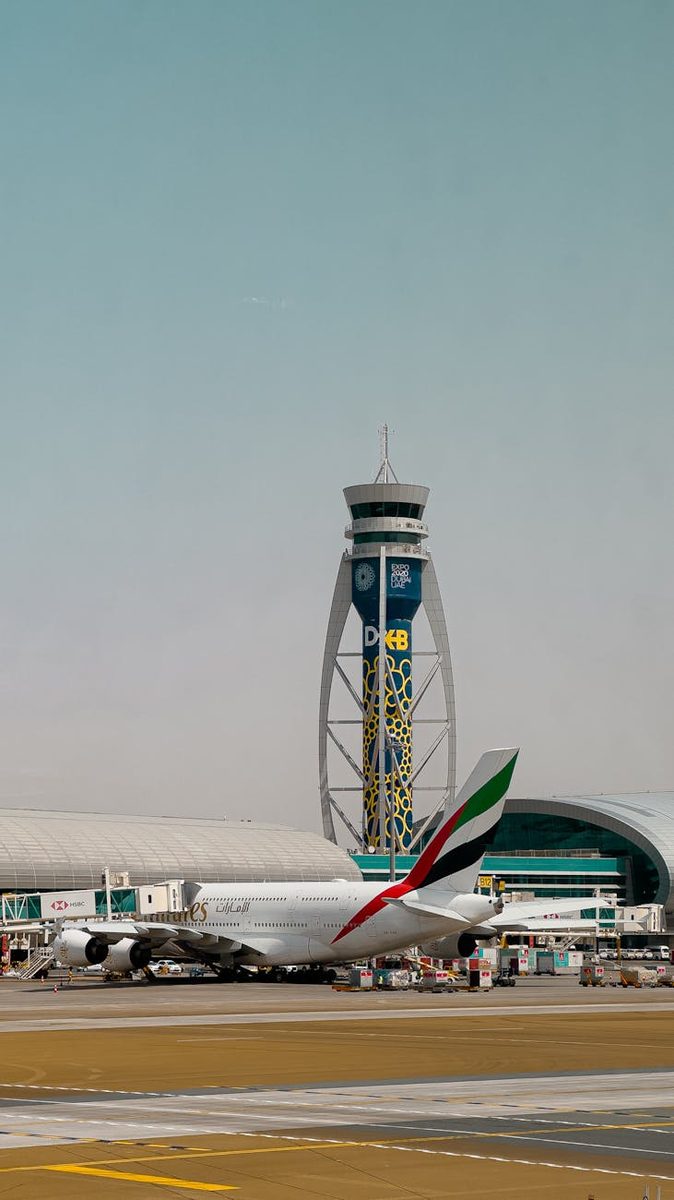
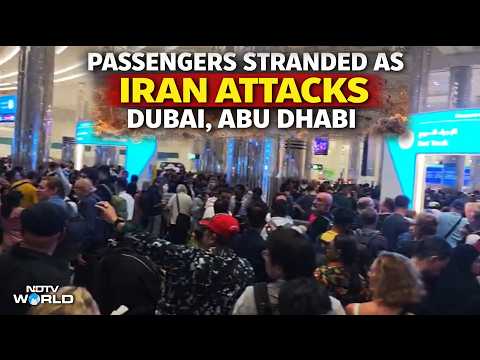
Dubai International Airport processed 95.2 million passengers in 2025 and became the world's busiest in January 2026. On March 1, Iranian missiles and drones struck its terminals, forcing full evacuation. On March 16—16 days into the conflict—another drone hit a fuel tank, reigniting flight suspensions and forcing additional Emirates cancellations despite partial airspace reopening. Abu Dhabi, Doha, and Kuwait shut down simultaneously on February 28, severing three major Gulf hubs that route long-haul traffic between Europe, Asia, and Africa.
The physical damage to Dubai's Terminal 3 and repeated strikes through mid-March mark the first time a major global aviation hub has faced state strikes since the 1991 Gulf War. Over 19,000 flights were disrupted initially; as of March 16, Emirates, Etihad, and flydubai have resumed limited operations, though cancellations remain common. Strait of Hormuz traffic collapsed from 120 ships per day to single-digit transits; Middle East crude loadings fell from 18.8 million barrels per day in February to 10.9 million in March. Foreign Minister Abbas Araghchi rejected ceasefire overtures March 15, saying Tehran sees 'no reason' to negotiate with the US and will fight 'for as long as it takes.'
Questions about this story
Free account needed to ask — your question is kept and asked for you right after sign-up. Answers are public.
No questions yet — be the first to ask.
Key Indicators
19,000+
Flights disrupted
Flights delayed or canceled across Middle Eastern airports since strikes began on February 28
95.2M
2025 DXB passengers
Dubai International Airport's annual passenger volume, making it the world's busiest airport by early 2026
8
Countries with airspace closures
Bahrain, Iran, Iraq, Israel, Jordan, Kuwait, Qatar, and the UAE announced full or partial airspace closures
~27%
Dubai GDP from aviation
Estimated share of Dubai's economy tied to aviation, tourism, trade, and related supply chains
1
Ships transiting Hormuz (Mar 12)
Strait of Hormuz traffic collapsed from 120 daily transits to single-digit vessels; March 12 saw only one transit
10.9M b/d
Middle East crude loadings (March)
Oil loadings fell 42% from 18.8 million barrels per day in February to 10.9 million in March
Images from Openverse under Creative Commons licenses.
Videos from YouTube.
Voices
Curated perspectives — historical figures and your fellow readers.
Ayn Rand
(1905-1982) ·Cold War · philosophy
Fictional AI pastiche — not real quote.
"When men of the mind — the engineers, pilots, and traders who built Dubai into the world's crossroads of commerce — are grounded by the missiles of those who produce nothing and demand everything, observe which side calls it a *victory*."
0% found this insightful
Ever wondered what historical figures would say about today's headlines?
Sign up to generate historical perspectives on this story.
16 events
Latest: March 16th, 2026 · 6 months ago
Showing 8 of 16
JK to step
Tap a bar to jump to that date
Jump to
March 2026
Iranian drone strikes fuel tank near Dubai airport; flights suspended again
LatestMilitary
A drone struck a fuel tank near Dubai International Airport, igniting a fire. Dubai Civil Defence brought the blaze under control with no reported injuries. Emirates cancelled additional flights despite partial airspace reopening earlier in the day.
Iran rejects ceasefire; Foreign Minister says no reason to negotiate with US
Diplomatic
Iranian Foreign Minister Abbas Araghchi told CBS News that Tehran sees 'no reason' to negotiate with the United States and will continue fighting 'for as long as it takes.' He dismissed Trump's claims that Iran was seeking a deal as false.
Strait of Hormuz traffic collapses to single-digit daily transits
Economic
Only one vessel (bulk carrier Broad Rich) transited the Strait of Hormuz on March 12, down from seven the previous day. Middle East crude loadings fell to 10.9 million barrels per day in March, down 42% from 18.8 million in February.
Gulf Air reroutes through Saudi Arabia as Bahrain airspace remains closed
Aviation
Gulf Air announced temporary commercial operations via King Fahad International Airport in Dammam, Saudi Arabia, as Bahrain's airspace closure persisted into the second week.
Airlines resume limited operations after 10-day shutdown
Aviation
Emirates, Etihad Airways, flydubai, and Air Arabia began operating reduced services on March 6–9. Emirates focused on long-haul trunk routes (London, Sydney, Delhi) while advising transit passengers to avoid Dubai unless contacted. Etihad's provisional schedule covered 70 destinations from Abu Dhabi but remained subject to same-day airspace clearances.
Second wave of Iranian strikes damages Dubai airport terminals
Military
A drone struck Terminal 3 at Dubai International Airport, prompting a full evacuation. Four airport staff were injured. A second attack followed hours later. Abu Dhabi's Zayed International Airport was also hit, killing one person and injuring seven.
Flight disruptions surpass 19,000 across the Middle East
Aviation
Cumulative delays and cancellations exceeded 19,000 flights. Emirates and flydubai extended suspension through March 2 at 3pm UAE time. Hundreds of thousands of travelers remained stranded.
February 2026
US and Israel launch joint strikes on Iran
Military
Israel (Operation Roaring Lion) and the US (Operation Epic Fury) launched coordinated strikes targeting Iranian military facilities, leadership, and nuclear infrastructure. Supreme Leader Khamenei was killed in strikes on Tehran.
Iran launches retaliatory strikes across Gulf region
Military
The IRGC fired ballistic missiles and drones at Israel and US military bases in Qatar, Kuwait, Bahrain, and the UAE. Civilian infrastructure in Dubai, including the Burj Al Arab hotel and Jebel Ali Port, was also struck.
Eight countries close airspace; Gulf hub airports suspend operations
Aviation
Bahrain, Iran, Iraq, Israel, Jordan, Kuwait, Qatar, and the UAE closed airspace. Dubai, Abu Dhabi, and Doha airports halted all flights. Over 1,800 flights were canceled on the first day alone.
Iran effectively closes Strait of Hormuz to commercial shipping
Economic
The IRGC broadcast warnings banning transit through the strait. Major shipping companies and insurers withdrew, stranding over 150 freight vessels including oil tankers.
Trump accuses Iran of reviving nuclear weapons program
Political
During a State of the Union address, President Trump accused Iran of restarting efforts to build nuclear weapons.
US military buildup reaches largest scale since 2003 Iraq invasion
Military
The US force posture in the Middle East was described as the largest since the 2003 invasion of Iraq.
US and Iran hold indirect nuclear talks in Oman
Diplomatic
Iran and the United States held indirect nuclear negotiations in Muscat, Oman's capital, amid escalating tensions.
January 2026
Dubai International overtakes Atlanta as world's busiest airport
Aviation
DXB officially surpassed Hartsfield-Jackson Atlanta as the world's busiest airport by passenger volume, handling 95.2 million travelers in 2025.
December 2025
Mass anti-government protests erupt across Iran
Political
The largest protests since the 1979 revolution spread to over 100 Iranian cities, driven by economic crisis and the collapse of the rial.
Scenarios
1
Gulf airports reopen within days; backlog clears over weeks
Uncertain
Discussed by: Aviation analysts at Cirium and industry observers at The National; conditional on ceasefire or de-escalation
If hostilities pause and no further strikes hit Gulf infrastructure, UAE and Qatari authorities could reopen airspace within days, similar to the two-day closure pattern after the September 11, 2001 attacks in the US. However, physical damage to Dubai's Terminal 3 and Abu Dhabi's Zayed airport would require repairs before full capacity returns. Airlines estimate a backlog of tens of thousands of rebookings. Cargo operators would gradually shift belly-hold freight back from emergency charter arrangements. This scenario depends entirely on whether Iran's retaliatory campaign has concluded.
2
Prolonged conflict forces permanent rerouting of global air traffic away from Gulf hubs
Possible
Discussed by: Bloomberg aviation coverage; Center for Strategic and International Studies (CSIS) regional analysis
If strikes continue or airspace remains closed for weeks, airlines would be forced to establish alternative routing patterns through Central Asia, the southern Indian Ocean, or expanded European hubs. Carriers already face added costs of $6,000–$7,500 per flight hour for detours around Gulf airspace. A sustained disruption would accelerate the shift of connecting traffic to Istanbul, Singapore, and European airports, potentially diminishing Dubai's status as the world's preeminent aviation hub. Aviation contributes roughly 27% of Dubai's gross domestic product (GDP) when including tourism and trade, making this an existential economic threat to the UAE.
3
Simultaneous air and sea disruption triggers global supply chain crisis
Possible
Discussed by: Bloomberg and Kpler commodity analysts; Lloyd's List shipping coverage
The combination of Gulf airspace closures and the effective shutdown of the Strait of Hormuz—which handles roughly 20% of global oil supply—creates a dual chokepoint scenario unprecedented in modern logistics. If both disruptions persist beyond a week, air freight costs would spike as capacity through Gulf hubs remains offline, oil prices could surge well above current projections, and manufacturers dependent on Gulf-routed supply chains would face cascading delays. Insurance markets would reprice risk for the entire region, potentially making Gulf routing commercially unviable even after physical infrastructure reopens.
4
Gulf states invest heavily in air defense and hardened infrastructure after ceasefire
Likely
Discussed by: Breaking Defense analysis; TIME reporting on Gulf security posture
Once hostilities end, the UAE, Qatar, and Kuwait would face intense political and economic pressure to ensure their aviation infrastructure can never be disrupted this way again. This could mean massive investment in missile defense systems, hardened terminal construction, and dispersed airport capacity. The strikes shattered the Gulf states' carefully cultivated image of stability that underpinned their emergence as global business and transit hubs. Restoring confidence among airlines, insurers, and travelers would require demonstrable defensive capability, fundamentally changing the cost structure of Gulf aviation.
5
Prolonged stalemate hardens into new regional equilibrium
Possible
Discussed by: Understanding War Institute analysis (March 14); regional analysts citing mediation failures by Oman and Egypt
If neither Iran nor the US shows willingness to negotiate (as of March 15, both have rejected ceasefire talks), the conflict could settle into a grinding stalemate where sporadic strikes continue but neither side escalates to full-scale war. Airlines would operate under permanent uncertainty, with contingency routing becoming standard. The Strait of Hormuz would remain functionally closed to commercial traffic, forcing a permanent shift in global oil supply chains toward alternative routes and suppliers. This scenario would reshape Gulf aviation's role in global logistics without a dramatic resolution—a slow erosion rather than a sharp break.
6
March 16 fuel tank strike triggers third major airspace closure
The March 16 drone strike on a fuel tank near Dubai International Airport could force authorities to reimpose full airspace closure if damage assessment reveals structural risk or if the strike is interpreted as a signal of renewed Iranian campaign intensity. This would reverse the fragile progress airlines made in resuming limited operations on March 6–9 and extend the disruption into a fourth week. Such a closure would devastate the backlog-clearing efforts and force a complete recalibration of alternative routing strategies.
Historical Context
3 moments from history that rhyme with this story — and how they unfolded.
1 of 3
August 1990
Iraqi invasion of Kuwait and airport seizure (1990)
When Iraq invaded Kuwait on August 2, 1990, Iraqi forces seized Kuwait International Airport within hours. A British Airways 747 that landed during the invasion found the airport deserted, with all other flights already canceled or diverted. The airport became an Iraqi military logistics hub for the duration of the occupation.
Then
Kuwait's aviation infrastructure was destroyed during the occupation and subsequent liberation. Passengers and crew from the stranded British Airways flight were taken hostage.
Now
The Gulf War prompted Gulf states to invest heavily in diversified military alliances with Western powers, hosting US bases in Qatar, Bahrain, Kuwait, and the UAE—the same bases Iran targeted in its 2026 retaliation.
Why this matters now
The 1990 invasion destroyed one small nation's airport. The 2026 strikes simultaneously damaged the world's busiest international airport and disrupted operations at multiple Gulf hubs, demonstrating how the region's transformation into a global aviation crossroads also made it a far more consequential target.
2 of 3
September 2001
US airspace closure after September 11 attacks (2001)
After the September 11 terrorist attacks, the Federal Aviation Administration (FAA) ordered the first-ever complete shutdown of US airspace. FAA National Operations Manager Ben Sliney, on his first day in the role, ordered all 4,500 airborne commercial flights to land at the nearest airport. The sky was nearly empty by noon.
Then
Airspace reopened two days later on September 13 with stringent new security measures. Airlines faced immediate financial crisis, with several carriers filing for bankruptcy within months.
Now
The closure reshaped aviation security permanently, creating the Transportation Security Administration (TSA) and fundamentally changing the passenger experience. The airline industry took years to recover financially.
Why this matters now
The 9/11 closure affected one country's domestic airspace for two days. The current Gulf disruption affects eight countries' airspace simultaneously, involves physical damage to terminal infrastructure, and has no clear timeline for resolution—making it potentially more consequential for global aviation networks.
3 of 3
April 2010
Eyjafjallajokull volcanic eruption grounds European aviation (2010)
Iceland's Eyjafjallajokull volcano erupted, sending an ash cloud across European airspace. Aviation authorities closed airspace across 23 European countries for six days, canceling over 100,000 flights and stranding 10 million passengers. The International Air Transport Association estimated airline losses at $1.7 billion.
Then
Airlines suffered massive financial losses. Stranded passengers overwhelmed ground transportation and hotels across Europe. Perishable cargo, particularly flowers from Africa, rotted in warehouses.
Now
European aviation authorities developed new ash-density protocols to avoid blanket closures. Airlines invested in contingency routing and the International Civil Aviation Organization established global coordination procedures for airspace disruptions.
Why this matters now
The volcanic disruption was the closest modern precedent for the scale of the Gulf shutdown—but it was caused by nature, not state military action, and involved no physical damage to airports. The Gulf crisis combines the routing disruption of the volcanic event with direct infrastructure destruction, compounded by simultaneous disruption to sea freight through the Strait of Hormuz.