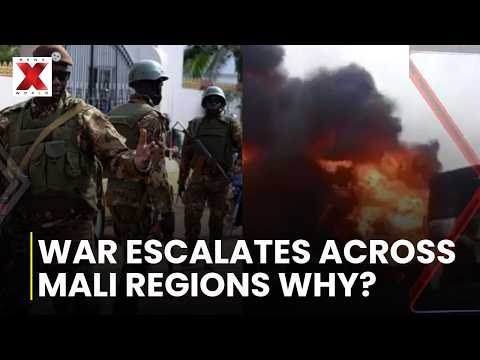
President Assimi Goïta assumed the defence portfolio on May 4 by presidential decree, 11 days after FLA rebels and JNIM militants struck five Malian cities on April 25, 2026. His predecessor Sadio Camara was killed in a car-bomb assassination a week earlier; Goïta named Army Chief of Staff General Oumar Diarra as minister delegate.
A military tribunal opened a criminal probe into the April 25 attacks and identified five suspects, including three active-duty soldiers, while also accusing exiled politician Oumar Mariko of involvement in the planning. In the days that followed, security forces abducted several critics and lawyers; prominent Bamako attorney Mountaga Tall was seized from his home by hooded men on May 2. Amnesty International called for Tall's immediate release, and the UN human rights office warned of 'gravely concerning' reports of extrajudicial killings by Malian security forces.
JNIM enforced its Bamako blockade by May 1; checkpoints on three of six main routes prompted Africa Corps and the Malian army to escort more than 800 fuel tankers through the southern gate. On May 6, JNIM attacked the Kenieroba Central Prison (60km southwest, 2,500 prisoners, 72 high-value detainees), setting fires to food trucks; Malian forces repelled the assault. Approximately 130 Malian soldiers are held captive in Kidal; Africa Corps retreated to Anefis, FLA has named Gao, Timbuktu and Menaka as targets, and Mali still lacks an independent intelligence chief.
Why it matters
Russia's Mali project is unraveling: five towns and a gold mine lost, Bayraktar drones captured, and two top security officials dead.
Questions about this story
Free account needed to ask — your question is kept and asked for you right after sign-up. Answers are public.
No questions yet — be the first to ask.
Key Indicators
5
Cities hit simultaneously
Bamako, Kati, Sevare, Gao and Kidal struck in the same overnight wave on April 25.
Kidal
Fallen — FLA in full control
Africa Corps and FAMa withdrew under a negotiated agreement on April 27; FLA declared the city 'totally free.' FAMa repositioned to Anefis, ~100 km south. Approximately 130 Malian soldiers remain held captive there.
Tessalit
Fallen — Bayraktar drone base seized
FLA rebels seized Tessalit on April 28, including the Bayraktar TB2 drone control center. Russian-Malian forces abandoned the base and retreated south.
5 towns + gold mine
Territory lost since April 25
Kidal, Tessalit, Aguelhok (Kidal Region), Ber (Tombouctou Region), and Tessit (Gao Region) have all fallen. In Tessit, Malian troops surrendered their weapons for safe passage. The Intahaka gold mine — described as Mali's most important economic site — was also ceded.
Gao, Timbuktu, Menaka
FLA's declared next targets
FLA spokesperson Ramadane stated on April 29 that rebels intend to take these three cities next. A JNIM ambush outside Gao on April 30 killed 10 pro-government militiamen, signalling pressure is already building.
Enforced
JNIM Bamako blockade — checkpoints confirmed May 1
After declaring the blockade on April 29, JNIM set up physical checkpoints on at least 3 of 6 main routes into Bamako by May 1. Africa Corps and FAMa escorted 800+ fuel tankers through on May 1. On May 6 JNIM attacked Kenieroba Prison and torched food trucks, extending the blockade from fuel to food.
~130
Malian soldiers held captive — Kidal
Approximately 130 Malian soldiers are held prisoner by FLA fighters in Kidal after Russian forces withdrew. Al Jazeera footage published May 4 showed dozens stripped of their uniforms. Their fate is a key rebel bargaining chip.
400%
Fuel price spike since September 2025
JNIM's road blockade on fuel routes from Senegal and Côte d'Ivoire preceded the kinetic offensive and is now being enforced with physical checkpoints.
Killed
Defence Minister Camara + family
Sadio Camara confirmed dead April 26 via suicide car bomb — along with his wife and two granddaughters. State funeral April 30. Succeeded May 4 by Goïta himself, who assumed the portfolio by presidential decree.
Reportedly killed
Intelligence chief Koné
Modibo Koné, head of Mali's National State Security Agency, reportedly died April 26 of gunshot wounds from the Kati attack. No successor announced; Mali has no functioning intelligence chief.
Self-appointed
Goïta assumes defence portfolio — May 4
By presidential decree on May 4, Goïta added the defence ministry to his existing roles as president and commander-in-chief. Army Chief of Staff General Oumar Diarra was named minister delegate.
~6,000
Estimated JNIM fighters
Analyst estimate for the al-Qaeda affiliate, now confirmed as fighting in a formal pre-arranged alliance with the FLA.
41 events
Latest: May 6th, 2026 · 4 months ago
Showing 8 of 41
JK to step
Tap a bar to jump to that date
Jump to
May 2026
JNIM attacks Kenieroba Central Prison near Bamako; food supply trucks torched
LatestConflict
JNIM fighters stormed the Kenieroba Central Prison — a high-security complex housing 2,500 prisoners including approximately 72 high-value detainees — located about 60km southwest of Bamako. Malian armed forces repelled the attack. Separately, JNIM fighters set fire to food-supply trucks heading to Bamako, extending the group's blockade from fuel and movement to food.
UN says reports of extrajudicial killings by Malian security forces 'gravely concerning'
Human Rights
The UN human rights office publicly stated that reports of extrajudicial killings and abductions allegedly carried out by Malian security forces following the April 25–26 attacks were 'gravely concerning,' and called for any investigation into the attacks to comply fully with international human rights law.
~130 Malian soldiers confirmed held captive in Kidal; 2,000 paramilitaries deployed around Bamako
Conflict
Al Jazeera published exclusive footage showing approximately 130 Malian soldiers stripped of their uniforms and held prisoner by FLA fighters in Kidal after Russian forces withdrew. Separately, Al Jazeera reported that approximately 2,000 paramilitary fighters had been deployed around Bamako with a mandate to protect the junta's military leadership.
Goïta formally assumes defence portfolio by presidential decree
Political
President Assimi Goïta issued a decree appointing himself Minister of Defence and Veterans Affairs — adding it to his roles as head of state and commander-in-chief — more than a week after the car-bomb assassination of predecessor Sadio Camara. Army Chief of Staff General Oumar Diarra was named minister delegate.
Mali probes soldiers for April 25 collusion; lawyer Mountaga Tall abducted in Bamako
Political
A military tribunal announced five suspects — including three active-duty soldiers, one retired soldier, and one killed in fighting — for alleged involvement in planning the April 25 attacks; exiled politician Oumar Mariko was also accused. On the same day, prominent lawyer and junta critic Mountaga Tall was seized from his Bamako home by hooded men, his wife assaulted when she tried to record the abduction. Three relatives of Oumar Mariko had been taken a day earlier.
JNIM enforces Bamako blockade with physical checkpoints; Africa Corps escorts 800-tanker fuel convoy through
Conflict
JNIM fighters set up physical checkpoints on at least three of the six main routes into Bamako, translating the April 29 blockade declaration into active enforcement. Africa Corps and FAMa responded the same day by escorting a convoy of more than 800 fuel tankers into the capital through the southern gate under helicopter air cover, preventing an immediate fuel-supply collapse.
JNIM claims Hombori military base in central Mali; Africa Corps denies
Conflict
JNIM claimed it had captured the military base at Hombori in central Mali's Mopti region. Africa Corps denied the claim, stating it had resupplied Malian troops at the base by helicopter and evacuated wounded personnel — the contradictory accounts could not be independently verified.
April 2026
Goïta attends Camara state funeral; Sahel Confederation defence ministers present
Political
Thousands paid tribute to slain Defence Minister Sadio Camara at the Military Engineering Parade Ground in Bamako, in a ceremony broadcast live on national television. President Goïta attended in combat fatigues and bowed before the flag-draped coffin. The defence ministers of Niger and Burkina Faso attended alongside Camara's family, under tight security with checkpoints blocking access roads.
JNIM ambushes and kills 10 pro-government militiamen outside Gao
Conflict
Jihadist fighters ambushed and killed ten pro-government militiamen in an attack outside Gao, signalling that rebel pressure on Mali's second city is intensifying before any formal FLA ground advance has begun.
Goïta delivers first televised address; declares 'situation under control'
Political
In his first television address since the April 25 attacks, Goïta declared 'the situation is under control' and pledged the 'complete neutralisation of the groups involved.' He also visited a hospital to see wounded soldiers and expressed condolences to Camara's family.
JNIM declares total blockade of Bamako, banning all entry
Conflict
JNIM spokesperson Bina Diarra announced in a video that all roads into Bamako are now closed — those inside may leave but entry is forbidden 'on pain of death,' with the same restriction applying to the Kati garrison town. AFP could not independently verify whether the blockade was being enforced.
France urges nationals to leave Mali 'as soon as possible'
Diplomatic
France issued an urgent travel advisory calling the security situation 'extremely volatile' and urging all French nationals in Mali to leave immediately — the first evacuation-level advisory from a major Western country since the April 25 attacks.
FLA vows 'regime will fall'; announces Gao, Timbuktu, Menaka as next targets
Conflict
FLA spokesperson Mohamed Elmaouloud Ramadane, speaking to AFP from Paris, declared 'the regime will fall, sooner or later' and stated the rebel coalition intends to seize Gao, Timbuktu and Menaka. A field commander separately said 'after Gao, Timbuktu will be easy to fall.' FLA also renewed its call for Russian forces to withdraw from Mali.
Goïta makes first public appearance; meets Russian Ambassador Gromyko
Political
President Goïta broke three days of silence with his first confirmed public appearance since the April 25 attacks, receiving Russian Ambassador Igor Gromyko at the presidential palace in Bamako. His office confirmed he had remained in Mali throughout, dispelling reports that he had fled to Niger. The meeting reaffirmed the Russia-Mali security partnership.
Mali PM Maiga urges calm; alleges foreign financing behind attacks
Political
Prime Minister Abdoulaye Maiga visited wounded soldiers in Kati and called on citizens 'not to give in to panic,' describing the attacks as 'cowardly and barbaric.' He said the scale of the coordinated offensive 'suggests foreign financing,' without naming a source.
Tessalit falls; rebels seize Bayraktar TB2 drone control center
Conflict
Following the loss of Kidal, Tessalit became the next town to fall as Russian-Malian forces retreated south. FLA fighters seized the Bayraktar TB2 drone control station at the base — one of the three pillars of the junta's security strategy alongside Russian forces and the army. Rebels were photographed at the base, including next to an abandoned helicopter.
Russia frames attacks as foiled 'coup attempt,' blames Ukraine and European mercenaries
Diplomatic
Russia's Defence Ministry claimed its Africa Corps had foiled a 'coup attempt,' asserting approximately 12,000 militants were involved and had been trained by Ukrainian and European mercenary instructors — claiming forces killed over 245 militants. Deputy Foreign Minister Georgy Borisenko separately acknowledged Africa Corps suffered losses. Kremlin spokesman Dmitry Peskov said Russia wanted the situation to 'return to a peaceful and stable course.'
Africa Corps and FAMa withdraw from Kidal; FLA declares city 'totally free'
Conflict
Under a negotiated agreement, Russia's Africa Corps and Malian army troops pulled out of Kidal, evacuating wounded personnel and heavy equipment. FLA spokesperson Mohamed El Maouloud Ramadan declared the city fully under rebel control; General Oumar Diarra confirmed on state television that forces had repositioned to Anefis, roughly 100 kilometers south.
Mali junta declares two days of national mourning
Political
The ruling junta formally declared two days of national mourning following the death of Defence Minister Camara and the broader attacks. General Oumar Diarra also acknowledged the loss of Kidal on state television — the first public junta concession of territorial loss.
Relative calm returns to most of Mali outside Kidal as Goïta remains absent
Security
Reports from Bamako and other affected cities indicated a return to relative calm following the weekend's attacks. President Goïta's inner circle confirmed he was evacuated to a secure location but he has not appeared publicly; his Sahel Confederation allies in Niger and Burkina Faso are also silent.
Aguelhok, Ber and Tessit also fall; Malian troops surrender weapons for safe passage
Conflict
Beyond Kidal, Malian and Africa Corps forces also withdrew from Aguelhok (Kidal Region) and Ber (Tombouctou Region). In Tessit (Gao Region), Malian soldiers agreed to hand over their weapons in exchange for safe passage from rebel forces. The Financial Times reported Africa Corps elements also pulled back from Labbezanga near the Nigerien border amid the threat of encirclement.
Rebels seize Intahaka gold mine — Mali's most important economic site
Conflict
Africa Corps and Malian forces withdrew from the Intahaka gold mine under a negotiated arrangement, ceding to rebel forces what Russian and Malian sources describe as the country's most strategically important economic center. The loss directly threatens junta revenues at a moment when the fuel blockade is already squeezing the capital.
Fresh fighting in Kidal as FAMa and Africa Corps mount counter-operation
Conflict
Government forces backed by Russia's Africa Corps clashed with FLA and JNIM fighters still holding Kidal. An FLA spokesman declared fighters aimed to 'drive out the last Russian fighters who have taken refuge in a camp' inside the city.
FLA calls on Russia to withdraw support from Mali junta
Diplomatic
The Azawad Liberation Front publicly called on Russia to 'reconsider its support for the military junta in Bamako, whose actions have contributed to the suffering of the civilian population' — the first direct FLA appeal to Moscow.
Russia's foreign ministry estimated around 250 fighters attacked Bamako's Senou airport area, stated the attack was repelled by Africa Corps and FAMa, and expressed 'deep concern over the unfolding events in Mali.'
UN condemns attacks; EU and ECOWAS call for regional response
Diplomatic
UN Secretary-General António Guterres condemned the attacks and called for 'coordinated international support to address the evolving threat of violent extremism and terrorism in the Sahel.' The European Union denounced the offensive as terrorism; ECOWAS urged regional governments and security forces to unite against the escalating threat.
Intelligence chief Modibo Koné reportedly dies of wounds; army chief also wounded
Political
Modibo Koné, head of Mali's National State Security Agency and the country's principal internal intelligence chief, reportedly died on April 26 from gunshot wounds sustained during the JNIM assault on Kati on April 25. Army Chief of Staff Major General Oumar Diarra was also shot in the same attack but survived. If confirmed, Koné's death would mean two of Mali's three most senior security officials were killed or fatally wounded in the same 24-hour offensive.
FLA and JNIM appear to coordinate simultaneous attacks on Bamako, the Kati military base, Sevare, Gao and Kidal. The FLA says it controls Kidal; the Kati residence of Defence Minister Sadio Camara is destroyed.
November 2025
US and UK advise citizens to leave Mali
Diplomatic
Western governments evacuate non-essential staff as the fuel siege deepens and security deteriorates.
September 2025
JNIM begins fuel blockade of Bamako
Conflict
JNIM systematically interdicts tanker convoys from Senegal and Côte d'Ivoire, pushing fuel prices up roughly 400% by October.
July 2025
Goïta sworn in as president
Political
After the junta extends its mandate, Goïta takes the formal title of head of state.
January 2025
Africa Corps replaces Wagner in Mali
Military
Russia's Defence Ministry formally absorbs the Mali contract from the Wagner Group.
July 2024
Wagner column destroyed at Tinzaouaten
Conflict
Tuareg rebels and JNIM ambush a joint Mali-Wagner column near the Algerian border, killing more than 80 Russian personnel and over 40 Malian soldiers.
January 2024
Mali quits ECOWAS
Political
Mali leaves the West African bloc with Burkina Faso and Niger, forming the Confederation of Sahel States.
November 2023
Junta and Wagner recapture Kidal
Conflict
Mali's army takes Kidal for the first time in a decade, supported by Wagner fighters and Bayraktar TB2 drones, after UN peacekeepers withdraw.
August 2022
Last French troops leave Mali
Military
France completes the withdrawal of Operation Barkhane after the junta orders it out.
December 2021
Wagner Group deploys to Mali
Military
Russian paramilitaries arrive as the junta pivots away from France toward Moscow for security support.
May 2021
Goïta consolidates power in second coup
Political
Colonel Assimi Goïta sidelines the civilian transitional president and takes effective control of Mali.
March 2017
JNIM formed under al-Qaeda banner
Organization
Iyad Ag Ghali merges Ansar Dine, the Macina Liberation Front, al-Mourabitoun and AQIM's Saharan branch into a single al-Qaeda affiliate.
January 2013
France launches Operation Serval
Military intervention
French forces intervene to stop a southward jihadist push, beginning a decade of Western military presence in Mali.
April 2012
Tuareg MNLA declares independent Azawad
Conflict
Tuareg rebels seize Mali's three northern regional capitals — Kidal, Gao and Timbuktu — and declare an independent state. Jihadist groups including Ansar Dine fight alongside them.
Scenarios
1
Junta retakes Kidal with Russian support, regime survives bruised
Possible
Discussed by: Africa Defense Forum, Critical Threats Project analysts
Africa Corps reinforcements and Bayraktar drones repeat the 2023 playbook: Goïta presents the offensive as a failed attack, retakes Kidal within weeks, and uses the moment to tighten internal security. The fuel blockade continues, the underlying problem is unresolved, but the regime stays standing and Russia's Sahel project is preserved.
2
Junta forced into power-sharing talks with FLA
Possible
Discussed by: International Crisis Group, The Soufan Center
If FLA holds Kidal and Africa Corps cannot dislodge it cleanly, the junta may be pushed into a negotiated settlement granting Tuareg autonomy in the north. This would split the FLA from JNIM — the analytically interesting outcome — and let the junta concentrate on the jihadist front, but at the cost of the territorial unity Goïta has staked his legitimacy on.
The Kati base — birthplace of every recent Mali coup — was directly targeted on April 25. If the offensive exposes that Goïta's inner circle cannot guarantee security even at home, junior officers could move against him. A counter-coup would likely keep the Russian relationship but reset the political face of the regime.
Tuareg separatists and salafi-jihadists have fundamentally different political programs. After the symbolic prize of Kidal, the alliance frays, JNIM keeps tightening its rural blockade, and the FLA consolidates the north. The result is not regime collapse but a long, fragmented war in which Bamako controls less and less of the country.
If Africa Corps cannot relieve Bamako and the fuel siege holds, the capital becomes ungovernable and the regime loses functional control. JNIM is unlikely to physically take Bamako but could force the junta into exile or fragmentation, with cascading effects on Burkina Faso and Niger inside the Sahel Confederation.
6
Russia reassesses Mali commitment after Kidal defeat, begins quiet drawdown
Possible
Discussed by: The Soufan Center, Foundation for Defense of Democracies
The withdrawal from Kidal — the city Russia's Africa Corps helped capture in November 2023 — marks its first clear territorial defeat in Africa. The Soufan Center describes the episode as 'an embarrassment for Russia.' If Moscow judges the reputational cost too high or the military situation unwinnable, it could quietly reduce its footprint or condition continued support on junta political concessions, leaving Bamako without its main security backer.
Historical Context
3 moments from history that rhyme with this story — and how they unfolded.
1 of 3
January–April 2012
2012 Tuareg-jihadist offensive in northern Mali
The Tuareg MNLA, joined by Ansar Dine and other jihadist factions, swept the Mali army out of Kidal, Gao and Timbuktu in a matter of weeks and declared an independent Azawad. The shock collapsed the elected government in Bamako through a March 2012 coup.
Then
Jihadist groups quickly turned on their Tuareg allies and seized control of the captured cities, imposing harsh rule. France launched Operation Serval in January 2013 to push them back.
Now
The 2012 collapse triggered a decade of foreign military presence — French, UN, EU — followed by junta rule and the pivot to Russia. The same actors and the same town are central to today's offensive.
Why this matters now
April 25, 2026 looks structurally like 2012 in reverse: another coordinated Tuareg-jihadist push, Kidal again the prize, but this time the foreign force facing them is Russia's Africa Corps rather than the Mali army alone.
2 of 3
August 2021
Taliban return to Kabul
After two decades of Western-backed counterinsurgency, the Afghan government's army collapsed in days as Taliban forces moved on provincial capitals. Kabul fell on August 15, 2021 and the elected president fled.
Then
The Western-backed state evaporated; the Taliban took full control of the country.
Now
Afghanistan became the canonical recent example of what state collapse looks like when an externally supported government loses both territorial control and political legitimacy at once.
Why this matters now
Mali is not Afghanistan — Bamako is unlikely to fall the way Kabul did — but the underlying dynamic of an externally propped-up regime losing peripheral territory and economic control simultaneously is the parallel worth holding in mind.
3 of 3
July 2024
Battle of Tinzaouaten
A joint Mali-Wagner column was ambushed near the Algerian border by Tuareg rebels of the CSP coalition, with JNIM fighters taking part. More than 80 Wagner personnel and 40 Malian soldiers were killed in the worst single-day Russian loss in Africa.
Then
Wagner's brand in the Sahel was damaged and Moscow accelerated the absorption of mercenary operations into the state-run Africa Corps.
Now
Tinzaouaten was the first clear public signal that Tuareg and JNIM forces could fight together effectively against the Mali-Russia partnership. The April 25 offensive scales that template up from a remote border ambush to a nationwide assault.
Why this matters now
If Tinzaouaten cracked the Russia-Mali military model, this offensive tests whether anything has been built in its place.