Armed men on motorcycles attacked Niger's main airport and military air base outside Niamey on January 29, 2026, triggering a firefight that left 20 attackers dead and 4 security personnel wounded. Military ruler Abdourahamane Tiani accused France, Benin, and Ivory Coast of sponsoring the assault, but the Islamic State – Sahel Province claimed responsibility through its Amaq News Agency, and Benin rejected the junta's allegations.
The attack was the most brazen jihadist assault on Niger's capital since the July 2023 coup that expelled French and American troops and invited Russian military advisers. Niger, Mali, and Burkina Faso withdrew from the West African bloc ECOWAS on January 29, 2025—exactly one year before this attack—completing a shift from decades of French military presence to Russian security partnerships. Jihadist violence has surged 94 percent, with Islamic State and JNIM expanding into the capital and Niger-Nigeria border; a February 2 attack on an Ayorou camp killed at least three soldiers, and the junta faces a two-front challenge of militant gains and coastal isolation.
Questions about this story
Free account needed to ask — your question is kept and asked for you right after sign-up. Answers are public.
No questions yet — be the first to ask.
Key Indicators
20
Attackers killed
Nigerien forces killed 20 attackers and arrested 11 others in the airport assault
94%
Increase in terrorism deaths
Niger recorded the largest increase in terrorism deaths globally in 2024
1,500 tonnes
Uranium stockpile
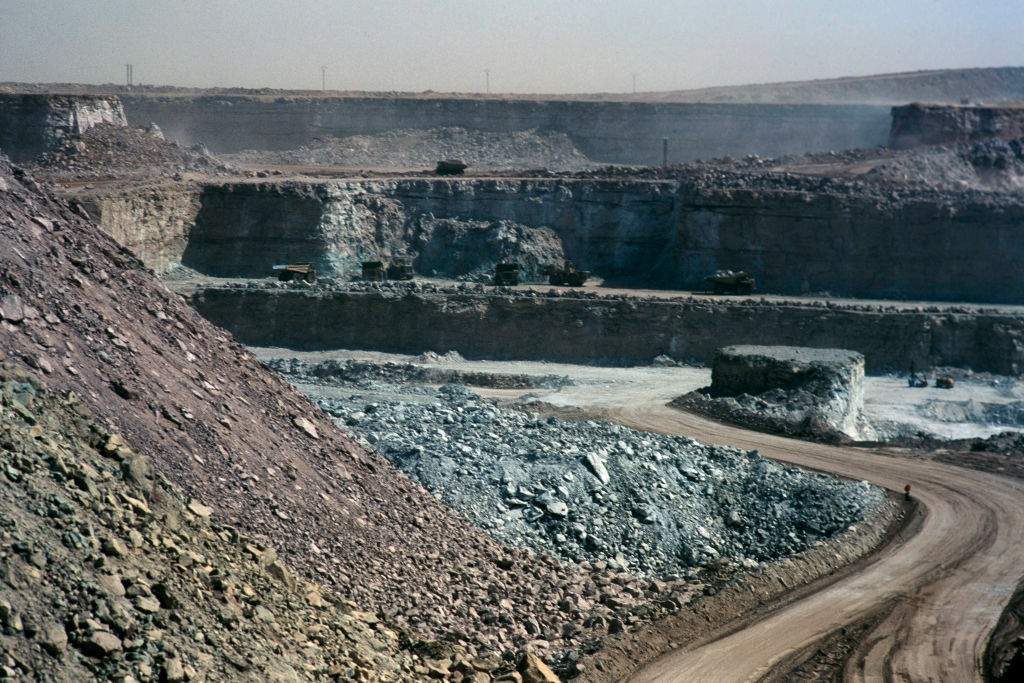
Yellowcake uranium from the seized Somair mine, valued at approximately $270 million
0
US troops remaining
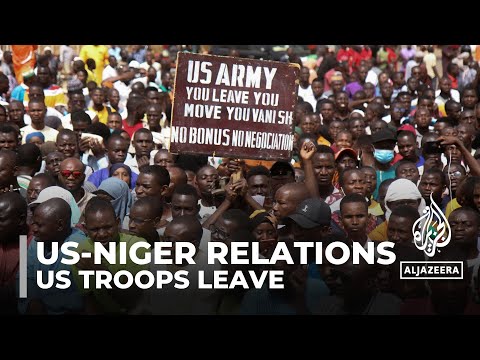
All US forces withdrew from Niger by August 2024 after the junta demanded their departure
3+
Soldiers killed in Ayorou
ISSP attack on military camp in Ayorou on February 2, 2026; attackers seized three vehicles
20 events
Latest: February 2nd, 2026 · 7 months ago
Showing 8 of 20
JK to step
Tap a bar to jump to that date
Jump to
February 2026
ISSP Attacks Ayorou Military Camp
LatestSecurity
Islamic State Sahel Province militants assaulted a National Guard camp in Ayorou, Tillabéri Region, near the Mali border, killing at least three soldiers, seizing three machine-gun equipped vehicles, and briefly occupying the site before retreating north.
January 2026
Armed Attack on Niamey Airport and Air Base
Security
Armed men on motorcycles attacked Diori Hamani International Airport and adjacent military base. Niger reported 20 attackers killed, 11 arrested, 4 security personnel wounded. Junta accused France, Benin, and Ivory Coast of sponsoring the assault.
Islamic State Claims Responsibility for Airport Attack
Security
The Islamic State – Sahel Province (ISSP), through its Amaq News Agency, claimed responsibility for the Niamey airport attack, describing it as a 'surprise and coordinated attack' on the military base. The claim directly contradicted Niger's accusations against France, Benin, and Ivory Coast.
Benin Rejects Niger's Accusations
Diplomatic
Wilfried Leandre Houngbedji, spokesman for Benin's government, officially rejected Niger's allegation that Benin sponsored the airport attack. France and Ivory Coast did not immediately comment on the accusations.
Terrorists operating in collaboration with JNIM fighters attacked Damala village in Nigeria's Borgu area near the Niger border, killing four residents and looting foodstuffs and livestock. The attack followed a January 3 massacre at Kasuwan Daji and a January 5 assault on a police checkpoint, signaling JNIM's expanding operations into the Niger-Nigeria corridor.
December 2025
Burkina Faso Assumes AES Chairmanship
Diplomatic
Mali's President Assimi Goïta handed over the chairmanship of the Alliance of Sahel States to Burkina Faso's leader Ibrahim Traoré, who will head the confederation throughout 2026.
November 2025
Niger Moves Uranium Despite Court Order
Economic
A convoy carrying approximately 1,050 tonnes of yellowcake uranium left the Somair site; buyer and destination undisclosed.
September 2025
Tribunal Bars Niger from Selling Uranium
Legal
World Bank arbitration tribunal issued interim order prohibiting Niger from selling or transferring uranium mined at Somair.
March 2025
Tiani Sworn In as President
Political
General Tiani was formally inaugurated for a five-year presidential term and dissolved all political parties.
January 2025
Niger Exits ECOWAS
Diplomatic
Niger, Mali, and Burkina Faso formally withdrew from ECOWAS after one year's notice, issuing new Alliance of Sahel States passports.
December 2024
Junta Seizes Orano Uranium Operations
Economic
Niger took operational control of the French-owned Somair uranium mine, citing expired agreements and national sovereignty.
August 2024
US Completes Military Withdrawal
Military
Last American troops departed Air Base 201 in Agadez, ending US counterterrorism operations in Niger.
April 2024
Russian Africa Corps Arrives in Niger
Military
First Russian military personnel deployed to Niger, training troops on drone operations at the Niamey air base.
March 2024
Junta Orders US Troop Withdrawal
Military
Niger's military government demanded approximately 1,000 US service members leave the country.
December 2023
French Troops Complete Withdrawal
Military
The last French military aircraft and troops departed Niger, ending decades of security partnership.
Niger Signs Military Agreement with Russia
Diplomatic
Defense Minister Salifou Modi and Russian Deputy Defense Minister Yevkurov signed a military cooperation agreement in Niamey.
September 2023
France Announces Military Withdrawal
Military
President Macron announced France would withdraw its ambassador and 1,500 troops from Niger by year's end.
Alliance of Sahel States Formed
Diplomatic
Niger, Mali, and Burkina Faso signed a mutual defense pact creating the Alliance of Sahel States.
August 2023
Junta Requests Russian Military Support
Diplomatic
Niger's new military government requested Wagner Group protection from internal and external threats, including potential ECOWAS intervention.
July 2023
Military Coup Ousts President Bazoum
Political
Presidential Guard commander Abdourahamane Tiani led a coup detaining elected President Mohamed Bazoum, ending Niger's democratic transition.
Scenarios
1
Jihadist Violence Escalates, Junta Loses Ground
Likely
Discussed by: International Crisis Group, Armed Conflict Location & Event Data Project, Global Terrorism Index analysts
JNIM and Islamic State affiliates continue gaining territory as the Russian security partnership fails to reverse insurgent momentum. Niger follows the trajectory of Mali, where jihadists now control or contest large portions of the country and have implemented fuel blockades threatening the capital. The junta faces a legitimacy crisis as security—the stated justification for the coup—deteriorates rather than improves.
2
Russia Deepens Engagement, Niger Becomes Moscow's Sahel Anchor
Possible
Discussed by: Washington Institute for Near East Policy, War on the Rocks analysts, Konrad Adenauer Foundation
Russia expands its Africa Corps presence and provides more sophisticated weapons systems, including air defense and drone capabilities, in exchange for resource access. Niger becomes a key node in Russia's African influence network, with Niamey serving as the headquarters for Alliance of Sahel States military operations backed by Russian advisers and equipment.
3
Regional Tensions Trigger Proxy Conflict
Unlikely
Discussed by: Security analysts at International Counter-Terrorism Academy (Ivory Coast), West Africa observers
Accusations against France, Benin, and Ivory Coast escalate into actual proxy warfare, with coastal West African states supporting opposition to the junta while Russia backs Niamey. The closed Niger-Benin border remains a flashpoint, and isolated attacks become part of a broader pattern of destabilization across the region.
4
Uranium Dispute Attracts New Buyers, Isolates Niger Further
Possible
Discussed by: Nuclear industry analysts, Reuters, mining industry observers
Niger sells its uranium stockpile to Russia, Iran, Turkey, or other buyers despite international arbitration rulings, generating revenue but deepening isolation from Western markets and international institutions. Orano pursues asset seizures, and Niger faces growing legal and financial complications that limit its economic options.
Historical Context
3 moments from history that rhyme with this story — and how they unfolded.
1 of 3
May 1978
France's Operation Léopard, Kolwezi, Zaire (1978)
French Foreign Legion paratroopers conducted an airborne assault to rescue 2,800 European hostages held by Katangese rebels in the mining town of Kolwezi. The operation killed 247 rebels and rescued most hostages, though rebels had already massacred about 160 Europeans.
Then
French and Belgian forces secured the region before handing control to an inter-African peacekeeping force from Morocco, Senegal, Togo, and Gabon.
Now
The intervention reinforced France's role as security guarantor for African governments but also sowed resentment that would fuel anti-French sentiment for decades.
Why this matters now
Niger's accusations that France sponsors armed attacks represent a complete inversion of the historical dynamic: where African governments once requested French military intervention, Sahel juntas now portray France as the threat they need Russian protection against.
2 of 3
January 2020
Camp Simba Attack, Kenya (2020)
Approximately 30-40 al-Shabaab militants attacked a joint US-Kenyan military base near Manda Bay, Kenya, destroying five aircraft and helicopters including an intelligence surveillance plane. Three Americans died in the first al-Shabaab attack targeting US forces in Kenya.
Then
US and Kenyan forces repelled the attack but suffered significant equipment losses. The assault demonstrated jihadist capability to strike hardened military targets.
Now
Al-Shabaab continued cross-border operations but did not repeat large-scale base attacks in Kenya. The incident prompted enhanced base security measures across East Africa.
Why this matters now
The Niamey airport attack shares tactical similarities—a brazen nighttime assault on a strategic military installation. However, unlike Kenya, Niger's junta blamed foreign governments rather than acknowledging jihadist responsibility, complicating any coordinated regional response.
3 of 3
February 2022
French Withdrawal from Mali (2022)
France withdrew its 2,400 Barkhane counterterrorism troops from Mali after the military junta invited Russian Wagner mercenaries and publicly demanded French departure. The pullout ended nearly a decade of French military operations against jihadists in the Sahel.
Then
Wagner forces replaced French troops, and Mali cut diplomatic ties with Paris. ECOWAS imposed sanctions on the junta.
Now
Jihadist violence in Mali increased dramatically. By late 2025, JNIM controlled or contested large swaths of territory and had implemented blockades threatening the capital Bamako. The pattern repeated in Burkina Faso and Niger.
Why this matters now
Niger's trajectory mirrors Mali's almost exactly: coup, Western troop expulsion, Russian replacement, ECOWAS withdrawal, and escalating jihadist violence. Mali's current crisis may preview Niger's near-term future.