

Pull to refresh
Logo
Sudan's war-driven famine crisis

Sudan's war-driven famine crisis

Force in Play

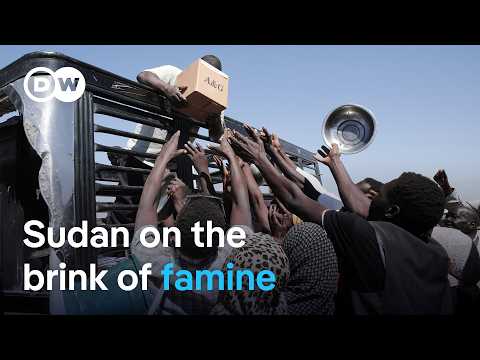
Three years of fighting between the army and Rapid Support Forces has left two of every five Sudanese without enough food

May 15th, 2026: UN agencies issue joint famine warning

Overview

Updated May 15

Two of every five Sudanese now lack enough food. Three UN agencies said on May 15 that 19.5 million people across Sudan face crisis-level hunger after three years of war between the national army and a paramilitary force.

Famine has been formally confirmed in El Fasher and Kadugli. About 135,000 people are in catastrophic conditions across 14 hotspots, 825,000 children risk severe malnutrition this year, and only one-fifth of the 2026 aid plan is funded.

Why it matters

Conflict-driven famine is preventable when fighters allow aid through. Every month of blocked access in Sudan turns a funding gap into a death toll.

Questions about this story

Free account needed to ask — your question is kept and asked for you right after sign-up. Answers are public.

No questions yet — be the first to ask.

Key Indicators

19.5M
People in food crisis
About 40% of Sudan's population now lives at IPC Phase 3 or worse.
135K
In catastrophic hunger
People in IPC Phase 5 conditions across 14 hotspots in Darfur and South Kordofan.
825K
Children at risk
Under-fives expected to suffer severe acute malnutrition in 2026.
20%
Of aid plan funded
Sudan's 2026 humanitarian response plan remains four-fifths short of its target.
9M
Internally displaced
Sudanese forced from their homes inside the country as of March 2026.
14
Famine hotspots
Areas in Darfur and South Kordofan facing IPC Phase 5 conditions or imminent risk.

Voices

Curated perspectives — historical figures and your fellow readers.

Ever wondered what historical figures would say about today's headlines?

Sign up to generate historical perspectives on this story.

People Involved

Organizations Involved

Timeline

April 2023 May 2026

10 events Latest: May 15th, 2026 · 4 months ago
Tap a bar to jump to that date
  1. UN agencies issue joint famine warning

    Latest Humanitarian

    WFP, FAO, and UNICEF release the latest IPC analysis warning 19.5 million Sudanese face acute food insecurity, with 135,000 in catastrophic conditions across 14 hotspots.

  2. El Fasher massacre

    Atrocity

    The UN Human Rights Office documents more than 6,000 killings in the first three days of the RSF takeover, including a hospital attack.

  3. RSF captures El Fasher

    Conflict

    After an 18-month siege, the RSF takes the last SAF stronghold in Darfur. All five Darfur state capitals are now under RSF control.

  4. Quad nations propose humanitarian truce

    Diplomacy

    The US, Saudi Arabia, Egypt, and the UAE propose a three-month humanitarian truce followed by a nine-month transition. Sudan's government rejects the framework.

  5. IPC confirms famine in El Fasher and Kadugli

    Humanitarian

    The IPC formally classifies both towns at Phase 5, with 20 other areas at imminent risk if fighting continues or aid access stays blocked.

  6. SAF recaptures Khartoum

    Conflict

    The army retakes the capital from RSF forces after two years of urban warfare. The war's center of gravity shifts west to Darfur and Kordofan.

  7. Geneva ceasefire talks collapse

    Diplomacy

    US-led Geneva talks fail to produce a ceasefire after the SAF refuses to attend, citing UAE participation. Aid access commitments yield little progress.

  8. IPC declares famine in Zamzam camp

    Humanitarian

    The IPC Famine Review Committee confirms famine conditions in Zamzam displacement camp near El Fasher. It is the world's first formal famine declaration since 2017.

  9. War erupts in Khartoum

    Conflict

    Fighting breaks out between the Sudanese Armed Forces and the Rapid Support Forces after months of tension over RSF integration into the regular army.

Scenarios

1

IPC expands famine designations to more Sudanese towns

Likely Resolves by End of 2026

Discussed by: WFP, FAO, IPC Famine Review Committee, IFPRI analysts

The IPC's October-November analysis cycle covers the lean season peak. Aid agencies expect that absent a ceasefire and a funding surge, additional hotspots in Darfur, South Kordofan, and West Kordofan will cross Phase 5 thresholds. This is the trajectory implied by the May 2026 joint warning if access does not change.

2

Quad-mediated humanitarian truce takes effect

Unlikely Resolves by End of 2026

Discussed by: US State Department, Saudi foreign ministry, Reuters, Al Jazeera

The Quad framework offers a three-month humanitarian pause as a step toward a permanent ceasefire. Burhan has rejected the version on the table, but a revised proposal that addresses SAF sovereignty concerns and RSF Darfur consolidation could yet move forward. McCain and others have urged the parties to accept access guarantees even without a political deal.

3

Donors close most of the 2026 aid funding gap

Unlikely Resolves by End of 2026

Discussed by: OCHA, donor governments, NGO consortiums

A donor pledging conference could lift the response plan from 20% funded toward levels seen in earlier crises. The pattern in Sudan has run the other way, with funding shares falling each year of the war. A major new commitment from the US, EU, or Gulf donors would be needed to reverse the trend.

4

SAF retakes a Darfur state capital from RSF

Unlikely Resolves by May 15, 2027

Discussed by: International Crisis Group, Reuters defense correspondents, Sudan analysts

The SAF retook Khartoum in March 2025 but has not pushed into Darfur in force. RSF consolidation after El Fasher makes a reversal harder, but army units in West Kordofan continue probing operations. A breakthrough would shift the humanitarian map and could reopen overland aid corridors.

Historical Context

3 moments from history that rhyme with this story — and how they unfolded.

1984 – 1985

Ethiopia famine (1984-85)

Drought combined with civil war in Tigray and Eritrea produced a famine that killed an estimated one million people. The Mengistu government restricted aid to rebel-held areas and used food as a counter-insurgency tool.

Then

Live Aid raised about $127 million and pushed Western governments into a larger response. Cross-border operations from Sudan eventually reached rebel-held northern Ethiopia.

Now

The crisis reshaped Western development politics and led to the creation of permanent early warning systems. The war itself continued until 1991.

Why this matters now

Ethiopia is the historical baseline for how war turns drought or displacement into mass starvation. Sudan today combines the same pattern of government access restrictions with the additional layer of cross-line obstruction by a paramilitary force.

July 2011 – February 2012

Somalia famine (2011)

The UN declared famine in southern Somalia after drought met war. The al-Shabaab insurgency blocked aid agencies from much of the worst-hit territory, leaving Bay and Bakool regions cut off for months.

Then

About 260,000 people died, half of them children under five. Aid eventually reached most areas through a mix of cross-border operations and negotiated access.

Now

The crisis reset how IPC and the UN run famine early warning. It also showed that conflict-driven famines kill far more people than the official declaration phase because access lags death.

Why this matters now

Somalia is the closest modern parallel to Sudan: a war-driven famine where the chokepoint is access, not food supply. The mortality curve in Somalia spiked before official declarations caught up, a pattern aid agencies fear is repeating in Darfur.

February – June 2017

South Sudan famine (2017)

The IPC declared famine in parts of Unity State after years of civil war between government forces and rebel factions. About 100,000 people were classed in famine, with another 1 million at imminent risk.

Then

A negotiated aid surge and humanitarian corridors brought the formal famine designation down within four months. Donors mobilized roughly $1.4 billion.

Now

Acute food insecurity remained high for years afterward. The case showed that famine can be rolled back when warring parties allow access, even without ending the underlying conflict.

Why this matters now

South Sudan's resolution depended on the government allowing aid into rebel areas. Sudan's current standoff is structurally similar: the SAF controls aid permits while the worst hunger sits in RSF territory.

Sources

(10)