



Pull to refresh
Logo
Chest X-ray AI that drafts radiology reports wins FDA breakthrough designation

Chest X-ray AI that drafts radiology reports wins FDA breakthrough designation

New Capabilities

Cognita CXR was the first generative model in radiology to get the status; Aidoc's rival tool followed in June. The FDA is now asking how to regulate this device category.

6 days ago: FDA asks industry how to regulate generative AI medical devices

Overview

Updated 6 days ago

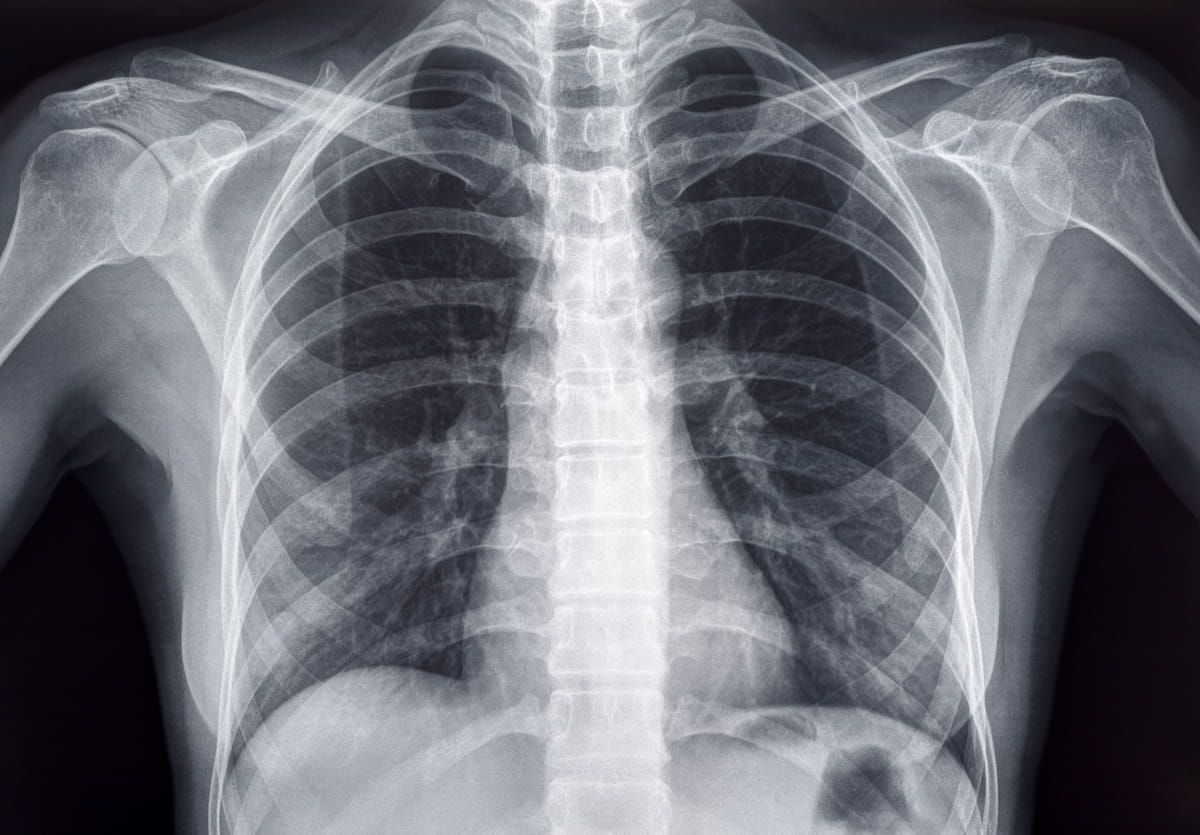
The Food and Drug Administration granted breakthrough-device status to Cognita CXR, a generative AI model that reads chest X-rays and drafts the preliminary report a radiologist then reviews. It's the first generative model in radiology to get the designation; Aidoc's rival tool, First Read, followed in June.

Traditional imaging AI flags individual findings on a scan. Cognita processes the whole image and writes comprehensive results, closer to what a human radiologist does. The FDA is also seeking input on how to regulate these tools, including whether they need monitoring after approval to catch errors and accuracy decline over time.

Why it matters

If generative AI that drafts full radiology reports clears FDA review, it could reshape how hospitals handle a growing imaging backlog and radiologist shortage.

Questions about this story

Free account needed to ask — your question is kept and asked for you right after sign-up. Answers are public.

No questions yet — be the first to ask.

Key Indicators

18%
Radiologist efficiency boost
Average interpretation efficiency gain cited in Mosaic's internal clinical validation.
16–65%
Detection improvement range
Improved detection of certain significant chest X-ray findings when radiologists used Cognita CXR.
2
Generative radiology AI devices with breakthrough status
Cognita CXR (March) and Aidoc First Read (June) both received the designation in 2026.
$80M
Cognita acquisition price
Radiology Partners paid $80 million for the Stanford-founded startup in November 2025.
4,000+
Radiologists in Radiology Partners network
Largest radiology practice in the U.S. and the parent of Cognita's maker, Mosaic Clinical Technologies.

Voices

Curated perspectives — historical figures and your fellow readers.

Ever wondered what historical figures would say about today's headlines?

Sign up to generate historical perspectives on this story.

People Involved

Organizations Involved

Timeline

July 2025 September 2026

6 events Latest: 6 days ago
Tap a bar to jump to that date
  1. FDA asks industry how to regulate generative AI medical devices

    Latest News

    The agency's discussion paper on generative AI-enabled devices asks how testing before approval and monitoring after approval should handle risks like hallucinations and accuracy decline. It cites Cognita CXR and Aidoc First Read as examples of generative AI that produces clinical content for physician review.

  2. Breakthrough designation confirmed as first for generative radiology AI

    News

    Reporting reaffirms Cognita CXR's status as the first generative model in radiology to win the designation.

  3. FDA grants breakthrough designation to Aidoc's First Read

    Regulatory

    A second generative AI chest X-ray tool receives the same status, confirming the category shift.

  4. FDA grants breakthrough designation to Cognita CXR

    Regulatory

    The first generative AI model in radiology receives the designation for multiple critical chest X-ray indications.

  5. Radiology Partners acquires Cognita for $80 million

    Acquisition

    The Stanford-founded AI startup joins Radiology Partners' Mosaic division as its AI business unit.

  6. Radiology Partners launches Mosaic division

    Corporate

    The radiology practice founds Mosaic Clinical Technologies as its technology subsidiary.

Scenarios

1

Cognita CXR clears FDA review and launches commercially

Likely Resolves by Q2 2027

Discussed by: Mosaic leadership; FDA's Breakthrough Device Program structure

Breakthrough designation accelerates interaction with the FDA, shortening the path to marketing authorization. With internal validation already showing efficiency gains, Mosaic submits for clearance and rolls the tool out across Radiology Partners' 4,000+ radiologist network, then to outside hospitals. The designation itself is not approval, so the FDA will still review the clinical evidence.

2

Generative radiology AI becomes an established device category

Likely Resolves by End of 2027

Discussed by: STAT News, industry observers tracking the two breakthrough designations

With Cognita and Aidoc both in the breakthrough program, other radiology AI vendors file for the same status and regulators build a review playbook for vision-language models that draft reports. The first authorized device becomes the template subsequent products must meet. Hospitals can point procurement and legal teams at federal recognition instead of vendor claims.

3

Independent studies fail to replicate the claimed gains

Possible Resolves by Q2 2028

Discussed by: Implicit in the history of computer-aided detection (CAD) for mammography

The 16-65% detection improvement and 18% efficiency boost come from Mosaic's internal validation, not independent trials. A prospective study in real hospital settings could find smaller gains, higher false-positive rates, or workflow friction that offsets efficiency. History offers a warning: FDA-cleared CAD for mammography was widely adopted, then large studies showed no benefit and Medicare stopped paying extra.

4

FDA issues guidance for generative AI medical devices

Likely Resolves by End of 2027

Discussed by: FDA's generative AI discussion paper; Mondaq legal analysis

The FDA's discussion paper asks whether generative AI devices need clinical confirmation in premarket testing and post-market monitoring for performance drift, since models can change as underlying components change. The agency cites Cognita CXR and Aidoc First Read as examples of generative AI that produces substantive clinical content. Guidance from this process would set the review standard both tools must meet for clearance.

Historical Context

2 moments from history that rhyme with this story — and how they unfolded.

1998–2013

R2 ImageChecker, first FDA-cleared CAD for mammography (1998)

The FDA cleared R2 Technology's ImageChecker in 1998, the first computer-aided detection system for mammograms. It flagged suspicious regions for radiologists to review and was widely adopted after Medicare began paying extra for CAD in 2001. Roughly 74% of U.S. screening mammograms used it by 2008.

Then

Hundreds of practices installed the systems and billed an extra Medicare code for each exam.

Now

A 2007 study in the New England Journal of Medicine found CAD did not improve cancer detection and increased recall rates. Medicare stopped separate reimbursement in 2013, and CAD use declined.

Why this matters now

The cautionary tale for any radiology AI: an FDA-cleared detection tool can be widely adopted before independent studies reveal it doesn't help. Cognita claims far larger benefits, but the data is still internal.

April 2018

IDx-DR, first autonomous AI diagnostic device (2018)

The FDA granted De Novo authorization to IDx-DR, the first AI system allowed to autonomously detect disease (diabetic retinopathy) without a clinician interpreting the image. A primary care worker could run the exam and get a diagnosis on the spot.

Then

IDx-DR launched in clinics and set a precedent that AI could make diagnostic decisions, expanding what the FDA would authorize.

Now

It opened the door for later autonomous and semi-autonomous AI diagnostics, showing each FDA decision widens the regulatory boundary.

Why this matters now

Just as IDx-DR expanded the FDA's definition of what AI could do in 2018, the Cognita and Aidoc breakthrough designations push the boundary again: AI that drafts an entire report, not just flags a finding.

Sources

(12)