
Pull to refresh
Logo
The race to detect cancer from a blood draw

The race to detect cancer from a blood draw

New Capabilities

Freenome's lung test wins FDA breakthrough status as blood-based screening moves toward the clinic

August 12th, 2026: FDA grants breakthrough status to Freenome's lung test

Overview

Updated Aug 13

Today, catching lung cancer early usually means a CT scan of your chest. Fewer than one in five people who qualify actually get one. On August 12, 2026, the FDA gave Freenome's blood test for lung cancer a status meant to speed its review, betting that a simple blood draw could reach the millions who skip the scan.

The designation is a procedural step, not an approval. Freenome has not published how often the test catches real cancers or how often it raises false alarms. That data comes later, from a study still running. What changed is regulatory momentum for a much larger idea: finding cancer in a tube of blood before symptoms start.

Why it matters

Lung cancer kills more Americans than any other cancer, and most cases are caught too late to cure. A blood test could reach people who never get scanned.

Questions about this story

Free account needed to ask — your question is kept and asked for you right after sign-up. Answers are public.

No questions yet — be the first to ask.

Key Indicators

124,730
U.S. lung cancer deaths per year
Lung cancer is the leading cause of cancer death in the United States, per 2025 American Cancer Society estimates.
~18%
Eligible adults who get screened
Most people who qualify for low-dose CT lung screening never get it; estimates run from 5% to 18%.
14.5M
U.S. adults eligible for screening
Adults aged 50 to 80 with a 20 pack-year smoking history qualify under 2021 USPSTF guidelines.
Sept 23, 2026
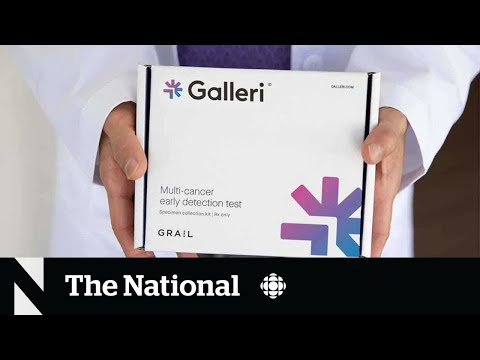
FDA panel reviews rival Galleri test
An FDA advisory committee meets to review GRAIL's multi-cancer blood test, a key test of the whole field.

Voices

Curated perspectives — historical figures and your fellow readers.

Ever wondered what historical figures would say about today's headlines?

Sign up to generate historical perspectives on this story.

Organizations Involved

Timeline

January 2018 August 2026

6 events Latest: August 12th, 2026 · 1 month ago
Tap a bar to jump to that date
  1. FDA grants breakthrough status to Freenome's lung test

    Latest Regulatory

    The FDA gives Breakthrough Device Designation to SimpleScreen Lung, for adults 50 to 80 with a 20 pack-year smoking history who are not being screened. No efficacy data was released.

  2. Freenome reports early lung test data

    Research

    At the AACR annual meeting, Freenome presents early case-control data for SimpleScreen Lung. The release omits sensitivity, specificity, and cohort details.

  3. GRAIL files for full FDA approval of Galleri

    Regulatory

    GRAIL submits a premarket approval application, backed by the PATHFINDER 2 study and the NHS-Galleri trial, the only randomized trial of a multi-cancer test.

  4. Freenome signs big colorectal deals

    Commercial

    Freenome licenses its blood-based colorectal cancer test to Exact Sciences, with $75 million upfront, and strikes a separate commercialization deal with Abbott.

  5. Galleri goes on sale as a lab test

    Commercial

    GRAIL begins selling Galleri as a lab-developed test, letting doctors order it before full FDA approval. Uptake spreads through concierge and employer health programs.

  6. FDA gives GRAIL's Galleri breakthrough status

    Regulatory

    The FDA grants Breakthrough Device Designation to GRAIL's multi-cancer test, an early signal that regulators saw promise in blood-based screening.

Scenarios

1

FDA clears Freenome's lung blood test for sale

Uncertain Resolves by Aug 12, 2029

Discussed by: Freenome, medical device trade press (MedTech Dive, Fierce Biotech)

Freenome's PROACT LUNG study reports strong accuracy, and the FDA grants marketing authorization. Breakthrough status speeds the review, and the test reaches doctors as an option for people who skip CT scans. This depends entirely on data Freenome has not yet published, so the path is real but unproven.

2

FDA approves GRAIL's Galleri, opening the door for the field

Possible Resolves by Q3 2027

Discussed by: GRAIL, MedTech Dive, CLP Magazine

The FDA advisory committee backs Galleri on September 23, 2026, and the agency approves the premarket application. A first full approval for a blood-based cancer screen would set the evidence bar rivals like Freenome must clear, and could speed insurance coverage across the field.

3

Freenome reports pivotal accuracy data for the lung test

Likely Resolves by End of 2028

Discussed by: Freenome, AACR presentations, peer-reviewed journals

The PROACT LUNG study reports sensitivity and specificity from real-world follow-up, giving doctors the first solid read on how well the blood test finds early lung cancer and how often it flags healthy people. This is the number that decides whether the test is useful or just faster to take.

4

Freenome lands a big-name partner to sell the lung test

Possible Resolves by Q2 2028

Discussed by: Freenome, Fierce Biotech, MedCity News

Following the pattern of its colorectal test, Freenome signs a major commercialization or licensing deal with a large diagnostics or pharmaceutical firm for the lung test. Such a deal would signal industry confidence and give the test the sales reach it needs to matter at scale.

Historical Context

3 moments from history that rhyme with this story — and how they unfolded.

August 2014

Cologuard wins FDA approval (2014)

Exact Sciences won FDA approval for Cologuard, a stool DNA test for colorectal cancer. On the same day, Medicare agreed to cover it. The test let people screen at home instead of getting a colonoscopy.

Then

Cologuard reached the market fast with insurance behind it and grew into a widely ordered screening option.

Now

It proved a molecular screening test could win approval, coverage, and mass adoption, becoming the model rivals now chase.

Why this matters now

Freenome's colorectal and lung tests aim for the same path: approval, then coverage, then scale. Cologuard shows it can work.

April 2016

Epi proColon approval (2016)

The FDA approved Epi proColon, the first blood-based test for colorectal cancer screening. It read a single methylation marker called Septin9. Doctors could offer it to patients who refused other screening.

Then

The test was approved but saw weak demand, hampered by limited insurance coverage and accuracy below stool and scope options.

Now

It showed that FDA approval alone does not guarantee adoption. Weak coverage and modest accuracy can strand a test.

Why this matters now

A blood test can clear the FDA and still fail in the market. Freenome's lung test faces the same coverage and accuracy hurdles.

2018 to 2026

Galleri's long road from breakthrough to review (2018–2026)

GRAIL won Breakthrough Device status for Galleri in 2018 and began selling it as a lab test in 2021. Full FDA approval only reached a formal advisory review in 2026, eight years after the breakthrough tag.

Then

Galleri built a commercial base as a lab-developed test while the full approval process dragged on for years.

Now

The gap shows breakthrough status is a starting gun, not a finish line. Proof and approval take years of trials.

Why this matters now

Freenome just earned the same breakthrough status Galleri got in 2018. Galleri's timeline is a realistic clock for what comes next.

Sources

(8)