


Pull to refresh
Logo
FDA clears cardiac MRI AI with self-update built in

FDA clears cardiac MRI AI with self-update built in

New Capabilities

Heartvue.Proton automates hour-long cardiac MRI measurements; its models can improve within FDA-approved bounds without new filings

7 days ago: Coverage highlights PCCP self-update mechanism

Overview

Updated 7 days ago

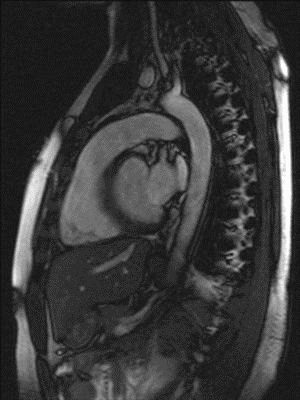
Reading a cardiac MRI by hand can take an hour. The FDA just cleared software that automates most of that work, and it comes with permission to keep improving itself.

Heartvue.Proton, from Brentwood, Tennessee-based Heartvue.ai, measures heart dimensions, ventricular volumes, ejection fraction, and blood flow automatically. Every result stays under physician review.

The clearance includes a predetermined change control plan (PCCP), a regulatory tool that lets the machine-learning models improve within FDA-approved bounds as clinical data grows. No new 510(k) filing is needed for each update. The company begins commercial rollout to U.S. hospitals and imaging centers.

Why it matters

Hour-long cardiac MRI analysis can now be automated, and the AI keeps improving without new FDA filings.

Questions about this story

Free account needed to ask — your question is kept and asked for you right after sign-up. Answers are public.

No questions yet — be the first to ask.

Key Indicators

60 min
Manual cardiac MRI analysis time
A single study can take an hour or more to measure by hand.
3
Automated measurement domains
2D linear dimensions, ventricular volumes and ejection fraction, and blood flow quantification.
167 days
FDA review time
From submission on March 12 to clearance on August 26, 2026.

Voices

Curated perspectives — historical figures and your fellow readers.

Ever wondered what historical figures would say about today's headlines?

Sign up to generate historical perspectives on this story.

People Involved

Organizations Involved

Timeline

March 2026 September 2026

4 events Latest: 7 days ago
Tap a bar to jump to that date
  1. Coverage highlights PCCP self-update mechanism

    Latest Media

    News reports focus on the predetermined change control plan as a regulatory first, noting the AI can improve within FDA-approved bounds without new filings.

  2. Heartvue.ai and Innolitics announce clearance

    Announcement

    The companies publicly announce the FDA clearance, highlighting the PCCP as a key feature that lets the AI improve as clinical data grows.

  3. FDA clears Heartvue.Proton with PCCP

    Regulatory

    FDA grants 510(k) clearance (K260811) for Heartvue.Proton, including a predetermined change control plan allowing model updates without new submissions.

  4. FDA receives Heartvue.Proton 510(k) submission

    Regulatory

    Heartvue.ai submits its 510(k) application for Heartvue.Proton, a machine-learning platform for cardiac MRI analysis.

Scenarios

1

Heartvue.Proton gains traction in U.S. hospitals

Likely Resolves by Sep 5, 2027

Discussed by: Heartvue.ai's commercial rollout plans and industry observers

Heartvue.ai begins commercial deployment to U.S. hospitals and imaging centers, building on its existing beta site network. If the platform delivers on automating hour-long analyses, adoption could grow through 2027. The PCCP means the models can improve with real-world data, potentially making the tool more accurate over time.

2

PCCP becomes the standard for AI medical device clearances

Possible Resolves by End of 2027

Discussed by: Regulatory observers and the FDA's own guidance development

The FDA has been developing PCCP guidance since 2019. If Heartvue.Proton's clearance demonstrates the approach works in practice, more AI medical device companies may seek PCCP in their submissions. The agency's willingness to authorize the plan could signal a broader shift in how it regulates adaptive algorithms.

3

Clinical use reveals measurement errors, adoption stalls

Unlikely Resolves by Q2 2027

Discussed by: Heartvue's own acknowledgment that automated systems can make mistakes

Every automated measurement system can make mistakes, particularly with abnormal anatomy, poor image quality, or cases outside training data. If clinicians frequently edit Heartvue.Proton's measurements, the time savings could evaporate and adoption could stall. The company's beta sites and early commercial deployments will reveal how often edits are needed.

Historical Context

2 moments from history that rhyme with this story — and how they unfolded.

2018-2019

First wave of AI radiology clearances (2018-2019)

The FDA cleared dozens of AI-based radiology tools, but they were locked. Any algorithm change required a new submission, and companies had to file new 510(k)s for even minor updates.

Then

Companies faced high costs for improving their algorithms post-market.

Now

This created a disincentive to update AI models, making them stale over time.

Why this matters now

The PCCP in Heartvue.Proton's clearance directly addresses this limitation, allowing controlled algorithm evolution.

April 2019

FDA's AI/ML regulatory framework proposal (2019)

The FDA published a discussion paper proposing a regulatory framework for AI/ML-based software as a medical device. It introduced the concept of a predetermined change control plan, allowing algorithms to learn and improve post-market within pre-approved bounds.

Then

The framework went through stakeholder feedback and refinement over several years.

Now

PCCP became an official regulatory tool, now appearing in clearances like Heartvue.Proton.

Why this matters now

This clearance is the practical implementation of a concept the FDA proposed seven years earlier.

Sources

(9)