

Pull to refresh
Logo
US gasoline tops $4 on Labor Day for first time as Iran war tightens fuel supply

US gasoline tops $4 on Labor Day for first time as Iran war tightens fuel supply

Built World

Six-month conflict closes Strait of Hormuz, driving diesel and jet fuel to records

September 5th, 2026: Gasoline tops $4 on Labor Day for first time

Overview

Updated 6 days ago

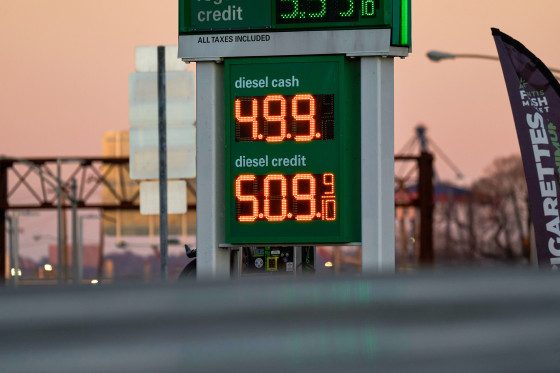
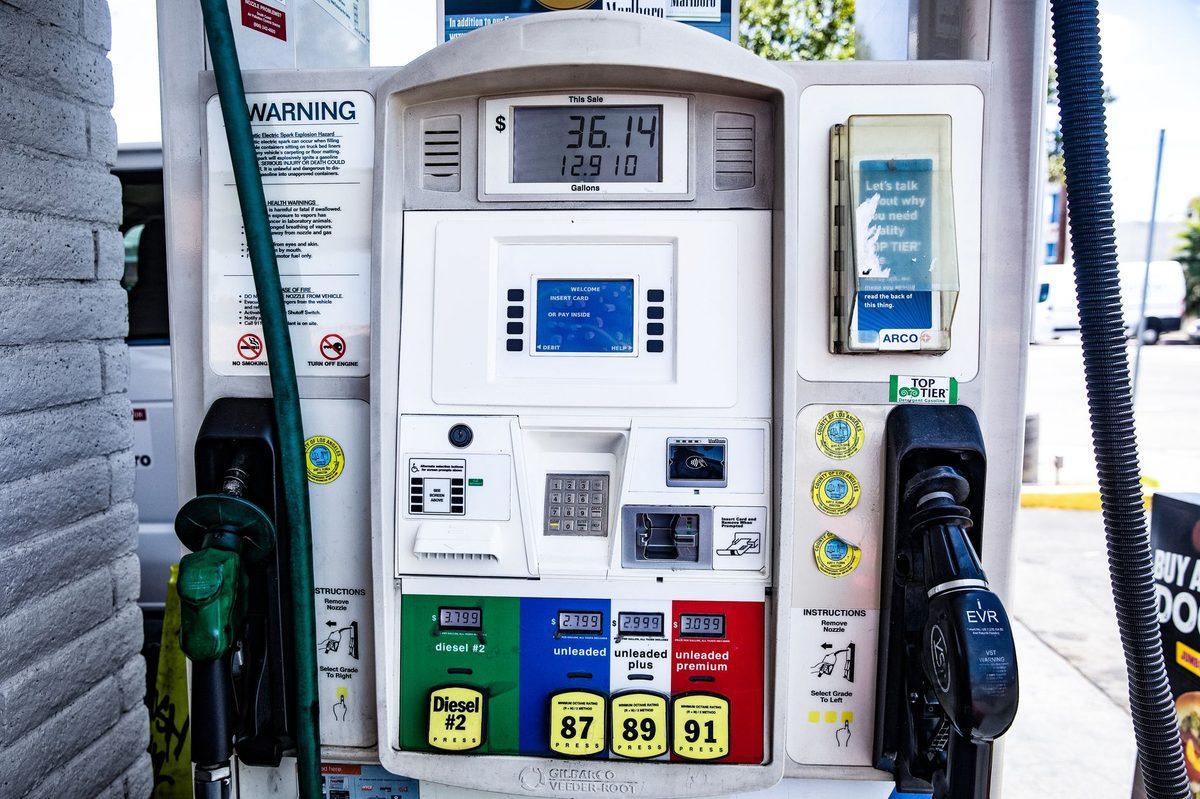
The average price of a gallon of gasoline in the US topped $4 on Labor Day weekend for the first time on record. Diesel hit $5.85 a gallon, and jet fuel and heating oil climbed with them.

The cause is supply, not a refinery hiccup. Since February, when the US and Israel attacked Iran, the Strait of Hormuz has been shut to normal tanker traffic. Refineries are running at 98% capacity, inventories sit below their five-year average, and there is little spare fuel anywhere to cover the gap.

Why it matters

Fuel moves everything in the US economy, and diesel at $5.85 pushes the cost of every trucked good into store prices.

Questions about this story

Free account needed to ask — your question is kept and asked for you right after sign-up. Answers are public.

No questions yet — be the first to ask.

Key Indicators

$4.13/gal
Average US gasoline price
National average the Thursday before Labor Day weekend, up from $3.20 a year earlier.
$5.85/gal
Average US diesel price
Record high set Friday; diesel powers most freight and doubles as heating oil.
98%
Refinery utilization rate
Highest since 2018, leaving almost no spare capacity to boost fuel supply.
205.7M barrels
US gasoline inventories
Below the five-year August average of 217.6 million barrels.
$740
Extra fuel cost per US household
Brown University estimate of added gas and diesel spending since the Iran war began, $97 billion total.

Voices

Curated perspectives — historical figures and your fellow readers.

Ever wondered what historical figures would say about today's headlines?

Sign up to generate historical perspectives on this story.

People Involved

Organizations Involved

Timeline

February 2026 September 2026

6 events Latest: September 5th, 2026 · 1 week ago
Tap a bar to jump to that date
  1. Gasoline tops $4 on Labor Day for first time

    Latest Market

    National average expected to reach $4.03, beating the 2012 record of $3.83 on the holiday weekend.

  2. Diesel hits record $5.85 a gallon

    Market

    The highest diesel price on record, up from about $3.76 before the war began.

  3. Gasoline averages $4.13, inventories fall

    Market

    EIA reports gasoline stocks at 205.7 million barrels, below the five-year August average.

  4. Ukraine hits Russian refineries

    Conflict

    Repeated drone attacks tighten global fuel supplies on top of the Hormuz closure.

  5. Iran shuts Strait of Hormuz

    Conflict

    Crude oil traffic through the key waterway plunges; Iran refuses to reopen it.

  6. US and Israel launch strikes on Iran

    Conflict

    The attack starts a war that cuts off the Strait of Hormuz to normal tanker traffic.

Scenarios

1

Ceasefire reached, Strait of Hormuz reopens, gasoline falls under $3.50

Possible Resolves by Q1 2027

Discussed by: Analysts quoted by Reuters and AP News frame Hormuz reopening as the main path to lower prices.

A ceasefire or de-escalation lets Iran reopen the waterway to tanker traffic. Crude supply normalizes, refining margins ease, and pump prices drift down over several weeks. Tom Seng at Texas Christian University notes this is the clearest trigger, though he flags other factors that could keep prices elevated.

2

Winter heating crisis: gasoline stays above $4, diesel tops $6

Possible Resolves by End of 2026

Discussed by: TT News and AP flag diesel's role as heating oil in Northeast states, including swing-district Maine.

If the Strait stays closed into winter, diesel and heating oil keep climbing since they are nearly interchangeable. Freight costs push into food and retail prices. The highest share of Maine homes heats with oil, giving the issue direct political weight in an upcoming Senate race.

3

Federal Reserve raises rates as fuel inflation grips the economy

Possible Resolves by End of 2026

Discussed by: Traders quoted by TT News see about a 50-50 chance of a rate hike when the Fed meets in mid-September.

With broader inflation climbing on fuel costs, the central bank tightens policy. That raises borrowing costs at a moment when households already pay more at the pump. A hike would signal the Fed views the fuel shock as entrenched rather than temporary.

Historical Context

3 moments from history that rhyme with this story — and how they unfolded.

October 1973 - March 1974

1973 oil embargo (1973-1974)

Arab members of OPEC cut oil exports to the US and its allies after Washington backed Israel in the Yom Kippur War. Oil prices roughly quadrupled, and Americans waited in long gas lines under odd-even rationing.

Then

Gasoline prices roughly doubled within months; the embargo ended after negotiations in March 1974.

Now

It created the Strategic Petroleum Reserve and made oil shocks a recurring feature of American politics.

Why this matters now

Like the Hormuz closure today, a geopolitical act shut off a key supply route and sent pump prices soaring within weeks.

January - December 2008

2008 oil spike (2008)

Crude hit $147 a barrel in July 2008, and the US average gas price peaked around $4.11 a gallon. On Labor Day weekend 2008, gas was at an inflation-adjusted record near $5.63 in today's dollars.

Then

Prices collapsed within months when the financial crisis crushed demand.

Now

2008 held the Labor Day price record until 2026 and remains the reference point for what high fuel prices look like.

Why this matters now

It shows how fast supply shocks can spike prices, and how quickly they unwind when demand collapses.

February - June 2022

2022 fuel spike after Russia's invasion of Ukraine (2022)

After Russia invaded Ukraine, sanctions and market panic pushed US gas to an average of about $5.02 by June 2022, the highest nominal price ever until 2026.

Then

Prices eased over the following months as the US released crude from the Strategic Petroleum Reserve.

Now

The episode set expectations for how governments respond to fuel shocks, including reserve releases and waiver extensions.

Why this matters now

The 2026 crisis reuses the same playbook, but with a more direct supply choke point: a closed strait rather than sanctions.

Sources

(11)