Anchor

US diesel prices hit record high as conflicts squeeze global supply
Built WorldNational average tops $6 for the first time as Iran war and Russian export ban cut world diesel supply
2 days ago: GasBuddy logs national diesel average above $6 for the first timeNew here? Follow stories to track developments over time. Create a free account to get updates when stories you care about change.
Overview
Updated 13 hours agoUS diesel hit a record $6.05 a gallon Friday, September 11, according to AAA. That's more than 60 percent above the $3.76 average on February 28, when the US and Israel attacked Iran.
Brent crude settled at $107.63 a barrel on September 10, the highest since mid-May. The Strait of Hormuz has been effectively closed since late February, and Moscow banned diesel exports in July. China also restricted fuel exports, and the combined cuts removed about 8 percent of world diesel supply, said Andy Lipow of Lipow Oil Associates.
Why it matters
Every dollar per gallon of diesel shows up as higher food and shipping costs for households.
Questions about this story
Free account needed to ask — your question is kept and asked for you right after sign-up. Answers are public.
No questions yet — be the first to ask.
Key Indicators
$6.05
US national average diesel price per gallon
Record high reported by AAA on September 11, 2026, up from $5.85 on September 4. GasBuddy's tracker crossed $6 a day earlier.
60%
Price increase since war began
Diesel averaged $3.76 the day the US and Israel attacked Iran on February 28. The September 11 average of $6.05 is more than 60 percent higher.
$107.63
Brent crude price per barrel
Brent settled at $107.63 on September 10, the highest since mid-May. It traded near $72 before the war began.
20%
Global seaborne diesel trade disrupted
ING analysts estimate combined disruptions from the Iran war and Russian refinery attacks cut about 20% of seaborne diesel trade.
19.3M barrels
East Coast distillate inventories
Record low for late August, the lowest since EIA records began in 1982.
8%
Global diesel supply disrupted
Roughly 2 million barrels per day affected by the Russian export ban, Strait of Hormuz delays, and Chinese export restrictions.
98%
US refinery utilization rate
Refineries are running near maximum capacity, leaving little spare supply if a hurricane or breakdown takes plants offline.
$112.17
US diesel crack spread per barrel
Hit a record $112.17 on September 10, per LSEG. The American Action Forum separately put the Gulf Coast crack spread above $100 on September 1, about five times the pre-conflict baseline of $20.
$34.8B
Added diesel costs for commercial transport
Direct fuel costs from late February through August 2026, per the American Action Forum. Every $1 per gallon adds about $120 million per day.
13%
US diesel inventories below five-year average
Total US diesel inventories stood at 106.3 million barrels, 13 percent below the five-year average, per the EIA.
Related Media
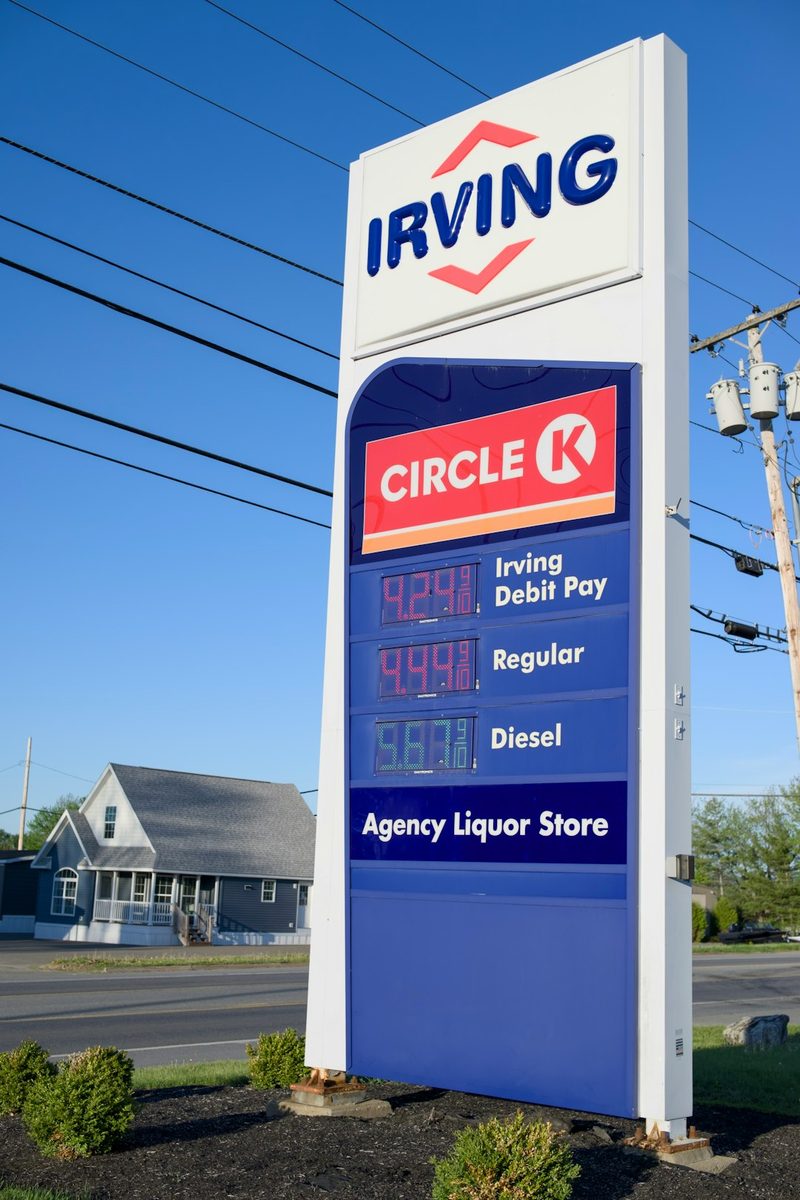
$4.44 gas and $5.67 diesel at an Irving gas station in Holden, Maine, USA. May 21, 2026.
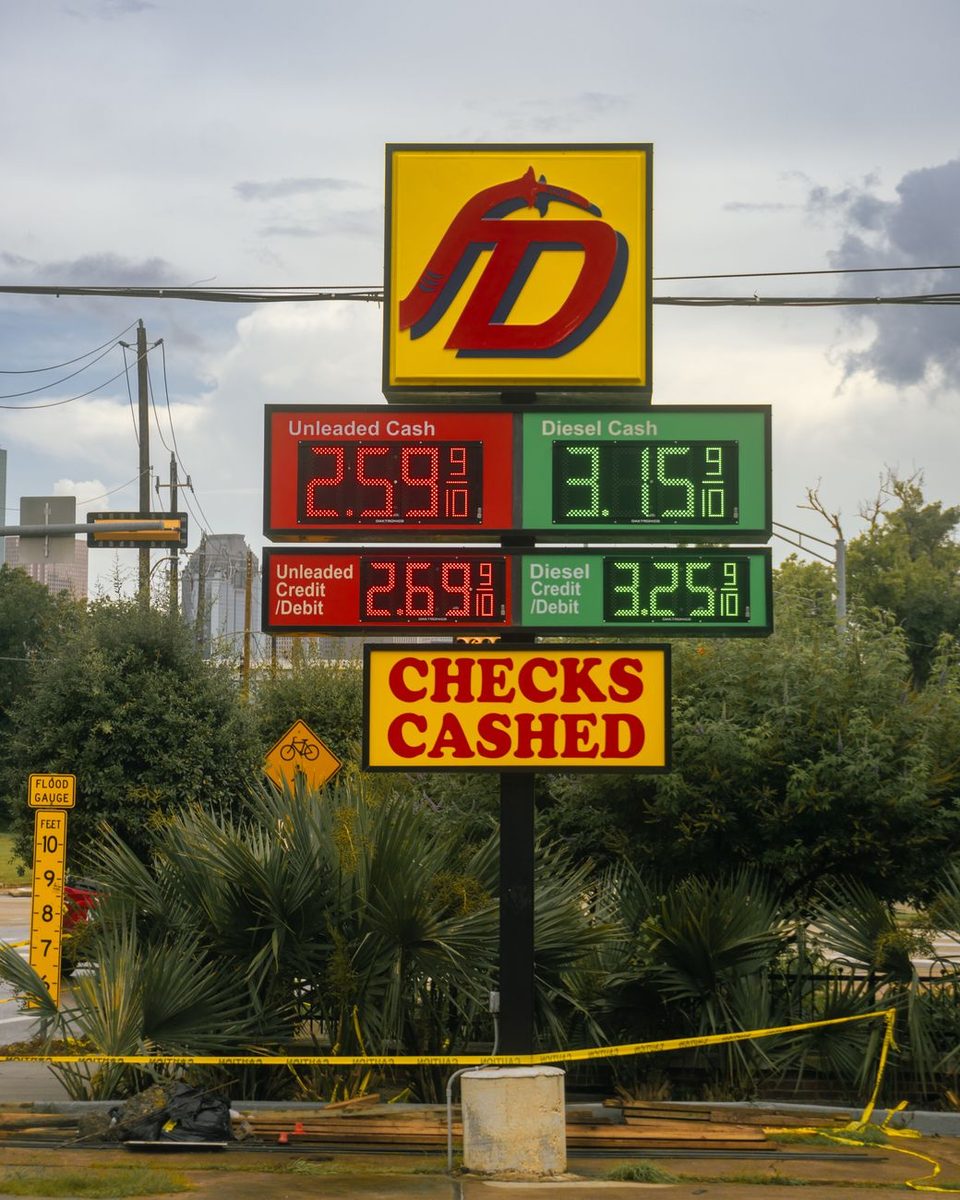
Gas station signboard displaying fuel prices and checks cashed in Houston, TX.
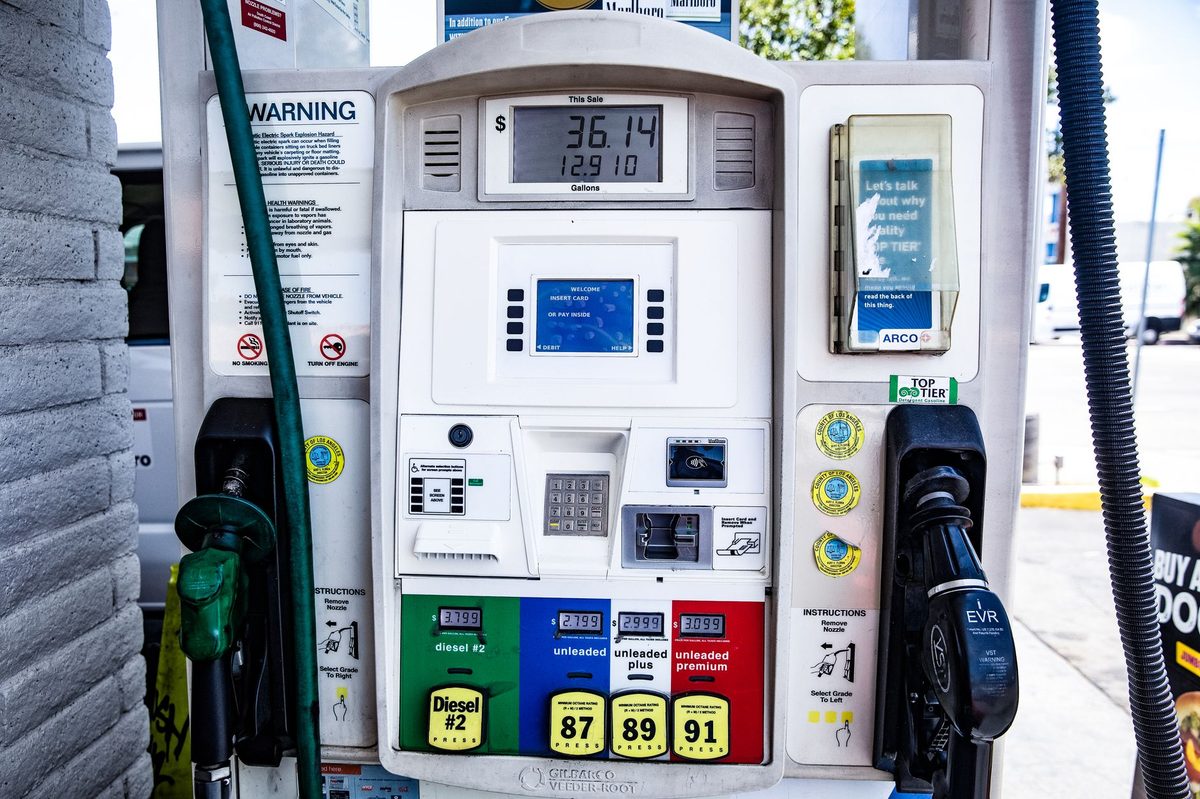
Close-up of a fuel pump showing gasoline and diesel options at a gas station in Los Angeles.

1.2K views
0:39
US diesel prices hit record high amid global supply crunch
USA TODAY

4.3K views
3:38
Diesel hits record high — here's why everything could cost more
Scripps News
553 views
3:13
US Diesel Hits Record $5.820/Gallon | Global Supply Crunch ...
CNBC-TV18
Images from Openverse under Creative Commons licenses. Videos from YouTube.
Voices
Curated perspectives — historical figures and your fellow readers.
Play
Exploring all sides of a story is often best achieved with Play.
Most of these play right now — no account needed. Sign up to save scores, keep a streak, and unlock Debate and Predict.
Log in
Sign Up
WHO SAID WHAT?
Can you match the quotes to the right people?
Rounds
People
Per question
Scoring
- points for each correct match.
- time bonus when you answer in under seconds.
- streak bonus once you hit correct in a row.
Score:
Round /
streak
— Who said this?
Tip: press 1– to answer.
Score:
Round /
streak
+
Base +
⚡ Speed +
🔥 Streak +
Streak reset · the answer was
No answer in time · it was
Next Up
Round
of
Score
points
Correct
Best Streak
Time Bonus
Avg. Time
points — sign up to put that on the leaderboard.
Now try on this story
Higher or Lower
A number from this story, against one from elsewhere in the news — guess which is bigger, then keep the chain going. 5 rounds, 3 strikes; a miss costs a strike and resets your streak.
Example
Anchor
EU tariff revenue
$52B
Big for this kind of number
Mystery
Pentagon AI contract
?
Round 1
Streak: 0
Mystery
?
Keyboard: ↓/L lower · ↑/H higher
0 pts
Best streak: 0 · Rounds: 0
0 points — sign up to put that on the leaderboard.
Now try on this story
Timeline
US diesel prices hit record high as conflicts squeeze global supply
Order five events from this story, oldest at top. Each in the right slot scores 1 — neighbours within one slot count too. Your previous result — green ✓ for exact slots, yellow ~ for off by one. Cards now in true chronological order.
Loading puzzle…
Tap 💡 Free hint to lock the oldest into slot 1 — that leaves just four to order. Type pills are clues.
0/5
Exact slot
0/5
Within 1
Sign up to save your score and track a streak across stories.
Now try on this story
Connections
Sixteen names from the news. Find the four hidden groups of four. Four mistakes max.
Loading today's puzzle…
0/4 groups
Mistakes
Sign up to keep a daily streak — a new puzzle lands every day.
Now try on this story
Exit debate?
Your progress in this debate will be lost.
How it works
- 1 Two AI personas square off on this story.
- 2 You predict who'll win each round — correct picks earn XP.
- 3 One crossfire question is yours to fire. Pick it carefully.
Couldn't generate a topic
Select Your Champions
Choose one persona for each side of the debate
DEBATE TOPIC
Choose personas with different perspectives for a more dynamic debate.
SIDE A (PRO)
Select debater for this side:
No debate personas available right now.
SIDE B (CON)
Select debater for this side:
No debate personas available right now.
VS
Get ready to make your prediction...
Round of
Claim
Evidence
Stakes
Crossfire Answer
Closing Statement
Claim
Evidence
Stakes
Crossfire Answer
Closing Statement
Your Crossfire Question
Generating arguments...
Who's Got This Round?
Make your prediction before the referee scores
The referee scores both sides on
Correct predictions earn +20 XP
· Press 1 or 2 to pick
Evidence
40%
Logic
30%
Detail
20%
Style
10%
Round Results
Your Pick
Not this time
(%)
Overall Score
/10
Your Pick
Not this time
(%)
Overall Score
/10
Set the Crossfire
Pick the question both personas must answer in the final round
Crafting crossfire questions...
Choosing a question earns +10 XP crossfire bonus
🏆
Total XP Earned
Cred Change
Predictions
Debate Oracle! You called every round!
Sharp Instincts! You know your debaters!
The Coin Flip Strategist! Perfectly balanced!
The Contrarian! Bold predictions!
Inverse Genius! Try betting the opposite next time!
XP Breakdown
Base completion
+20 XP
Rounds played ( rounds x 5 XP)
+ XP
Correct predictions ( correct x 20 XP)
+ XP
Crossfire bonus
+10 XP
Accuracy
%
Prediction History
Round
You picked:
✓
✗
Now try on this story
Keep debating to level up your credibility and unlock achievements
People Involved
Patrick De Haan
Head of petroleum analysis, GasBuddy
Tracking daily fuel prices, warning of record year
Andy Lipow
President, Lipow Oil Associates
Tracking supply disruptions for energy clients
Gary Simmons
Chief operating officer, Valero
Running US refinery operations amid tight margins
Brian Mandell
Executive vice president for marketing, Phillips 66
In charge of fuel marketing during supply crunch
David Russell
Global head of market strategy, TradeStation
Warning of sharper price increases ahead
GS
Giovanni Staunovo
Analyst, UBS
Tracking refinery utilization and supply disruptions
LG
Linda Giesecke
Director of refined products, Rapidan Energy Group
Tracking distillate inventories and refining margins
Organizations Involved
American Automobile Association (AAA)
Motorist association and data provider
Publishes national average fuel prices
Reports daily average fuel prices nationwide, the benchmark for US diesel and gasoline costs.
GasBuddy
Fuel price tracking service
Tracks real-time diesel and gasoline prices
Aggregates fuel prices from millions of user-reported stations and publishes daily averages.
U.S. Energy Information Administration
Federal statistical agency
Publishes weekly petroleum inventory data
The Energy Information Administration, part of the US Department of Energy, publishes weekly petroleum inventory and price data.
Valero Energy
Refining company
Major US refiner operating at high utilization
One of the largest independent petroleum refiners in the United States.
Phillips 66
Energy company
Refiner and fuel marketer
US energy company operating refineries and fuel marketing across the country.
IN
ING
Bank and financial services
Publishing analysis of diesel supply disruptions
Dutch bank whose commodities strategy team tracks global oil and diesel flows.
American Action Forum
Policy research organization
Publishing analysis of the diesel price shock
Policy research group that quantified the economic cost of the diesel surge.
RE
Rapidan Energy Group
Energy consulting firm
Publishing analysis of distillate markets
Energy consulting firm tracking distillate inventories and refining margins.
Timeline
February 2026 September 2026
11 events
Latest: 2 days ago
Showing 8 of 11
Tap a bar to jump to that date
-
GasBuddy logs national diesel average above $6 for the first time
Latest MarketGasBuddy's tracker put the national average above $6 a gallon Thursday, a day before AAA's reading hit $6.05. The US-Israel war on Iran and Ukrainian attacks on Russian refineries have squeezed supply.
-
Brent settles at $107.63; diesel crack spread hits record $112.17
MarketBrent crude settled at $107.63 a barrel, the highest since mid-May, as US-Iran fighting intensified. The US diesel crack spread, a measure of refining margins, hit a record $112.17 a barrel, per LSEG.
-
Brent crude surges past $100 a barrel
MarketThe international benchmark topped $100, the highest since July, after a new round of US-Iran strikes. It traded near $72 before the war began.
-
Diesel hits new record $5.90 on Labor Day
MarketAAA reports the national average at $5.90 a gallon on September 7, up from $5.85 on September 4. Gasoline also set a Labor Day record at $4.15 a gallon.
-
Diesel hits record $5.85 national average
MarketAAA reports the national average at $5.85, an all-time high, up about 55 percent since the war began.
-
GasBuddy logs $5.82, topping 2022 record
MarketFuel tracking service GasBuddy records $5.820 a gallon, beating its June 2022 peak of $5.819.
-
EIA reports East Coast diesel inventories at record low
DataDistillate stocks fall to 19.3 million barrels for the week ending August 28, the lowest August level since EIA records began in 1982.
-
EPA allows winter-blend gasoline early
PolicyThe Environmental Protection Agency said winter-blend gas could be sold starting September 1, ending summer-blend requirements early to boost supply.
-
Diesel holds above $5 a gallon
MarketNational average stays above $5 as the Iran war drags on and supply disruptions mount.
-
Russia bans diesel exports after refinery strikes
PolicyMoscow halted diesel sales abroad in July after Ukrainian drone strikes knocked out refineries, removing about 800,000 barrels per day from world supply. The ban runs through September 30.
-
US and Israel launch war against Iran
ConflictMilitary action begins. Diesel averages $3.76 a gallon that day, and crude prices climb fast.
Scenarios
1
Diesel tops $6 as heating season tightens supply
Possible
Resolves by Nov 30, 2026
Discussed by: GasBuddy analysts, TradeStation market strategists
Autumn harvest demand arrives with inventories at record lows. Heating oil, a similar distillate drawn from the same stockpiles, adds pressure as winter approaches. If the Iran war and Russian export ban persist, the national average could push past $6 a gallon.
2
Iran ceasefire restores Hormuz flows, diesel falls below $5
Unlikely
Resolves by End of 2026
Discussed by: Commodity analysts at UBS, energy trading desks
A diplomatic settlement or de-escalation restores tanker traffic through the Strait of Hormuz. If Russia also lifts its diesel export ban, prices could fall back below $5 a gallon. This would require both conflicts to ease, which no major analyst currently expects.
3
Diesel stays above $5 into 2027, squeezing households and farmers
Likely
Resolves by Mar 1, 2027
Discussed by: TradeStation strategists, UBS analysts, Reuters reporting
The status quo holds: no ceasefire, no end to the Russian export ban. Diesel remains above $5 through winter and spring, pushing food and shipping costs higher and slowing consumer spending. Some businesses have already added fuel surcharges on online orders.
4
Hurricane knocks Gulf refineries offline, diesel spikes above $6.50
Possible
Resolves by Nov 30, 2026
Discussed by: Energy analysts citing refinery capacity strain
US refineries are running at 98 percent capacity, mostly in Texas where heat has already stressed operations. A major hurricane hitting the Gulf Coast could knock several plants offline for weeks, cutting supply when inventories are already at record lows.
5
Russia extends diesel export ban past September 30
Possible
Resolves by Q3 2026
Discussed by: Energy analysts at American Action Forum, CNBC
Moscow's ban on diesel exports runs through September 30. If Russia extends it, roughly 800,000 barrels per day stay off the market through winter. Heating oil draws from the same distillate stockpiles as diesel, so prices would likely stay above $6 into 2027.
6
Refinery maintenance stalls inventory rebuild, diesel holds above $6 into winter
Likely
Resolves by Nov 30, 2026
Discussed by: Rapidan Energy Group analysts
US refineries enter seasonal maintenance in September and October, which cuts output just as harvest and heating demand build. Rapidan's Linda Giesecke expects stockpiles to stay hard to rebuild, with diesel margins elevated and volatile into early next year.
Historical Context
3 moments from history that rhyme with this story — and how they unfolded.
October 1973 – March 1974
1973 OPEC oil embargo
Arab members of OPEC cut oil exports to the US and allies in response to US support for Israel in the Yom Kippur War. Oil prices roughly quadrupled, US gas stations ran short, and long lines formed at pumps.
Then
The embargo ended in March 1974 after diplomatic efforts. Prices stayed high for years.
Now
Triggered lasting policy shifts: fuel economy standards, the Strategic Petroleum Reserve, and the 55 mph speed limit.
Why this matters now
The clearest historical example of Middle East conflict driving US fuel prices and broader inflation.
2008
2008 oil price spike
Crude futures climbed to $147 a barrel in July 2008 as global demand outpaced supply. US gasoline topped $4 a gallon nationally for the first time. Consumers cut back on driving and discretionary spending.
Then
Prices collapsed as the financial crisis triggered a deep recession later that year.
Now
Demonstrated how sustained high fuel costs act as a drag on consumer spending and can help tip the economy into downturn.
Why this matters now
Shows the path from sustained high diesel prices to a broader economic slowdown, a risk analysts now flag.
February-June 2022
Russia's invasion of Ukraine and the June 2022 diesel record
Russia invaded Ukraine in February 2022, disrupting energy markets. Crude spiked and diesel hit $5.81 a gallon in June 2022, the record at the time. Refiners struggled to replace Russian diesel exports while Europe scrambled for alternative supplies.
Then
Prices eased by late 2022 as recession fears cut demand and Russia kept exporting at a discount.
Now
Set the benchmark that this event just broke, and showed how quickly war-driven supply shocks move fuel prices.
Why this matters now
The current record breaks the 2022 peak under similar conditions: war cutting crude supply and refining capacity.
Sources
(25)Related Stories
US gasoline tops $4 on Labor Day for first time as Iran war tightens fuel supply
Built World
Updated 5 days ago
Global oil shock as Iran war shuts down the Strait of Hormuz
Built World
Updated 2 days ago
Brent crude nears $100 as Strait of Hormuz shipping halves
Force in Play
Updated 3 days ago
Iran conflict shuts down the world's most important oil chokepoint
Force in Play
Updated May 30
Global coal demand set to reach record as Iran war cuts gas supplies
Built World
Updated 19 hours ago
Oil tankers halt Strait of Hormuz transit after US-Israel strikes on Iran
Force in Play
Updated Sep 4