Anchor

Salesforce unveils enterprise AI harness to govern agents across the business
New CapabilitiesSix-capability harness targets enterprise AI governance and challenges ServiceNow; security and cost tooling still in progress
Yesterday: Salesforce publishes harness details; analysts flag security and cost gapsNew here? Follow stories to track developments over time. Create a free account to get updates when stories you care about change.
Overview
Updated 10 hours agoEnterprises are putting AI agents to work across their business systems, which creates a new problem: controlling what those agents can see, do, and spend. Salesforce's answer, unveiled September 10, 2026, is the Trusted Enterprise AI Harness, a software layer that wraps AI in six capabilities: context, agency, action, governance, security, and models.
The harness gives agents a shared view of the customer and business, routes work to the right model, and applies consistent security and compliance rules. Much of the underlying tech already exists in Salesforce products like MuleSoft and Data Cloud; the unified experience rolls out in early fiscal year 2028 (February 2027). Salesforce is positioning itself as the central management layer for enterprise AI, with the AI Economy substack comparing its control plane to rivals from ServiceNow, Microsoft, AWS, and SAP.
Why it matters
Enterprises deploying AI agents face a governance decision: adopt Salesforce's harness, a rival like ServiceNow, or assemble point tools from startups.
Questions about this story
Free account needed to ask — your question is kept and asked for you right after sign-up. Answers are public.
No questions yet — be the first to ask.
Key Indicators
6
Core capabilities in the harness
Context, agency, action, governance, security, and models form the six pillars.
8
Existing Salesforce platforms contributing tech
The harness draws on Data 360, Informatica, MuleSoft, Agent Fabric, Tableau, Agentforce, Salesforce Guardian, and the Salesforce Platform.
Feb 2027
Unified experience target
Rollout begins early fiscal year 2028; some foundational technologies are available now.
60+
MCP tools exposed via Headless 360
Salesforce's headless layer exposes the platform through Model Context Protocol tools and APIs so the harness can reach Claude, Slack, and Microsoft Teams.
Related Media

Salesforce's Agentforce Is Here: Trusted, Autonomous AI Agents to Scale Your Workforce - Salesforce
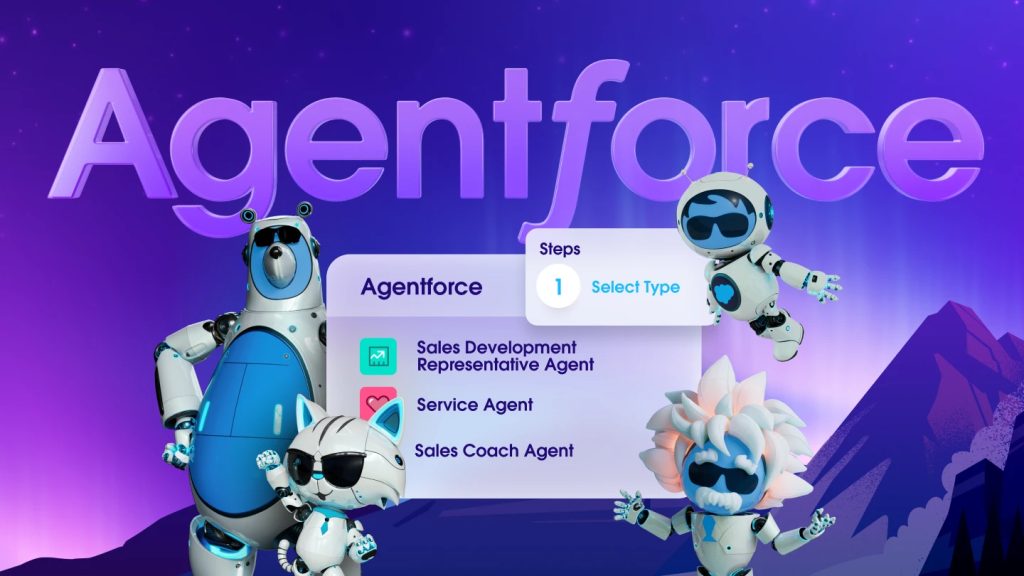
Agentforce: The AI Agent Platform | Salesforce
See Every Agent. Govern Every Agent. Control AI Costs.

5.3K views
4:05
Salesforce and Anthropic Just Made Claude the Default AI ...
AIM Network

80 views
1:09
Salesforce's New AI Agent Layer Changes Enterprise Software
FounderSignalAI

5 views
1:05
Salesforce Enters AI Era: Your CRM Just Got Smarter!
Enterprise Tech News
Images from Openverse under Creative Commons licenses. Videos from YouTube.
Voices
Curated perspectives — historical figures and your fellow readers.
Play
Exploring all sides of a story is often best achieved with Play.
Most of these play right now — no account needed. Sign up to save scores, keep a streak, and unlock Debate and Predict.
Log in
Sign Up
Higher or Lower
A number from this story, against one from elsewhere in the news — guess which is bigger, then keep the chain going. 5 rounds, 3 strikes; a miss costs a strike and resets your streak.
Example
Anchor
EU tariff revenue
$52B
Big for this kind of number
Mystery
Pentagon AI contract
?
Round 1
Streak: 0
Mystery
?
Keyboard: ↓/L lower · ↑/H higher
0 pts
Best streak: 0 · Rounds: 0
0 points — sign up to put that on the leaderboard.
Now try on this story
Connections
Sixteen names from the news. Find the four hidden groups of four. Four mistakes max.
Loading today's puzzle…
0/4 groups
Mistakes
Sign up to keep a daily streak — a new puzzle lands every day.
Now try on this story
Exit debate?
Your progress in this debate will be lost.
How it works
- 1 Two AI personas square off on this story.
- 2 You predict who'll win each round — correct picks earn XP.
- 3 One crossfire question is yours to fire. Pick it carefully.
Couldn't generate a topic
Select Your Champions
Choose one persona for each side of the debate
DEBATE TOPIC
Choose personas with different perspectives for a more dynamic debate.
SIDE A (PRO)
Select debater for this side:
No debate personas available right now.
SIDE B (CON)
Select debater for this side:
No debate personas available right now.
VS
Get ready to make your prediction...
Round of
Claim
Evidence
Stakes
Crossfire Answer
Closing Statement
Claim
Evidence
Stakes
Crossfire Answer
Closing Statement
Your Crossfire Question
Generating arguments...
Who's Got This Round?
Make your prediction before the referee scores
The referee scores both sides on
Correct predictions earn +20 XP
· Press 1 or 2 to pick
Evidence
40%
Logic
30%
Detail
20%
Style
10%
Round Results
Your Pick
Not this time
(%)
Overall Score
/10
Your Pick
Not this time
(%)
Overall Score
/10
Set the Crossfire
Pick the question both personas must answer in the final round
Crafting crossfire questions...
Choosing a question earns +10 XP crossfire bonus
🏆
Total XP Earned
Cred Change
Predictions
Debate Oracle! You called every round!
Sharp Instincts! You know your debaters!
The Coin Flip Strategist! Perfectly balanced!
The Contrarian! Bold predictions!
Inverse Genius! Try betting the opposite next time!
XP Breakdown
Base completion
+20 XP
Rounds played ( rounds x 5 XP)
+ XP
Correct predictions ( correct x 20 XP)
+ XP
Crossfire bonus
+10 XP
Accuracy
%
Prediction History
Round
You picked:
✓
✗
Now try on this story
Keep debating to level up your credibility and unlock achievements
People Involved
Organizations Involved
Salesforce, Inc.
Enterprise software company
Announced the Trusted Enterprise AI Harness and AI Control Plane; detailed headless delivery via MCP
Enterprise cloud software vendor best known for CRM, now pivoting hard toward AI agents.
MuleSoft
API management and integration platform (Salesforce subsidiary)
Provides integration and agent orchestration foundation for the harness
Platform for connecting applications, data, and devices through APIs.
Agentforce
Agentic AI platform (Salesforce product)
Underlying agent platform the harness extends
Salesforce's platform for building and running AI agents.
Timeline
March 2018 September 2026
5 events
Latest: Yesterday
Tap a bar to jump to that date
-
Salesforce publishes harness details; analysts flag security and cost gaps
Latest Follow-upSalesforce published the official press release detailing the six capabilities, the AI Control Plane, and headless delivery through MCP and APIs to surfaces like Claude, Slack, and Microsoft Teams. Launch coverage from diginomica quoted Kumar saying trusted security and FinOps capabilities still need to be built.
-
TechTarget frames harness as Salesforce's challenge to ServiceNow
AnalysisTechTarget reported the Enterprise AI Harness is Salesforce's latest salvo aimed at ServiceNow. It noted Salesforce previewed MuleSoft Agent Fabric at Dreamforce 2025 and has since released it.
-
Salesforce unveils Trusted Enterprise AI Harness
Product launchSalesforce announced the six-capability AI harness and control plane; unified rollout starts early fiscal 2028.
-
Agentforce launches at Dreamforce 2024
Product launchSalesforce launched Agentforce, its agentic AI platform, positioning the company for autonomous agents.
-
Salesforce announces MuleSoft acquisition for $6.5 billion
AcquisitionThe deal brought MuleSoft's API management and integration tools, which anchor the harness's action layer.
Scenarios
1
Salesforce harness becomes the enterprise standard for agent governance
Possible
Resolves by Q3 2027
Discussed by: Salesforce's announcement materials and Kumar's model-agnostic framing
Salesforce bundles the harness with Agentforce, MuleSoft, and Data Cloud and lands large enterprise deals. Intelligent model routing and the AI control plane win customers running multiple large language models. Pricing announced closer to general availability, likely early fiscal 2028, will determine how quickly adoption accelerates.
2
Adoption splits as customers mix the harness with rival point tools
Likely
Resolves by End of 2027
Discussed by: diginomica's analysis flagging governance and cost-control gaps in the early formulation
Enterprises already using LangChain, Microsoft Copilot Studio, or Amazon Bedrock for some workloads keep those in place, turning to Salesforce only for CRM-adjacent agents. The harness becomes one layer among several rather than the single control plane Salesforce envisions. Independent analysts will measure whether the harness dominates or merely competes.
3
Harness becomes a neutral orchestrator across rival models
Possible
Resolves by Jan 31, 2028
Discussed by: SiliconANGLE's coverage of intelligent model routing; Salesforce's headless and MCP strategy
Salesforce leans into open standards — Model Context Protocol (MCP) support, routing across third-party models, and headless delivery to Claude, Slack, or Teams. The harness functions as a routing and governance layer for any model, making model choice secondary. The company has said capabilities will extend beyond its own applications into other AI experiences.
4
Security and cost gaps slow the harness rollout
Possible
Resolves by Apr 30, 2027
Discussed by: diginomica's report on Kumar's briefing remarks
Kumar conceded the security and FinOps pieces are not all built. If the unified experience ships in early fiscal 2028 without them, enterprises running regulated workloads may keep their own governance stacks and use the harness only for CRM-adjacent agents. Salesforce says it is working with customers on R&D to align AI costs with enterprise value, and plans a bigger role for Tableau in monitoring the data and AI estate.
5
ServiceNow rivalry defines the agent governance market
Likely
Resolves by End of 2027
Discussed by: TechTarget's coverage of the launch
TechTarget framed the Enterprise AI Harness as Salesforce's latest salvo aimed at ServiceNow, which has been selling its own AI agents. Both vendors pitch themselves as the control layer for enterprise AI. The contest may come down to which installed base trusts its vendor for mission-critical agent workflows.
6
AI Control Plane Market Splits Across Salesforce, ServiceNow, Microsoft, AWS, and SAP
Likely
Resolves by Q2 2027
Discussed by: The AI Economy substack analysis
The AI Economy notes the AI Control Plane functions similarly to ServiceNow's AI Control Tower, Microsoft's Agent 365, Amazon Bedrock AgentCore, and SAP's AI Agent Hub. Enterprises running multiple clouds may adopt several control planes rather than one, with Salesforce winning CRM-adjacent agents and hyperscalers winning their own ecosystems.
Historical Context
3 moments from history that rhyme with this story — and how they unfolded.
1999-2005
Microsoft Active Directory (1999-2000s)
As Windows servers spread through corporate networks in the late 1990s, Microsoft introduced Active Directory to centralize identity and policy. It became the layer that governed who could access what.
Then
Enterprises standardized on Active Directory for identity management.
Now
The control layer anchored Microsoft's dominance of enterprise IT management.
Why this matters now
Whoever owns the identity and governance layer for AI agents gains a controlling position in the enterprise AI stack — the dynamic Salesforce is chasing.
2008-2018
The API management wave (2008-2018)
When companies broke software into microservices and adopted software-as-a-service, APIs multiplied faster than teams could manage them. Vendors like MuleSoft, Apigee, and Kong sold governance layers to track, secure, and control access to those connections.
Then
Enterprises bought or built API gateways to manage connections between applications.
Now
MuleSoft became an enterprise standard and was acquired by Salesforce for $6.5 billion in 2018.
Why this matters now
AI agents are multiplying across enterprises the way APIs did. The harness is Salesforce's attempt to own the governance layer for agents the way MuleSoft did for APIs.
2015-2020
Cloud cost management and FinOps (2015-2020)
As businesses moved workloads to AWS, Azure, and Google Cloud, tracking and controlling cloud spending became a real problem. A wave of startups — CloudHealth, Turbonomic, Apptio — sold cost management tools to fix it.
Then
Cost management tools became standard practice for cloud-heavy enterprises.
Now
Cloud providers built native tooling and bought or displaced the startups.
Why this matters now
The AI Control Plane explicitly manages inference costs and agent performance, applying the FinOps model to AI agents.
Sources
(13)Related Stories
Google Cloud pitches itself as the operating system for enterprise AI agents
New Capabilities
Updated Aug 27
SAP moves to become the registry for enterprise AI agents
New Capabilities
Updated Jul 28
Observe.AI launches AI agents that automate contact center coaching
New Capabilities
Updated 3 days ago
Slack launches Surfaces AI that builds dashboards inside chats
New Capabilities
Updated Yesterday
Salesforce extends rolling layoffs with new San Francisco filing
Money Moves
Updated Aug 31
Anthropic targets Wall Street with packaged AI agents
New Capabilities
Updated Jun 3