

Pull to refresh
Logo
Observe.AI launches AI agents that automate contact center coaching

Observe.AI launches AI agents that automate contact center coaching

New Capabilities

Performance Agents analyze calls, draft coaching plans, and measure whether coaching changed behavior

4 days ago: Observe.AI launches Performance Agents for CX

Overview

Updated 3 days ago

Contact center supervisors spend hours each week pulling transcripts, finding examples, and writing coaching plans. Observe.AI's new Performance Agents do that work in under five minutes.

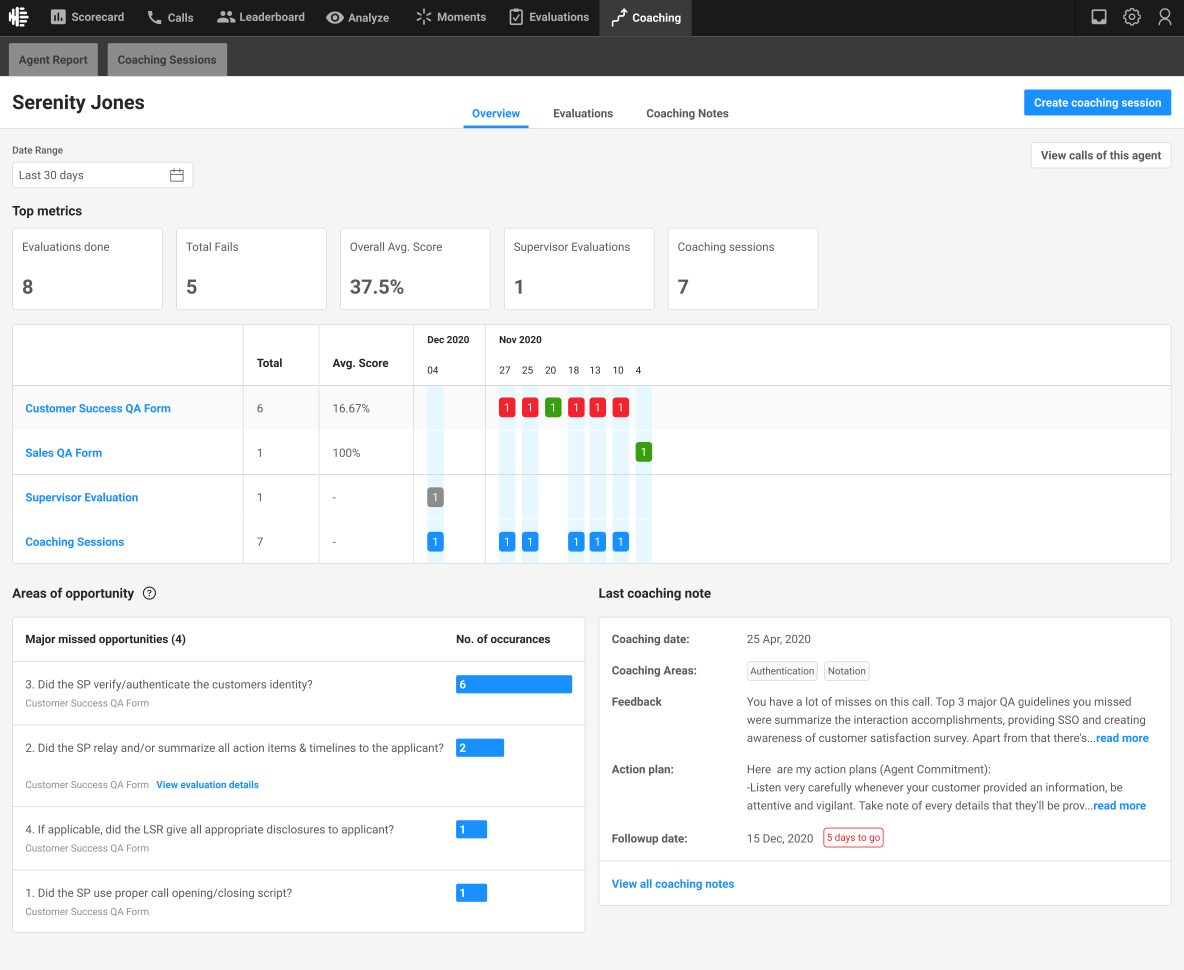
The agents analyze customer conversations, identify coaching opportunities, and measure whether coaching actually improved performance. Supervisors still approve every plan before it reaches a frontline worker, but the analysis, drafting, and follow-up are now automated.

Why it matters

AI in contact centers is moving from telling managers what happened on calls to deciding what workers should change and measuring whether the change worked.

Questions about this story

Free account needed to ask — your question is kept and asked for you right after sign-up. Answers are public.

No questions yet — be the first to ask.

Key Indicators

Under 5 min
Coaching prep time per plan
Down from hours of manual transcript review, evidence gathering, and plan drafting
4
AI agent types in Observe.AI platform
Customers, Companion, Operations (including Performance Agents), and Interaction Intelligence

Voices

Curated perspectives — historical figures and your fellow readers.

Ever wondered what historical figures would say about today's headlines?

Sign up to generate historical perspectives on this story.

People Involved

Organizations Involved

Timeline

1 event Latest: 4 days ago
  1. Observe.AI launches Performance Agents for CX

    Latest Product Launch

    Launched AI agents that analyze conversations, draft coaching plans, and measure whether coaching improved performance. Supervisors approve every plan before it reaches frontline workers.

Scenarios

1

AI coaching agents become the contact center standard

Likely Resolves by Sep 8, 2027

Discussed by: Industry analysts and CX publications tracking the shift from conversation intelligence to AI-driven action

If Performance Agents prove effective, major contact center vendors will launch comparable products. The human-in-the-loop model could become the industry standard for AI coaching, with supervisors reviewing AI-drafted plans before they reach workers.

2

Observe.AI removes the human approval gate

Possible Resolves by Sep 8, 2027

Discussed by: Sales Tech Edition, which noted the human gate sits on internal coaching plans, not customer-facing interactions

The supervisor approval requirement could fall as the technology proves itself. Observe.AI or a competitor could launch fully autonomous coaching that sends plans directly to frontline workers without human review.

3

Performance Agents fail to gain traction

Unlikely Resolves by Sep 8, 2027

Discussed by: Skeptics who question whether supervisors will trust AI-generated coaching plans

Supervisors may not trust AI-drafted plans that miss context a human would catch. Frontline workers may push back against AI-driven performance management. If adoption stalls, Observe.AI could scale back the product or reposition it.

Historical Context

2 moments from history that rhyme with this story — and how they unfolded.

Early 2000s

Automated speech analytics in call centers (2000s)

Before speech analytics, supervisors manually listened to a small sample of calls to assess quality. Speech analytics tools automated the analysis, allowing 100% of calls to be evaluated for sentiment, compliance, and customer experience.

Then

Contact centers shifted from sampling a few calls per agent to analyzing every interaction.

Now

Set the precedent for AI in contact centers, but the tools were analytical - they showed what happened without prescribing what to do about it.

Why this matters now

Performance Agents represent the next wave: AI that not only analyzes conversations but also decides what workers should change and measures whether the change worked.

2010s

AI clinical decision support in healthcare (2010s)

Systems like IBM Watson for Oncology analyzed patient data and suggested treatment options, but doctors retained final authority over treatment decisions. The human-in-the-loop model was designed to combine AI analysis with human judgment.

Then

Adoption varied; some hospitals found the suggestions useful, others found them redundant or unreliable.

Now

Established a template for AI recommendations with human approval, now being applied to performance management.

Why this matters now

Performance Agents use the same model: AI drafts coaching plans, supervisors approve them. The open question is whether the human gate holds or falls as the technology improves.

Sources

(5)