

Pull to refresh
Logo
PagerDuty launches Paige, an AI agent that answers the page

PagerDuty launches Paige, an AI agent that answers the page

New Capabilities

The incident-management company renamed its operations cloud the PD Reliability Platform, opened PD Labs for early AI features, and adjusted plan limits within a week of launch.

Overview

Updated 2 days ago

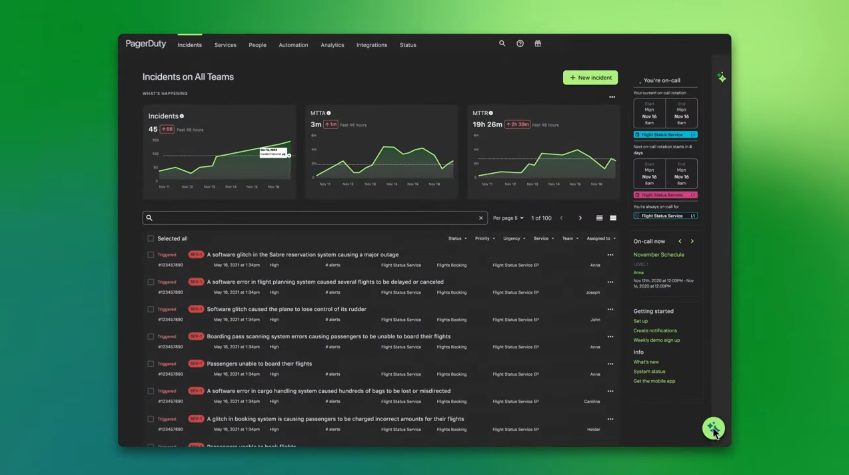
PagerDuty's incident agent, Paige, is generally available, the company said on November 3, 2026. It investigates alerts, suggests fixes, and can carry them out when a team allows it.

Not everything shown at launch is in the shipping product. PagerDuty lists fully automatic handling of known incidents as coming soon, and keeps features such as Deep Investigation and the SRE Workbench inside PD Labs, its early-access program. The company also changed plan limits in the following week, cutting included events on some tiers and raising AI action allowances on others.

Why it matters

If Paige works as advertised, on-call engineers spend less time diagnosing and more time approving an agent's proposed fixes.

Questions about this story

Free account needed to ask — your question is kept and asked for you right after sign-up. Answers are public.

No questions yet — be the first to ask.

Key Indicators

95%
Executives who call incident reduction a competitive advantage
Figure PagerDuty cites from recent research to justify resilience spending.
77%
Executives planning to raise resilience investment
Share who say they will increase spending over the next 12 months.
6
Steps in Paige's incident workflow
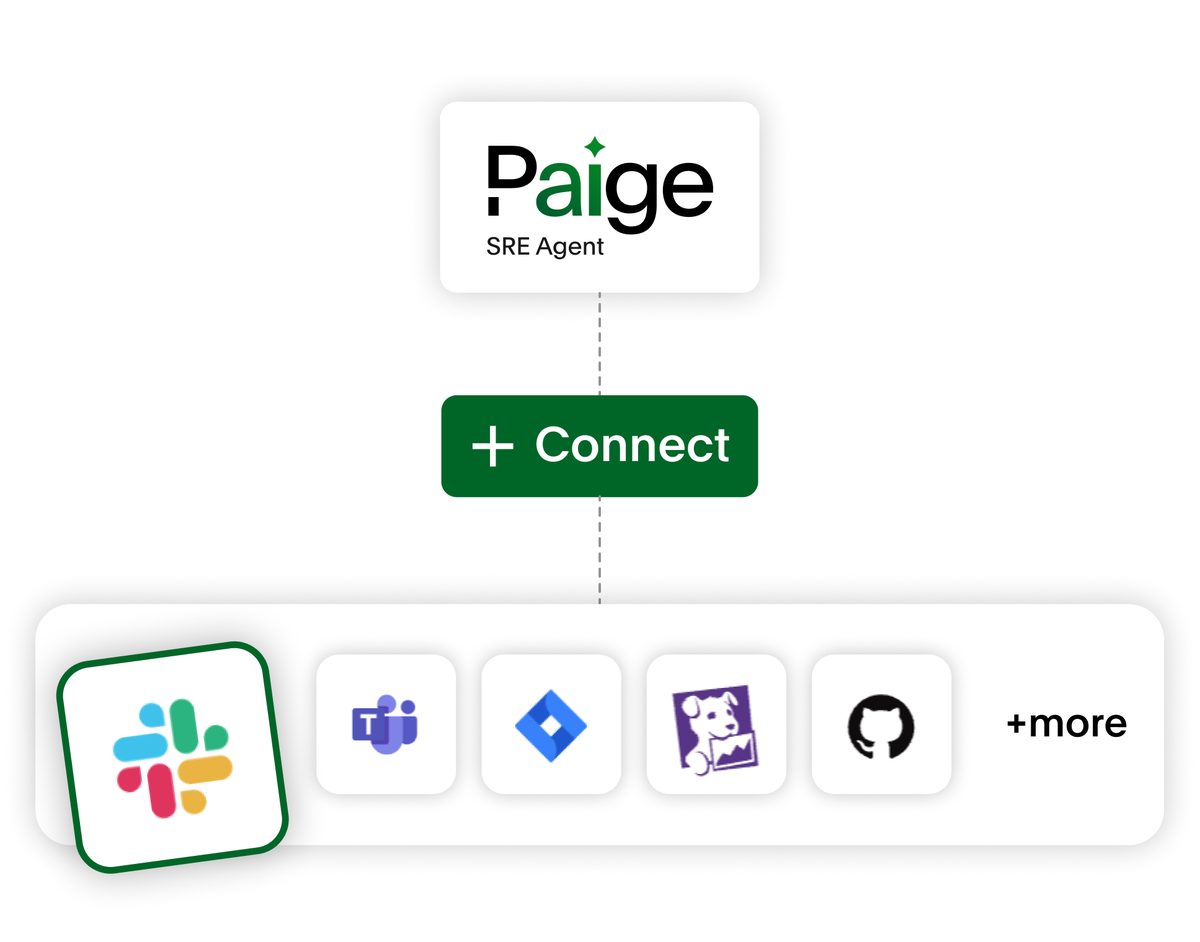
Connect, detect, mobilize, diagnose, remediate, learn.
160,000
AI actions included in the Ultimate plan
Raised from 100,000 in a pricing update recorded on November 9, 2026.

Voices

Curated perspectives — historical figures and your fellow readers.

Sign up to generate historical perspectives on this story.

People Involved

Organizations Involved

Timeline

2009 November 2026

5 events Latest: 2 days ago
Tap a bar to jump to that date
  1. PagerDuty adjusts PD Reliability Platform plan limits

    Latest Pricing

    Pricing-page captures show Starter seats cut from 10 to 5, Essential events from 40,000 to 25,000, and Ultimate events from 2,000,000 to 1,500,000, while Ultimate AI actions rose from 100,000 to 160,000.

  2. Paige, PD Reliability Platform, and PD Labs launch

    Product launch

    PagerDuty releases its SRE agent, renames its operations cloud, and opens an AI innovation center. SRE Workbench also ships on the PD Labs early-access platform.

  3. SRE Workbench released on PD Labs

    Product launch

    PagerDuty releases SRE Workbench, a shared workspace for testing agent investigations, on its PD Labs early-access platform.

  4. PagerDuty goes public

    Company

    Shares begin trading on the New York Stock Exchange under ticker PD.

  5. PagerDuty founded

    Company

    The company starts in San Francisco to automate on-call alerting.

Scenarios

1

Paige resolves most incidents without a human approving each fix

Possible Resolves by Nov 3, 2027

Discussed by: PagerDuty product materials and analysts covering AI operations

PagerDuty designed Paige to act on its own in well-understood cases, and says every resolved incident feeds a shared memory. The company still lists fully automatic handling of known incidents as coming soon, so most fixes currently need a person to approve them.

2

Customers keep Paige on a short leash

Likely Resolves by Nov 3, 2027

Discussed by: Reliability engineers and industry surveys on AI adoption

Remediation is the riskiest step. PagerDuty says teams choose whether Paige runs with a human in the loop or acts on its own, and that permissions and remediation are configurable. Many teams may still run Paige as an investigator that never touches production.

3

A rival ships a competing SRE agent

Likely Resolves by May 3, 2027

Discussed by: Enterprise software analysts

Observability and service-management vendors already sell into the same budgets. A generally available agent from a large competitor would turn Paige from a category creator into one option among several.

4

A Paige remediation causes a public outage

Unlikely Resolves by Nov 3, 2028

Discussed by: Reliability engineers and post-incident reviewers

Automated fixes can make an outage worse. PagerDuty's guardrails, including human approval and tested releases, are meant to prevent that. A public failure would test whether customers still trust autonomous remediation.

5

An independent test finds Paige's diagnosis accuracy below PagerDuty's benchmark

Possible Resolves by May 1, 2027

Discussed by: Reliability engineers and reviewers of vendor benchmarks

PagerDuty cites a 17-scenario benchmark in which its Deep Investigation mode scored among the highest at diagnosing simulated incidents. The benchmark was run by the vendor on simulated rather than production incidents, and no independent replication has been published. A customer or outside lab running Paige against real incident history would show whether the scores hold.

Historical Context

3 moments from history that rhyme with this story — and how they unfolded.

August 2012

Knight Capital trading failure (2012)

Knight Capital deployed new trading software but left old code running on one of eight servers. When markets opened on August 1, the firm sent millions of erroneous orders. It lost about $440 million in roughly 45 minutes.

Then

Knight's stock collapsed, and the firm was acquired by Getco the next year.

Now

The Securities and Exchange Commission fined Knight $12 million and regulators tightened rules for automated trading systems.

Why this matters now

Paige automates production changes rather than trades, but the failure mode is the same: software acting at machine speed needs limits before it acts.

May 2010

The Flash Crash (2010)

On May 6, 2010, the Dow Jones Industrial Average fell about 9% in minutes before recovering. Regulators later pointed to a large sell algorithm interacting with high-frequency traders.

Then

Exchanges introduced circuit breakers to pause trading during sudden moves.

Now

Automated market controls became standard, built on the premise that fast machines need fast brakes.

Why this matters now

The debate over how much autonomy to give Paige echoes the question regulators faced in 2010: how fast should automation be allowed to act without a person in the loop?

2011

Netflix Chaos Monkey (2011)

Netflix released software that randomly terminated production servers so engineers would build systems that survive failure. The practice became known as chaos engineering.

Then

Netflix teams designed services to tolerate constant, expected failure.

Now

Controlled failure testing spread across the industry as a way to earn trust in automation.

Why this matters now

PagerDuty's pitch is similar: let an agent act, but only after testing and guardrails show it can be trusted.

Sources

(13)