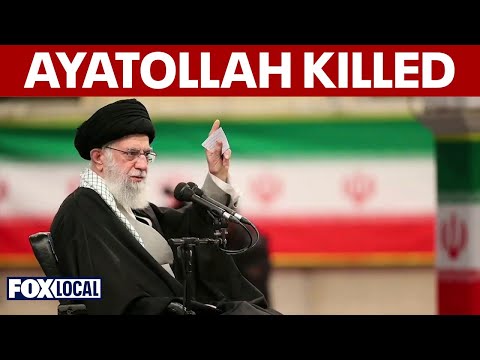
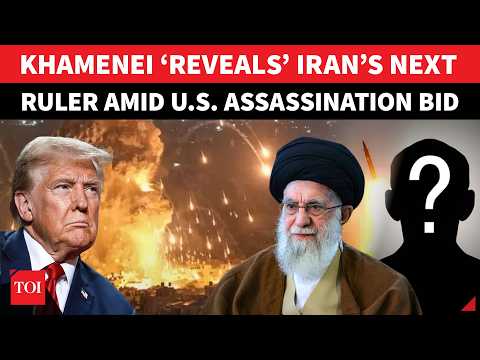
Iran activates wartime succession after Khamenei killed in US-Israeli strikes
Force in Play
Israeli and US forces intensify strikes on Iran's leadership and military infrastructure as an IRGC interim council fights to retain cohesion, Gulf states warn of oil export cutoffs, and Trump demands Iran's 'unconditional surrender' amid a shattered succession process.
Israeli and US forces intensify strikes on Iran's leadership and military infrastructure as an IRGC interim council fights to retain cohesion, Gulf states warn of oil export cutoffs, and Trump demands Iran's 'unconditional surrender' amid a shattered succession process.
Ali Khamenei ruled Iran as supreme leader for 36 years until joint US-Israeli strikes on February 28, 2026, killed him along with family members and multiple top military and intelligence officials at his Tehran compound. The succession process is now opaque and under fire, with the Assembly of Experts' Qom site damaged, acting leader Ali Larijani facing a power vacuum, and the IRGC interim council trying to preserve control.
As the war enters its second week, Israel and the United States are hitting hundreds of targets inside Iran. Tehran retaliates against Israel and US bases and strikes Gulf states. Qatar and other producers warn that oil and gas exports could be cut off within weeks.
The Israel Defense Forces say they have destroyed much of Iran's missile arsenal and navy. The Iranian Red Crescent reports more than a thousand people killed. Crude prices have jumped roughly 25 percent to around $90 a barrel, with credible warnings of a spike toward $150, and President Trump now says only Iran's 'unconditional surrender' will stop the campaign.
Questions about this story
Free account needed to ask — your question is kept and asked for you right after sign-up. Answers are public.
No questions yet — be the first to ask.
Key Indicators
1,000+
Reported deaths in Iran
The Iranian Red Crescent says more than 1,000 people have been killed inside Iran during the first week of US-Israeli strikes and Iranian retaliation.
60%
Missile arsenal destroyed (claimed)
Israeli and US officials say airstrikes have destroyed about 60% of Iran’s missile stockpile and sunk 24 Iranian naval vessels, severely degrading conventional capabilities.
~$90/bbl
Latest crude price level
Benchmark crude prices are up about 25% to around $90 per barrel amid regional attacks and warnings that Gulf exporters could halt shipments within weeks.
Curated perspectives — historical figures and your fellow readers.
George Orwell
(1903-1950) ·Modernist · satire
Fictional AI pastiche — not real quote.
"When a supreme leader rules for thirty-six years in the name of God and revolution, his succession plan is, by definition, a contradiction in terms—for the whole machinery of such a state depends on the fiction that power flows downward from divine sanction, not upward from military councils scrambling in a bunker. The Assembly of Experts will solemnly select a new guardian of the faith, and the IRGC will solemnly accept him, and both parties will understand perfectly well which of them is holding the gun."
0% found this insightful
Ever wondered what historical figures would say about today's headlines?
Sign up to generate historical perspectives on this story.
24 events
Latest: March 6th, 2026 · 6 months ago
Showing 8 of 24
JK to step
Tap a bar to jump to that date
Jump to
March 2026
Israel and US intensify bombardment, claim major damage to Iran’s missiles and navy
LatestMilitary
Israeli and US officials said they hit about 400 targets in Iran on the seventh day of the war and claimed to have destroyed roughly 60% of Iran’s missile arsenal and sunk 24 naval vessels, while the Iranian Red Crescent reported more than 1,000 people killed.
Gulf states warn exports could be cut off as oil surges
Economic
Qatar and other Gulf producers warned that continued Iranian strikes on regional energy infrastructure could force them to halt oil and gas exports within weeks, as crude prices jumped about 25% to around $90 a barrel and analysts warned of a possible spike toward $150.
UN chief urges halt to fighting as Trump demands ‘unconditional surrender’
Diplomatic
UN Secretary-General António Guterres called for an immediate end to hostilities, warning of grave humanitarian and economic consequences, while President Trump said only Iran’s ‘unconditional surrender’ would stop US-Israeli strikes.
Iran launches new drone strikes on US base in Erbil
Military
Iranian regular army drones targeted a US base near Erbil, Iraq, marking a further expansion of Tehran’s regional retaliation beyond earlier missile salvos at Israel and Gulf states.
Israeli airstrike destroys Assembly of Experts building in Qom during supreme leader succession vote
Military
Israeli forces struck and leveled the Assembly of Experts compound in Qom while clerics were counting votes for Khamenei's successor. The attack crippled Iran's formal succession mechanism, forcing any remaining deliberations underground as the IRGC interim council consolidates military authority.
Assembly of Experts convenes emergency session
Succession
The 88-member Assembly of Experts held an emergency closed-door session in an undisclosed secure location to begin formal deliberations on selecting a new supreme leader. The session marked the first time the body has convened under wartime conditions.
IRGC announces interim command council
Military
The Islamic Revolutionary Guard Corps announced formation of a five-member interim command council to coordinate military operations in the absence of a permanent commander. The move signals the IRGC's intent to maintain operational control during the succession process.
Oil markets spike as Strait of Hormuz disruption feared
Economic
Crude oil prices jumped $15-18 per barrel on March 1 as markets reopened, with Brent crude reaching $104-105 per barrel. Traders cited fears of Iranian retaliation targeting the Strait of Hormuz, through which 20% of global oil passes.
Trump vows to continue strikes if Iran escalates
Political
President Trump declared via Truth Social that the US would 'not hesitate' to resume bombing if Iran launched further attacks on US bases or allies. He stated the goal remained 'complete degradation' of Iran's military capability.
Russia and China condemn US-Israeli strikes
Diplomatic
Russia and China issued joint statements condemning the strikes as a violation of international law and called for an immediate ceasefire. Both nations signaled they would not support additional UN Security Council resolutions authorizing further military action.
Pezeshkian's authority questioned as Larijani consolidates power
Political
Reports emerged that President Pezeshkian was excluded from the Assembly of Experts emergency session, raising questions about his role in the succession process. Larijani, as acting supreme leader, has assumed de facto control of state institutions.
February 2026
US and Israel launch joint strikes on Iran
Military
Operation Epic Fury (US) and Operation Roaring Lion (Israel) began with approximately 200 fighter jets striking around 500 targets across Tehran, Isfahan, Qom, Karaj, and Kermanshah, including military command facilities, air defenses, nuclear-linked sites, and leadership compounds.
Iranian state media confirmed Khamenei's death along with his daughter, son-in-law, and grandson. Ali Larijani assumed acting supreme leader authority under pre-arranged emergency plans. At least seven senior defense and intelligence officials were also killed.
Iran retaliates with missile strikes across the region
Military
Iran launched ballistic missiles at Israel and at US bases in Saudi Arabia, the United Arab Emirates, Bahrain, Qatar, and Kuwait, spreading the conflict across the Persian Gulf.
Trump accuses Iran of reviving nuclear weapons program
Political
In his State of the Union address, Trump described Iran's nuclear ambitions as 'sinister' and warned of its advancing missile capabilities, four days before ordering strikes.
Iran-US indirect nuclear talks begin in Geneva
Diplomatic
Iran and the US started indirect negotiations mediated by Oman, aimed at curbing Tehran's nuclear program. Three rounds of talks produced what Oman called 'significant progress.'
IRGC gunboats attempt to seize US tanker in Strait of Hormuz
Military
Six IRGC Navy gunboats tried to stop and seize the Stena Imperative tanker. The vessel continued under escort from the USS McFaul destroyer, avoiding a direct confrontation.
January 2026
US deploys carrier strike group to the Gulf
Military
The USS Abraham Lincoln carrier strike group moved toward the Persian Gulf, part of the largest American military buildup in the region since the 2003 invasion of Iraq.
Trump encourages Iranian protesters, signals possible intervention
Diplomatic
President Trump told Iranians to 'keep protesting' and indicated the US was considering military action. The US began a major military buildup in the Persian Gulf region.
Iran shuts down internet as security forces kill thousands
Crackdown
The government imposed a nationwide internet blackout lasting over two weeks. Security forces killed thousands of protesters on January 8-10, with confirmed death tolls exceeding 7,000.
Khamenei appoints Larijani to manage crisis
Political
Khamenei elevated Ali Larijani as de facto crisis manager, sidelining elected President Pezeshkian and consolidating wartime authority in the Supreme National Security Council.
December 2025
Massive protests erupt across Iran
Civil Unrest
Shopkeepers in Tehran's Grand Bazaar struck over the collapsing rial and soaring inflation, sparking protests that spread to over 100 cities—the largest since the 1979 revolution.
June 2025
US-brokered ceasefire ends Twelve-Day War
Diplomatic
Hostilities between Iran and Israel officially ceased, but Iran's military was significantly degraded. The humiliation fueled internal discontent that would erupt months later.
Twelve-Day War begins between Iran and Israel
Military
Israel launched surprise strikes on Iranian military and nuclear facilities, triggering 12 days of direct conflict that killed at least 610 Iranians and 28 Israelis before a US-brokered ceasefire on June 24.
Scenarios
1
Assembly of Experts selects IRGC-aligned cleric, regime consolidates
Possible
Discussed by: Council on Foreign Relations, Atlantic Council analysts, and Iranian state-aligned commentators
The Assembly of Experts manages to convene—possibly in a secure or undisclosed location—and selects a hardline cleric with IRGC ties, such as Sadiq Larijani or Alireza Arafi. The new leader rallies what remains of the military establishment, uses the strikes as a unifying nationalist grievance, and reasserts the Islamic Republic's governing structure. This outcome would require the IRGC's mid-level command chain to hold and the Assembly to reach consensus quickly, both of which are uncertain given the ongoing bombing campaign.
2
Succession stalls, Iran fragments into competing power centers
Possible
Discussed by: Foreign Policy Research Institute, International Institute for Strategic Studies, and Gulf-based security analysts
The Assembly of Experts cannot safely convene or reaches no consensus. Ali Larijani's acting authority is challenged by IRGC commanders, provincial governors, or clerical factions who do not recognize his legitimacy. Without a supreme leader to adjudicate among competing institutional interests, Iran's government fractures—the presidency, the Guardian Council, IRGC regional commands, and provincial authorities begin acting independently. This is the scenario that most closely mirrors Libya after Muammar Gaddafi's death in 2011.
3
Mojtaba Khamenei selected as successor, dynasty established
Unlikely
Discussed by: CNN, Sunday Guardian, and prediction markets (Kalshi)
Khamenei's son Mojtaba, who wields significant behind-the-scenes influence and has strong IRGC ties, is elevated despite lacking senior clerical rank. This would require the Assembly of Experts to either lower the clerical threshold or grant a waiver—deeply controversial in a revolutionary republic that overthrew a monarchy. The IRGC's support could prove decisive, but the move risks alienating the clerical establishment and triggering a legitimacy crisis among Iran's religious authorities.
4
Regime collapses under combined military and popular pressure
Uncertain
Discussed by: Trump administration officials, Hudson Institute, and Iranian exile opposition groups
The strikes, combined with the unresolved mass protest movement that saw over 7,000 confirmed deaths in January, prove fatal to the Islamic Republic's governing structure. Without a supreme leader and with the IRGC command chain shattered, the state loses its monopoly on force. Protests reignite, military units refuse to fire on civilians, and the constitutional order dissolves. This is Trump's stated objective of 'regime change from within,' though analysts note that the absence of an organized opposition makes what comes next deeply uncertain.
5
IRGC interim council seizes de facto control, Assembly becomes ceremonial
Possible
Discussed by: International Institute for Strategic Studies, Middle East Institute analysts, and Iranian military observers
The IRGC's interim command council, citing wartime necessity, begins making strategic decisions independently of the Assembly of Experts. The Assembly selects a figurehead supreme leader acceptable to the military, but real power flows through the IRGC's interim structure. This outcome would represent a shift from clerical rule toward military governance, mirroring patterns seen in Egypt and Pakistan.
6
Larijani's acting authority rejected by IRGC factions; power vacuum deepens
Possible
Discussed by: Council on Foreign Relations, Iranian exile analysts, and regional security experts
Mid-level IRGC commanders, particularly those from the Quds Force and naval branches, refuse to recognize Larijani's authority and begin operating independently. The Assembly's selection of a successor is challenged by competing military factions, producing a de facto split between civilian and military command structures. This fragmentation could accelerate state collapse.
Historical Context
3 moments from history that rhyme with this story — and how they unfolded.
1 of 3
June 1989
Iran's first supreme leader succession (1989)
Ayatollah Ruhollah Khomeini, the founder of the Islamic Republic, died of a heart attack on June 3, 1989, at age 86. The Assembly of Experts selected Ali Khamenei—then serving as president with relatively modest clerical credentials—as successor within hours. The constitution was amended to remove the requirement that the supreme leader be a 'marja' (senior source of religious authority).
Then
The transition was smooth. Khamenei was confirmed quickly and the system continued without disruption.
Now
Khamenei spent the next 36 years consolidating power far beyond what Khomeini had held, building the IRGC into a dominant military-economic force and making the supreme leader position nearly unchallengeable.
Why this matters now
The only precedent for this succession occurred during peacetime, with advance preparation, and with Khomeini's implicit endorsement guiding the Assembly's choice. None of those conditions exist now. The 1989 transition also required lowering the clerical bar for the job—a precedent that could be invoked again for candidates like Mojtaba Khamenei or Ali Larijani who lack senior religious rank.
2 of 3
March-April 2003
Iraq decapitation strikes and state collapse (2003)
The US opened the 2003 Iraq invasion with a 'decapitation strike' targeting Saddam Hussein and 55 senior officials at a compound in Baghdad. The strike missed Saddam but succeeded in destroying Iraq's ability to coordinate military command. The Iraqi government and military collapsed within 22 days.
Then
Baghdad fell on April 9, 2003. Saddam went into hiding and was captured eight months later.
Now
The destruction of Iraq's state institutions—without a viable replacement—produced a decade-long insurgency, sectarian civil war, and the rise of the Islamic State. The US occupied Iraq for eight years.
Why this matters now
The Iran strikes achieved what Iraq's decapitation strike did not—killing the top leader—but face the same core problem: destroying a command structure is faster than building a replacement. Iran's deeper institutional framework (Assembly of Experts, Guardian Council) provides a constitutional path that Iraq's one-man dictatorship lacked, but whether those institutions can function under bombardment is untested.
3 of 3
October 2011
Libya after Gaddafi's death (2011)
Muammar Gaddafi was captured and killed by rebel forces in Sirte on October 20, 2011, after a NATO-backed military campaign. Gaddafi had deliberately hollowed out state institutions over 42 years of rule, concentrating power in personal networks and loyalist militias rather than building durable institutions.
Then
A transitional council took power and held elections in 2012, producing a new parliament.
Now
Libya fractured into competing governments, armed factions, and regional power centers. As of 2026, the country still has no unified government. The power vacuum enabled weapons proliferation across North Africa and the rise of extremist groups.
Why this matters now
Libya illustrates the worst-case outcome when a strongman's death leaves no functioning succession mechanism. Iran's constitution provides formal succession procedures that Libya entirely lacked—but Khamenei, like Gaddafi, had concentrated so much authority in his person and the IRGC that the formal institutions may prove unable to fill the vacuum.