
Pull to refresh
Logo
DOJ sends election monitors to eight Michigan cities for November midterm

DOJ sends election monitors to eight Michigan cities for November midterm

Rule Changes Grand Rapids, MI local

Federal monitors deployed to all 50 states for the first time; Michigan officials flagged two improper interactions in Dearborn and Flint.

Overview

Updated 2 days ago

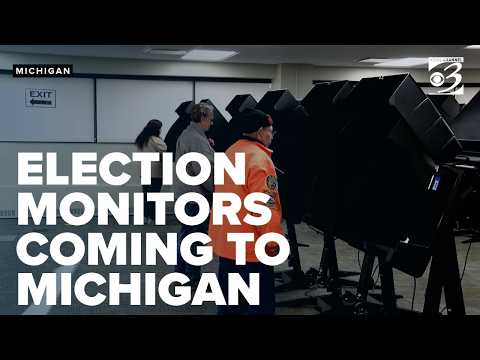
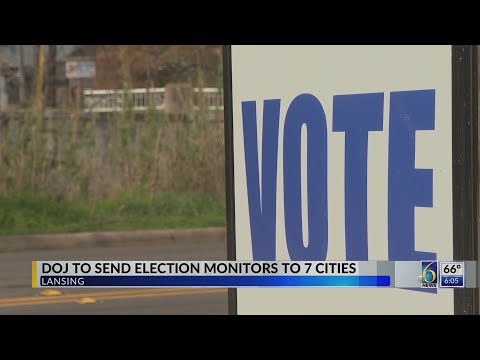
The Justice Department placed federal election monitors at polling places in eight Michigan cities on Nov. 3: Detroit, Dearborn, East Lansing, Flint, Grand Rapids, Hamtramck, Lansing and Warren. About 71 went to Michigan as part of roughly 1,000 nationwide, the first time the department has sent monitors to all 50 states.

Michigan officials reported high turnout and routine problems with ballot-counting machines, but they contacted the Justice Department after monitors in Dearborn and Flint questioned poll workers about their training. State officials said the questions went beyond the monitors' legal role; the Justice Department said they were typical and that it would remind the monitors of the limits.

Why it matters

Federal monitors watched voting in eight Michigan cities, and a complaint tested how far they can go.

Last Monday's email for Grand Rapids, MI

Sent Nov 9. It carried:

Get next Monday's: one short email a week. Free. Unsubscribe in one click.

Questions about this story

Free account needed to ask — your question is kept and asked for you right after sign-up. Answers are public.

No questions yet — be the first to ask.

Key Indicators

8
Cities receiving DOJ election monitors
Detroit, Dearborn, East Lansing, Flint, Grand Rapids, Hamtramck, Lansing and Warren had monitors at polling places on Nov. 3.
71
DOJ monitors assigned to Michigan
The Justice Department sent 71 monitors to eight Michigan cities as part of about 1,000 nationwide.
4
Cities that hosted monitors in August primary
Detroit, Lansing, Hamtramck and East Lansing had monitors during the August 2026 primary.
~1,000
Monitors deployed nationwide
The Justice Department sent about 1,000 monitors and observers to all 50 states, the first time it has covered every state.
388
Monitors sent in 2022 midterms
The Justice Department sent 388 monitors to polling places for the 2022 midterms.

Voices

Curated perspectives — historical figures and your fellow readers.

Sign up to generate historical perspectives on this story.

People Involved

Organizations Involved

Timeline

August 2026 November 2026

9 events Latest: November 3rd, 2026 · 1 week ago
Tap a bar to jump to that date
  1. DOJ deploys monitors to all 50 states for first time

    Latest Election

    The Civil Rights Division sent about 1,000 monitors and observers nationwide, including 71 in eight Michigan cities. The department called it its largest monitoring effort and the first in all 50 states.

  2. Michigan officials flag monitor conduct in Dearborn and Flint

    Complaint

    The Attorney General's Office and Department of State said monitors asked poll workers in Dearborn for training materials and questioned training in Flint, which the state said exceeded their role. The DOJ said it would remind monitors of the limits.

  3. Ballot-counting machines stall at some Michigan precincts

    Election

    Tabulators malfunctioned in Redford Township, Shelby Township and Madison Heights, among other places. State officials said the problems were routine and no voters were turned away.

  4. Statewide early voting begins in Michigan

    Election

    Early voting opened statewide and runs through Nov. 1. Federal monitors are not expected during early voting.

  5. DOJ confirms monitors in all 50 states

    Notification

    A DOJ representative confirmed by email that monitors will be in all 50 states. The department says each monitor's role is to observe and report, not interfere.

  6. Michigan voting-rights groups say they planned for nearly 25 scenarios

    Preparation

    Jessica Ayoub, deputy political director at the ACLU, said the 100 groups in the Michigan Election Protection Program have rapid-response plans for nearly 25 possible problems at the polls.

  7. DOJ sends monitoring notices to seven Michigan cities

    Notification

    The Civil Rights Division notifies Detroit, East Lansing, Flint, Grand Rapids, Hamtramck, Lansing and Warren that monitors will be at polling places on Nov. 3.

  8. DOJ starts notifying counties nationwide of monitoring plans

    Notification

    The Justice Department began telling counties it plans to observe their polling places, with roughly 1,000 monitors expected across all 50 states, about 2.5 times the 388 it sent in 2022. DOJ spokesperson Kiersten Pels said specific locations would be shared closer to the election.

  9. Monitors present in four Michigan cities for August primary

    Election

    DOJ monitors observed voting in Detroit, Lansing, Hamtramck and East Lansing during the primary.

Scenarios

1

Monitors observe clean election in eight Michigan cities

Likely Resolves by Nov 15, 2026

Discussed by: Michigan officials, DOJ

Election Day passes without major incidents at monitored precincts. The DOJ releases a standard post-election statement noting its Civil Rights Division monitored compliance with federal voting laws and received no significant complaints. Michigan election officials highlight the smooth process.

2

DOJ investigation opens into Michigan election incidents

Possible Resolves by Dec 15, 2026

Discussed by: election law observers

Monitors witness or receive reports of voter intimidation, access problems, or interference at a monitored precinct. The Civil Rights Division opens an investigation or files a complaint, drawing national attention to Michigan's election administration.

3

Monitoring becomes political flashpoint in Michigan

Deadline passed (Nov 10, 2026)

Discussed by: political commentators

A candidate or party figure publicly frames the federal monitors as unnecessary or as federal overreach, while others defend them as a safeguard. The dispute generates news coverage but no concrete change to the monitoring plan.

4

Local clerks keep federal monitors outside polling places

Deadline passed (Nov 3, 2026)

Discussed by: State election officials, Campaign Legal Center

Federal law does not expressly authorize the monitors, so their access depends on consent from state and local election officials. Hennepin and Ramsey counties in Minnesota refused entry in a prior election and monitors stood outside a 100-foot perimeter. A Michigan clerk could do the same, leaving monitors to observe from outside on Nov. 3.

5

DOJ issues written guidance after Michigan monitor complaint

Possible Resolves by End of 2026

Discussed by: Michigan election officials, voting-rights groups

Michigan officials said the Justice Department would remind monitors in Dearborn and Flint about the limits of their role. Written guidance or a formal policy change would show the complaint produced a lasting fix; no such guidance has been announced.

Historical Context

2 moments from history that rhyme with this story — and how they unfolded.

August 1965

Voting Rights Act of 1965

President Lyndon Johnson signed the Voting Rights Act, which allowed the Justice Department to send federal examiners to register voters in states with a history of discrimination. The law targeted nine states, mostly in the South, where minority turnout was suppressed.

Then

Federal examiners registered hundreds of thousands of Black voters within months. Minority voter registration rose sharply in covered states.

Now

The Voting Rights Act became the backbone of federal voting rights enforcement. Its preclearance requirement meant covered jurisdictions had to get federal approval for any voting change.

Why this matters now

The DOJ's authority to send election monitors traces directly to the Voting Rights Act. What began as a tool for the Jim Crow South is now a routine presence in states like Michigan.

June 2013

Shelby County v. Holder (2013)

The Supreme Court struck down the Voting Rights Act's coverage formula, which determined which jurisdictions had to preclear voting changes. Chief Justice John Roberts wrote that the formula was outdated, based on 1960s data.

Then

Nine states and numerous counties immediately stopped submitting voting changes for preclearance. Several passed new voter ID laws and redistricting plans within months.

Now

Without preclearance, the DOJ lost its forward-looking veto over election changes. It now relies on monitoring and post-election litigation to enforce voting rights.

Why this matters now

After Shelby, election monitoring is one of the DOJ's few real-time tools to watch voting in places it can no longer pre-clear changes for. That's part of why these monitors in Michigan matter.

Sources

(24)