

Pull to refresh
Logo
Record flooding hits Guangxi as a second typhoon targets Zhejiang

Record flooding hits Guangxi as a second typhoon targets Zhejiang

Force in Play

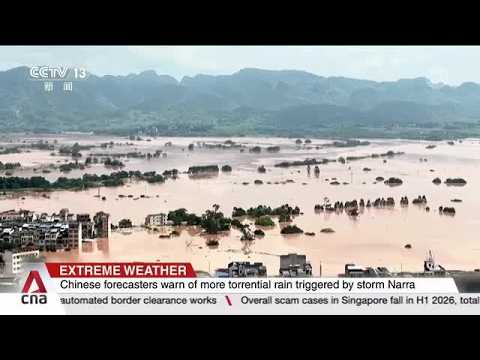
Guangxi's record floods ease as Xizang counts 21 dead and 541 missing from a mudslide that dammed a river

September 2nd, 2026: Gyirong death toll reaches 21; 541 missing

Overview

Updated Sep 3

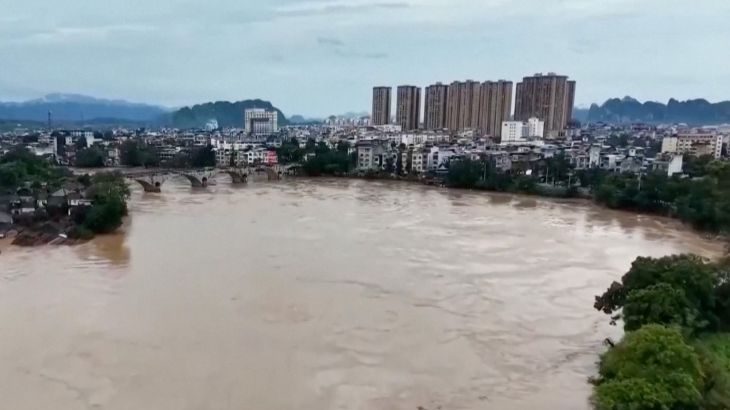
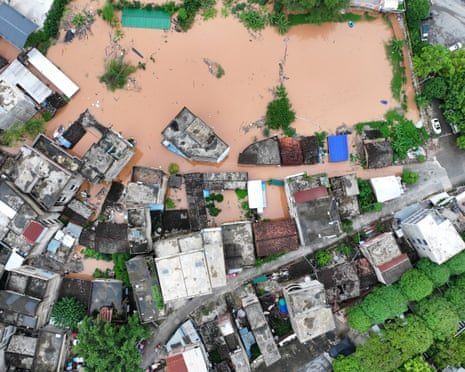
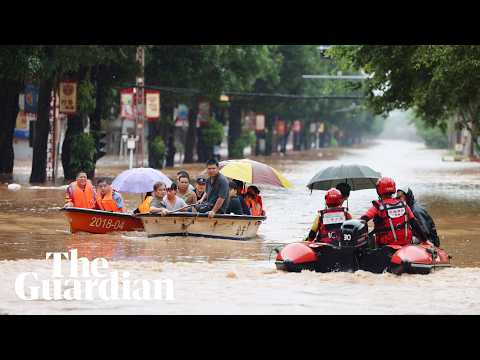
Guangxi's Zuojiang river at Chongzuo peaked at 108.87 meters on August 26, its highest level since 1955. Typhoon Narra's rains, which displaced more than 54,000 people, pushed the river 7.67 meters above flood stage before the storm weakened.

In Xizang, the mudslide at Gyirong Port on August 26 killed 21 people and left 541 missing. Set off by an ice-rock avalanche in Nepal, it also dammed a river into a barrier lake holding about 2 million cubic meters of water. The Ministry of Water Resources warned the lake could breach as Typhoon Saudel, a second storm, approached the Zhejiang or Fujian coast.

Why it matters

Two typhoons and an unstable barrier lake are flooding three regions at once, testing flood defenses built in the decades since the 1998 Yangtze disaster.

Questions about this story

Free account needed to ask — your question is kept and asked for you right after sign-up. Answers are public.

No questions yet — be the first to ask.

Key Indicators

54,000+
Evacuated in Guangxi
People displaced after Typhoon Narra caused record flooding along the Zuojiang river.
21
Dead in Gyirong mudslide
Confirmed dead after the August 26 mudslide at Gyirong Port; 541 people remain missing.
3M m³
Forecast inflow to Gyirong barrier lake
Cubic meters of water expected to flow into the lake over three days, per the Ministry of Water Resources, raising breach risk.
108.87m
Chongzuo river water level
Measured at 03:00 on August 26, 7.67 meters above flood warning stage, the highest since 1955.

Voices

Curated perspectives — historical figures and your fellow readers.

Ever wondered what historical figures would say about today's headlines?

Sign up to generate historical perspectives on this story.

People Involved

Organizations Involved

Timeline

August 2026 September 2026

9 events Latest: September 2nd, 2026 · 1 week ago
Tap a bar to jump to that date
  1. Gyirong death toll reaches 21; 541 missing

    Latest Update

    The Xizang regional government confirms 21 dead and 541 missing as of noon. Road access to the core zone is restored at 10 am after days of repairs.

  2. Saudel landfall expected in Zhejiang or Fujian

    Forecast

    Typhoon Saudel forecast to come ashore between Zhejiang's Sanmen county and Fujian's Xiapu county, packing winds up to 42 m/s.

  3. Orange flood alert; Level I response for Saudel; Xizang barrier lake risk

    Alert

    GDACS orange alert active. Zhejiang raises typhoon response to Level I ahead of Saudel. Ministry of Water Resources activates level-IV response for the Gyirong barrier lake.

  4. Chongzuo hits highest water level since 1955

    Measurement

    Chongzuo's Zuojiang river reaches 108.87 meters, 7.67 meters above flood stage, the largest flood at this station since 1955. CMA upgrades to Level II response.

  5. Mudslide hits Gyirong Port on China-Nepal border

    Disaster

    An ice-rock avalanche in Nepal triggers a mudslide that destroys buildings, power supplies, and a section of the G216 highway at Gyirong Port.

  6. Record levels at three hydrological stations

    Measurement

    Stations in Ningming and Longzhou counties record their highest flood levels on record. Xinhua reports 22,008 evacuated across Guangxi.

  7. Typhoon Narra makes landfall in Hainan

    Weather

    Narra comes ashore in Changjiang county, Hainan, at 6:40 pm after lingering over the Beibu Gulf, then heads toward Guangdong and Guangxi.

  8. Flood event flagged; rivers start rising

    Alert

    GDACS tracks a flood event in China as rain and upstream inflows saturate Guangxi's river basins.

  9. Heavy rain begins across Guangxi

    Weather

    Rainfall associated with Typhoon Zitan starts; Zhilang town in Ningming county records 618.2 mm over four days.

Scenarios

1

Saudel makes landfall, flooding widens in Zhejiang and Fujian

Likely Resolves by Sep 15, 2026

Discussed by: Zhejiang Provincial Emergency Management Department, China Meteorological Administration

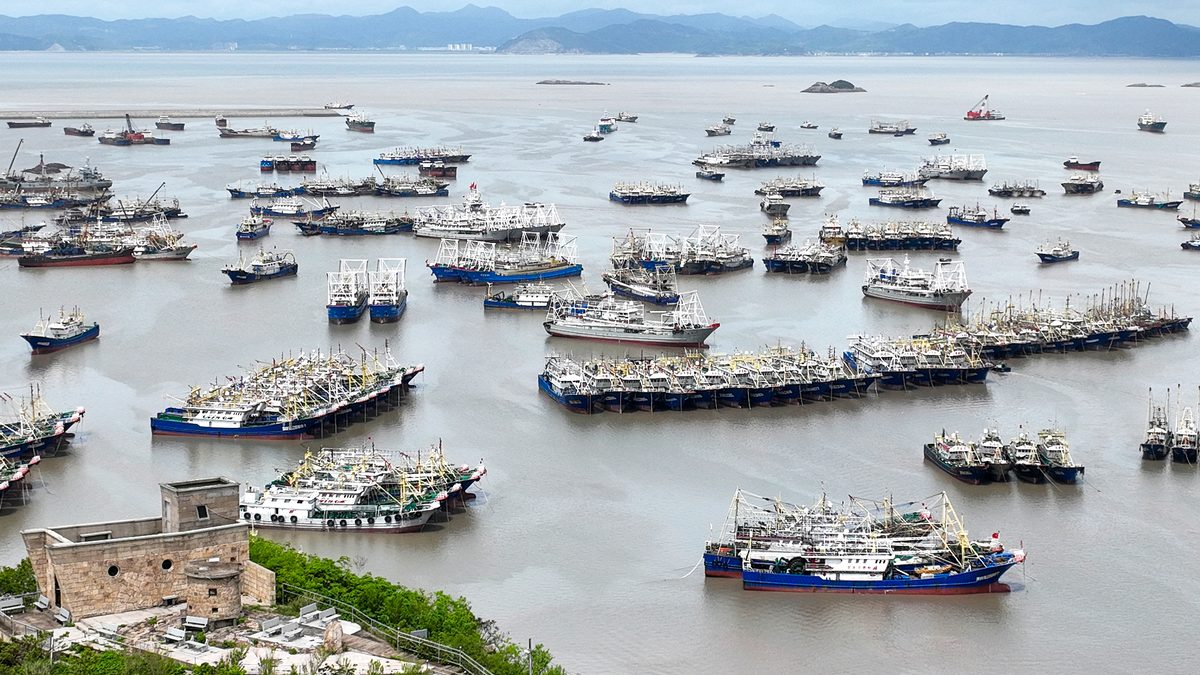
Saudel is forecast to make landfall on the morning of August 28 between Sanmen and Xiapu. Officials warn the storm coincides with astronomical high tides, and rivers are already swollen from prior rain. The risk is compound flooding from wind, waves, storm surge, and rainfall together. Zhejiang has pre-drained reservoirs and river networks, and all 14,682 fishing vessels have taken shelter, but the incoming water may exceed what defenses can absorb.

2

Gyirong barrier lake breaches, forcing downstream evacuations

Possible Resolves by Sep 10, 2026

Discussed by: Reuters, Ministry of Water Resources

A mudslide near Gyirong port formed a barrier lake holding about 2 million cubic meters. Forecasts say inflows could reach 3 million cubic meters over three days, and peak flow is expected around September 1. A breach would send floodwaters downstream past Gyirong Port and beyond. The ministry ordered local authorities to identify exposed residents and evacuate them in advance.

3

Guangxi floodwaters recede, recovery begins

Likely Resolves by Oct 1, 2026

Discussed by: Guangxi authorities

The Zuojiang river at Chongzuo is expected to fall as rain stops. Officials have ordered evacuees not to return home until conditions are safe. Recovery will take weeks: roads are cut, some remote areas rely on satellite phones, and thousands remain in emergency shelters. The main upside risk is a breach at Gyirong or new rainfall re-flooding the region.

4

Gyirong missing count stays high as search enters recovery phase

Likely Resolves by Q3 2026

Discussed by: Xizang regional government

Road access to Gyirong Port was restored September 2, letting heavy machinery enter the core zone. Debris averages 4 meters deep and reaches 16 meters, so officials plan radar-assisted searches focused on parking lots and damaged buildings. The regional government said rescuers will use professional instruments to locate the missing.

Historical Context

3 moments from history that rhyme with this story — and how they unfolded.

June-August 1998

1998 Yangtze River floods

The Yangtze, Songhua, and Nen rivers overflowed for months, killing more than 4,000 people and affecting 180 million. Floodwaters breached dikes in dozens of places, and the military deployed in force for sandbagging and evacuation.

Then

The government launched a massive dike reinforcement and resettlement program along major rivers.

Now

Spending on flood control infrastructure rose sharply, and river basin management shifted toward draining floodplains and strengthening reservoirs.

Why this matters now

Today's August 2026 flooding tests the infrastructure built after 1998. Guangxi's record levels and Zhejiang's pre-drained reservoirs reflect that era of investment.

August 2019

Typhoon Lekima (2019)

Lekima hit Zhejiang's Wenling coast as a severe typhoon, dumping record rainfall and triggering a landslide that killed dozens. More than a million people were evacuated before landfall.

Then

Zhejiang's pre-evacuation effort was widely credited with limiting casualties.

Now

The province refined its typhoon response playbook, including reservoir pre-release and fishing fleet sheltering.

Why this matters now

Lekima is the direct precedent for how Zhejiang prepares for Typhoon Saudel. The August 27 Level I activation and 14,682 vessels in harbor mirror the 2019 playbook.

July 2021

Zhengzhou metro flooding (2021)

A year's worth of rain fell on Zhengzhou in a single day. Floodwater poured into the metro system, killing 302 people, most inside a flooded subway line. The city's drainage and warning systems were overwhelmed within hours.

Then

China's cabinet launched a national review of urban flood defenses and weather warning thresholds.

Now

Cities upgraded drainage and early-warning systems, but extreme rainfall events continue to exceed design capacity.

Why this matters now

The 2021 disaster showed that even modern urban infrastructure fails under extraordinary rain. Guangxi and Zhejiang now face a similar test of whether defenses hold.

Sources

(17)