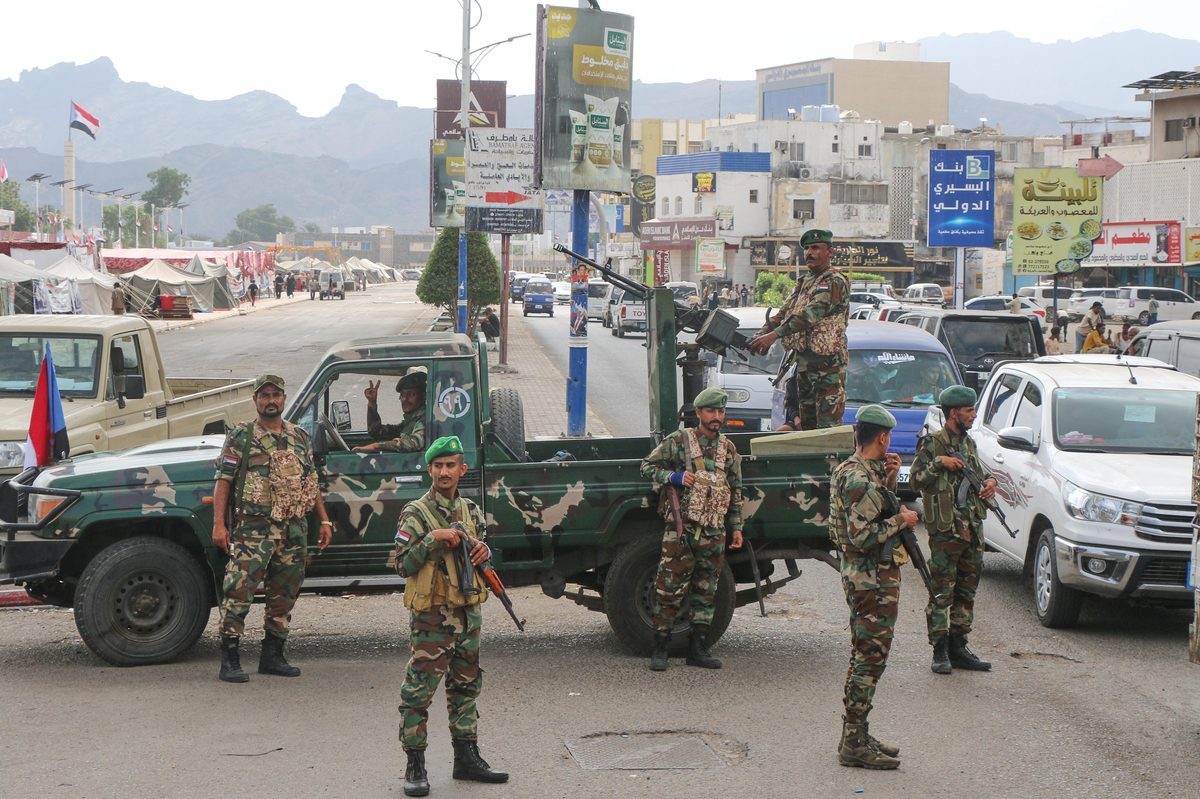
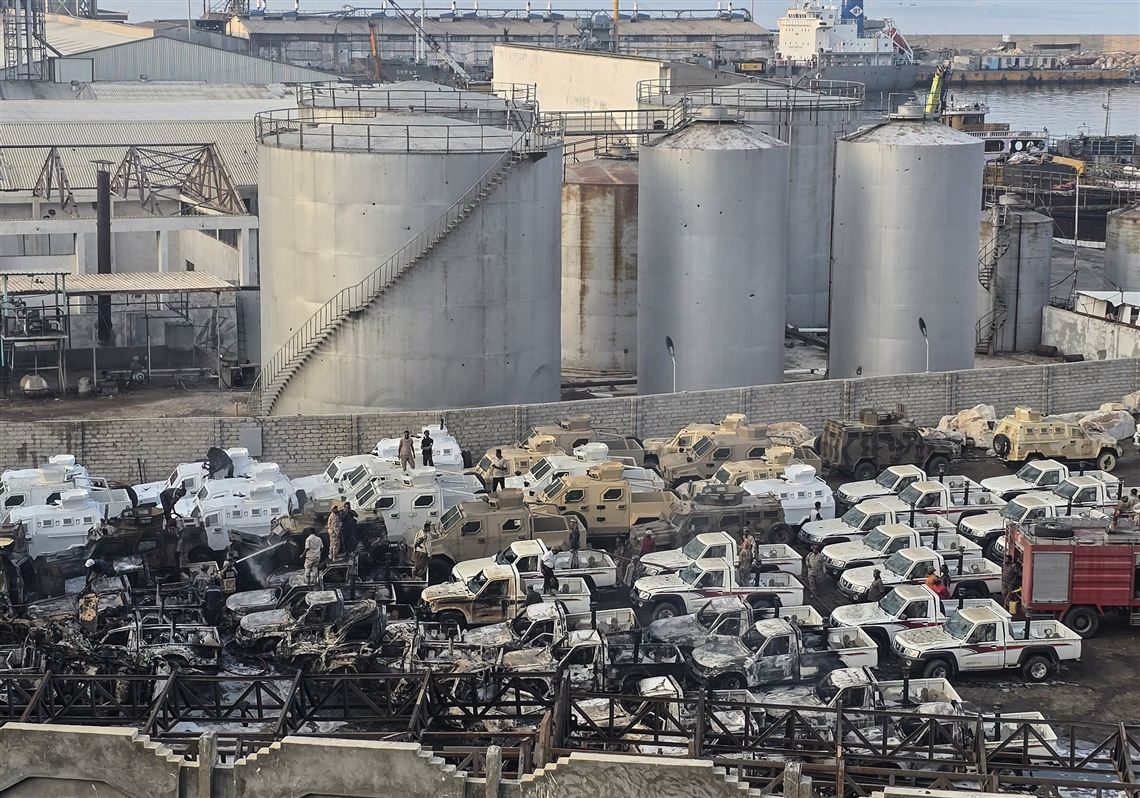
Saudi Arabia and the UAE fought a proxy war in Yemen in January 2026 when UAE-backed separatists seized Aden and the oil fields. Saudi-backed forces crushed the rebellion within a week; the STC announced dissolution on January 9 but immediately rejected it.
What started as a joint intervention against Houthi rebels in 2015 has fractured into a power struggle over Yemen's future. Saudi Arabia wants territorial integrity on its southern border; the UAE wants southern independence to expand influence from the Horn of Africa to the Red Sea. The separatist dream endures despite military defeat: thousands rallied in Aden on January 10 waving South Yemen flags.
Questions about this story
Free account needed to ask — your question is kept and asked for you right after sign-up. Answers are public.
No questions yet — be the first to ask.
Key Indicators
5 days
From STC offensive to total collapse
Separatists lost all territorial gains captured in December 2025 by January 7, 2026
80%
Yemen's oil reserves in Hadhramaut
The governorate seized by separatists before government forces retook it
9 years
Since UAE created the STC
Abu Dhabi built the Southern Transitional Council in 2017 as its Yemen proxy
130+
STC fighters captured in counteroffensive
At least 80 killed, 152 wounded as Saudi-backed forces crushed resistance
20 events
Latest: January 10th, 2026 · 8 months ago
Showing 8 of 20
JK to step
Tap a bar to jump to that date
Jump to
January 2026
Supreme Military Committee Formed Under Saudi Command
LatestMilitary
PLC announces formation of committee to oversee all southern military forces under Saudi coalition leadership, consolidating Riyadh's command structure.
Thousands Rally in Aden Supporting STC
Political
Massive demonstration in Khor Maksar district despite dissolution announcement. Protesters wave South Yemen flags, chant anti-Saudi slogans, and display photos of al-Zubaidi.
STC Rejects Dissolution as 'Null and Void'
Political
STC holds 'extraordinary meeting' declaring January 9 dissolution announcement made 'under coercion and pressure,' calls for mass protests in southern cities.
STC Announces Dissolution
Political
STC Secretary-General announces dissolution from Riyadh after losing all territory. Abu Dhabi spokesman rejects announcement, revealing internal split.
Al-Alimi dismisses defense, transport, and planning ministers plus Aden governor Lamlas. Appoints STC founding member Abdulrahman Al-Yafei as new Aden governor.
Saudi Arabia Details Al-Zubaidi's Escape Route
Political
Saudi coalition reveals al-Zubaidi fled Aden by sea to Berbera, Somaliland, then flew via Mogadishu to UAE's Al Reef military airport with identification systems disabled.
Government Forces Retake Aden
Military
PLC forces enter Aden as STC resistance collapses. Al-Alimi expels al-Zubaidi from council, charges him with treason. Al-Zubaidi flees to UAE.
Government Forces Retake Mukalla
Military
PLC captures Mukalla and all nine Hadhramaut districts, reclaiming oil infrastructure.
Royal Saudi Air Force strikes STC positions in Hadhramaut, killing at least 20 fighters. Saudi-backed government launches counteroffensive.
December 2025
STC Launches 'Promising Future' Offensive
Military
UAE-backed forces seize Hadhramaut and al-Mahra governorates, capturing oil fields and 80% of Yemen's reserves without PLC approval.
April 2022
Presidential Leadership Council Formed
Political
Saudi Arabia forces Hadi to cede power to eight-member council including al-Zubaidi. Riyadh and Abu Dhabi pledge $3 billion.
November 2019
Riyadh Agreement Signed
Political
Saudi Arabia brokers power-sharing deal between Hadi government and STC, attempting to reunify anti-Houthi forces.
August 2019
STC Seizes Aden from Government
Military
UAE-backed separatists capture the wartime capital, exposing Saudi-UAE divergence on Yemen's future.
May 2017
Southern Transitional Council Founded
Political
Al-Zubaidi creates UAE-backed STC to advocate for southern independence, splitting the anti-Houthi coalition.
April 2017
President Hadi Fires Aden Governor
Political
Hadi dismisses Aidarus al-Zubaidi as Aden governor for alleged disloyalty and UAE ties, triggering mass protests.
March 2015
Saudi-UAE Coalition Launches Yemen Intervention
Military
Saudi Arabia and UAE begin military campaign to restore Hadi government and counter Houthi control of the north.
September 2014
Houthis Seize Capital Sanaa
Military
Iran-backed Houthi rebels capture Yemen's capital, eventually controlling northern regions with 60-65% of the population.
May 1994
South Yemen Declares Secession
Political
Vice President Ali Salem al-Beidh declares the Democratic Republic of Yemen. Northern forces crush the secession by July, creating lasting southern grievances.
May 1990
North and South Yemen Unify
Political
The Yemen Arab Republic and People's Democratic Republic of Yemen merge to form the Republic of Yemen, ending 23 years of division.
Scenarios
1
Saudi Arabia Consolidates Control, Southern Separatism Dormant
Likely
Discussed by: The Washington Institute, Bloomberg, CNN analysts
Riyadh uses its decisive military victory to force the UAE into accepting Saudi primacy in Yemen. The STC dissolves fully, with members either integrating into the PLC or exiting politics. Saudi Arabia maintains a unified Yemen as a buffer state, preventing both Houthi expansion and southern independence. Abu Dhabi, having lost its proxy force and facing Saudi pressure, redirects resources to other regional priorities like Sudan and the Horn of Africa. Southern separatist sentiment persists but lacks organized leadership or external backing.
2
UAE Rebuilds STC Under Different Leadership
Possible
Discussed by: Middle East Eye, Sana'a Center analysts, regional security experts
Despite the dissolution announcement, the UAE maintains relationships with STC military commanders and begins reorganizing separatist forces under new leadership, possibly excluding al-Zubaidi. Abu Dhabi learned from the failed offensive and pursues a slower strategy focused on economic leverage through control of ports and infrastructure rather than overt territorial seizures. The STC re-emerges as a political movement rather than armed force, advocating for autonomy within a federal Yemen structure. Saudi-UAE tensions simmer as proxy competition continues through economic rather than military means.
3
Saudi-UAE Confrontation Escalates to Regional Crisis
Possible
Discussed by: Foreign Policy, The Soufan Center, Gulf analysts
The January 2026 clash marks the beginning of a broader Saudi-UAE rivalry playing out across multiple theaters including Sudan, Libya, and the Red Sea corridor. Riyadh continues pressuring Abu Dhabi to abandon separatist proxies; the UAE refuses and doubles down on supporting non-state actors to fragment regional states. Egypt aligns firmly with Saudi Arabia, creating a regional bloc opposing UAE influence. The confrontation stops short of direct military conflict but fractures Gulf Cooperation Council unity and creates competing spheres of influence that reshape Middle East alliances for years.
4
Yemen Fragments into De Facto Partition
Unlikely
Discussed by: International Crisis Group, Yemen analysts, regional observers
Despite Saudi military success, the PLC lacks capacity to govern recaptured territories effectively. Local power brokers fill the vacuum, creating fragmented control across southern Yemen. The Houthis continue controlling the north, the PLC holds nominal authority from Riyadh, and tribal/local militias control actual territory in the south. Yemen becomes a patchwork of competing authorities without functioning central government. International recognition remains with the PLC, but reality on the ground is permanent partition along three or more zones of control, making future unification nearly impossible.
Historical Context
3 moments from history that rhyme with this story — and how they unfolded.
1 of 3
1979-1989
Soviet-Afghan War: Proxy Turned Enemy
The U.S. and Saudi Arabia funded mujahideen fighters to resist Soviet occupation of Afghanistan, funneling billions through Pakistan's intelligence services. The coalition succeeded in forcing Soviet withdrawal in 1989. However, the power vacuum and lack of post-war planning led to civil war, eventually bringing the Taliban to power and providing safe haven for al-Qaeda.
Then
Soviet defeat represented a major Cold War victory for Western and Gulf state sponsors of the resistance.
Now
Former CIA-backed fighters turned against their sponsors. The Taliban harbored terrorists who attacked the U.S. on 9/11, leading to two decades of American military presence.
Why this matters now
Yemen illustrates similar risks when regional powers create proxy forces without exit strategies. The UAE built the STC as an anti-Houthi proxy, but the separatists pursued independence, threatening Saudi interests and turning allies into adversaries.
2 of 3
May-July 1994
1994 Yemen Civil War: Southern Secession Crushed
Four years after unification, southern Vice President Ali Salem al-Beidh declared independence as the Democratic Republic of Yemen, citing northern domination and appropriation of southern oil resources. No country recognized the breakaway state. Northern forces captured Aden within two months, crushing the secession and forcing southern leaders into exile.
Then
Northern Yemen established military dominance, reduced southern representation in parliament, and abolished power-sharing arrangements.
Now
The defeat created lasting grievances that fueled the Southern Movement and eventually the STC. Many 1994 fighters, including al-Zubaidi, became 2017 separatist leaders.
Why this matters now
The 2026 STC collapse mirrors 1994: a southern independence bid crushed by superior forces, leaders fleeing to exile, and separatist dreams deferred but not extinguished.
Saudi Arabia, UAE, Egypt, and Bahrain severed ties with Qatar, imposing a land, air, and sea blockade over allegations of supporting terrorism and ties to Iran. The quartet demanded Qatar close Al Jazeera, shut down a Turkish military base, and align foreign policy with Saudi/UAE positions. Qatar refused all demands. The U.S. attempted mediation while maintaining military ties with all parties.
Then
Qatar deepened relationships with Turkey and Iran, undermining the blockade. Kuwait and Oman remained neutral, exposing GCC disunity.
Now
The crisis ended in January 2021 with Saudi-Qatar reconciliation, but UAE remained distant from Doha. The blockade demonstrated Gulf states could pursue divergent regional strategies.
Why this matters now
The Qatar crisis showed Gulf unity is fragile and UAE-Saudi interests can sharply diverge. The 2026 Yemen clash suggests an even deeper rift, as the two largest Gulf powers now back opposing forces in armed conflict.