

Pull to refresh
Logo
Daily Brief
Following
Why Ranks Sign Up
Inseego acquires Nokia's fixed wireless access business

Inseego acquires Nokia's fixed wireless access business

Money Moves

Deal roughly doubles Inseego's revenue and gives Nokia an 11% equity stake in the combined supplier

April 30th, 2026: Inseego and Nokia announce FWA acquisition

Overview

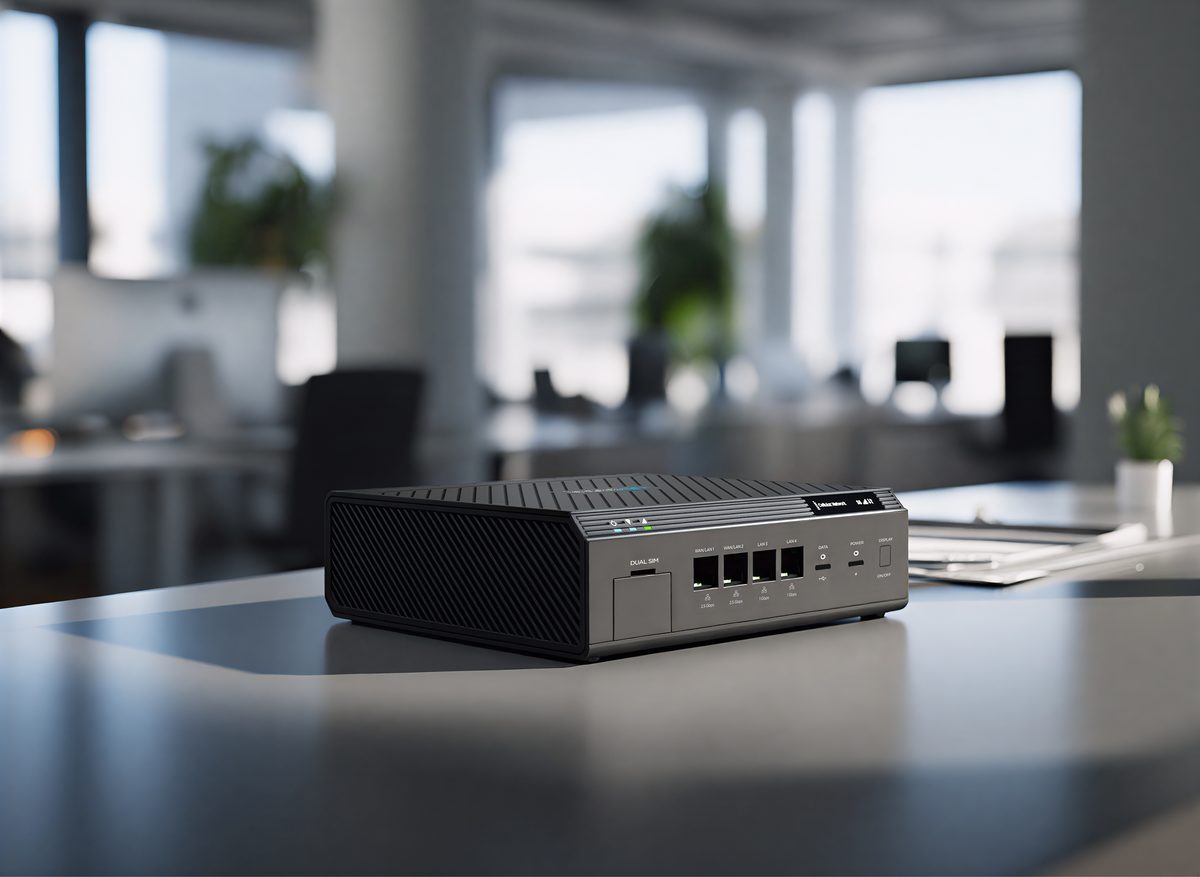
Inseego Corp. is buying Nokia's fixed wireless access (FWA) device business — the routers and home gateways that carriers ship to customers who get broadband over a cellular network instead of fiber or cable. The acquisition roughly doubles Inseego's annual revenue and merges two of the largest non-Chinese makers of FWA customer equipment into a single company.

Nokia is not walking away clean. It takes an approximately 7% equity stake in Inseego, valued at about $20 million in common stock and warrants, then invests another $10 million to reach roughly 11% ownership. The two companies will also collaborate on next-generation 6G and wireless edge products. The transaction is subject to closing conditions and is expected to complete in the fourth quarter of 2026.

Why it matters

Fixed wireless is the fastest-growing way Americans and Europeans are getting home internet, and this deal shrinks the list of companies that build the boxes those connections run through.

Play on this story Voices Debate Predict

Key Indicators

~2x
Inseego revenue
The deal is expected to roughly double Inseego's annual revenue.
~11%
Nokia stake in Inseego
Combined ownership after a 7% equity grant and a follow-on $10 million investment.
$30M
Nokia investment
Roughly $20 million in stock and warrants plus a $10 million cash investment.
Q4 2026
Expected close
Subject to regulatory and other closing conditions.

Interactive

Exploring all sides of a story is often best achieved with Play.

Dorothy Parker

Dorothy Parker

(1893-1967) · Jazz Age · wit

Fictional AI pastiche — not real quote.

"Nokia, having sold the furniture, graciously accepts a small chair in the new house — which is either a masterstroke of business or the corporate equivalent of a man who sets fire to his own hat and then asks to borrow yours."

Ever wondered what historical figures would say about today's headlines?

Sign up to generate historical perspectives on this story.

People Involved

Organizations Involved

Timeline

  1. Inseego and Nokia announce FWA acquisition

    M&A

    Inseego will acquire Nokia's fixed wireless access customer-premises equipment business; Nokia will take roughly a 7% equity stake (about $20 million in stock and warrants) and add a $10 million investment to reach about 11% ownership. The deal is expected to close in Q4 2026.

Scenarios

Predict which scenario wins. Contrarian picks score more — points lock in when the scenario resolves.

Log in to predict. Track your picks, climb the leaderboard. Log in Sign Up
1

Deal closes on schedule, Inseego emerges as global FWA leader

Regulators in the US and Europe clear the transaction without significant remedies. Inseego absorbs Nokia's customer relationships and product lines through 2027, doubles revenue as guided, and uses its enlarged scale to bid against Huawei and ZTE for FWA contracts in markets where Chinese vendors are restricted. Joint 6G and wireless edge work with Nokia begins to surface in product roadmaps.

Discussed by: Inseego and Nokia in joint announcement; trade press covering wireless equipment markets
Consensus
2

Regulatory review pushes the close into 2027

Antitrust authorities, particularly in the European Union, take a longer look at the combination given concentration among non-Chinese FWA suppliers. The companies negotiate behavioral commitments — for example around interoperability or licensing — and the closing slips past the Q4 2026 target, but the deal ultimately completes broadly intact.

Discussed by: M&A analysts tracking telecom equipment consolidation
Consensus
3

Integration friction drags on revenue gains

The headline doubling of revenue is real, but combining two device portfolios, two engineering organizations, and two carrier sales motions proves harder than projected. Margins compress in the first full year post-close as Inseego rationalizes overlapping product lines. The strategic logic still holds, but the financial payoff is delayed.

Discussed by: Equity analysts covering Inseego
Consensus
4

Deal collapses before closing

A material adverse change, financing shortfall, or regulatory block prevents the transaction from closing. Both sides walk away, Nokia keeps the FWA business or seeks another buyer, and Inseego remains a smaller, more North American–centric player.

Discussed by: Risk-arbitrage commentary
Consensus

Historical Context

Nokia sells Devices & Services to Microsoft (2013–2014)

September 2013 – April 2014

What Happened

Nokia agreed to sell its handset business — the unit that had made it the world's largest mobile phone vendor — to Microsoft for roughly $7.2 billion. The deal closed in April 2014 and ended Nokia's life as a consumer device company.

Outcome

Short Term

Nokia exited consumer devices and used the proceeds to buy out Siemens from Nokia Siemens Networks, doubling down on telecom infrastructure.

Long Term

Microsoft eventually wrote down most of the value of the handset business. Nokia, meanwhile, became a focused network equipment vendor and later acquired Alcatel-Lucent, the position from which it now operates.

Why It's Relevant Today

The FWA divestment is the same playbook on a smaller scale: Nokia sheds a device-side business to concentrate engineering and capital on carrier network infrastructure, while keeping a financial tie — this time through equity rather than a long-term licensing arrangement.

Cisco sells Linksys to Belkin (2013)

March 2013

What Happened

Cisco sold its Linksys home networking unit, which it had bought in 2003 for $500 million, to Belkin for an undisclosed sum widely reported to be far below the original purchase price. Cisco said it wanted to focus on enterprise and service-provider equipment.

Outcome

Short Term

Cisco simplified its portfolio and exited consumer-facing routers; Belkin became one of the largest dedicated home networking brands.

Long Term

The transaction confirmed a recurring pattern: large network infrastructure vendors periodically conclude that customer-premises devices belong with specialist firms that can run them at lower cost and tighter focus.

Why It's Relevant Today

FWA customer-premises equipment sits in a similar place in the value chain — close to the consumer, lower margin than core network gear, and benefiting from a focused operator. The Inseego deal continues that structural pattern in a new, faster-growing product category.

T-Mobile and Verizon scale 5G home internet (2021–2024)

2021 – 2024

What Happened

After 5G mid-band spectrum became widely deployed, T-Mobile and Verizon launched 5G home internet services in the United States. Within a few years they had together added more than 10 million fixed wireless subscribers, taking nearly all the net broadband additions in the country.

Outcome

Short Term

FWA went from a niche rural product to the fastest-growing residential broadband category in the US, pressuring cable operators on price and net additions.

Long Term

FWA became a core line of business for major mobile operators globally and a strategic equipment category — turning what had been a small device segment into one large enough to support a dedicated global supplier.

Why It's Relevant Today

The economics that make this acquisition attractive — doubling revenue, justifying a global FWA-focused vendor — are a direct consequence of this demand surge. Without the last few years of FWA subscriber growth, there would be no business worth buying or carving out.

Sources

(3)