
Pull to refresh
Logo
Daily Brief
Following
Why Ranks Sign Up
Kone agrees to acquire TK Elevator in €29.4 billion deal

Kone agrees to acquire TK Elevator in €29.4 billion deal

Money Moves

Finnish manufacturer's tie-up with German rival would shrink elevator industry's 'Big Four' to three, pending regulatory and shareholder approval

June 2027: Targeted closing

Overview

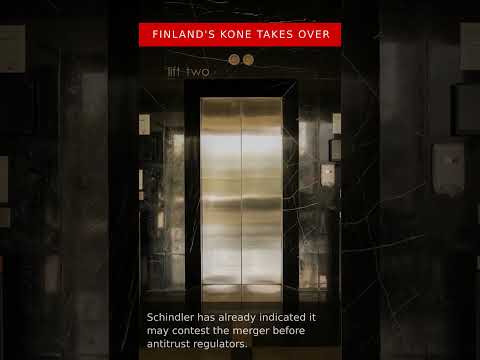
Finland's Kone has agreed to buy Germany's TK Elevator for €29.4 billion, a deal that would collapse the elevator industry's long-standing 'Big Four' into three players. The combined company would maintain roughly 3.2 million elevators and escalators worldwide and generate about €20.5 billion in annual revenue, with roughly 65% coming from service and modernization contracts—the stable, recurring-fee side of the business that drives margins and makes this portfolio the strategic prize.

Kone tried to buy this same business in 2020 and lost to a private equity consortium. Six years later it is back, paying €5 billion in cash and 270 million newly issued shares worth €15.2 billion to take the company off Advent International's and Cinven's hands. Analysts noted the price came in higher than many had anticipated, and Kone's own shares fell about 3.3% on announcement day as investors weighed the dilution. CEO Philippe Delorme, who will lead the combined company, said on a conference call that he is confident regulators will clear the deal—but Swiss rival Schindler has pledged an antitrust fight in every jurisdiction, and closing is not expected until mid-2027.

Why it matters

If approved, a single company would service roughly a third of the world's elevators—shaping maintenance costs, modernization timelines, and safety standards in buildings worldwide.

Play on this story Voices Debate Predict

Key Indicators

€29.4B
Total deal value
€5 billion cash plus 270 million Kone Class B shares valued at €15.2 billion, with the remainder reflecting assumed debt and other consideration.
3.2M
Units under maintenance
Combined global service portfolio of elevators and escalators, the largest in the industry.
€700M
Estimated annual cost synergies
Projected run-rate savings Kone says it can extract from combining procurement, R&D, and corporate functions.
4 → 3
Big players becomes three
Otis, Schindler, Kone, and TK Elevator have dominated globally for decades; this deal removes one.
Q2 2027
Expected closing
Subject to a Kone shareholder vote in June 2026 and antitrust clearances in the EU, US, China, and other jurisdictions.

Interactive

Exploring all sides of a story is often best achieved with Play.

Dorothy Parker

Dorothy Parker

(1893-1967) · Jazz Age · wit

Fictional AI pastiche — not real quote.

"How fitting that the company which spent six years circling back to buy what it couldn't have the first time now faces regulators who may deny it again — one does admire an industry so thoroughly dedicated to going up and coming down, and getting nowhere at all."

Ever wondered what historical figures would say about today's headlines?

Sign up to generate historical perspectives on this story.

People Involved

Organizations Involved

Timeline

  1. Targeted closing

    Transaction

    Q2 2027 closing is contingent on antitrust clearances in the EU, US, China, and other jurisdictions.

  2. Kone shareholder vote expected

    Governance

    Kone shareholders are scheduled to vote on the share issuance needed to fund the deal; Herlin family backing makes approval likely.

  3. Kone agrees to acquire TK Elevator for €29.4 billion

    Transaction

    Kone announces a binding cash-and-stock agreement that would create the world's largest elevator company, with about 3.2 million units under maintenance.

  4. Schindler signals antitrust opposition

    Statement

    Swiss rival Schindler indicates it will raise objections to European competition authorities, citing market concentration concerns.

  5. Kone shares fall ~3.3%; Thyssenkrupp surges up to 14% on deal news

    Market Reaction

    Kone stock declined roughly 3.3% (from €56.30 to ~€54.46) as investors focused on dilution from 270 million new shares and a deal price analysts described as higher than expected. Shares of Thyssenkrupp—TK Elevator's former parent—surged as much as 14%, closing up about 8%, reflecting the market's read on the deal's implications for the German industrial sector.

  6. Kone reports solid Q1 2026 results on same day as deal

    Financial

    Kone reported first-quarter 2026 sales of €2.71 billion (up 1.3%), adjusted operating income margin of 10.8%, and cash flow from operations of €500 million, and maintained its full-year guidance of 3–6% sales growth and a 12.3–13.0% adjusted operating margin.

  7. TK Elevator becomes independent

    Transaction

    Sale closes. The unit is renamed TK Elevator and operates independently of Thyssenkrupp under PE ownership.

  8. Thyssenkrupp sells elevator unit to private equity

    Transaction

    Cash-strapped Thyssenkrupp agrees to sell its elevator division to an Advent-Cinven consortium for €17.2 billion, choosing PE certainty over Kone's bid.

Scenarios

Predict which scenario wins. Contrarian picks score more — points lock in when the scenario resolves.

Log in to predict. Track your picks, climb the leaderboard. Log in Sign Up
1

Deal closes in 2027 with significant divestitures

The European Commission opens a Phase II review and ultimately clears the deal in exchange for sales of overlapping service portfolios in markets where the combined entity would exceed concentration thresholds—likely Germany, the Nordics, and parts of Southern Europe. Otis or a financial buyer absorbs the divested units. Kone gets the prize but at a smaller scale than announced. This is the path most precedent suggests.

Discussed by: Industry analysts at Bloomberg, antitrust lawyers cited in CNBC coverage
Consensus
2

European Commission blocks the merger

Regulators conclude that even substantial divestitures cannot remedy a four-to-three reduction in a market where service contracts have multi-decade lifespans and switching costs are high. Schindler's lobbying succeeds, the Commission issues a prohibition decision, and Kone walks away with a break fee owed to Advent and Cinven. The PE owners restart a sale process or pursue an IPO.

Discussed by: Antitrust specialists pointing to 2019 Siemens-Alstom precedent
Consensus
3

Counter-bid emerges from Otis or a consortium

Otis—the only Big Four player without a horse in this race—launches a competing offer to keep TK Elevator out of Kone's hands, or a new PE consortium offers more cash to Advent and Cinven. Such a move would face its own antitrust hurdles but could trigger an auction. No bidder has surfaced publicly.

Discussed by: Deal-flow speculation in financial press
Consensus
4

Kone shareholders reject the share issuance

Minority shareholders balk at the dilution from issuing 270 million new shares and vote down the transaction in June 2026. The Herlin family's controlling stake makes this scenario remote unless the family itself splits.

Discussed by: Corporate governance commentators
Consensus

Historical Context

Kone's failed bid for Thyssenkrupp Elevator (2020)

February 2020

What Happened

Kone bid for Thyssenkrupp's elevator unit alongside CVC Capital Partners as German industrial conglomerate Thyssenkrupp scrambled for cash. Despite a competitive offer, Thyssenkrupp's board chose the all-cash €17.2 billion bid from Advent and Cinven, citing greater antitrust certainty.

Outcome

Short Term

TK Elevator became a private equity-owned standalone company in August 2020. Kone returned cash to shareholders and refocused on organic growth.

Long Term

The decision delivered Advent and Cinven a six-year holding period and a substantial profit on exit. It also delayed industry consolidation that Kone's chairman has clearly pursued for years.

Why It's Relevant Today

The 2020 loss is the direct setup for today's deal: Kone is back, paying considerably more, for the same business it could not buy six years ago.

European Commission blocks Siemens-Alstom rail merger (2019)

February 2019

What Happened

The Commission blocked the proposed merger of Siemens' and Alstom's rail businesses, despite the companies offering substantial divestitures. Competition Commissioner Margrethe Vestager concluded the remedies were insufficient to prevent a dominant European rail-signaling and high-speed-train provider.

Outcome

Short Term

Both companies abandoned the deal. France and Germany publicly criticized the Commission and called for revising EU merger rules to permit 'European champions.'

Long Term

The decision became the standard reference for how EU regulators weigh industrial consolidation in concentrated markets, even when companies argue global competition (e.g., Chinese rivals) justifies the merger.

Why It's Relevant Today

Schindler and other deal opponents will cite Siemens-Alstom as proof that the Commission can and does block large European industrial mergers when concentration concerns outweigh global-competitiveness arguments.

Holcim-Lafarge cement merger (2014–2015)

April 2014 – July 2015

What Happened

Swiss Holcim and French Lafarge announced a merger of equals to create the world's largest cement company. The European Commission approved the deal after the companies divested assets generating roughly €5 billion in annual revenue across more than a dozen countries.

Outcome

Short Term

The combined LafargeHolcim closed in July 2015. The divested assets were sold to Ireland's CRH for €6.5 billion.

Long Term

The deal showed that even highly concentrated European industries can consolidate if companies accept large remedies upfront. It became a template for negotiated antitrust clearance.

Why It's Relevant Today

If the Kone deal closes, it will likely follow this pattern: substantial divestitures negotiated before the Commission's final decision, with a third-party buyer ready to absorb shed assets.

Sources

(9)