

Pull to refresh
Logo
Court rules Trump administration illegally fired prosecutor Maurene Comey

Court rules Trump administration illegally fired prosecutor Maurene Comey

Rule Changes

Judge orders back pay and rules Congress can shield career prosecutors from removal; Justice Department says it will appeal

Overview

Updated Oct 28

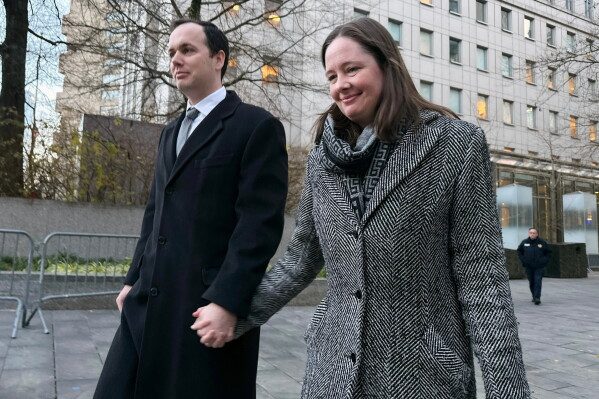
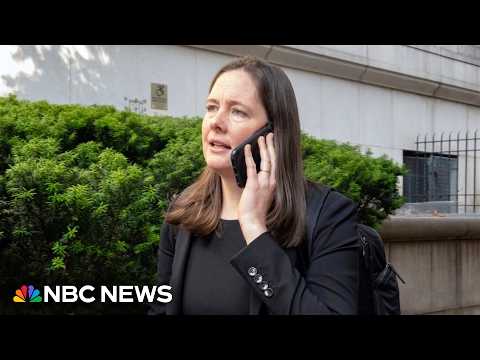
A federal judge ruled on October 26 that the Justice Department illegally fired Maurene Comey, a career prosecutor in Manhattan and the daughter of former FBI Director James Comey. Judge Jesse Furman ordered back pay from her July 16, 2025 termination through December 20, 2025, and the department says it will appeal.

The department conceded in a May 26, 2026 court filing that former Attorney General Pam Bondi directed the firing and that it was not for cause. Furman rejected the argument that Article II lets the president remove assistant US attorneys without following civil service law, and called the fallback claim that the firing carried its own cause "borders on frivolous." Comey was due by November 9 to explain why her First Amendment retaliation count should proceed.

Why it matters

Career prosecutors now have a ruling that Congress can shield them from political firings, but the government is appealing it.

Questions about this story

Free account needed to ask — your question is kept and asked for you right after sign-up. Answers are public.

No questions yet — be the first to ask.

Key Indicators

Nov 9
Deadline on remaining claim
Comey was due to explain by November 9, 2026 why her First Amendment retaliation claim should continue despite the relief already awarded. The government gets a week to respond.
10
Years of prosecutorial service
Nearly 10 years as an assistant US attorney in the Southern District of New York before termination.
Dec 20, 2025
Back pay cutoff date
Through this date, when Comey accepted a different job, per the court's inference. The amount is not yet set.

Voices

Curated perspectives — historical figures and your fellow readers.

Sign up to generate historical perspectives on this story.

People Involved

Organizations Involved

Timeline

May 2017 October 2026

8 events Latest: October 26th, 2026 · 2 weeks ago
Tap a bar to jump to that date
  1. Trump supporters call for firing Maurene Comey

    Political

    Amid rising tensions between Trump and James Comey, supporters called for the termination of Maurene Comey; her husband resigned from DOJ on May 9.

  2. Trump fires James Comey as FBI director

    Political

    President Trump dismisses FBI Director James Comey, beginning a years-long public feud with the Comey family.

Scenarios

1

Justice Department appeals to Second Circuit

Likely Resolves by Jan 15, 2027

Discussed by: Law360; AP News; The Guardian

The administration argued throughout that Article II gives the president exclusive removal power over prosecutors. A notice of appeal within 60 days of the ruling (by late December 2026) would take the case to the Second Circuit. Oral arguments and a decision could come in 2027, keeping the removal-power question alive.

2

DOJ complies, pays back pay, case closes

Possible Resolves by Jan 31, 2027

Discussed by: Campaign Legal Center

If the administration accepts the ruling, DOJ would reinstate Comey's personnel record, pay back pay through December 20, 2025, and the case would close. This outcome is possible, but the administration's pattern of litigating Article II questions makes it appear less likely than an appeal.

3

Supreme Court asked to hear removal-power case

Possible Resolves by End of 2027

Discussed by: Campaign Legal Center; court observers

If the Second Circuit upholds the ruling, the government could petition the Supreme Court, which has recently shown interest in Article II removal-power questions. Granting cert would extend the dispute well into 2027 or beyond, with the constitutional question of inferior officer removal squarely presented.

4

Comey drops or loses her remaining First Amendment claim

Deadline passed (Nov 9, 2026)

Discussed by: Judge Furman's scheduling order; B Times Online

Furman awarded Comey her job, back pay and declaratory relief without deciding whether her father or her politics motivated the firing. He asked her to explain by November 9 why the retaliation count should stay alive, and said he could dismiss it without ruling on motive.

Historical Context

3 moments from history that rhyme with this story — and how they unfolded.

December 2006 – August 2007

Bush-era US Attorney firings (2006–2007)

The Bush administration fired nine US Attorneys mid-term. Critics said the dismissals were political — several prosecutors had resisted pressure on corruption investigations. New Mexico US Attorney David Iglesias, who refused to rush charges against a Democratic official before an election, was among those removed.

Then

Congressional hearings followed, and Attorney General Alberto Gonzales resigned in August 2007.

Now

The episode triggered reforms tightening reporting requirements for prosecutor removals and became a reference point for political interference in federal prosecutions.

Why this matters now

Political firing of federal prosecutors is not new — the Comey case is the latest test of how much protection the civil service system provides.

October 20, 1973

Saturday Night Massacre (1973)

During Watergate, President Nixon ordered Attorney General Elliot Richardson to fire special prosecutor Archibald Cox. Richardson refused and resigned; Deputy Attorney General William Ruckelshaus also refused and was fired. Solicitor General Robert Bork finally carried out the dismissal.

Then

Massive public backlash, with hundreds of thousands of telegrams and accelerated impeachment proceedings against Nixon.

Now

Established a strong norm of prosecutorial independence from presidential pressure, a norm the Comey ruling reinforces.

Why this matters now

The Comey case concerns a lower-level prosecutor, but the underlying question — how much control a president can exert over federal prosecutors — is the same.

June 1988

Morrison v. Olson (1988)

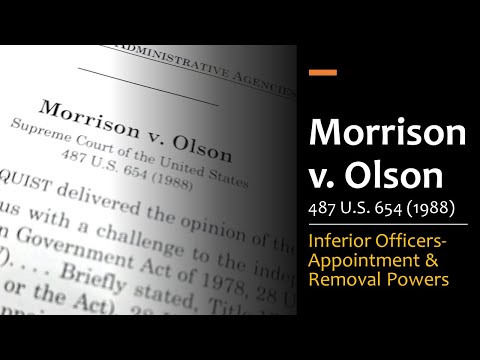
The Supreme Court upheld the independent counsel law, ruling 7–1 that Congress may restrict the president's removal of "inferior officers." Chief Justice Rehnquist wrote the opinion, holding that the independent counsel's duties were executive but that removal restrictions did not impermissibly intrude on presidential power.

Then

The independent counsel statute survived; several high-profile investigations followed.

Now

Morrison became the cornerstone precedent allowing Congress to impose removal limits on inferior officers — the same principle the Comey court invoked.

Why this matters now

The Comey ruling explicitly relies on this line of precedent; the administration's argument would require overturning it.

Sources

(10)