Pull to refresh
Logo
Daily Brief
Following
Why Ranks Sign Up
Justice Department prosecutes former officials under Trump's second term

Justice Department prosecutes former officials under Trump's second term

Force in Play

Comey faces arrest warrant under acting AG Blanche as DOJ presses prosecutions of Trump adversaries

April 28th, 2026: Second Comey indictment in North Carolina

Overview

James Comey deleted the Instagram post within hours of publishing it. Nearly a year later, a federal grand jury in North Carolina charged him with two counts of threatening the President of the United States over the same fifteen-character image: '8647' written above seashells. The indictment, returned April 28, 2026, is the second federal case Trump's Justice Department has brought against the former FBI Director—the first, filed in Virginia in September 2025, was dismissed when a judge ruled the interim prosecutor had been unlawfully appointed. Alongside the new indictment, Judge Louise Wood Flanagan issued an arrest warrant for Comey; he may be allowed to self-surrender rather than be taken into custody. Within hours, Comey posted a video response on his Substack: 'I'm still innocent. I'm still not afraid.'

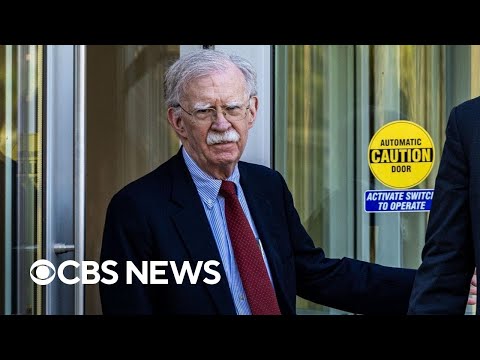
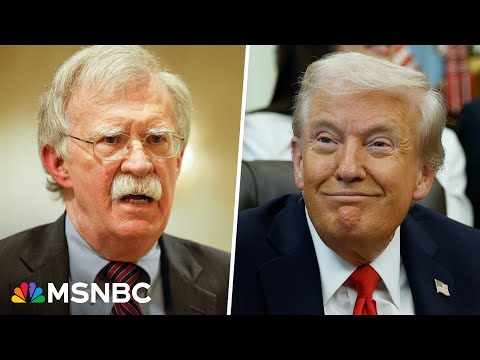
The second case arrives under new leadership at the Justice Department. Trump fired Attorney General Pam Bondi on April 2, 2026—reportedly frustrated with her handling of the Jeffrey Epstein files and with the department's repeated failures to convict his adversaries—and elevated Todd Blanche, his former personal criminal defense attorney, to acting attorney general. Comey is one of at least three former officials indicted since Trump's return to office; John Bolton, the former national security adviser, faces charges of unlawfully retaining classified documents, and New York Attorney General Letitia James was indicted on mortgage fraud counts. The Justice Department is also investigating former CIA Director John Brennan. Each prosecution tests whether established legal standards can withstand the administration's aggressive interpretations; legal scholars have called the First Amendment hurdles in the Comey case a 'monumental challenge' that could ultimately reach the Supreme Court.

Why it matters

When prosecutors pursue criminal threat charges over a deleted social-media post—and the attorney general who hesitated is fired—the line between political prosecution and law enforcement disappears for every American online.

Key Indicators

2
Federal indictments of Comey
First case dismissed November 2025; second filed April 2026 in a different district on different charges. Arrest warrant issued alongside the second indictment.
10 years
Maximum sentence
Five years per count under 18 U.S.C. § 871, the federal statute criminalizing threats against the President.
8647
The post at issue
Numerals arranged on a beach with seashells; '86' is service-industry slang for ejecting, '47' refers to the 47th president.
3+
Former officials charged
Comey, Bolton, and James have been indicted since Trump's second term began. Former CIA Director John Brennan is also under DOJ criminal investigation.
Hours
Time post was live
Comey removed the image the same day, saying he had not understood the violent reading and rejected any association with it.

Interactive

Exploring all sides of a story is often best achieved with Play.

Dorothy Parker

Dorothy Parker

(1893-1967) · Jazz Age · wit

Fictional AI pastiche — not real quote.

"They've turned the Justice Department into a personal grudge list with a federal seal, and yet somehow the man they can't seem to convict keeps posting videos — which suggests that while Washington has mastered the indictment, it has yet to master the execution."

Ever wondered what historical figures would say about today's headlines?

Sign up to generate historical perspectives on this story.

People Involved

Organizations Involved

Timeline

  1. Second Comey indictment in North Carolina

    Legal

    A grand jury in the Eastern District of North Carolina indicts Comey on two counts of threatening the President under 18 U.S.C. § 871, citing the May 2025 Instagram post.

  2. Arrest warrant issued for Comey; self-surrender possible

    Legal

    Judge Louise Wood Flanagan of the Eastern District of North Carolina issued an arrest warrant for Comey alongside the indictment. Prosecutors indicated Comey may be permitted to self-surrender rather than be taken into custody.

  3. Comey responds: 'I'm still innocent. I'm still not afraid.'

    Statement

    Comey posted a video to his Substack account hours after the indictment was announced. His attorney Patrick Fitzgerald issued a written statement saying the defense would 'contest these charges in the courtroom and look forward to vindicating Mr. Comey and the First Amendment.'

  4. Trump fires Bondi; Blanche named acting Attorney General

    Political

    President Trump dismissed Pam Bondi as attorney general, citing frustration with her handling of Epstein files and the department's inability to secure convictions against his adversaries. Deputy AG Todd Blanche, Trump's former personal criminal defense attorney, was elevated to acting attorney general.

  5. First Comey case dismissed

    Legal

    Federal judge dismisses the Virginia indictment after ruling that interim US Attorney Halligan was unlawfully appointed, voiding her charging authority.

  6. John Bolton indicted

    Legal

    Former National Security Adviser John Bolton is charged with willful retention of classified records related to his memoir.

  7. Letitia James indicted

    Legal

    New York Attorney General Letitia James is charged with mortgage fraud, the second prosecution of a former Trump adversary in two weeks.

  8. First Comey indictment in Virginia

    Legal

    A grand jury in the Eastern District of Virginia indicts Comey on false-statements and obstruction counts tied to 2020 Senate testimony, signed by interim US Attorney Lindsey Halligan.

  9. Comey posts '8647' image

    Inciting incident

    Comey publishes an Instagram photo of seashells arranged to spell '8647' and deletes it hours later, saying he had not understood any violent interpretation.

  10. Trump fires Comey

    Background

    Trump dismisses FBI Director Comey during the bureau's Russia investigation, triggering the appointment of Special Counsel Robert Mueller eight days later.

Scenarios

Predict which scenario wins. Contrarian picks score more — points lock in when the scenario resolves.

Log in to predict. Track your picks, climb the leaderboard. Log in Sign Up
1

Court dismisses charges on First Amendment grounds

Defense moves to dismiss under Watts v. United States, the 1969 Supreme Court decision distinguishing 'true threats' from political hyperbole. The motion argues a deleted, ambiguous numeric image cannot meet the statute's intent requirement. A federal judge agrees the post falls within protected speech and dismisses before trial.

Discussed by: Lawfare contributors, former federal prosecutors quoted in Washington Post and NPR coverage
Consensus
2

Case proceeds to trial; jury acquits or hangs

The judge denies pretrial dismissal, finding the threat question is for jurors. Prosecutors argue Comey, a former FBI Director, knew exactly how '8647' would be read. The defense calls character witnesses and points to the rapid deletion. A North Carolina jury either acquits or fails to reach a verdict, ending the case without conviction.

Discussed by: Trial attorneys interviewed by NPR and Reuters
Consensus
3

Comey convicted; appellate courts review threat doctrine

A jury convicts on at least one count. Comey appeals on First Amendment grounds, drawing the case into the federal circuits and potentially the Supreme Court. The appeal becomes a vehicle for revisiting how 'true threat' doctrine applies to ambiguous symbolic speech online.

Discussed by: Constitutional law commentators
Consensus
4

Justice Department withdraws case before trial

Internal review or a procedural setback—similar to the appointment defect that sank the first case—leads prosecutors to dismiss the indictment without prejudice. The administration pivots to other prosecutions while preserving the option to refile.

Discussed by: Former DOJ officials cited by Washington Post
Consensus

Historical Context

Watts v. United States (1969)

April 1969

What Happened

An eighteen-year-old draft protester at a Washington rally said that if forced to carry a rifle, 'the first man I want to get in my sights is L.B.J.' He was convicted under the same threats statute now used against Comey, 18 U.S.C. § 871.

Outcome

Short Term

The Supreme Court reversed the conviction in a per curiam opinion, ruling that political hyperbole is not a 'true threat' even when its words name the President.

Long Term

Watts established the constitutional floor for federal threat prosecutions: the statute reaches only statements a reasonable person would understand as a serious expression of intent to harm. Courts have applied that test to social-media speech ever since.

Why It's Relevant Today

Comey's defense will almost certainly cite Watts to argue that a deleted, ambiguous numeric image is constitutionally protected hyperbole. The case is the central legal precedent on which this prosecution turns.

United States v. Ted Stevens (2008-2012)

July 2008 - April 2012

What Happened

The Justice Department indicted seven-term Senator Ted Stevens of Alaska on false-statement charges weeks before the 2008 election. A jury convicted him; he lost his Senate seat by 3,724 votes.

Outcome

Short Term

Months later, the new Attorney General moved to dismiss the conviction after discovering prosecutors had withheld exculpatory evidence. The judge appointed a special investigator who issued a 500-page report finding 'systematic' misconduct.

Long Term

The Stevens collapse became the canonical example of a high-profile federal prosecution undone by errors inside the Justice Department itself. It prompted lasting reforms to discovery practice in federal criminal cases.

Why It's Relevant Today

The first Comey case was dismissed not on the merits but because of a defect inside DOJ—an unlawful prosecutor appointment. Stevens illustrates how procedural failures at the department can sink even well-publicized indictments, and how the government typically responds by reorganizing leadership.

United States v. John Edwards (2011-2012)

June 2011 - June 2012

What Happened

Federal prosecutors charged former presidential candidate John Edwards with using nearly $1 million in campaign donations to conceal an extramarital affair, applying campaign-finance law in a novel way.

Outcome

Short Term

After a six-week trial, a North Carolina jury acquitted Edwards on one count and hung on the others. The Justice Department declined to retry him.

Long Term

The Edwards case stood as a warning against pursuing politically prominent defendants on contested legal theories. Prosecutors lost despite years of investigation and substantial evidence about the underlying conduct.

Why It's Relevant Today

Like Edwards, the Comey threats case asks a North Carolina jury to apply federal law to facts that don't fit its usual contours. Edwards shows that aggressive charging theories often fail at trial even when the defendant's conduct is unflattering.

Sources

(13)