


Pull to refresh
Logo
Syria reopens Nasib border crossing with Jordan after airstrikes

Syria reopens Nasib border crossing with Jordan after airstrikes

Force in Play

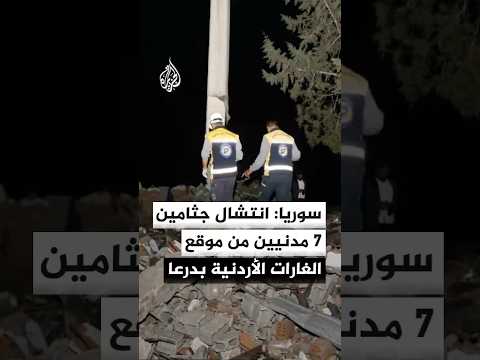
Jordan and Syria reopened the Nasib crossing on October 28 and agreed to a joint security committee to investigate the strikes that killed seven civilians in Daraa.

Overview

Updated Oct 28

Jordanian jets struck targets in southern Syria on October 26, killing seven civilians including three children, according to Syrian Civil Defence. Syria announced the closure of the Nasib crossing, the main road link between the two countries, effective the next day.

The crossing reopened on October 28 after Syria and Jordan agreed to form a joint security committee to investigate the strikes and improve border coordination. Jordan's foreign minister expressed regret over the civilian deaths; Damascus had condemned the operation as a violation of its sovereignty and disputed Jordan's claim that the strikes were coordinated.

Why it matters

The crossing moves freight from the Gulf to Syria, Lebanon, and Turkey. Its closure froze trade at the region's main land gateway.

Questions about this story

Free account needed to ask — your question is kept and asked for you right after sign-up. Answers are public.

No questions yet — be the first to ask.

Key Indicators

7
People killed in the Jordanian strikes
Syrian Civil Defence reported seven dead, including three children. Other reports ranged from six to eight.
9
Killed in the Karak church attack
The attack on a Greek Orthodox church in Jordan's Karak governorate, which Amman says triggered its retaliation.
Reopened
Nasib crossing status
Passenger and commercial traffic resumed on October 28 after the crossing was closed following the strikes.

Voices

Curated perspectives — historical figures and your fellow readers.

Sign up to generate historical perspectives on this story.

People Involved

Organizations Involved

Timeline

6 events Latest: October 28th, 2026 · 2 weeks ago
Tap a bar to jump to that date
  1. Syria and Jordan agree to joint security committee

    Latest Diplomatic agreement

    Foreign affairs chief Asaad al-Shaibani and Jordan's Ayman Safadi agreed by phone to form a committee to investigate the October 26 strikes and improve border security. Jordan's Safadi expressed deep regret over civilian deaths, according to a joint statement.

  2. Nasib crossing reopens after closure

    Border reopening

    Passenger and commercial traffic resumed on the morning of October 28, Syrian customs official Mazen Alloush said. The crossing had been shut since October 27.

  3. Trucks pile up and Damascus pushes back

    Reaction

    Freight traffic stops at the closed crossing. The foreign ministry objects to the strikes and proposes a joint security committee.

  4. Jordan says strikes were coordinated; Syria denies it

    Diplomatic dispute

    Jordan said the strikes were coordinated with Damascus. Syria denied this and said it had opened an investigation.

  5. Jordanian jets strike southern Syria

    Military action

    Jordan's air force hits targets in Daraa and Sweida, citing the Karak church attack. Syria reports seven civilians dead, three of them children.

  6. Syria closes the Nasib crossing

    Border closure

    The border authority announces a full suspension of passenger and commercial traffic in both directions, effective the next day, with no reopening date.

Scenarios

1

Nasib crossing reopens under a joint security arrangement

Likely Resolves by End of 2026

Discussed by: Syria's foreign ministry, which proposed a joint field and security committee in its statement.

Damascus has already floated a joint committee to manage the border. If Amman accepts and the situation calms, the border authority would announce a reopening and trucking from the Gulf to Syria, Lebanon, and Turkey would resume.

2

Jordan strikes again inside Syria

Possible Resolves by Q2 2027

Discussed by: Jordanian military statements, which say the operation targeted terrorist organizations tied to the Karak church attack.

Jordan has framed the strikes as retaliation and deterrence. If it judges the groups remain active in southern Syria, another round is possible. That would keep the crossing shut and deepen the rift between the two governments.

3

Syria carries the dispute to the United Nations

Possible Resolves by End of 2026

Discussed by: The Syrian Lawyers Syndicate, which called the strikes a possible war crime.

The Lawyers Syndicate has demanded Damascus summon Jordan's ambassador and address the UN Security Council over the sovereignty breach. If Syria follows through, the dispute moves from bilateral negotiation to a public diplomatic stage.

Historical Context

3 moments from history that rhyme with this story — and how they unfolded.

February 2015

Jordan's 2015 airstrikes on ISIS in Syria

Days after ISIS released a video of Jordanian pilot Muath al-Kasasbeh being burned alive, Jordan's air force struck ISIS positions in Syria and Iraq, targeting weapons depots and training areas.

Then

Jordan destroyed dozens of ISIS targets in response to the killing and said the strikes were part of broader coalition operations.

Now

The episode established Jordan's willingness to use air power across the border into Syria when it judged its security threatened.

Why this matters now

It is the most direct precedent for Jordan striking targets inside Syrian territory in response to an attack—though the 2015 raids ran under coalition cover, while this week's operation had no prior coordination with Damascus.

August 2016–March 2017

Turkey's Operation Euphrates Shield (2016)

After bombings traced to Syria, Turkey launched a ground and air incursion into northern Syria against ISIS and Kurdish forces, entering without the Assad government's consent.

Then

Turkey seized a swath of territory along the border and expelled ISIS from the area.

Now

The operation set a precedent for repeated Turkish incursions—Olive Branch in 2018 and Peace Spring in 2019—each without Syrian approval.

Why this matters now

Like Jordan this week, Turkey acted unilaterally inside Syria citing cross-border threats, and Damascus could do little more than protest the sovereignty breach.

2013–present

Israel's airstrike campaign in Syria (2013–present)

Israel has carried out hundreds of strikes inside Syria against Iranian-linked forces and weapons transfers, never coordinating with Damascus and rarely acknowledging each strike.

Then

Israel has repeatedly degraded its targets while Syrian air defenses and foreign allies failed to stop the raids.

Now

Uncoordinated strikes into Syria have become routine, with Damascus issuing protests that carry little practical weight.

Why this matters now

It frames this week's Jordanian operation: a neighboring state striking Syrian territory on its own assessment, with the Syrian government left to object after the fact.

Sources

(21)