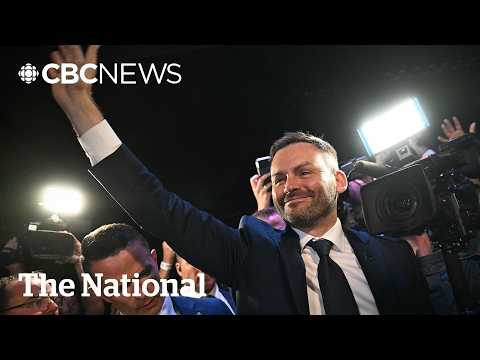
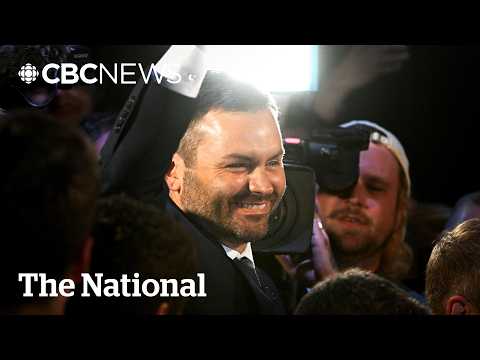
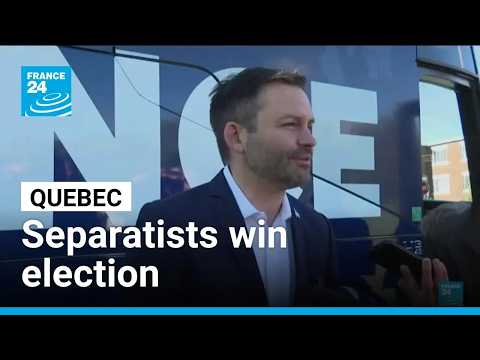
Paul St-Pierre Plamondon was sworn in as Quebec's 34th premier on Oct. 21 and named a cabinet of 22 ministers, down from the 29 under the Coalition Avenir Québec (CAQ). Catherine Gentilcore is deputy premier, House leader and minister responsible for Quebec's path to independence.
On Oct. 22 the Parti Québécois (PQ) dropped its Champlain recount, so Conservative Adriana Szalontai keeps the seat by 186 votes and the Conservatives stay at 19. The PQ's 60 seats stand, but the Liberals are challenging the Vachon result. Judge Ian Demers is weighing a challenge to the rule that let members skip the oath to the King.
Why it matters
A sovereigntist premier governs Quebec with 60 seats, four short of a majority, while a court weighs the legality of its laws.
Questions about this story
Free account needed to ask — your question is kept and asked for you right after sign-up. Answers are public.
No questions yet — be the first to ask.
Key Indicators
60
PQ seats in 127-seat National Assembly
Four short of the 64 needed for a majority, after a recount in Vachon. The Liberals are challenging that result.
28%
PQ share of popular vote
Lowest share ever to form a Quebec government.
0
CAQ seats after election
The governing party was wiped off the electoral map.
19
Conservative Party seats
First Conservative MNAs elected in Quebec provincial politics in 90 years. Champlain recount ended Oct. 22 with the seat kept.
22
Ministers in the PQ cabinet
Not counting the premier, down from 29 under the CAQ.
The PQ withdrew its challenge after 67 of 191 ballot boxes were recounted. Élections Québec confirmed Adriana Szalontai won by 186 votes, giving the Conservatives 19 seats.
Plamondon sworn in as premier, names 22-minister cabinet
Political
Paul St-Pierre Plamondon became Quebec's 34th premier and named a cabinet of 22 ministers, not counting himself. Catherine Gentilcore was named deputy premier and minister responsible for Quebec's accession to independence; Nicolas Marceau took finance and Marie-Karlynn Laflamme took health, with a mandate to abolish Santé Québec. Plamondon made himself minister responsible for the fight against homelessness.
Lt.-Gov. skips cabinet swearing-in for the first time
Political
Manon Jeannotte stayed out of the National Assembly ceremony at Plamondon's written request and watched it on television from her nearby office. She signed the appointment documents behind the scenes so the ministers could be sworn in without her.
Recount gives PQ a 60th seat in Vachon
Legal
Élections Québec confirmed that PQ candidate Stephan Fogaing won Vachon by three votes after a judicial recount. The result left the party with 60 seats, four short of a majority.
Judge hears challenge to Quebec's oath law
Legal
Lawyer Lawrence David, founder of the Public Interest Litigation Institute, argued that laws passed by a legislature whose members refused the oath to the King would be illegitimate and asked for a stay forcing members to swear allegiance. Quebec's lawyers said there was no urgency and told the court the government was considering pushing the return of the National Assembly to Nov. 24. Judge Ian Demers reserved his decision.
Lévesque says CAQ faces self-reflection as interim leader
Political
In a press release, Mathieu Lévesque said it was time for the party to reflect on its future. "I firmly believe that we represent the true third way," he wrote.
CAQ appoints Mathieu Lévesque interim leader
Political
The CAQ's executive board named former MNA Mathieu Lévesque interim leader, replacing Christine Fréchette. He will organize the party's leadership race; no timeline has been set.
PQ MNAs sworn in without oath to King
Political
PQ legislators were sworn in at the National Assembly without taking the oath of allegiance to the King, the first time a governing party skipped it. Plamondon closed his remarks with "Vive le Québec libre." Two results remain contested, including a PQ request for a judicial recount in Champlain, where it lost by 191 votes.
Plamondon and Fréchette hold transition meeting
Political
Premier-designate Paul St-Pierre Plamondon met outgoing Premier Christine Fréchette. They discussed the economy, jobs and the Churchill Falls agreement with Newfoundland and Labrador.
Court to hear challenge to oath requirement
Legal
Parties appeared in Quebec Superior Court over an emergency injunction seeking to restore the requirement that MNAs swear allegiance to the King. The case will be heard between Oct. 19 and Nov. 9.
PQ requests recount in Vachon riding
Legal
The Parti Québécois said it will ask for an official recount after its candidate lost the Vachon riding to the Liberal candidate by 10 votes in the October 5 election.
Advocates urge electoral reform after record-low vote share
Political
Calls for Quebec to change its first-past-the-post system grew after the PQ formed a government with 28% of the popular vote, the lowest share ever for a governing party in the province.
St-Pierre Plamondon says referendum not early priority; meets with PM
Political
The premier-designate said independence won't be a top priority in the first part of his mandate and repeated a promise not to hold a referendum before Trump leaves office. He spoke by phone with Prime Minister Mark Carney.
Fréchette resigns as CAQ leader
Political
Outgoing Premier Christine Fréchette resigned as leader of the Coalition Avenir Québec a day after the party lost every seat.
PQ wins minority government; CAQ shut out
Election
Parti Québécois wins 59 seats and forms a minority government with 28% of the vote. The ruling CAQ wins no seats. The Conservatives take 19 and Québec Solidaire nine.
Liberals challenge Vachon recount result
Legal
Liberal candidate Affine Lwalalika said she will not concede Vachon and will use legal recourse. Rejected ballots there rose from 588 to 730 after the recount.
Scenarios
1
PQ minority government falls within two years, triggering a new election
Likely
Resolves by Oct 5, 2028
Discussed by: CBC News, The Globe and Mail
Minority governments in Quebec typically last less than two years. With only 59 of 127 seats, St-Pierre Plamondon needs support from opposition parties to pass budgets and legislation. The Liberals and Conservatives have said they would block any move toward a referendum, and the PQ's promise to hold one creates a natural rupture point.
2
Referendum on independence held after 2029
Unlikely
Resolves by End of 2030
Discussed by: Politico, National Post
St-Pierre Plamondon has promised a third referendum once Trump leaves office, timing it for 2029 or 2030. Polls show only about 30% of Quebecers support independence, historically low, so a vote would face long odds. The PQ would also need support from Québec Solidaire, the only other sovereignist party, to trigger it.
3
CAQ dissolves as a party
Uncertain
Resolves by Oct 5, 2027
Discussed by: The Writ, CBC News
With no MNAs, no grassroots base and no leader after Fréchette's loss, the CAQ faces an existential question. The last Canadian party to suffer a full wipeout, New Brunswick's Progressive Conservatives in 1987, rebuilt by 1999. But the CAQ's 'third way' nationalism may have no audience now that sovereignty is back on the agenda.
4
Court suspends the oath law and MNAs who refused the King cannot take their seats
Possible
Resolves by Nov 17, 2026
Discussed by: Lawrence David and the Public Interest Litigation Institute
David is seeking an emergency stay of Bill 4, the 2022 law that made the oath to the monarch optional in Quebec. If granted, the roughly 100 members who renounced the oath, including Plamondon, could be barred from sitting when the National Assembly returns in mid-November. Quebec's lawyers argue the law has been in force since 2022 without disrupting the legislature.
Historical Context
2 moments from history that rhyme with this story — and how they unfolded.
1 of 2
October 1987
New Brunswick Progressive Conservatives shut out (1987)
The governing Progressive Conservative Party of New Brunswick, led by Richard Hatfield, lost every seat in the provincial election. Premier Frank McKenna's Liberals won all 58 seats.
Then
The PCs were left without a single member in the legislature.
Now
The party rebuilt and returned to government in 1999 under Bernard Lord.
Why this matters now
It is the only recent Canadian parallel to a governing party being entirely wiped off the electoral map, the same fate that befell the CAQ.
2 of 2
May 1980 and October 1995
Quebec independence referendums (1980 and 1995)
Quebecers voted 40-60 against sovereignty in 1980 and 49.4-50.6 against it in 1995. The second referendum lost by fewer than 55,000 votes.
Then
A narrow majority voted to remain in Canada in both votes.
Now
Support for independence has since fallen to about 30%, near historic lows.
Why this matters now
They were the only two referendums on Quebec independence, and their margins frame any future vote the PQ might hold.