


Pull to refresh
Logo
Quebec and Newfoundland replace the 1969 Churchill Falls contract

Quebec and Newfoundland replace the 1969 Churchill Falls contract

Built World

A new hydro deal ends the most resented energy contract in Canadian history and commits both provinces to a multi-billion-dollar Labrador buildout

August 17th, 2026: New Churchill Falls deal unveiled

Overview

Updated Aug 17

For 57 years, Newfoundland and Labrador sold the power from one of the world's largest hydro plants to Quebec for about 0.2 cents a kilowatt-hour. Quebec resold much of it for roughly 50 times that. On August 17, 2026, the two provinces signed a deal to end that arrangement.

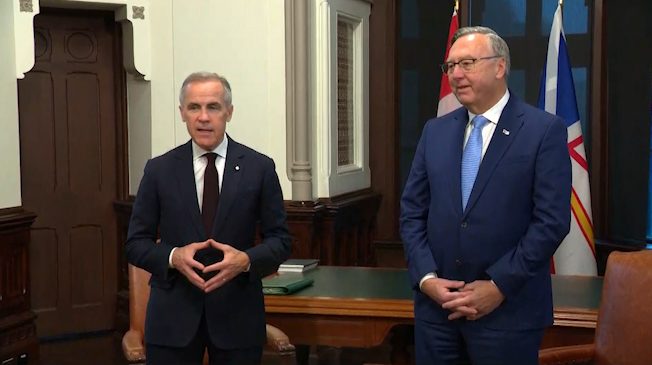
Prime Minister Mark Carney, Newfoundland and Labrador Premier Tony Wakeham and Quebec Premier Christine Fréchette announced the agreement in St. John's. It raises the price Quebec pays now, before the old contract expires in 2041, and commits both sides to build new hydro capacity on the Churchill River in Labrador.

Why it matters

The 1969 contract sent an estimated tens of billions in resale profit to Quebec while Newfoundland got about $100 million a year. This deal rewrites who keeps that money.

Questions about this story

Free account needed to ask — your question is kept and asked for you right after sign-up. Answers are public.

No questions yet — be the first to ask.

Key Indicators

$200B+
Projected N.L. revenue by 2075
Newfoundland and Labrador's estimated take from the new framework through 2075.
0.2¢/kWh
1969 contract price
What Quebec paid per kilowatt-hour under the old deal, against about 10.3 cents it earned on 2023 exports.
2041
Old contract expiry
The 1969 contract runs until 2041; the new deal raises prices before then.
2,250 MW
New Gull Island plant
Capacity of a new hydro plant planned downstream of Churchill Falls.
15%
N.L. consumer rebate
A Churchill River electricity rebate promised to Newfoundland and Labrador ratepayers.

Voices

Curated perspectives — historical figures and your fellow readers.

Ever wondered what historical figures would say about today's headlines?

Sign up to generate historical perspectives on this story.

People Involved

Organizations Involved

Timeline

May 1969 August 2026

5 events Latest: August 17th, 2026 · 4 weeks ago
Tap a bar to jump to that date
  1. New Churchill Falls deal unveiled

    Latest Agreement

    Carney, Wakeham and Fréchette announce a deal in St. John's expanding generation at Churchill Falls and a new plant at Gull Island, with a 15% consumer rebate for Newfoundland ratepayers.

  2. New N.L. premier reopens the talks

    Political

    After winning office, Tony Wakeham orders a review of the 2024 memorandum and sends negotiators back to the table.

  3. Provinces sign a framework to end the contract

    Agreement

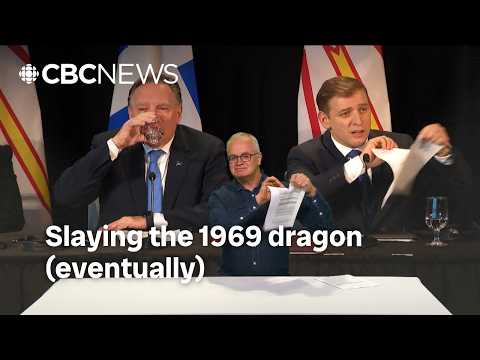
    Premiers Legault and Furey unveil a memorandum to replace the 1969 deal and expand Churchill River capacity, targeting $200 billion-plus for Newfoundland by 2075.

  4. The 1969 contract is signed

    Origin

    The Churchill Falls corporation agrees to sell most of the plant's power to Hydro-Québec at fixed, declining prices running to 2041.

Scenarios

1

Provinces sign binding final agreements

Likely Resolves by Q2 2027

Discussed by: CBC News, BNN Bloomberg

The August announcement is a political framework. To hold, both governments must convert it into definitive, binding contracts covering pricing, ownership and construction. Negotiators had targeted final agreements in 2026. If lawyers and utilities close the remaining terms, this resolves yes.

2

Gull Island construction gets the green light

Possible Resolves by End of 2029

Discussed by: CBC News, Newfoundland and Labrador Hydro

The deal promises a new 2,250-megawatt plant at Gull Island and upgrades at Churchill Falls. A formal final investment decision or construction start would show the buildout is real, not just signed. Financing from Ottawa and the utilities has to line up first.

3

Opposition forces the deal back to the table

Possible Resolves by Q2 2027

Discussed by: Global News, CBC News

Former officials called the 2024 version a 'giveaway,' and Wakeham already reopened it once. Public hearings, a legislature vote, or a Quebec political shift could stall or reopen the terms before binding contracts are signed, repeating the 2024-2026 pattern.

Historical Context

3 moments from history that rhyme with this story — and how they unfolded.

May 1969

The Churchill Falls contract is signed (1969)

Newfoundland's power corporation agreed to sell most of Churchill Falls output to Hydro-Québec at fixed prices that fell over time. The deal locked in rates near 0.2 cents a kilowatt-hour and ran to 2041, with a near-automatic renewal.

Then

Quebec financed the plant and secured cheap, reliable power for its grid.

Now

As market prices climbed, Quebec earned huge resale profits while Newfoundland collected about $100 million a year. Courts upheld the contract into 2019.

Why this matters now

This is the grievance the 2026 deal is meant to settle. Understanding how one-sided the original became explains why the reset matters so much in Newfoundland.

2012–2021

Muskrat Falls megaproject (2012–2021)

Newfoundland sanctioned the Muskrat Falls dam on the lower Churchill River at about $6.2 billion. Costs ballooned past $13 billion, and Ottawa stepped in with rate relief to shield ratepayers.

Then

The project came online years late and far over budget.

Now

It became a cautionary tale about hydro megaproject risk and left the province wary of large builds it cannot fully control.

Why this matters now

The new deal promises tens of billions in construction on the same river. Muskrat Falls shows how quickly those numbers can slip, which is why financing and cost-sharing are central.

July 2024

Columbia River Treaty renegotiation (2024)

Canada and the United States reached an agreement-in-principle to modernize their 1964 Columbia River hydro treaty, updating how power benefits and flood control are shared six decades on.

Then

Negotiators announced revised terms giving Canada more flexibility over its share of benefits.

Now

The talks showed that long-term cross-jurisdiction hydro deals can be reopened and rebalanced when one side feels shortchanged.

Why this matters now

Like Churchill Falls, it is a decades-old power pact renegotiated across a border. It is a template for resetting the split without tearing up the underlying infrastructure.

Sources

(7)