

Pull to refresh
Logo
Shell completes $16.5 billion acquisition of Canada's ARC Resources

Shell completes $16.5 billion acquisition of Canada's ARC Resources

Money Moves

Canadian Montney deal adds 370,000 barrels per day and positions Shell to expand LNG exports to Asia

September 2nd, 2026: Shell completes acquisition of ARC Resources

Overview

Updated Sep 4

Shell closed its $16.5 billion takeover of ARC Resources on September 2, giving the British oil major 370,000 barrels of oil equivalent per day from western Canada's Montney basin. ARC shareholders receive CAD $8.20 cash plus 0.40247 Shell shares for each ARC share they owned.

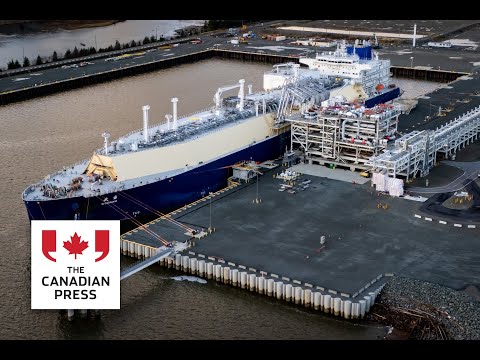
The deal is the centerpiece of Shell CEO Wael Sawan's plan to concentrate the company on oil and gas, with LNG as the growth engine. ARC's fields sit near LNG Canada, the Kitimat export terminal Shell owns 40% of, and undeveloped ARC acreage could supply a second phase of that facility. That would give Shell a complete chain from Canadian wells to Asian gas buyers.

Why it matters

Shell now controls a direct line from Canadian gas wells to Asia's LNG market — a position that could expand with LNG Canada and reshape North American gas exports.

Questions about this story

Free account needed to ask — your question is kept and asked for you right after sign-up. Answers are public.

No questions yet — be the first to ask.

Key Indicators

$16.5B
Enterprise value of the acquisition
Includes US$2.5 billion in assumed net debt and leases.
370 kboe/d
Production added immediately
Oil-equivalent output across liquids and gas from ARC's Montney operations.
4%
Expected production CAGR through 2030
Shell's stated growth rate for 2025-2030, supported by this acquisition.
$13.9B
Equity value
Funded by US$3.3 billion cash and US$10.6 billion in new Shell shares.

Voices

Curated perspectives — historical figures and your fellow readers.

Ever wondered what historical figures would say about today's headlines?

Sign up to generate historical perspectives on this story.

People Involved

Organizations Involved

Timeline

April 2026 September 2026

4 events Latest: September 2nd, 2026 · 1 week ago
Tap a bar to jump to that date
  1. Shell completes acquisition of ARC Resources

    Latest Acquisition

    Deal closes after shareholder, court, and regulatory approvals. Enterprise value: US$16.5 billion. ARC shareholders get CAD $8.20 and 0.40247 Shell shares per share.

  2. Second amending agreement signed

    Agreement

    Further amendments to the arrangement agreement, two weeks before closing.

  3. First amending agreement signed

    Agreement

    Shell and ARC amend the terms of the arrangement agreement.

  4. Shell and ARC sign arrangement agreement

    Agreement

    Shell agrees to acquire ARC Resources in a cash-and-shares transaction valued at approximately CAD $22 billion including assumed net debt.

Scenarios

1

LNG Canada expansion gets final investment decision

Possible Resolves by End of 2028

Discussed by: Kalkine and energy analysts tracking LNG Canada's growth plans, Shell management

Shell has said undeveloped ARC acreage could supply a second phase of the Kitimat terminal. If the LNG Canada partners greenlight an expansion within a few years, the deal's strategic logic—tying Montney gas to Asian buyers—is validated. An FID would require firm gas sales agreements and construction financing, so the timing depends on global LNG prices and buyer commitments.

2

ARC deal delivers promised production growth and returns

Likely Resolves by Q1 2031

Discussed by: Shell management; energy sector analysts covering the company

The acquisition adds 370 kboe/d immediately, and Shell expects roughly 4% annual production growth through 2030, with free cash flow per share accretion from 2027. If those targets hold, the deal validates Shell's pivot toward LNG and supports its share-buyback program. This is the base case Shell's board committed to at deal close.

3

Gas price slump forces Shell to write down ARC assets

Unlikely Resolves by End of 2030

Discussed by: Climate-focused investors and analysts skeptical of large fossil-fuel acquisitions

Global LNG prices have been volatile since the 2022 energy shock, and integrating a large Canadian producer carries execution risk. If gas prices fall sharply or ARC production underperforms, Shell might record an impairment charge. Climate-focused shareholders already criticize Shell for deepening fossil commitments, and a writedown would strengthen their case at annual meetings.

Historical Context

3 moments from history that rhyme with this story — and how they unfolded.

April 2015 - February 2016

Shell's $70 billion acquisition of BG Group (2015-2016)

Shell agreed in April 2015 to buy BG Group for roughly $70 billion, the largest energy deal in a decade. The purchase was built on bets that LNG demand would surge and deepwater Brazil would keep producing. Oil prices crashed during the deal, falling from over $60 to below $30 a barrel by early 2016, stoking claims Shell overpaid.

Then

The deal closed in February 2016 as Shell's share price dropped; critics called the timing disastrous.

Now

BG's LNG portfolio became a core strength. By 2022, as Europe scrambled to replace Russian gas, Shell's LNG position looked prescient and became the centerpiece of the company's strategy.

Why this matters now

Same acquirer, same logic: Shell pays a premium to build LNG scale. The BG outcome shaped Shell's confidence in making this larger, more concentrated bet on Canadian gas.

March 2017

Shell's retreat from Canadian oil sands (2017)

Shell sold its Athabasca oil sands stake and Peace River asset to Canadian Natural Resources in 2017, part of a strategy to shed carbon-intensive, high-cost crude production and shrink its Canadian upstream footprint.

Then

Shell exited large-scale oil sands production in Alberta while keeping downstream Canadian refining and retail operations.

Now

The retreat signaled a shift toward gas and lower-carbon assets. Now Shell is re-entering large-scale Canadian production through the Montney gas basin — a different asset profile from the oil sands it left.

Why this matters now

Shows Shell's Canada strategy evolving from oil sands to natural gas. The ARC deal is the biggest step in that reversal.

October 2023 - May 2024

ExxonMobil's $60 billion Pioneer deal (2023-2024)

ExxonMobil struck a roughly $60 billion all-stock deal for Pioneer Natural Resources, its largest acquisition since the Mobil merger in 1999. The deal consolidated the top of the Permian basin and made Exxon the basin's largest producer, targeting two million barrels a day by 2027.

Then

Closed in May 2024; Exxon moved to cut unit costs by combining adjacent acreage and infrastructure.

Now

The deal triggered a wave of supermajor consolidation: Chevron bought Hess, and other majors followed. Scale became the dominant strategy in shale basins.

Why this matters now

Like Shell-ARC, a supermajor paying a premium for basin scale in a cash-plus-shares deal to lock in a dominant position. Both deals bet on sustained demand for the underlying fuel — Permian oil for Exxon, Montney gas for Shell feeding Asian LNG.

Sources

(10)