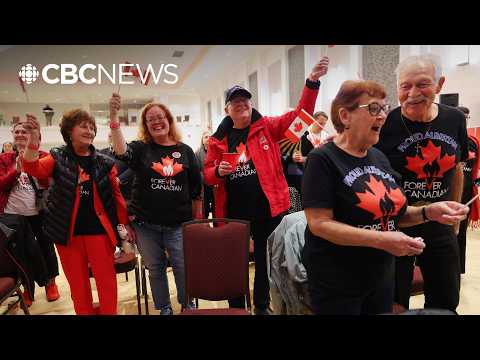
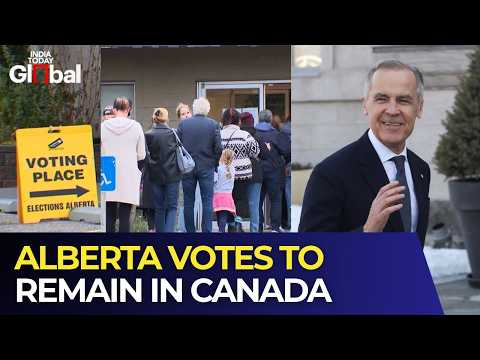
Official results show 74.9 per cent of Albertans voted to stay in Canada, and Premier Danielle Smith says her United Conservative Party is 'not an independence party.'
Elections Alberta released official results on Oct. 29 showing 74.9 per cent voted to stay in Canada, with 2.2 million ballots cast on the separation question and turnout of 70.4 per cent. The agency had finished hand-counting 20,574,612 ballots across all 10 questions on Oct. 24, three days past its 48-hour deadline.
Premier Danielle Smith told her party on Oct. 21 it is 'not an independence party' and invited separatists to leave. Final counts approved five immigration questions by slim margins and rejected all four constitutional ones. Separatist organizers say they will keep pushing, and at least five UCP constituency associations have voted for a leadership review; 22 are needed to trigger one.
Why it matters
The result settles, at least for now, whether Canada's wealthiest, most energy-rich province remains part of the federation.
Questions about this story
Free account needed to ask — your question is kept and asked for you right after sign-up. Answers are public.
No questions yet — be the first to ask.
Key Indicators
74.9%
Voted to stay in Canada
Official share backing 'remain' in the tally released Oct. 29.
25.1%
Voted to start a separation process
Official share supporting a path toward a binding independence vote.
70.4%
Referendum turnout
Turnout on the separation question, nearly 10 points higher than the 2023 provincial election.
400K+
Signatures on 'Forever Canadian' petition
More than 400,000 people signed the stay-in-Canada petition, roughly double the separatist petition's count.
222.6K
Verified signatures on separatist petition
Elections Alberta found nearly 222,600 verified signatures from more than 279,000 valid signatures submitted; the petition was later quashed by a court decision now under appeal.
$50–170B
Estimated 5-year cost of independence
University of Calgary estimate of the initial fiscal price an independent Alberta could face.
20.6M
Ballots counted by hand
Ballots tallied across the 10 referendum questions, the most ever hand-counted in a Canadian electoral event.
21 events
Latest: October 29th, 2026 · 1 week ago
Showing 8 of 21
JK to step
Tap a bar to jump to that date
Jump to
October 2026
Official results confirm 74.9% remain
LatestElection
Elections Alberta released the official tally 10 days after the vote: 74.9 per cent backed remaining in Canada, 2.2 million ballots were cast on the separation question and turnout was 70.4 per cent.
Hand count of 20.6 million ballots finished
Election
Elections Alberta completed the count about three days past its 48-hour deadline, with 20,574,612 ballots tallied by hand. The count put remain at 75 per cent, rejected all four constitutional questions and gave five immigration questions slim majorities.
Alberta orders flags outside every school
Policy
The province required Canada's and Alberta's flags to fly outside schools all year and limited other flags inside schools to those tied to a prescribed course or program. The rules take effect Jan. 4, 2027.
Smith tells UCP it is 'not an independence party'
Statement
In a video to party members and a Calgary news conference, Premier Danielle Smith said separatists who want to make the UCP a vehicle for independence should 'join a different party.' She said candidates must back 'a strong Alberta within a united Canada.'
Smith says she is 'very pleased' and plans address
Statement
Premier Danielle Smith wrote on social media that early results show 'widespread support for remaining in Canada' and announced she would address the province Tuesday evening on where it goes from here.
Separatist leaders vow to keep pressing
Politics
Alberta Prosperity Project leader Mitch Sylvestre said supporters must 'get involved in government,' and lawyer Jeff Rath renewed threats to unseat Smith through a United Conservative Party leadership vote.
Turnout projected above 80 per cent
Election
Elections Alberta forecast turnout of 80% to 85%, against an average of just over 55% in the last five provincial elections.
Nine other referendum questions split narrowly
Referendum
With counting under way, a proposal to let provinces withdraw from some federal programs while keeping funding was at 50.9 per cent No. Three constitutional measures led narrowly, and five policy proposals led with 54.2 per cent to 63.8 per cent Yes.
Official results set for Oct. 29
Election
Elections Alberta plans to release official referendum results at noon ET on Oct. 29.
Smith vows no second independence referendum
Statement
In a televised address, Premier Danielle Smith said she will honour the remain vote and will not hold another referendum on separation while she is premier. She said it was time to move forward together.
First Nations polling stations run short of ballots
Election
Several First Nations polling stations, including Siksika Nation, ran out of ballots and stayed open late as turnout exceeded expectations. Elections Alberta said 36 Indigenous communities participated, up from 33 in 2023.
Albertans vote to stay in Canada
Referendum
Early results showed about 76% backing 'remain' in the province's first referendum on separation.
Five UCP constituency associations back leadership review
Politics
The Tyee reported at least five UCP constituency associations had voted for a review of Premier Danielle Smith's leadership. Twenty-two are needed to trigger a leadership vote.
September 2026
University of Calgary prices independence
Report
Commissioned report estimates a five-year cost of $50 billion to $170 billion for an independent Alberta.
UCP loses Calgary-Shaw byelection
Election
The governing party loses a stronghold seat to the Opposition NDP; critics tie the loss to the referendum.
Alberta launches $4-million ad campaign
Campaign
The government urges citizens to vote to stay in Canada, as polls show a broad majority favoring remain.
May 2026
Smith calls a referendum on separation
Announcement
Smith adds a 10th referendum question asking whether Alberta should stay or begin a separation process.
Court quashes separatist petition
Legal
Alberta Court of King's Bench rules the government failed to properly consult First Nations; Smith promises to appeal.
January 2026
Separatist petition approved
Petition
Alberta Prosperity Project organizer Mitch Sylvestre gets approval to gather signatures on an independence petition.
June 2025
'Forever Canadian' petition launched
Petition
Former deputy premier Thomas Lukaszuk launches a petition affirming Alberta stays in Canada; it later tops 400,000 signatures.
May 2025
Smith announces panel on Alberta's future
Announcement
Smith says her government won't itself put separation on a ballot but would honor a successful citizen petition.
Scenarios
1
Premier Danielle Smith ousted by her own party
Possible
Resolves by Q2 2027
Discussed by: CBC News reported internal UCP division; polls showed a slight majority of party voters backed separation, and critics tied the referendum to the Sept. 14 Calgary-Shaw byelection loss.
The referendum exposed a split Smith has managed but not resolved. If the UCP's separation-minded base blames her for a lose-lose outcome, a leadership challenge could take shape, or pressure could mount for her to step down before the next provincial election.
2
Separatists push a new petition route
Possible
Resolves by Oct 31, 2027
Discussed by: Financial Times and Moneycontrol reported separatist organizers may keep pressing through Alberta's citizen-petition system, which Smith's government has made easier to use.
Smith has said she will not hold another independence referendum while premier, closing her route. The Alberta Prosperity Project and its allies could instead gather signatures for a new petition triggering a vote, building on the 223,000 signatures they previously collected.
3
Court of Appeal revives the separatist petition
Uncertain
Resolves by Q2 2027
Discussed by: Canadian Press noted Smith's appeal of the King's Bench quashing remains unresolved and in legal limbo.
If the Alberta Court of Appeal reverses the ruling that quashed the Prosperity Project petition, the original petition could resume its path toward a binding separation vote. The government's failure to consult First Nations is the central issue on appeal.
4
Smith's government pushes constitutional demands on immigration
Possible
Resolves by Q1 2027
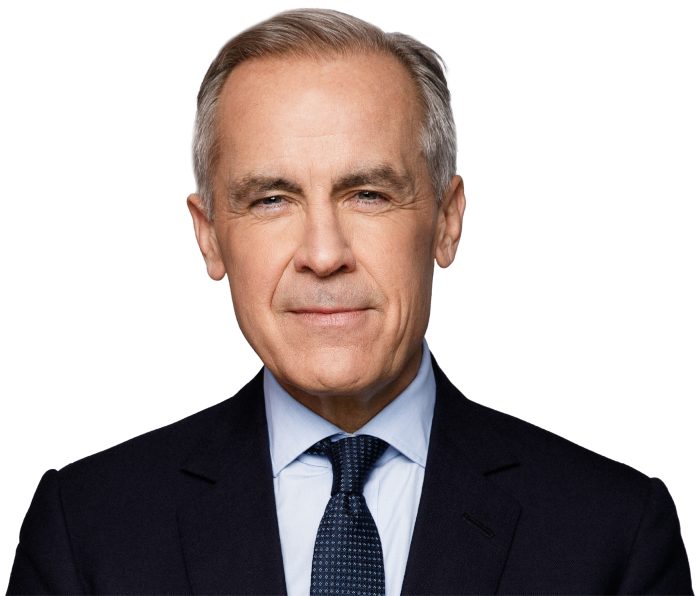
Discussed by: Prime Minister Mark Carney, who said he discussed immigration with Smith after the vote
Carney said he and Smith talked about immigration and that he intended to work with her on it, adding they 'can accomplish that without constitutional change.' The nine other referendum questions covered immigration and constitutional issues and were still being counted, so the next test is whether Smith's government presses Ottawa for formal constitutional amendments or settles for administrative changes.
5
Separatists win control of the UCP's provincial board
Possible
Resolves by Nov 30, 2026
Discussed by: The Globe and Mail reported that leading independence advocates, including podcasters Jason Lavigne and Chris Scott, are competing for provincial board seats
Nearly half the UCP's provincial board is up for election at the party's annual meeting in late November. Independence-minded members who win those seats could push the party toward a separation agenda and force a review of Smith's leadership.
Historical Context
3 moments from history that rhyme with this story — and how they unfolded.
1 of 3
1980
National Energy Program (1980)
Ottawa introduced the National Energy Program, keeping domestic oil prices below world levels and raising the federal share of oil revenues. Alberta treated it as a federal grab on its resource wealth.
Then
The program was later dismantled, but it entrenched western alienation.
Now
Decades on, separatists still cite it as the founding grievance against Ottawa.
Why this matters now
Referendum proponents repeatedly invoked federal energy policy, echoing NEP-era grievances that remain the core of Alberta separatism.
2 of 3
May 1980 / October 1995
Quebec sovereignty referendums (1980, 1995)
Quebec held two independence referendums and voted to stay both times: about 60% No in 1980, and a razor-thin 50.6% No in 1995.
Then
The 1995 result, decided by under one point, triggered federal recognition of Quebec as a distinct society.
Now
Quebec separatism faded through the 2000s but never fully disappeared.
Why this matters now
Alberta's vote was Canada's first sovereignty referendum since Quebec's, showing such movements can persist across generations.
3 of 3
September 2014
Scottish independence referendum (2014)
Scotland voted about 55% to 45% against independence, keeping the United Kingdom intact.
Then
The referendum brought record civic engagement but did not settle the constitutional question.
Now
Brexit reopened it; Scottish nationalists have since demanded another vote.
Why this matters now
The Alberta result echoes the Scottish pattern: a clear 'No' that may not end the independence debate.