Pull to refresh
Logo
Startup deploys AI-designed viruses on human patient

Startup deploys AI-designed viruses on human patient

New Capabilities

Radical Numerics says its Omnii-1 model generated phages for compassionate-use treatment of an antibiotic-resistant infection

Overview

Updated Oct 26

A patient with an antibiotic-resistant infection was given viruses designed by an artificial intelligence model, Radical Numerics said on October 20. The company calls it physician-led compassionate use: an experimental treatment given outside a clinical trial.

Company officials told the New York Times the Food and Drug Administration had authorized a trial, and no such trial appears on ClinicalTrials.gov. The company has not said whether the patient improved or named the hospital, and its technical report is self-published and not peer-reviewed. Researchers including Uppsala microbiologist Brandon Berryhill say lab results cannot show whether the viruses control an infection in a person.

Why it matters

If AI-designed phages work, personalized treatment for resistant infections becomes possible; if not, a warning about therapies reaching patients before validation.

Questions about this story

Free account needed to ask — your question is kept and asked for you right after sign-up. Answers are public.

Did it work?

No one outside the company knows — Radical Numerics is withholding the patient's clinical course and outcomes, so there is no public evidence yet on whether the treatment worked.

This is the first claimed use of AI-designed viruses in a human, but without outcome data or peer review, it remains an unverified milestone.

4 details4 sources2 disagreements
  • Radical Numerics says it will not disclose the patient's clinical course or outcomes, citing patient privacy, so the treatment's success is unconfirmed.
  • In lab tests, the cocktail containing Omnii-1-designed phages eliminated the patient's antibiotic-resistant bacterial isolate in vitro before it was administered.
  • The company's technical report is self-published and has not been peer-reviewed; no trial appears on ClinicalTrials.gov.
  • Outside scientists caution that lab results don't guarantee clinical success — Harvard's Michael Baym says he would hold judgment until the treatment is finished and others can examine the viruses.
Room for disagreement
  • Radical Numerics frames the case as a milestone, but skeptics note the report is self-published, unpeer-reviewed, and lacks outcome data; Uppsala's Brandon Berryhill says lab measurements alone cannot predict how well a phage will control a real infection.
  • The New York Times reported company officials said the FDA authorized a trial, while the company's own report describes a narrower physician-led compassionate-use pathway — and the FDA distinguishes expanded access from a clinical trial, with no trial registered on ClinicalTrials.gov.
0 AI answers with web search. May be wrong.

Key Indicators

1
Patients treated with AI-designed phages
First human use of AI-generated phages, under a physician-led compassionate-use pathway.
69.9%
AI-designed variants recovered in lab tests
Share of Omnii-1 designs recovered at 11 to 15 amino acid changes from wild type, against 4.8% of random controls.
2,161
Designed variants that beat wild-type phage
Out of 6,694 variants with measurable activity. Random controls that beat wild type had at most five amino acid changes.
16
AI-generated phage designs that produced working viruses
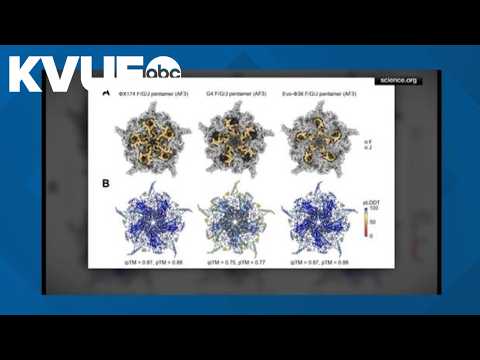
Arc Institute and Stanford reported in Science in August 2026 that 285 synthesized Evo-designed genomes yielded 16 functional viruses.
40 million
Projected deaths from antibiotic resistance over 25 years
Global projection cited by Radical Numerics in its technical report.
0
Peer-reviewed publications on this treatment
The company's technical report is self-published and has not been peer-reviewed.

Voices

Curated perspectives — historical figures and your fellow readers.

Sign up to generate historical perspectives on this story.

People Involved

Organizations Involved

Timeline

June 2026 October 2026

4 events Latest: October 20th, 2026 · 3 weeks ago
Tap a bar to jump to that date
  1. First clinical use of AI-designed phages announced

    Latest Clinical

    Patient with antibiotic-resistant infection receives Omnii-1-designed phages under compassionate use. Not peer-reviewed.

  2. Omnii-1 biological AI model launched

    Product Launch

    Radical Numerics introduces Omnii-1, a model trained across DNA, RNA and protein data, the same day it announces the patient treatment.

  3. Arc Institute and Stanford publish AI-designed phage genomes

    Research

    Using the Evo 1 and Evo 2 models, the team designed roughly 700,000 phage genomes, synthesized 285 of them, and reported 16 that produced working viruses. Published in Science.

  4. Radical Numerics unveils Omnii-1

    Product Launch

    The company introduces its multimodal genome language model for designing phages and predicting phage-host interactions.

Scenarios

1

Peer-reviewed study validates AI-designed phage treatment

Possible Resolves by Q2 2027

Discussed by: The company says it intends to publish peer-reviewed research. Michael Baym told the New York Times "if it works, that's incredible" but wants to see the data.

Radical Numerics publishes a peer-reviewed paper documenting the patient's treatment and outcome. This would validate the approach and potentially accelerate AI-designed phage therapy toward formal clinical trials.

2

Compassionate use expands, building evidence without trials

Possible Resolves by End of 2027

Discussed by: The company's stated goal is to make personalized phage therapy accessible to more patients. The FDA's expanded access pathway allows individual patient use.

More patients with antibiotic-resistant infections receive Omnii-1-designed phages under compassionate use. Each case adds evidence, even without formal clinical trials or peer-reviewed publication.

3

Claim fades without independent verification

Possible Resolves by Q2 2027

Discussed by: Skeptics like Brandon Berryhill note there's no guarantee the designs work. The company has already declined to share patient details.

No peer-reviewed publication, no additional cases, and no independent verification emerge. The claim remains an unverified single-patient anecdote, and public attention moves on.

Historical Context

2 moments from history that rhyme with this story — and how they unfolded.

1915-present

Phage therapy's century-long struggle (1915-present)

Bacteriophages were discovered in the 1910s. Phage therapy was used for decades, particularly in Eastern Europe and the former Soviet Union. Despite this long history, it still lacks a protocol approved in the West.

Then

Phage therapy remained a niche treatment, used mainly when antibiotics failed.

Now

Antibiotic resistance has renewed interest in phages, but regulatory pathways for living therapies remain unclear.

Why this matters now

The AI-designed phage treatment faces the same regulatory and scientific hurdles that have slowed traditional phage therapy for a century, now compounded by questions about AI-designed organisms.

2025

Arc Institute Evo phage generation (2025)

Arc Institute researchers used the Evo 1 and Evo 2 genome language models to generate phage genomes. The team curated 302 designs, built 285 of them, and 16 produced working viruses.

Then

Demonstrated that AI models could design functional phages in the lab.

Now

Laid the technical foundation for Radical Numerics, founded by three Evo 2 team members.

Why this matters now

This was the direct precursor to the clinical use. The 16 working designs showed AI-generated phages could function, but clinical use is a much larger step.

Sources

(15)