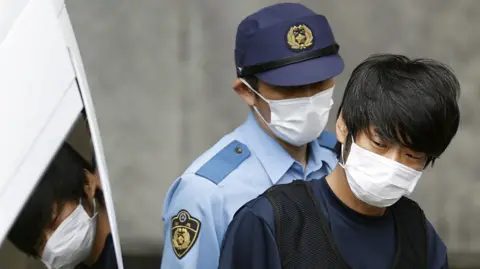
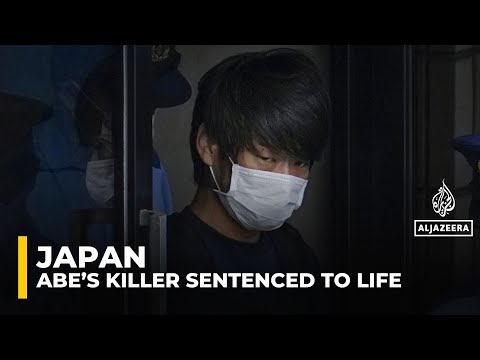
Tetsuya Yamagami shot former Prime Minister Shinzo Abe at a campaign rally in July 2022 with a homemade gun. He built it after his mother's donations to the Unification Church—totaling $720,000—destroyed his family. On January 21, 2026, a Nara court sentenced him to life in prison, rejecting defense arguments that his traumatic upbringing warranted leniency.
The assassination of Japan's longest-serving prime minister exposed six decades of ties between the ruling Liberal Democratic Party and the Unification Church, long accused of predatory fundraising. These ties traced directly to Abe's grandfather. The scandal cratered Prime Minister Kishida's approval ratings, prompted Japan's first-ever dissolution of a religious organization under civil law, and forced the LDP to sever its relationship with the church entirely.
Questions about this story
Free account needed to ask — your question is kept and asked for you right after sign-up. Answers are public.
No questions yet — be the first to ask.
Key Indicators
¥100M
Mother's donations
Yamagami's mother donated approximately $720,000 to the Unification Church, bankrupting the family
179
LDP lawmakers with church ties
Nearly half of the party's 379 Diet members had some connection to the Unification Church
¥22B+
Church damages paid
Total settlement and court-ordered damages paid by the church since 1980
18
Trial days
The lay-judge trial ran from October 2025 to January 2026
21 events
Latest: January 22nd, 2026 · 8 months ago
Showing 8 of 21
JK to step
Tap a bar to jump to that date
Jump to
January 2026
Yamagami Consulting on Appeal Decision
LatestLegal
Following a meeting with Yamagami, a professor reports the defendant plans to decide 'next week' whether to file an appeal. Under Japanese law, appeals must be filed within two weeks of sentencing.
Yamagami Sentenced to Life
Legal
Judge Shinichi Tanaka rejects defense plea for 20-year maximum and sentences Yamagami to life imprisonment.
December 2025
Prosecutors Seek Life Sentence
Legal
Prosecution calls the killing 'unprecedented in our postwar history' and requests life imprisonment.
Yamagami Apologizes to Abe Family
Legal
Yamagami apologizes in court to Akie Abe and the Abe family for the first time since the killing.
Akie Abe Attends Trial
Legal
Abe's widow uses victim participation system to attend trial for the first time.
October 2025
Yamagami Trial Begins
Legal
Trial opens at Nara District Court. Yamagami pleads guilty to murder and firearms violations at the first hearing.
April 2025
Church Appeals Dissolution
Legal
The Unification Church files appeal with Tokyo High Court, arguing the dissolution violates religious freedom.
March 2025
Court Orders Church Dissolved
Legal
Tokyo District Court orders dissolution of the Unification Church—the first such order against a religious group under Japan's civil code.
October 2023
Government Requests Church Dissolution
Legal
Education Ministry files dissolution request with Tokyo District Court, submitting 5,000 documents based on interviews with 170+ people.
December 2022
Anti-Coercion Donation Law Enacted
Legal
Parliament passes law restricting malicious donation solicitations, allowing donors to rescind contributions made under coercive conditions.
October 2022
Government Orders Church Investigation
Legal
PM Kishida orders the first-ever government investigation of a religious organization under the Religious Corporations Act.
September 2022
Internal Survey Reveals Extent of Ties
Investigation
LDP Secretary-General reports 179 of 379 party Diet members had some connection to the Unification Church.
August 2022
LDP Severs Ties with Church
Political
The party announces it will end all relationships with the Unification Church and expel members who maintain connections.
Kishida Reshuffles Cabinet
Political
PM Kishida removes seven ministers with acknowledged church ties, but the new cabinet still includes members with connections.
July 2022
LDP Wins Upper House Elections
Political
Two days after the assassination, the LDP wins 119 seats in House of Councillors elections that Abe was campaigning for.
Shinzo Abe Assassinated in Nara
Event
Yamagami shoots Abe from behind during a campaign speech with a homemade double-barreled shotgun. Abe dies at Nara Medical University Hospital.
First Assassination Attempt Fails
Investigation
Yamagami travels to Okayama to kill Abe at an LDP rally but cannot get close due to entry protocols. He test-fires his homemade gun.
September 2021
Abe Sends Video to Church-Affiliated Event
Statement
Former PM Abe sends a video message to a Universal Peace Federation event, an act Yamagami later cited as his reason for targeting Abe.
2002
Family Bankruptcy
Background
Yamagami's mother declares bankruptcy after donating approximately ¥100 million ($720,000) to the church, ending Yamagami's university hopes.
August 1991
Yamagami's Mother Joins Church
Background
Following her husband's suicide, Yamagami's mother joins the Unification Church and begins donating family assets.
1960s
Unification Church Gains Foothold in Japan
Background
With support from Prime Minister Nobusuke Kishi, the church obtains legal status as a religious organization during Japan's anti-communist movement.
Scenarios
1
Yamagami Serves Life, Parole Decades Away
Likely
Discussed by: Japanese legal experts and mainstream media
Life sentences in Japan technically allow parole, but the average time served before release is 35 years, and many lifers die in prison. Given the gravity of assassinating a former prime minister and the judge's strong condemnation, Yamagami is unlikely to receive early parole consideration. His case may become a reference point for how Japan handles politically motivated violence.
2
Defense Appeals, Seeks Reduced Sentence
Possible
Discussed by: Defense lawyer Takashi Fujimoto, Japanese legal analysts
The defense has two weeks to file an appeal. Lawyer Fujimoto called the verdict 'regrettable' for not considering Yamagami's traumatic upbringing. An appeal would focus on the 'religious abuse' defense—arguing the church's exploitation of his mother created conditions that diminished his culpability. Higher courts rarely reduce life sentences in high-profile murder cases.
3
Church Dissolution Upheld, Organization Stripped of Status
Likely
Discussed by: Tokyo High Court proceedings, legal observers
The Unification Church's appeal of the March 2025 dissolution order is expected to conclude in late 2025 or early 2026. If the high court upholds the lower court decision, the church loses its religious corporation status immediately—stripping tax benefits and requiring asset liquidation. The church could still operate as an unregistered voluntary association but would face severe financial constraints.
4
Yamagami Case Prompts Legislative Reform on Religious Coercion
Possible
Discussed by: Japanese lawmakers, victim advocacy groups
Critics argue existing laws lack teeth—no donation limits, insufficient protection for children of cult members, no provisions for those 'brainwashed' into joining. The trial's focus on religious abuse could fuel legislative efforts to strengthen protections, though constitutional concerns about religious freedom may limit changes.
Historical Context
3 moments from history that rhyme with this story — and how they unfolded.
1 of 3
October 1960
Assassination of Inejirō Asanuma (1960)
Japan Socialist Party chairman Inejirō Asanuma was stabbed to death on live television during a debate at Hibiya Public Hall in Tokyo. The assassin, 17-year-old ultranationalist Otoya Yamaguchi, used a traditional short sword. Yamaguchi hanged himself in his cell three weeks later.
Then
The assassination weakened the Japan Socialist Party and inspired copycat attacks. Yamaguchi became a martyr to far-right groups.
Now
The killing marked the last assassination of a major Japanese political figure before Abe—a 62-year gap that made Japan appear immune to political violence.
Why this matters now
Both assassinations targeted political leaders during public events. But while Asanuma's killing was ideologically motivated by a right-wing nationalist, Yamagami's was driven by personal grievance against a religious organization—reflecting how the nature of political violence in Japan has shifted.
2 of 3
March 1995 - January 2000
Aum Shinrikyo Dissolution (1995-2000)
After Aum Shinrikyo's sarin gas attack on Tokyo subways killed 13 and injured thousands, the government sought to dissolve the cult. The Tokyo District Court revoked Aum's religious corporation status in October 1995, and the group was later designated a terrorist organization.
Then
Aum lost tax benefits and legal protections. Leader Shoko Asahara and 12 other members were executed in 2018.
Now
The case established precedent for dissolving religious organizations that harm public welfare, though the standard remained high—only two dissolutions occurred before the Unification Church case.
Why this matters now
The Unification Church dissolution order is only the third in postwar Japan, following Aum. Unlike Aum's violent crimes, the church was dissolved for civil code violations—predatory fundraising and psychological manipulation—setting a new, lower threshold for action against religious groups.
3 of 3
1970s-1980s
Moonie Controversy in the United States (1970s-1980s)
The Unification Church faced intense scrutiny in America over 'brainwashing' allegations, aggressive fundraising, and mass weddings. Congressional hearings in 1978 examined church practices. Founder Sun Myung Moon was convicted of tax fraud in 1982 and served 13 months in federal prison.
Then
The term 'Moonie' became pejorative. Several states attempted to regulate church activities.
Now
The church rebranded and maintained political influence, particularly among conservative movements. Moon's media holdings included The Washington Times.
Why this matters now
Japan's current reckoning mirrors American concerns from decades ago. Both cases centered on coercive donation practices and psychological manipulation, but Japan's response—dissolution of legal status—goes further than any U.S. action.