Pull to refresh
Logo
Human heart can regrow muscle after heart attack, first study shows

Human heart can regrow muscle after heart attack, first study shows

New Capabilities

Australian researchers overturn the belief that cardiac damage is permanent, opening a path to regenerative heart failure treatments

Yesterday: Discovery reaches broad public attention

Overview

Updated Yesterday

Medical textbooks have long said the adult human heart cannot repair itself. Researchers at the University of Sydney, the Baird Institute, and Royal Prince Alfred Hospital have now shown, for the first time in humans, that heart muscle cells regrow after a heart attack.

Using living tissue collected during bypass surgery, the team found that heart muscle cells increase mitosis after a heart attack. The finding, published in Circulation Research, overturns the assumption that damaged heart regions are permanently lost. It opens a new path toward regenerative treatments for heart failure, a condition with no cure short of transplant.

Why it matters

If the heart's natural repair can be amplified, millions of heart failure patients could avoid transplant.

Questions about this story

Free account needed to ask — your question is kept and asked for you right after sign-up. Answers are public.

0

This seems pretty strange to me. Billions of people have died and are alive today and we've only just now figured this out. Is that really true? My uncle had a heart attack and he's 85 and his heart rebuilt itself. That's what the doctor said so I'm confused by this. Is this really new?

Yes, this is genuinely new—Australian researchers just published the first direct evidence that human heart muscle cells divide after a heart attack—but the regrowth is small, and "your heart rebuilt itself" goes beyond what the evidence shows.

Why it matters: It overturns a long-standing medical teaching that cardiac damage is permanent, and opens the way toward treatments that amplify the heart's own repair.

  • The study, published in Circulation Research, found about 11% of heart muscle cells near the attack site showed signs of mitosis; biopsies taken 7–10 days after an attack showed 7–8%.
  • That is real but far from enough: senior author Sean Lal says rebuilding a damaged heart would require 25–50% of cells to divide.
  • Rodent studies showed this for 25 years, but no one had proven it in living human hearts until this team used tissue collected during bypass surgery.
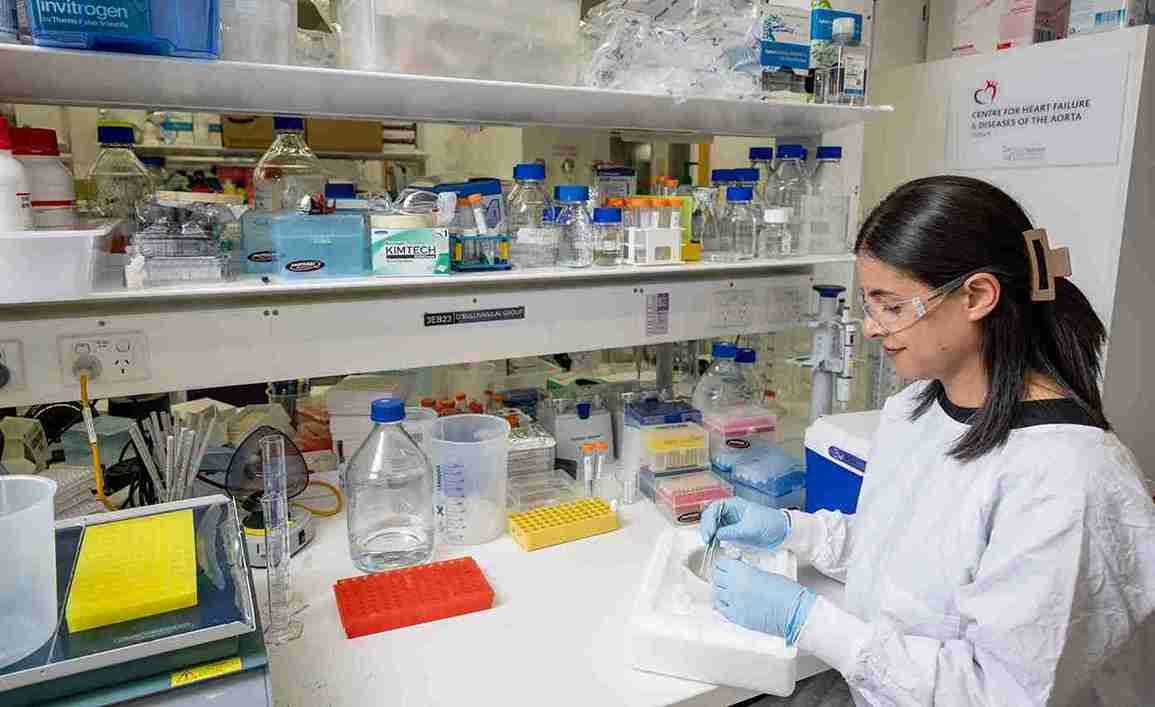
  • The team's new pre-mortem biopsy method lets researchers collect living tissue from the damaged heart's border zone, giving them a lab model for testing regenerative therapies.
Room for disagreement
  • Coverage splits on how to frame the finding: the University of Sydney calls it heart muscle "regrowth," but the researchers themselves stress the natural increase in cell division is too low to replace lost tissue—so a doctor telling a patient the heart "rebuilt itself" likely means something more modest, like recovery of function, not new muscle at a regenerative scale.
AI-generated with web search — may be wrong. Check the linked sources.


Key Indicators

3 billion
Cardiomyocytes in the adult human heart
A heart attack can eliminate up to a third of these muscle cells.
33%
Maximum fraction of heart muscle cells destroyed by a heart attack
The scale of damage that a regenerative therapy would need to address.
144,000
Heart failure patients in Australia
Compared with only 115 heart transplants performed annually in the country.
25 years
Years animal studies predicted heart regeneration before human confirmation
Rodent models showed increased cardiomyocyte mitosis after infarction; humans were only now confirmed to do the same.

Voices

Curated perspectives — historical figures and your fellow readers.

Ever wondered what historical figures would say about today's headlines?

Sign up to generate historical perspectives on this story.

People Involved

Organizations Involved

Timeline

January 2026 September 2026

3 events Latest: Yesterday
  1. Discovery reaches broad public attention

    Latest Media coverage

    ScienceDaily, ScienceAlert, and International Business Times cover the finding, bringing the heart regeneration discovery to a global audience.

  2. Study published in Circulation Research

    Publication

    The peer-reviewed study demonstrates increased human cardiomyocyte mitosis after myocardial infarction, confirmed through a novel post-MI biopsy method.

  3. University of Sydney announces heart regeneration discovery

    Announcement

    Researchers reveal that human heart muscle cells regrow after a heart attack, challenging decades of medical doctrine.

Scenarios

1

First cardiac regeneration clinical trial registered

Possible Resolves by Sep 11, 2031

Discussed by: Study authors Sean Lal and Robert Hume; regenerative medicine researchers

Researchers identify proteins that amplify the heart's natural mitotic response and develop a therapy targeting them. The first clinical trial of a cardiac regeneration treatment for heart failure patients is formally registered within five years.

2

Researchers decode the heart's regeneration mechanism

Likely Resolves by Sep 11, 2029

Discussed by: Study team; cardiology research community

Using the novel biopsy method and multiomics data, researchers identify the specific proteins and molecular pathways driving human cardiomyocyte mitosis after infarction. The findings produce concrete drug targets and move the field from observation to intervention.

3

Regeneration discovery stalls without clinical payoff

Possible Resolves by Sep 11, 2031

Discussed by: Skeptical cardiology researchers

The intrinsic mitotic response proves too small or too unsafe to amplify in patients. No therapeutic candidate emerges from the discovery within five years, and the field shifts back to other approaches like device therapy and transplantation.

Historical Context

2 moments from history that rhyme with this story — and how they unfolded.

2001–2026

Rodent heart regeneration studies (2001–2026)

For 25 years, researchers observed increased mitosis in the heart muscle of mice and rats following induced heart attacks. The increase was real but too small to replace lost tissue, proving adult rodents have an intrinsic regenerative potential.

Then

Animal models became the standard platform for studying cardiac regeneration.

Now

The findings raised the unresolved question of whether human hearts behave the same way — a question the new study answers.

Why this matters now

The Australian team confirmed in human tissue what animal studies had shown for a quarter century, closing a major gap between model systems and patients.

2011

Neonatal mouse heart regeneration (2011)

Lineage-tracing experiments showed that neonatal mice regenerate heart muscle after injury. Spared cardiomyocytes near the injury site re-enter the cell cycle and divide to replace lost tissue, rather than a resident stem cell population doing the work.

Then

The discovery reframed the adult heart as having lost, rather than never having had, regenerative capacity.

Now

It motivated a decade of research into restoring that capacity in adult hearts, culminating in the new human evidence.

Why this matters now

Showing that young mammalian hearts regenerate raised the possibility that adult humans retain a silenced version of the same program. The new study confirms that program is active, at low levels, even in adults.

Sources

(6)