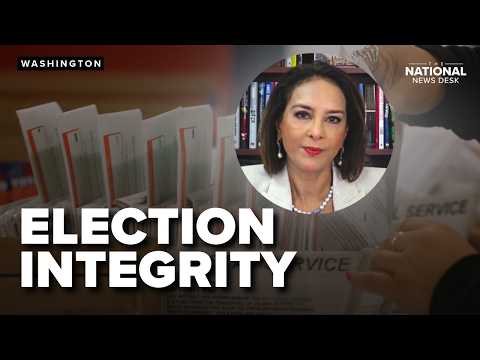
Harmeet Dhillon, who took over the Justice Department's Civil Rights Division in April 2025, resigned as its chief on November 5, 2026, Al Jazeera reported. She left an office focused on election-fraud claims, campus discrimination cases and suits against universities.
About 300 of the division's more than 400 lawyers departed during her tenure, and the department hired about 130 replacements. The division had planned to send roughly 1,000 monitors to the November elections; the NAACP sued to stop prosecutors and agents from serving as monitors. Judges have dismissed more than two dozen of the division's new lawsuits.
Why it matters
Federal voting and discrimination law is enforced by an office that lost most of its lawyers and now its chief.
Questions about this story
Free account needed to ask — your question is kept and asked for you right after sign-up. Answers are public.
No questions yet — be the first to ask.
Key Indicators
~300
Attorneys who left the division since January 2025
About 300 of the division's more than 400 lawyers departed during Dhillon's tenure, according to NPR.
130
New attorneys hired to replace them
The Justice Department says about 130 attorneys have been hired to replace the roughly 300 who left.
~70%
Share of the division's lawyers who left
About 300 of more than 400 lawyers departed, current and former officials say.
~1,000
Election monitors planned for November
The division planned to send about 1,000 monitors, more than its 353 authorized positions, per DOJ budget documents.
25+
Lawsuits dismissed by federal judges
Judges have thrown out more than two dozen of the department's new cases, including most recently in Georgia.
11
Division sections with rewritten mission statements
New missions include protecting children from gender-related care and eradicating anti-Christian bias.
14 events
Latest: 6 days ago
Showing 8 of 14
JK to step
Tap a bar to jump to that date
Jump to
November 2026
Dhillon resigns as civil rights chief
LatestLeadership Change
Harmeet Dhillon stepped down as assistant attorney general for civil rights, Al Jazeera reported. She had led the division since April 2025.
October 2026
Justice Department starts notifying counties it wants to monitor
Election
Counties in Colorado, Florida, Minnesota, Texas and Washington received notices that the department plans to observe their elections. A department spokesperson said the full list will be shared closer to the election.
Division finds Ohio State medical school discriminates by race
Legal
The Civil Rights Division announced it had found Ohio State University's medical school discriminates on the basis of race in admissions.
UNC-Chapel Hill settles antisemitism and race discrimination investigation
Legal
The Civil Rights Division and the Education Department's Office for Civil Rights settled their investigations of the university, which agreed to race-blind admissions, a Title VI coordinator, mandatory antisemitism training and quarterly complaint reports through December 2028.
NAACP sues to block election monitors
Legal
The NAACP and three voters sued Attorney General Todd Blanche, Dhillon and the Justice Department in Washington federal court. They argue that using prosecutors and law enforcement agents as poll monitors would intimidate voters, violating Section 11(b) of the Voting Rights Act.
NPR documents the transformed division
Report
About 300 attorneys have left and the Justice Department says some 130 have been hired to replace them.
September 2026
Dhillon announces plan for 1,000 election monitors
Policy Change
Dhillon said the division will send about 1,000 federal monitors to polling sites in November, well above the division's 353 authorized positions, of which 193 are attorneys.
August 2026
Judge dismisses Harvard antisemitism suit
Legal
A federal judge dismisses the department's lawsuit against Harvard, finding the antisemitism claims too 'isolated and episodic.'
Attorney who hacked election websites monitors Minnesota primary
Election
David Michael Levin, a Florida attorney who pleaded guilty in 2016 to breaking into county and state election websites, was spotted monitoring a Minnesota primary. Public Citizen counts him among five new hires with records of misconduct or extremist litigation.
April 2026
DOJ opens investigations into 36 Illinois school districts
Legal
The Civil Rights Division launched Title IX probes into 36 Illinois districts reaching beyond sports eligibility to discourage teaching about sexual orientation and gender identity in pre-K-12 classes, per Human Rights Watch.
2026
Division targets four universities over admissions
Legal
The division accuses UC Berkeley, Duke, UCSF, and George Washington University law and medical schools of discriminating against white and Asian students.
May 2025
Mass exodus of division lawyers reported
Workforce
NPR reports around 250 attorneys, or 70% of the division, have left or will leave by month's end.
Division drops dozens of cases
Policy Change
The division withdraws statements of interest or amicus briefs in roughly 30 cases, including voting rights and racial discrimination matters.
April 2025
Dhillon takes over the Civil Rights Division
Leadership Change
Harmeet Dhillon becomes chief and vows to radically reshape the division's mission.
Scenarios
1
Division wins a landmark case, validating the new mission
Possible
Resolves by Q2 2027
Discussed by: Department officials and legal analysts tracking the university and voter-data suits
If the division wins one of its pending discrimination suits against UC Berkeley, Duke, UCSF, or George Washington University, or a court orders a state to hand over voter data, it would validate the enforcement agenda and likely invite more such cases.
2
Courts keep striking down the division's enforcement cases
Likely
Resolves by Q2 2027
Discussed by: State election officials and civil rights groups
Judges have already dismissed more than two dozen of the division's new lawsuits. If a federal appeals court rejects a voter-data demand or another major case collapses, states gain leverage to refuse cooperation.
3
A new administration reverses the changes in 2029
Uncertain
Resolves by Jan 20, 2029
Discussed by: Former division officials
A president from the opposing party taking office in January 2029 could replace Dhillon, restore career-staff hiring, and reorient the division toward its traditional mission. Until then, the restructuring appears set to continue.
4
Judge blocks prosecutors and agents from monitoring polls
Deadline passed (Nov 3, 2026)
Discussed by: NAACP lawyers in NAACP v. Blanche
The October 16 suit asks Judge Reggie B. Walton to keep prosecutors and law enforcement agents away from polling places, arguing their presence violates the Voting Rights Act's ban on voter intimidation. A ruling for the plaintiffs would undercut Dhillon's plan to send about 1,000 monitors. As of October 26 the docket showed only procedural steps and no ruling.
Historical Context
One moment from history that rhymes with this story — and how it unfolded.
2009
DOJ Inspector General report on Bush-era hiring (2009)
A Justice Department inspector general found that during the George W. Bush administration, the Civil Rights Division favored Republican and conservative candidates in hiring, including in the Voting Section where some career attorneys were rejected for their political views.
Then
The department adopted reforms that gave career staff the lead role in hiring, insulating the process from partisan considerations.
Now
Those reforms governed hiring for about 15 years until Dhillon's front office removed career staff from the process.
Why this matters now
Dhillon's restructuring reverses the exact reforms designed to keep politics out of division hiring.