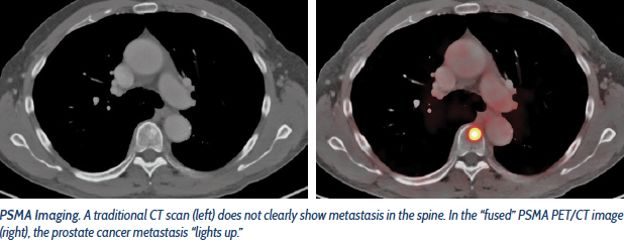
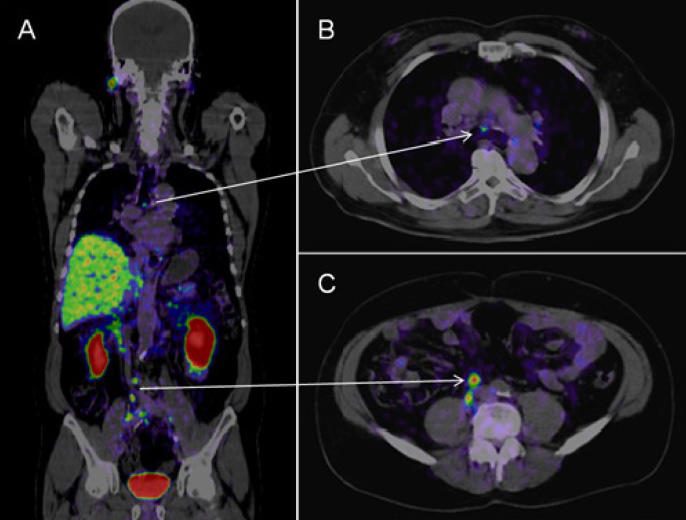
Every year, roughly 750,000 men in the United States alone undergo prostate biopsies that turn out to be unnecessary. On March 13, 2026, researchers at the European Association of Urology Congress in London presented results from the PRIMARY2 trial showing that a scan using a molecule that binds to prostate cancer cells and makes them glow on imaging cut the need for biopsies nearly in half, without missing dangerous cancers.
The trial matters because prostate cancer screening has been stuck in a painful tradeoff for decades: the standard blood test catches cancers early, but also flags vast numbers of harmless ones. This leads to biopsies and treatments that can leave men incontinent or impotent for tumors that would never have hurt them. Prostate-Specific Membrane Antigen (PSMA) PET scanning now offers a way to break that tradeoff, distinguishing aggressive cancers from indolent ones before a needle ever enters the body.
Questions about this story
Free account needed to ask — your question is kept and asked for you right after sign-up. Answers are public.
No questions yet — be the first to ask.
Key Indicators
49%
Biopsy reduction
Share of men in the PRIMARY2 trial who safely avoided biopsy after a negative PSMA PET scan
660
Patients enrolled
Biopsy-naive men with equivocal MRI results randomized across seven Australian centers
750K
Unnecessary biopsies per year (US)
Estimated annual unnecessary prostate biopsies in the United States under current screening practices
1.5M
Annual global diagnoses
Prostate cancer is the most commonly diagnosed cancer in men across 118 countries
13 events
Latest: March 13th, 2026 · 6 months ago
Showing 8 of 13
JK to step
Tap a bar to jump to that date
Jump to
March 2026
PRIMARY2 trial shows PSMA PET halves biopsies safely
LatestResearch
At the European Association of Urology Congress in London, researchers present results from the PRIMARY2 trial showing that PSMA PET/CT scanning reduced the need for prostate biopsies by 49% in men with inconclusive MRI results, without missing clinically significant cancers. Diagnoses of harmless cancers fell from 32% to 14%.
January 2026
BIOPSTAGE trial shows PSMA PET cuts biopsy targets by two-thirds
Research
The BIOPSTAGE trial reports that guiding biopsies exclusively by PSMA PET-positive lesions could reduce the number of biopsy targets by approximately 66% compared with MRI alone, while maintaining 86% sensitivity and 86% specificity.
March 2022
FDA approves Pluvicto, first PSMA-targeted therapy
Regulatory
The FDA approves lutetium-177 PSMA-617 (Pluvicto) as the first radioligand therapy that uses PSMA to deliver radiation directly to prostate cancer cells, completing the "theranostic" loop from PSMA imaging to PSMA treatment.
May 2021
Pylarify becomes first commercial PSMA PET tracer
Regulatory
The FDA approves Pylarify (piflufolastat F-18), the first commercially manufactured PSMA PET tracer, expanding access beyond academic medical centers that could produce gallium-68 on-site.
December 2020
FDA approves first PSMA PET imaging agent
Regulatory
The FDA approves gallium-68 PSMA-11 as the first PSMA-targeted PET imaging agent for prostate cancer, initially for men with suspected metastasis or recurrence.
March 2020
proPSMA trial published in The Lancet
Research
The proPSMA trial, led from Peter MacCallum Cancer Centre, demonstrates that PSMA PET/CT has 92% accuracy for staging high-risk prostate cancer, compared with 65% for conventional CT and bone scans. The results are published in The Lancet.
May 2018
US panel partially reverses PSA screening recommendation
Regulatory
The task force issues an updated recommendation encouraging shared decision-making about PSA screening for men aged 55 to 69, partially walking back its 2012 blanket recommendation against screening.
October 2012
US panel recommends against routine PSA screening
Regulatory
The United States Preventive Services Task Force recommends against routine PSA-based screening for all men, citing evidence that it leads to overdiagnosis and overtreatment of indolent cancers.
January 2012
First patient scanned with Gallium-68 PSMA PET
Discovery
Researchers in Heidelberg, Germany report imaging the first patient with a gallium-68-labeled PSMA PET compound targeting the exterior of PSMA on cancer cells, producing far clearer images than earlier agents.
January 1996
First PSMA-based imaging agent approved
Regulatory
ProstaScint, using a radiolabeled antibody targeting an internal portion of PSMA, becomes the first FDA-approved PSMA imaging agent. Its accuracy proves limited.
January 1994
FDA approves PSA blood test for screening
Regulatory
The Food and Drug Administration approves the prostate-specific antigen blood test for prostate cancer screening, leading to a surge in diagnoses and the beginning of the overdiagnosis debate.
January 1993
PSMA gene cloned at Memorial Sloan Kettering
Discovery
Researchers at Memorial Sloan Kettering Cancer Center clone the PSMA gene, opening the path toward diagnostic and therapeutic applications.
January 1987
PSMA first identified
Discovery
Researchers led by George Murphy and Julius Horoszewicz develop a monoclonal antibody from mice immunized with human prostate cancer cells, identifying what would become known as Prostate-Specific Membrane Antigen.
Scenarios
1
PSMA PET becomes standard first-line test before biopsy
Likely
Discussed by: Peter MacCallum researchers and the European Association of Urology; reflected in momentum from proPSMA, BIOPSTAGE, and PRIMARY2 trials
As evidence accumulates from multiple randomized trials, urology guidelines incorporate PSMA PET/CT as a standard step before biopsy for men with elevated PSA but inconclusive MRI results. Insurance systems begin covering the scan for initial diagnosis, not just recurrence. The result is a measurable drop in unnecessary biopsies, infections, and overtreatment of indolent cancers across screening populations.
2
Access barriers limit PSMA PET to wealthy countries and major hospitals
Possible
Discussed by: American Society of Clinical Oncology researchers; health economists studying PET infrastructure costs
PSMA PET scanning requires specialized radioactive tracers, PET/CT scanners costing millions to install, and trained nuclear medicine physicians. Even with strong trial evidence, adoption stalls outside major academic medical centers and high-income countries. Rural patients face long travel distances, insurance coverage remains inconsistent, and supply chain issues with radiopharmaceuticals persist, creating a two-tier system where the technology's benefits flow primarily to those already closest to care.
3
PSMA theranostics reshape prostate cancer from screening through treatment
Possible
Discussed by: Novartis (which invested $2.1 billion in Pluvicto); nuclear medicine researchers at Peter Mac and St Vincent's Hospital
PSMA PET scanning for diagnosis pairs with PSMA-targeted radioligand therapy (Pluvicto) for treatment, creating a complete pipeline where the same molecular target is used to find, characterize, and destroy prostate cancer. Clinical trials expand Pluvicto's use to earlier-stage disease, and the combination of PSMA-guided screening plus PSMA-targeted treatment reduces prostate cancer mortality while avoiding the collateral damage of aggressive surgery and radiation in men with localized tumors.
Discussed by: Oncology skeptics and guideline committees awaiting two-year PRIMARY2 follow-up data
The PRIMARY2 trial's initial six-month results are promising, but the study will follow patients for two years. If longer follow-up reveals that some clinically significant cancers were missed by the PSMA-negative pathway, enthusiasm could cool and guidelines could limit the technology's role to a supplement rather than a replacement for biopsy. The 12% versus 16% detection gap, which was noninferior at six months, could widen over time.
Historical Context
3 moments from history that rhyme with this story — and how they unfolded.
1 of 3
1994-2018
PSA screening controversy and the overdiagnosis crisis (1994-2018)
After the FDA approved the PSA blood test in 1994, prostate cancer diagnoses soared. By the 2000s, evidence showed that for every man whose life was saved by early detection, many more were diagnosed with slow-growing cancers that would never have harmed them. In 2012, the US Preventive Services Task Force recommended against routine PSA screening entirely, triggering a sharp decline in testing.
Then
Screening rates fell, and some men who would have benefited from early detection were diagnosed later with more advanced disease. The task force partially reversed its position in 2018.
Now
The controversy created lasting public confusion about prostate cancer screening and demonstrated the urgent need for tools that could distinguish aggressive cancers from indolent ones, rather than simply detecting the presence of any cancer.
Why this matters now
PSMA PET directly addresses the central problem that made PSA screening controversial. Rather than simply flagging elevated protein levels that could indicate anything from cancer to a benign enlarged prostate, PSMA imaging identifies cells with the molecular signature of aggressive cancer. PRIMARY2's finding that diagnoses of clinically insignificant cancer dropped from 32% to 14% shows the technology can reduce exactly the overdiagnosis that undermined confidence in prostate screening.
2 of 3
2017-2021
MRI replaces blind biopsies for prostate cancer (2017-2021)
The PRECISION trial in 2018 and the STHLM3-MRI trial in 2021 demonstrated that magnetic resonance imaging could be used to target prostate biopsies rather than sampling the gland blindly. The STHLM3 trial, enrolling over 12,000 men in Stockholm, showed that combining a risk-prediction blood test with MRI reduced overdiagnosis while maintaining detection of dangerous cancers.
Then
MRI-targeted biopsy became the standard of care in many countries, reducing the number of men biopsied by roughly 48% and cutting detection of harmless cancers by 62%.
Now
MRI set the precedent that imaging could safely replace some biopsies, but it still left a large group of men with ambiguous results who were sent for biopsy anyway. PRIMARY2 addresses exactly this gap.
Why this matters now
PRIMARY2 picks up where MRI-targeted biopsy left off. The trial specifically enrolled men whose MRI results were inconclusive, showing that adding PSMA PET to the diagnostic pathway can resolve ambiguity that MRI alone cannot.
3 of 3
1970s-present
Mammography screening debate and the quest for precision cancer detection (1970s-present)
Mammography screening for breast cancer faced decades of debate remarkably similar to the PSA controversy: early detection saved some lives but also led to overdiagnosis of ductal carcinoma in situ and other conditions that might never progress. Estimates suggest 20-30% of screen-detected breast cancers represent overdiagnosis.
Then
Screening guidelines were revised repeatedly as different countries weighed the tradeoff between early detection and overtreatment differently.
Now
The field has moved toward more precise imaging (contrast-enhanced mammography, breast MRI) and molecular markers to distinguish aggressive from indolent lesions, mirroring the trajectory now underway in prostate cancer.
Why this matters now
The prostate cancer screening pathway is following a pattern established by breast cancer: from blunt population-level screening to increasingly precise molecular and imaging tools that reduce harm while preserving the benefits of early detection. PSMA PET represents the prostate cancer equivalent of this evolution.