

Pull to refresh
Logo
Daily Brief
Following
Why Ranks Sign Up
Mayo Clinic AI detects pancreatic cancer years before diagnosis

Mayo Clinic AI detects pancreatic cancer years before diagnosis

New Capabilities

A model called REDMOD spots disease on routine CT scans up to three years before tumors appear

May 8th, 2026: AI-PACED clinical trial enrollment underway

Overview

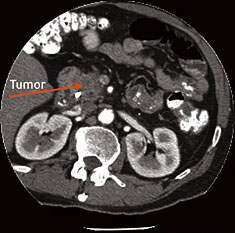
Pancreatic cancer kills nearly nine in ten patients within five years, mostly because doctors catch it too late to operate. On April 28, 2026, Mayo Clinic researchers published a validation study showing their artificial intelligence model can flag the disease on routine CT scans up to three years before a clinical diagnosis.

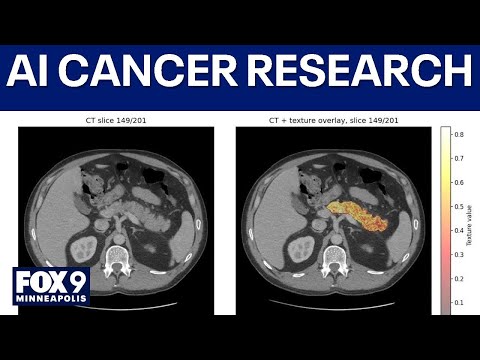
The model, called REDMOD (Radiomics-based Early Detection Model), found 73% of prediagnostic cancers in scans previously read as normal. Radiologists working without the AI caught 39%. The system now moves into a clinical trial that will test whether earlier flags translate into more curable surgeries.

Why it matters

Caught early, pancreatic cancer is survivable for most patients. Caught late, it kills nine in ten. This tool shifts that timing window.

Play on this story Voices Debate Predict

Key Indicators

3 years
How early REDMOD spots cancer
The AI flagged signs of disease on CT scans taken up to three years before patients were diagnosed.
73%
AI sensitivity
Share of prediagnostic cancers REDMOD identified in scans previously interpreted as normal.
39%
Radiologist sensitivity
Share found by specialists reviewing the same scans without AI assistance.
88%
AI specificity
Share of healthy patients the model correctly cleared, limiting false positives.
13%
Current five-year survival
The U.S. pancreatic cancer survival rate has stalled at 13% for three straight years.
80%+
Stage IA five-year survival
When pancreatic cancer is found at the earliest stage, more than 80% of patients survive five years.
1,755
CT scans analyzed
Total scans across the development and test sets in the validation study.
67,530
U.S. cases projected in 2026
American Cancer Society estimate of new pancreatic cancer diagnoses this year.

Interactive

Exploring all sides of a story is often best achieved with Play.

Ever wondered what historical figures would say about today's headlines?

Sign up to generate historical perspectives on this story.

People Involved

Organizations Involved

Timeline

  1. AI-PACED clinical trial enrollment underway

    Clinical trial

    Mayo advances REDMOD into a prospective study testing AI-guided screening in high-risk patients, measuring outcomes and false positives.

  2. Bloomberg and major outlets cover the breakthrough

    Coverage

    Mainstream press picks up the study, framing it as the most credible early-detection advance for pancreatic cancer in a decade.

  3. Mayo Clinic publishes REDMOD validation study

    Research

    Researchers report in Gut that the AI flagged 73% of prediagnostic cancers across 1,755 scans, beating radiologists nearly two to one.

  4. Pancreatic cancer survival stalls at 13%

    Context

    PanCAN reports the third straight year with no movement in five-year survival, even as other cancers improve.

  5. DeepMind AI matches radiologists on breast cancer screening

    Milestone

    Nature publishes results showing a Google AI reduces false negatives in mammography. The first credible proof that AI imaging can rival specialists.

Scenarios

Predict which scenario wins. Contrarian picks score more — points lock in when the scenario resolves.

Log in to predict. Track your picks, climb the leaderboard. Log in Sign Up
1

AI-PACED confirms benefit, REDMOD becomes standard for high-risk patients

If the prospective trial shows REDMOD-guided screening leads to more curable surgeries without flooding the system with false positives, hospitals adopt it for patients with new-onset diabetes, family history, or pancreatic cysts. Insurance coverage follows for the high-risk subgroup. Survival rates begin moving for the first time in a decade.

Discussed by: Mayo Clinic researchers; coverage in Inside Precision Medicine and Bloomberg
Consensus
2

FDA clears REDMOD as a clinical decision tool within two years

The model receives Food and Drug Administration authorization as a software-as-a-medical-device, similar to existing AI tools for stroke and breast cancer. Radiology groups integrate it into routine abdominal CT workflows. Adoption depends on reimbursement codes catching up.

Discussed by: Medical AI analysts at Inside Precision Medicine
Consensus
3

False positive load slows real-world adoption

Even at 88% specificity, screening millions of scans produces enough false alarms to trigger biopsies, anxiety, and cost. If AI-PACED shows the harms outweigh the survival gains for general use, REDMOD stays locked to narrow high-risk groups.

Discussed by: Cancer screening researchers; PanCAN advisory groups
Consensus
4

The radiomics approach extends to other hard-to-screen cancers

If REDMOD's pixel-by-pixel analysis works on the pancreas, similar models follow for ovarian, esophageal, and stomach cancers, diseases that share the same late-detection problem. Mayo and academic competitors race to publish.

Discussed by: Mayo's Precure initiative leadership
Consensus

Historical Context

DeepMind breast cancer screening AI (2020)

January 2020

What Happened

Google's DeepMind unit published a Nature study showing its AI reduced false negatives by 9.4% and false positives by 5.7% in U.S. mammograms. In a head-to-head test, the model outperformed all six human radiologists, even with less patient history to work from.

Outcome

Short Term

The result triggered the first wave of FDA-cleared AI tools for mammography reading. Hospitals began piloting AI-assisted double reads.

Long Term

By 2025, AI-assisted mammography became a standard offering at large U.S. radiology groups, though insurance coverage and workflow integration lagged the technology.

Why It's Relevant Today

REDMOD follows the same playbook: train on a hard imaging problem, beat specialists in a controlled study, then face a long road to real-world adoption. The 2020 milestone also showed that the gap between published study and routine clinical use can stretch five years or more.

National Lung Screening Trial (2011)

August 2011

What Happened

The National Cancer Institute reported that low-dose CT screening cut lung cancer deaths by 20% among heavy smokers compared to chest X-rays. The trial enrolled 53,454 high-risk patients across 33 U.S. centers.

Outcome

Short Term

The U.S. Preventive Services Task Force recommended annual low-dose CT screening for high-risk smokers in 2013. Medicare began covering it in 2015.

Long Term

Lung cancer mortality has fallen steadily since, with screening cited as a meaningful contributor. Uptake remains uneven; only about 16% of eligible patients get screened.

Why It's Relevant Today

The lung trial is the closest precedent for what AI-PACED is trying to prove: that earlier imaging-based detection of a deadly cancer translates into lives saved. It also shows the gap between proving a screening tool works and getting eligible patients to actually use it.

Pap smear adoption (1950s–1960s)

1950–1970

What Happened

George Papanicolaou's cervical cell test, developed in the 1940s, became the first widespread cancer screening tool after the American Cancer Society endorsed it in 1957. By the 1960s, U.S. women were getting routine Pap smears as part of gynecologic care.

Outcome

Short Term

Cervical cancer detection shifted from late-stage diagnosis to precancerous lesions that could be removed in clinic.

Long Term

Cervical cancer deaths in the U.S. fell roughly 70% between 1955 and 1992. The Pap smear became the model for what successful cancer screening looks like.

Why It's Relevant Today

Pancreatic cancer today sits where cervical cancer sat before the Pap smear: no general screening test, late diagnoses, low survival. REDMOD will not become a Pap smear overnight, but it is the first credible candidate for changing the same dynamic.

Sources

(9)