



Pull to refresh
Logo
POWERGRID wins HVDC project to move 6 GW of Rajasthan solar power

POWERGRID wins HVDC project to move 6 GW of Rajasthan solar power

Built World

State-run grid operator beats private rivals in competitive auction for ±800 kV line estimated to cost ₹25,000-26,000 crore

5 days ago: GE Vernova T&D India emerges L1 bidder for HVDC converter stations

Overview

Updated 5 days ago

India's state-owned grid operator won the contract on September 2, 2026 to build the transmission line that will carry 6 gigawatts of solar power from Rajasthan's Barmer desert to Maharashtra's industrial west. POWERGRID will be paid ₹3,244 crore in annual transmission charges under a build-own-operate-transfer (BOOT) model: it finances, constructs, and runs the line before handing it to regulators.

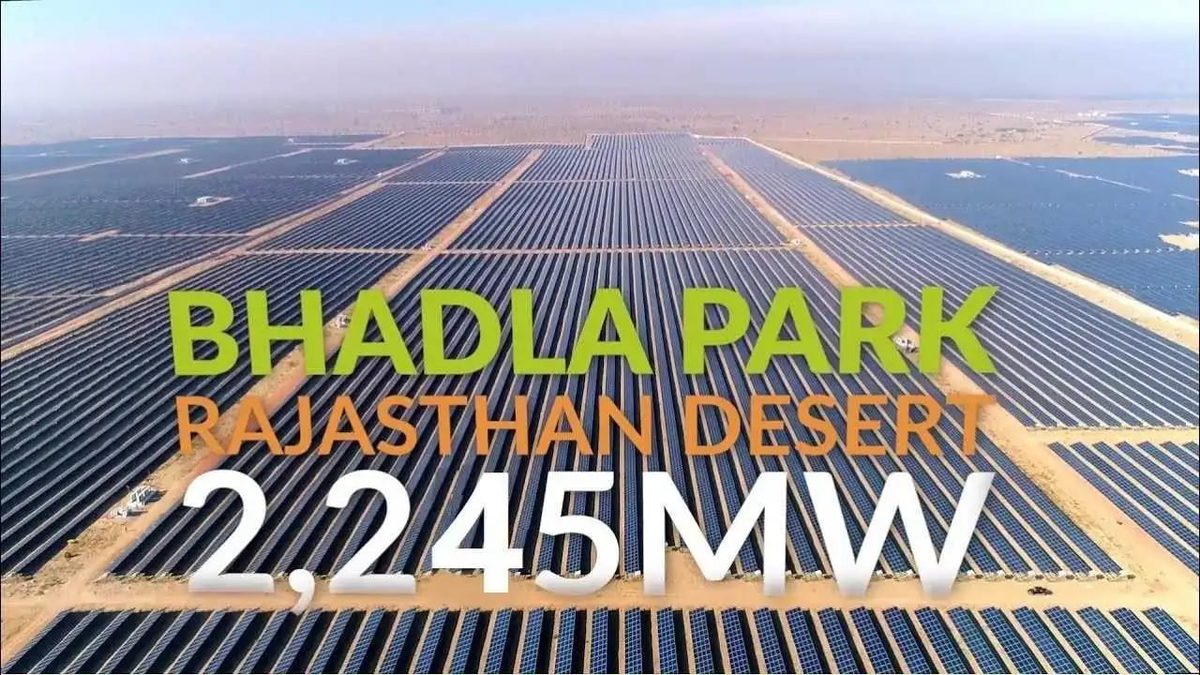
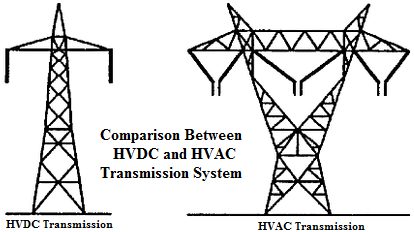
The project tackles India's biggest renewable energy constraint: the sunniest states sit far from the cities that consume power, so Rajasthan's solar output gets stranded without long-distance grid corridors. This ±800 kV high-voltage direct current (HVDC) line, roughly 1,000 km long, is among the largest built specifically to evacuate renewable power. It also tests whether the state utility can hold its ground against private rivals in India's competitive transmission auctions.

Why it matters

Rajasthan's desert solar is stranded without long-distance grid capacity; this line decides whether India's renewable target can actually reach the cities.

Questions about this story

Free account needed to ask — your question is kept and asked for you right after sign-up. Answers are public.

No questions yet — be the first to ask.

Key Indicators

₹24,974 crore
Estimated project cost
RamRajya News cites a ₹24,974 crore estimate; Business Upturn's analyst range is ₹25,000-26,000 crore. Positive signal for GE Vernova, Hitachi Energy, and Siemens.
48 months
First HVDC pole commissioning timeline
Implementation period for the first pole; the second pole follows six months later.

Voices

Curated perspectives — historical figures and your fellow readers.

Ever wondered what historical figures would say about today's headlines?

Sign up to generate historical perspectives on this story.

Organizations Involved

Timeline

April 2026 September 2026

5 events Latest: 5 days ago
Tap a bar to jump to that date
  1. GE Vernova T&D India emerges L1 bidder for HVDC converter stations

    Latest Contract

    GE Vernova received a letter from POWERGRID stating it had bid lowest to design, supply, and execute the project's two 3,000 MW HVDC terminal stations using line-commutated converter technology. The company said L1 status does not mean a final award.

  2. POWERGRID shares gain ~1.5% after announcement

    Market

    Stock rises to about ₹270 on NSE; analysts flag positive read-through for GE Vernova T&D, Hitachi Energy, Siemens.

  3. POWERGRID declared winner of Barmer HVDC project

    Award

    State utility wins at ₹3,244.33 crore annual charges after cutting its bid about 14% in the e-reverse auction.

  4. POWERGRID wins separate 20 GW Rajasthan transmission project

    Award

    State utility receives Letter of Intent for a larger renewable-evacuation system, also run by RECPDCL.

  5. RECPDCL issues RFP for Barmer HVDC transmission project

    Bidding

    The Bid Process Coordinator floats tenders for evacuating 6 GW of solar power from Rajasthan REZ Phase IV, Barmer Complex.

Scenarios

1

POWERGRID commissions Barmer HVDC line on schedule

Likely Resolves by End of 2031

Discussed by: POWERGRID management; RECPDCL project monitoring

POWERGRID has already built India's earlier ±800 kV HVDC lines, so the core technology is proven. If land acquisition clears on time across Rajasthan, Gujarat, and Maharashtra, commissioning lands within the planned window, roughly 2030-31. The Ministry of Power and Central Electricity Authority track progress, and generator developers at Barmer-II get a working evacuation corridor.

2

Land and clearance delays push commissioning past 2031

Possible Resolves by End of 2030

Discussed by: Analysts tracking Indian interstate transmission projects

HVDC corridors need rights-of-way across three states, and land compensation disputes plus forest and environmental clearances have delayed earlier grid projects. If approvals slip, commissioning moves to 2032 or later. That would ripple into solar developers' schedules at Barmer-II and could force curtailment of generated power.

3

Cost overruns strain POWERGRID's margins on the project

Possible Resolves by Q1 2029

Discussed by: Cost estimates cited by Business Upturn; historical overruns on Indian HVDC projects

Analysts peg the project at ₹25,000-26,000 crore. Under the BOOT model, POWERGRID absorbs cost increases until a tariff reset, so rising steel, land, or converter-station prices would hit its returns. The company's annual results during the construction phase would reveal whether the aggressive ~14% bid cut still yields acceptable margins.

4

POWERGRID finalizes converter contract and opens EPC packages

Likely Resolves by Q1 2027

Discussed by: DesiMachines tracking POWERGRID procurement; GE Vernova T&D filing

GE Vernova's L1 status is not a final award. After the converter station contract is confirmed, POWERGRID splits the HVDC and 765 kV work into EPC packages for tower foundations, erection, stringing, terminal civil works, and access roads. On the Barmer bipole, contractors build access tracks first because the desert alignment has almost no existing haul route. The sequence usually takes several months before foundation work starts in volume.

Historical Context

3 moments from history that rhyme with this story — and how they unfolded.

2006-2011

India's shift to competitive bidding in transmission (2006-2011)

India moved interstate transmission from a cost-plus model, where developers passed costs to consumers, to Tariff-Based Competitive Bidding (TBCB). Private firms entered the market and undercut the state utility POWERGRID on price.

Then

Transmission tariffs fell as competition took hold.

Now

POWERGRID now bids against private operators for each new line, and its competitive behavior, like the ~14% quote cut in this auction, has become essential to winning work.

Why this matters now

The Barmer win is a test of POWERGRID's ability to defend its dominant position under that competitive framework.

2009-2020

China's ultra-high-voltage grid buildout (2009-2020)

China's State Grid built the world's largest ultra-high-voltage network, connecting remote wind and solar zones in the northwest to coastal industrial cities. Lines stretched 2,000-3,000 km across deserts and mountains.

Then

China avoided severe renewable curtailment by building transmission in parallel with generation.

Now

The playbook, build long-distance grid first, became the reference for any country scaling renewables far from demand.

Why this matters now

India faces the same geographic mismatch, and the Barmer HVDC corridor is part of the same strategy applied to Rajasthan's solar belt.

2015-2019

India's first ±800 kV HVDC lines (2015-2019)

India commissioned its first ultra-high-voltage direct current lines, including the multi-terminal line from Biswanath Chariali in Assam to Agra in Uttar Pradesh, over 1,700 km long. The Raigarh-Pugalur corridor followed in 2015-2018. Engineers and contractors had to learn how to build and operate the technology at scale.

Then

The lines proved HVDC could span Indian distances reliably and created domestic expertise in converter stations.

Now

POWERGRID now applies that experience to a new generation of lines built specifically for renewable evacuation.

Why this matters now

The Barmer project uses the same ±800 kV HVDC technology at 6,000 MW capacity, but its purpose is new: moving desert solar to load centers instead of thermal power from eastern coal fields.

Sources

(13)