Pull to refresh
Logo
India approves green energy corridor to move 135 GW of renewable power

India approves green energy corridor to move 135 GW of renewable power

Built World

Cabinet clears ₹1.86 lakh crore plan for 51,126 km of transmission lines and 50 GWh of battery storage

Overview

Updated Oct 23

India's grid can't move the renewable power it generates. About 21 GW of clean energy runs on temporary connections, and 12 GW gets cut off during peak solar hours.

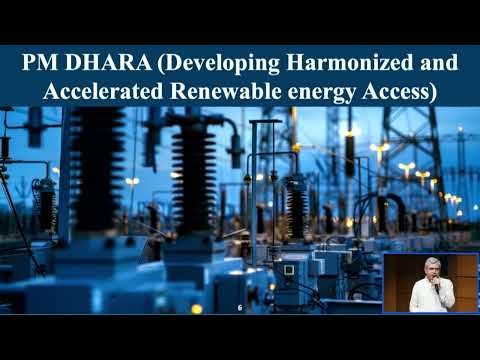
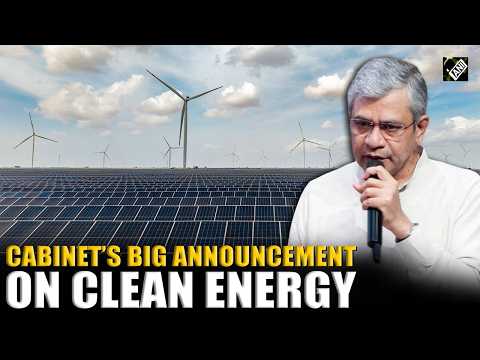
The Union Cabinet approved a ₹1.86 lakh crore program on September 30 to fix that. Green Energy Corridor Phase-III, branded PM DHARA, adds 51,126 km of lines for 135 GW and 50 GWh of storage, backed by ₹54,082 crore in central support. Andhra Pradesh secured ₹21,838 crore for its network in October, and Adani Green says Khavda delays cut first-half earnings by ₹724 crore.

Why it matters

India's renewable buildout is outpacing its grid. Without new transmission and storage, solar and wind power gets curtailed and developers lose revenue.

Questions about this story

Free account needed to ask — your question is kept and asked for you right after sign-up. Answers are public.

No questions yet — be the first to ask.

Key Indicators

135 GW
Renewable evacuation capacity target
Intra-state transmission lines built under GEC-III will carry up to 135 GW of renewable power.
50 GWh
Battery energy storage capacity
Battery systems deployed at renewable plants or grid locations to absorb surplus solar and discharge during evening peaks.
₹1,86,405 crore
Total program outlay
Includes ₹1,36,378 crore for transmission systems and ₹50,000 crore for battery storage.
51,126 km
Transmission lines to be built
Plus 2,28,903 MVA of new transformation capacity across states and union territories.
6,900 GWh
Renewable energy curtailed in FY26
Clean electricity that faced restrictions because transmission infrastructure lagged behind renewable deployment.
4.2%
Solar output unabsorbed, July-August 2026
Center for Research on Energy and Clean Air analysis found 4.2% of solar generation went unabsorbed during the monsoon months as peak demand hit 270 GW.
₹724 crore
Adani Green earnings lost to curtailment, H1 FY27
The company says transmission delays at the Khavda renewable park kept it from evacuating power, cutting potential EBITDA.

Voices

Curated perspectives — historical figures and your fellow readers.

Sign up to generate historical perspectives on this story.

People Involved

Organizations Involved

Timeline

June 2026 October 2026

9 events Latest: October 22nd, 2026 · 3 weeks ago
Tap a bar to jump to that date
  1. Adani Green pegs Khavda curtailment loss at ₹724 crore

    Latest Earnings

    Adani Green said transmission delays at the Khavda renewable park cut potential H1 FY27 EBITDA by about ₹724 crore. It had installed 6,632 MWh of battery storage by September-end and targets 10 GWh by the end of FY27.

  2. UN climate chief welcomes GEC-III

    Statement

    The UN climate chief said the scheme will help India harness its growing renewable capacity and address curtailment, when grid operators limit power output.

  3. MNRE Secretary details GEC-III rollout and earlier-phase deadlines

    Statement

    Secretary Santosh Kumar Sarangi said GEC-I will finish by March 2027 and GEC-II by 2028. India expects to add about 400 GW of renewable capacity between 2030 and 2035-36, which needs 160 GW more intra-state transmission; GEC-III covers 135 GW. A Cabinet Secretary-level committee will review progress twice a year, and 13 states have sent proposals.

  4. Centre approves ₹21,838 crore Andhra Pradesh transmission plan

    Policy

    The Centre sanctioned ₹21,838 crore to expand Andhra Pradesh's transmission network under GEC-III. About ₹7,207 crore is a grant and AP Transco will raise ₹14,631 crore in loans, with a five-year target focused on evacuating solar and wind from Rayalaseema.

  5. Cabinet approves GEC-III with ₹1.86 lakh crore outlay

    Policy

    Union Cabinet clears the Green Energy Corridor Phase-III scheme to build transmission for 135 GW of renewable power and deploy 50 GWh of battery storage by FY 2032-33.

  6. CERC drafts grid code rules for battery storage

    Regulation

    The Central Electricity Regulatory Commission issued a draft amendment to the Indian Electricity Grid Code proposing trial-run norms for standalone battery storage of at least 50 MW and a congestion-charge mechanism. Comments were due by October 21.

  7. Solar curtailment hits 4.2% in July-August

    Report

    A Center for Research on Energy and Clean Air analysis reported by ETEnergyWorld found about 4.2% of solar generation went unabsorbed in July and August, even as peak demand reached 270 GW.

  8. MNRE reports 8,133 GWh solar curtailed in April-June

    Report

    Grid operators cut solar generation to maintain grid security during record peak demand of 270 GW, highlighting transmission bottlenecks.

  9. GEC Phase-II reaches 85 of 95 packages awarded

    Implementation

    Government data shows 1,124 km of transmission lines charged and 6,860 MVA of substation capacity commissioned under the earlier phase.

Scenarios

1

GEC-III transmission built on schedule, 135 GW evacuation by 2033

Possible Resolves by Q1 2033

Discussed by: Ministry of Power planning documents

Greenfield projects move through tariff-based competitive bidding without major delays. State utilities clear right-of-way hurdles, and the full 135 GW of evacuation capacity comes online by the March 2033 deadline. Battery storage deployment follows the same schedule.

2

Right-of-way disputes delay GEC-III past 2033

Possible Resolves by Q1 2033

Discussed by: Indian Express, citing a parliamentary panel report

Compensation for right-of-way has been the main cause of transmission delays in GEC Phase-II. If the same disputes hit Phase-III, completion slips past the target date. The parliamentary panel's report on Phase-II delays suggests this pattern could repeat at a larger scale.

3

Battery storage deployment cuts renewable curtailment sharply

Possible Resolves by Q1 2030

Discussed by: MNRE, grid operators

The 50 GWh of battery storage absorbs surplus solar during the day and discharges in the evening. If deployed on schedule, annual curtailment drops well below the 6,900 GWh recorded in FY26. This scenario depends on storage projects clearing regulatory and financing hurdles.

4

Greenfield bidding draws private transmission companies

Possible

Discussed by: JP Morgan Research, Business Standard

GEC-III opens greenfield intra-state projects to tariff-based competitive bidding after years of state-led cost-plus awards. JP Morgan Research sees ₹20,000-24,000 crore in annual project opportunities for Power Grid Corporation and Adani Energy Solutions. Execution depends on state utilities, whose efficiency and finances vary.

5

Curtailment keeps rising through FY27 as transmission lags

Likely Resolves by Apr 1, 2027

Discussed by: Center for Research on Energy and Clean Air (CREA)

About 4.2% of solar output was unabsorbed in July-August 2026. Solar capacity keeps growing faster than transmission - India has met only about 80% of its annual transmission targets over the past five years, per the energy think tank Ember - so curtailment could stay elevated until GEC-II lines and GEC-III's first packages come online.

6

Regulators make co-located storage mandatory for new solar and wind

Possible Resolves by Jul 1, 2027

Discussed by: Central Electricity Authority proposal

CEA has proposed requiring a minimum 2-hour co-located battery on future ground-mounted solar and on-shore wind projects, plus 15% grid-forming capability for inverters on projects after July 2027. Adoption would push storage beyond GEC-III's 50 GWh but add cost to developers.

7

State sanctions roll out one by one, starting with Andhra Pradesh

Possible Resolves by Q1 2027

Discussed by: Deccan Chronicle, state transmission utilities

The ₹21,838 crore sanction for Andhra Pradesh is the first state-level project approval under GEC-III. If other states clear right-of-way and financing on similar terms, the 135 GW target stays reachable. If approvals bunch up or states struggle to raise their share, construction slips.

Historical Context

2 moments from history that rhyme with this story — and how they unfolded.

2021-2026

Green Energy Corridor Phase-II (ongoing)

India's second green energy corridor, covering 7 states, targets 7,863 km of transmission lines and 24,388 MVA of substation capacity. As of June 2026, 85 of 95 packages had been awarded, with 1,124 km of lines charged.

Then

Right-of-way compensation disputes emerged as the main cause of transmission delays, according to a parliamentary panel report.

Now

The Phase-II experience shaped GEC-III's design, which separates greenfield bidding from brownfield upgrades and assigns state utilities as implementing agencies.

Why this matters now

Phase-III builds on the same framework at a much larger scale, adding 135 GW of evacuation capacity and 50 GWh of battery storage that Phase-II did not include.

April 2025-March 2026

India's renewable curtailment crisis (FY26)

Around 6,900 GWh of clean electricity faced restrictions because transmission infrastructure lagged behind renewable deployment. In April-June 2026 alone, grid operators curtailed 8,133 GWh of solar power during record peak demand of 270 GW.

Then

Developers faced revenue losses as their plants were cut off during peak solar generation hours, raising concerns about project financial viability.

Now

The curtailment data provided the evidence base for GEC-III, which pairs transmission expansion with battery storage to absorb surplus generation.

Why this matters now

GEC-III is a direct response to this problem. Its transmission lines and storage systems are designed to eliminate the bottleneck that caused the curtailment.

Sources

(24)