Pull to refresh
Logo
Daily Brief
Following
Why Ranks Sign Up
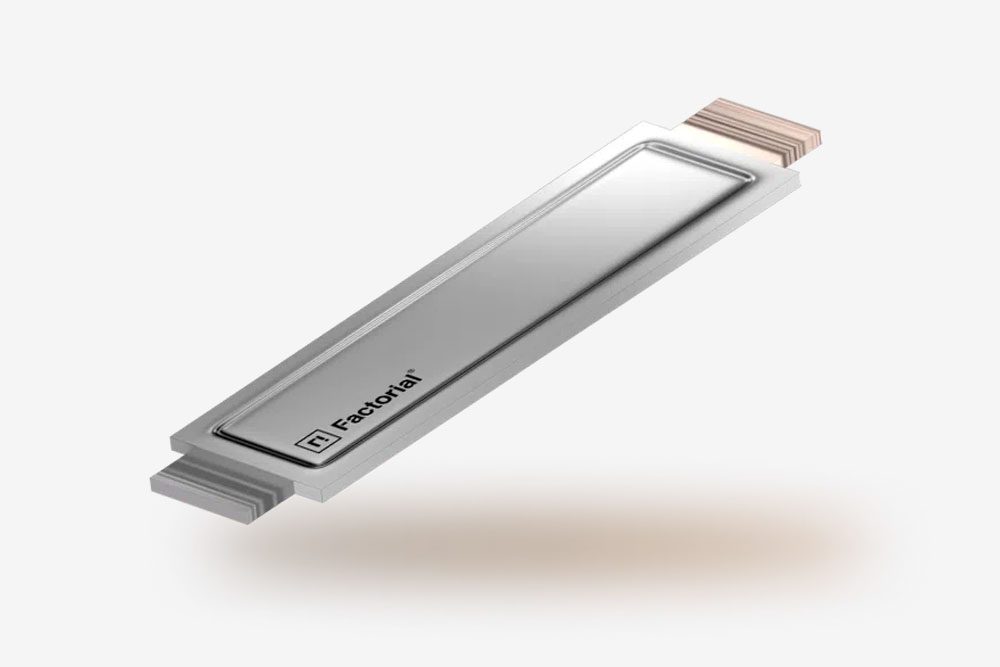
Factorial lists on Nasdaq to scale solid-state batteries

Factorial lists on Nasdaq to scale solid-state batteries

New Capabilities

A SPAC merger gives the battery startup about $1.3 billion in value and fresh cash to move from carmaker tests to mass production.

June 8th, 2026: Factorial begins Nasdaq trading

Overview

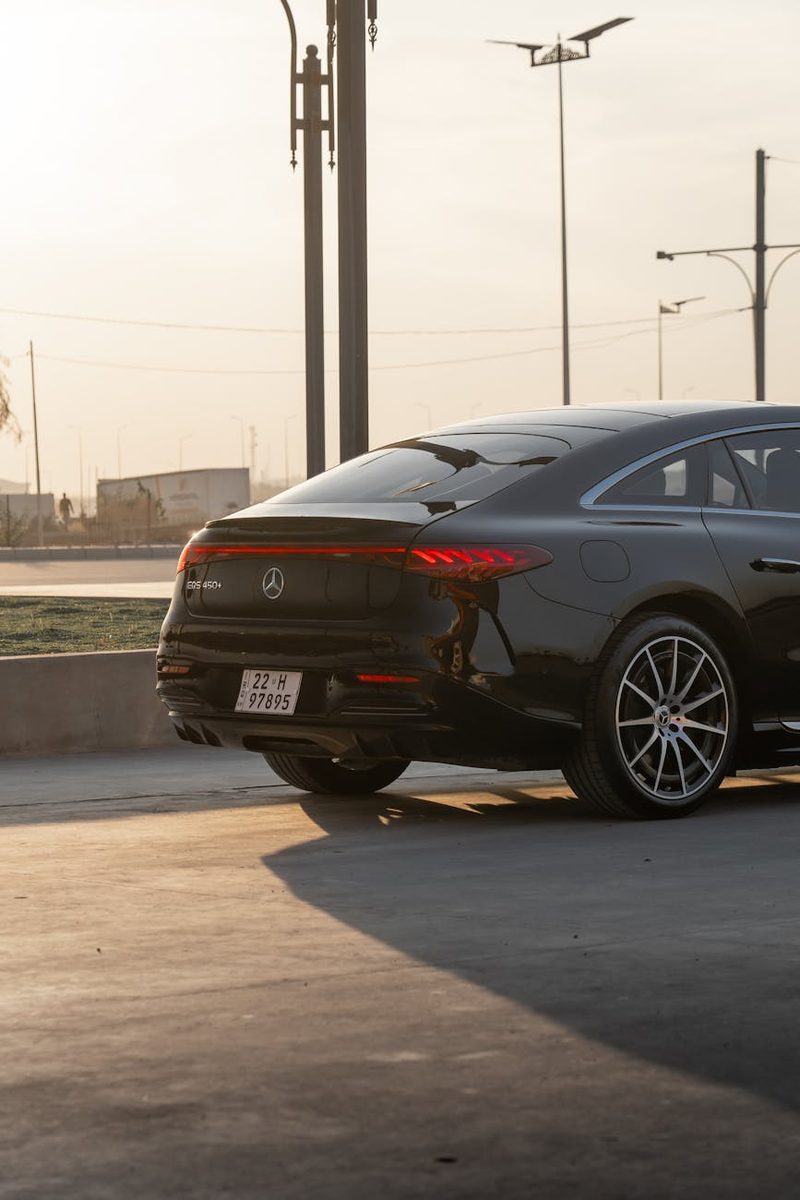
A modified Mercedes-Benz EQS drove from Stuttgart to Malmö last fall, 1,205 kilometers, on a single charge. The battery inside came from Factorial Energy, which on June 8 began trading on Nasdaq.

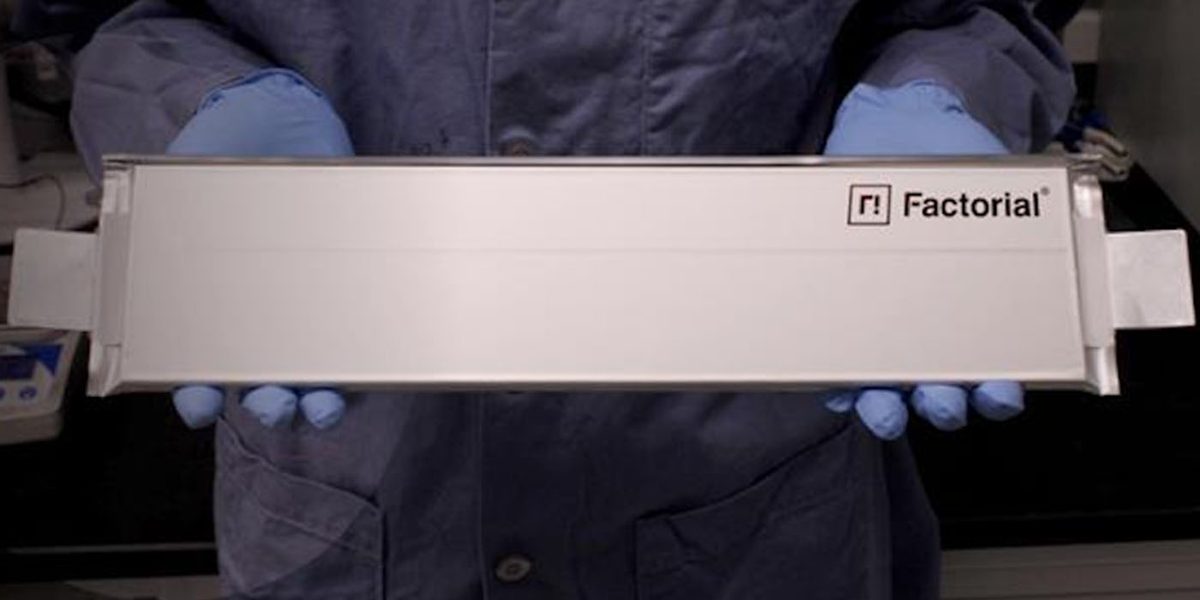
The listing, a merger with a shell company called Cartesian Growth Corporation III, values Factorial near $1.3 billion and hands it over $100 million to fund production. Solid-state cells replace the flammable liquid in today's lithium-ion batteries with a solid material, promising more range and less fire risk. The hard part has never been the lab; it is making them by the millions.

Why it matters

If Factorial delivers, electric cars could gain far more range and charge more safely, the battery breakthrough automakers have promised for a decade.

Questions about this story

0

Do you think it would be a good idea to invest?

Factorial is a high-risk speculative bet: real technology and credible partners, but pre-revenue, SPAC-listed, and in a sector where most rivals have missed every production deadline.

Why it matters: The gap between a successful demo drive and profitable mass production is where solid-state battery companies tend to collapse — and Factorial has yet to cross it.

  • FAC opened June 8 in the $11–$12 range on a $1.3B valuation, but it has no product revenue yet; the $100M raised funds its push toward first commercial deliveries, targeted for late 2027 with Karma Automotive.
  • SPAC listings carry a structural warning: de-SPAC stocks lost 60–70% of value on average within a year during the last wave (2021–2022), partly because valuations are privately negotiated and often priced for optimism.
  • The bull case is real: Mercedes-Benz, Stellantis, Hyundai, and Kia are strategic partners AND investors — carmakers don't write checks unless they've validated the cells internally.
  • Rival QuantumScape (QS) has been public since 2020, has more capital, and is still in pilot-line trials — a reminder that the road from proof-of-concept to factory output routinely takes longer and costs more than projections.
Room for disagreement
  • Bulls point to Factorial's OEM partnerships as validation no other solid-state startup had at IPO — Stellantis and Hyundai are equity holders, not just customers, suggesting deeper due diligence than typical. Bears counter that the same argument was made for QuantumScape (backed by Volkswagen) and SolidPower (BMW), both of which have seen their stocks fall sharply as timelines slipped.
AI-generated with web search — may be wrong. Check the linked sources.
0

Why is it hard to manufacture? Also, how does it compare to the recently announced china battery?

Solid-state batteries are hard to mass-produce because pressing two solids into perfect atomic contact—billions of times, at EV scale—is far harder than soaking electrodes in liquid; China's CAS lab battery beats Factorial's specs on paper but is a research prototype, while Factorial's cells have actually driven a car 1,205 km.

Why it matters: The gap between lab claims and factory-floor reality is where every solid-state bet lives or dies, and China's numbers raise the stakes for every Western startup now racing to produce.

  • The core manufacturing problem: liquid electrolytes flow into every gap, making natural contact with electrodes; solid electrolytes must be pressed into perfect atomic-scale contact, and lithium metal expands and contracts during cycling, cracking that interface and shorting cells.
  • Scale makes it worse — large-format cells (the 100 Ah+ size cars need) amplify every defect; dry-room production requirements drive costs 3–5× above conventional lithium-ion, and yields collapse at volume.
  • China's Chinese Academy of Sciences battery, published in JACS in May 2026, claims 451.5 Wh/kg energy density, stable for 700 cycles at a 20C (3-minute) charge rate, using a PVDF polymer electrolyte — roughly double Factorial's implied energy density and far faster charging.
  • Factorial's edge is validation: its cells ran inside an actual Mercedes EQS for 1,205 km, have automaker test programs with Stellantis, Hyundai, and Kia, and are on a contract production timeline with Karma Automotive for late 2027 — the CAS battery has none of that.
Room for disagreement
  • IDTechEx and most industry analysts put mass production at 2030 or later; Factorial's Nasdaq pitch implies it can beat that timeline via its FEST electrolyte and fresh capital — a claim its rivals QuantumScape and Toyota have each made and missed.
  • China's 451.5 Wh/kg figure looks decisive on paper, but critics note it comes from a government research institute with no vehicle test and a history of lab numbers that don't survive contact with production — the same skepticism that has followed every breakthrough announcement in this space for a decade.
AI-generated with web search — may be wrong. Check the linked sources.
Key Indicators

$1.3B
Equity value at listing
What the merger implied Factorial was worth as it began trading.
>$100M
Cash to commercialize
Gross proceeds the deal provides to build batteries at scale.
1,205 km
Single-charge test range
Distance a Factorial-powered Mercedes EQS covered without stopping.
+25%
Usable energy gain
Added energy in the test battery at similar size and weight.

Voices

Curated perspectives — historical figures and your fellow readers.

Ever wondered what historical figures would say about today's headlines?

Sign up to generate historical perspectives on this story.

Play

Exploring all sides of a story is often best achieved with Play.

Log in to play. Track your picks, climb the leaderboards. Log in Sign Up
Predict 4 ways this could play out. Contrarian picks score more — points lock when the scenario resolves. Log in to play
Higher or Lower Two numbers from this story. Guess which is bigger. 5 rounds to set a streak. Log in to play
Connections Sixteen names from the news. Find the four hidden groups of four. Log in to play

People Involved

Organizations Involved

Timeline

January 2017 June 2026

7 events Latest: June 8th, 2026 · 1 month ago
Tap a bar to jump to that date
  1. Factorial begins Nasdaq trading

    Latest Milestone

    Factorial starts trading under tickers FAC and FACWW, valued near $1.3 billion with over $100 million to fund commercialization.

  2. Shareholders approve the merger

    Deal

    Investors in both companies vote to approve the combination, clearing the path to a Nasdaq listing.

  3. First U.S. production program with Karma

    Partnership

    Karma Automotive and Factorial announce a solid-state production program for the Kaveya, targeted for late 2027.

  4. SPAC merger announced

    Deal

    Factorial and Cartesian Growth Corporation III agree to a business combination to take Factorial public.

  5. Mercedes EQS goes 1,205 km on one charge

    Validation

    A modified Mercedes EQS with Factorial cells drives Stuttgart to Malmö without charging, arriving with range to spare.

  6. First large solid-state cell

    Milestone

    Factorial launches a 100Ah-plus lithium-metal solid-state battery, a size useful for cars.

  7. Factorial founded

    Origin

    Siyu Huang and Alex Yu start Factorial Energy in Massachusetts to develop solid-state batteries.

Historical Context

3 moments from history that rhyme with this story — and how they unfolded.

November 2020

QuantumScape goes public (2020)

QuantumScape, a solid-state battery startup backed by Volkswagen and Bill Gates, went public through a SPAC. Its stock spiked above $130, valuing the firm near $50 billion before it had shipped a single commercial cell.

Then

Shares fell below $10 within a year as investors saw production was years away.

Now

By the mid-2020s QuantumScape was sending sample cells to carmakers but still had no mass-market product.

Why this matters now

Factorial takes the same SPAC route with similar promises. QuantumScape shows how fast enthusiasm fades when factories lag the science.

2017-2025

Toyota's solid-state roadmap (2017-2025)

Toyota first signaled solid-state batteries in production cars around 2020, holding thousands of patents. It then pushed the target to 2025, then to 2027 and 2030.

Then

Each delay cooled expectations for near-term solid-state vehicles.

Now

The slips set a benchmark: solid-state is widely seen as hard to mass-produce, not impossible.

Why this matters now

Factorial promises Karma cars by late 2027. Toyota's record shows why investors discount such dates.

2020-2023

The EV SPAC bust (2020-2023)

Dozens of pre-revenue electric vehicle startups went public via SPACs in 2020 and 2021. Nikola's founder was later convicted of fraud, and Lordstown Motors filed for bankruptcy in 2023.

Then

Most EV SPAC stocks lost the bulk of their value within two years.

Now

Regulators tightened SPAC disclosure rules, and investor appetite for pre-production EV deals shrank.

Why this matters now

Factorial enters public markets the same way, before mass production. The bust frames the skepticism it faces.

Sources

(6)