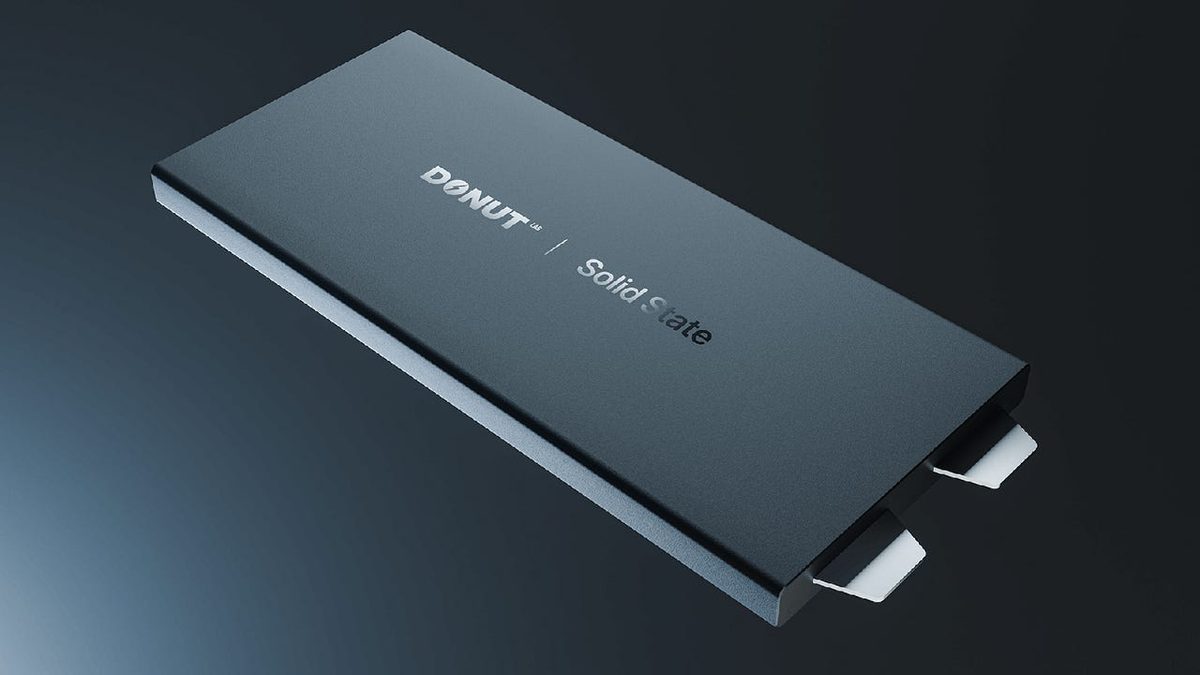
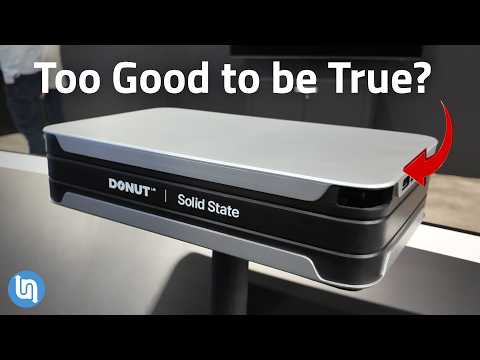
Finnish startup claims first production solid-state battery
New Capabilities
An investigation backed by 20+ experts found the claimed solid-state battery is conventional lithium-ion; Finnish regulators have launched a fraud probe
An investigation backed by 20+ experts found the claimed solid-state battery is conventional lithium-ion; Finnish regulators have launched a fraud probe
A June 2026 investigation backed by more than 20 independent battery experts concluded that Donut Lab's claimed solid-state battery is a conventional lithium-ion cell. Voltage curves at 3.7–3.8V at 50% state of charge and graphite anode expansion signatures matched NMC lithium-ion chemistry — not the sodium-ion solid-state design Donut Lab announced at CES.
The investigation traced the technology to CT Coatings, a German company whose main business is screen-printed paving stones. Lehtimäki admitted in Finnish media that the VTT-tested cells were 'not even the cell that's going to be shipped to customers.' Finnish financial regulators and criminal authorities launched a full investigation; Donut Lab had raised €25 million from more than 1,300 small investors on the debunked claims.
Why it matters
Donut Lab raised €25 million on specs now exposed as fraudulent, and real solid-state batteries remain years from consumer vehicles.
Questions about this story
Free account needed to ask — your question is kept and asked for you right after sign-up. Answers are public.
No questions yet — be the first to ask.
Key Indicators
400
Wh/kg — energy density claimed
Donut Lab's flagship claim; a June 2026 investigation by 20+ experts confirmed the battery is a conventional lithium-ion cell. CEO Lehtimäki admitted the VTT-tested cells were 'not even the cell that's going to be shipped to customers.'
268-297
Wh/kg — independent test result
Range from testing cited in Lauri Peltola's April 2026 criminal complaint. A June 2026 investigation confirmed NMC lithium-ion chemistry via voltage curves and traced the battery supply chain to CT Coatings.
4.5 min
VTT-confirmed charge to 80% (cell level)
Finland's VTT confirmed 11C fast charging to 80% in 4.5 minutes at cell level. Full pack (18 kWh) took 12 minutes from 10-80% in a Verge TS Pro. The June investigation found the tested cell was not the product being shipped to customers.
100,000
claimed charge cycles
Donut Lab's claim; VTT tests covered only fast-charging and self-discharge. The June 2026 investigation found the battery is conventional lithium-ion, making the cycle life claim unsupported by the tested chemistry.
36
years of industry R&D
Toyota began solid-state research in 1990. QuantumScape signed a Honda deal in June 2026 and reported $10.8M in Q2 billings — still years from mass production.
QuantumScape posted $10.8 million in Q2 2026 customer billings and a $98.2 million net loss. QSE-5 cells shipped to a major US defense prime contractor; stock fell 14% following the report.
June 2026
QuantumScape Signs Multi-Year Deal with Honda
Partnership
QuantumScape announced a multi-year joint research agreement with Honda R&D, following Honda's completed technology evaluation. The deal covers solid-state battery development for Honda's EVs, motorcycles, and power equipment.
Finnish financial regulators and criminal authorities opened a formal investigation into Donut Lab. The company had raised €25 million from more than 1,300 retail investors at a reported €1.25 billion valuation.
Donut Lab Battery Exposed as Conventional Lithium-Ion
Investigation
A researcher investigation backed by 20+ independent experts found Donut Lab's battery is a conventional lithium-ion cell. Voltage curves and graphite anode expansion data matched NMC chemistry; the technology was traced to CT Coatings, a German firm that primarily makes screen-printed paving stones.
April 2026
QuantumScape Reports First Customer Revenue: $11M in Q1 2026
Financial
QuantumScape posted $11 million in Q1 2026 customer billings — its first meaningful revenue — with four of the world's ten largest automakers actively testing QSE-5 cells. A Volkswagen licensing deal allows PowerCo to manufacture up to 80 GWh of solid-state cells annually.
Nordic Nano Co-Founder Files Criminal Complaint Against Donut Lab
Legal
Lauri Peltola, co-founder of Nordic Nano — the firm Donut Lab invested in — filed a criminal complaint with Finnish authorities alleging the energy density, cycle endurance, and production-readiness claims are 'simply not true.' Independent testing found actual energy density of 268-297 Wh/kg, 25-33% below Donut Lab's claimed 400 Wh/kg. Donut Lab denied the allegations.
BYD Chief Scientist: Solid-State at 'Critical Breakthrough Stage'
Announcement
BYD's chief scientist said solid-state development has hit a 'critical breakthrough stage' but commercialization remains constrained by cost and manufacturing. The company targets 2027 for small-batch demonstration vehicles, with large-scale adoption after 2030.
March 2026
VTT Tests Full Battery Pack in Verge TS Pro
Testing
Donut Lab's 18 kWh battery pack in a Verge TS Pro charged from 10% to 80% in 12 minutes using air cooling at over 100 kW. Fast-charging at pack level confirmed; energy density remained untested.
CATL filed a sulfide-based solid-state battery patent targeting automotive-grade 60-Ah cell formats and confirmed progress toward small-scale production by 2027. Current sulfide cells cost three to five times more than conventional lithium-ion.
February 2026
MIT Technology Review Publishes Critical Investigation
Media
MIT Technology Review examined Donut Lab's claims and found none had been independently verified, noting the absence of disclosed battery chemistry and the company's reliance on self-selected tests.
Donut Lab Releases VTT Fast-Charging Test Results
Testing
Finland's VTT Technical Research Centre confirmed Donut Lab's battery charges from 10% to 80% at 11C in 4.5 minutes — matching the five-minute claim at cell level. The test did not measure energy density or cycle life.
QuantumScape Eagle Line Inaugurated
Production
QuantumScape opens automated pilot production line for QSE-5 cells in San Jose, featuring ceramic separator technology. Represents first commercial-scale facility after 15+ years of development.
January 2026
Toyota Partner Breaks Ground on Solid Electrolyte Plant
Production
Idemitsu Kosan breaks ground on large-scale solid electrolyte pilot plant in Ichihara, Chiba Prefecture, targeting several hundred tonnes annual capacity. Facility expected to complete by end of 2027 to supply Toyota's solid-state battery program.
Geely Announces 400 Wh/kg Solid-State Battery Pack for 2026
Announcement
Geely Auto announces it will complete production of its first in-house developed all-solid-state battery pack in 2026 with 400 Wh/kg energy density and conduct vehicle installation verification. Timeline matches Donut Lab's claims but with more conservative deployment expectations.
Svolt Energy CEO Calls Donut Lab Claims 'A Scam'
Industry Response
Yang Hongxin, chairman and CEO of Chinese battery manufacturer Svolt Energy, publicly denounced Donut Lab's claims, stating "all the parameters are contradictory" and that the combination of 12C charging, extreme low-temperature performance, and 400 Wh/kg energy density is not technically achievable with current materials. First major industry condemnation from established battery maker.
Chery Announces 600 Wh/kg Solid-State Battery for 2026
Announcement
Chinese automaker Chery announces Exeed Liefeng shooting brake will feature Rhino S solid-state battery with 600 Wh/kg energy density (50% higher than Donut Lab's claims) and 1,500 km range at -30°C. Initial fleet deployment in ride-hailing and rental markets in late 2026, with mass production targeted for 2027.
Washington Post Coverage Amplifies Mainstream Attention
Media
The Washington Post publishes major feature on Verge Motorcycles' solid-state battery claims, bringing the story to mainstream audiences beyond EV industry publications.
Stanford Announces Silver Coating Breakthrough
Research
Stanford researchers demonstrate that heat-treating thin silver layers on solid electrolyte surfaces prevents cracking, making surfaces five times more crack-resistant and addressing a key durability challenge.
Dongfeng Begins Extreme Cold Battery Testing
Testing
Dongfeng Motor initiates winter testing of 350 Wh/kg solid-state battery prototypes in -40°C to -30°C conditions in Mohe, China. Vehicles claim 1,000 km range with 72% energy retention at -30°C. Mass production targeted for September 2026.
Critical Analysis of Donut Lab Claims Published
Analysis
Electrek publishes detailed skeptical analysis titled 'This battery is about to change the world in 3 months, or make this guy a fool,' noting absence of physical battery at CES, lack of independent verification, and CEO's reputation at stake with Q1 delivery commitment.
Chinese Researchers Solve Manufacturing Pressure Challenge
Research
Chinese team publishes breakthrough in Nature Communications demonstrating new solid electrolyte enabling stable cycling at 5 MPa external pressure, down from previously required 100+ MPa. Peer reviewers note this could bridge laboratory research and large-scale commercial deployment by eliminating impractical high-pressure requirements.
China Opens First Dedicated Solid-State Production Facility
Production
Heyuan Lithium Innovation's Huaian base, China's first dedicated solid-state battery mass production facility, officially commences operations with 10 GWh capacity. Company launches 'Liuhe Battery' product line covering 250-600 Wh/kg energy density range for drones and unmanned vehicles, with 20 GWh Xiantao facility under construction.
Industry Skepticism Emerges Over Missing Verification
Analysis
Battery industry publications note absence of third-party testing data, peer-reviewed research, or detailed chemistry information. Critics question supercapacitor hybrid speculation and note company showed only empty battery case at CES.
South Korean Researchers Demonstrate 4x Performance Boost
Research
Scientists in South Korea publish research showing internal battery structure redesign using inexpensive materials can boost solid-state battery performance up to four times while improving safety.
Donut Lab Announces Production Solid-State Battery
Announcement
At CES 2026, Donut Lab claims world's first production-ready all-solid-state battery with 400 Wh/kg, 5-minute charging, and 100,000-cycle life. Verge motorcycles with the battery available for order, Q1 2026 delivery.
Brown University Solves Dendrite Growth Challenge
Research
Brown University engineers demonstrate that applying temperature gradients across solid-state electrolytes blocks destructive dendrite growth, enabling dramatic improvements in dendrite-free charging performance.
At CES 2026, ProLogium announces proprietary all-inorganic solid-state lithium ceramic battery with 57 mS/cm ionic conductivity (5× conventional electrolytes), claiming first lithium system globally with no thermal runaway in ARC testing. Partnership with FEV Group targets 1,000 km range with 4-6 minute charging to 60-80%.
China Releases World's First National Solid-State Battery Standard
Regulatory
China's National Automotive Standardization Technical Committee releases draft standard defining solid-state batteries with stricter 0.5% weight-loss threshold (vs. 1% industry standard). Document classifies batteries into liquid, hybrid solid-liquid, and solid-state categories, establishing first regulatory framework globally.
QuantumScape Announces Cobra Process Standardization
Production
QuantumScape reports manufacturing breakthrough making Cobra ceramic separator process the new production standard, enabling faster throughput with smaller equipment footprint. Eagle Line inauguration scheduled for February 2026.
October 2025
Donut Lab Invests in Nordic Nano
Investment
Donut Lab makes strategic investment in Nordic Nano Group; CEO Lehtimäki joins Nordic Nano board.
July 2025
Donut Lab Raises €25M
Investment
Donut Lab closes seed round with Risto Siilasmaa as anchor investor; former Nokia chairman joins board.
January 2025
Donut Motor Unveiled at CES 2025
Announcement
Donut Lab debuts in-wheel motor technology at CES, engaging over 200 OEMs in development discussions.
August 2024
Donut Lab Founded
Corporate
Marko Lehtimäki and team spin off from Verge Motorcycles to form Donut Lab, focusing on integrated EV technology.
March 2024
Samsung SDI Confirms 2027 Target
Announcement
Samsung SDI outlines production roadmap at InterBattery trade show, confirming 2027 mass production goal.
October 2023
Toyota-Idemitsu Partnership Announced
Partnership
Toyota and Idemitsu Kosan announce collaboration on sulfide solid electrolytes, targeting 2027-2028 commercialization.
March 2022
Samsung SDI Opens Pilot Line
Production
Samsung SDI starts Korea's first all-solid-state battery pilot line in Suwon.
March 2021
Fisker Abandons Solid-State Effort
Corporate
Henrik Fisker announces company has completely dropped solid-state battery development, calling commercial viability at least seven years away.
November 2020
QuantumScape Goes Public
Corporate
QuantumScape completes SPAC merger, reaching $20 billion valuation with no commercial product or revenue.
May 2018
VW Invests $100M in QuantumScape
Investment
Volkswagen makes major investment, with partnership targeting solid-state VWs by 2025.
January 2018
Verge Motorcycles Founded
Corporate
Finnish electric motorcycle company RMK Vehicle Corporation (later Verge) founded in Turku.
November 2017
Fisker Claims Solid-State Breakthrough
Announcement
Fisker files patents claiming solid-state batteries with 500-mile range and one-minute charging, targeting 2023 automotive readiness.
January 2010
QuantumScape Founded
Corporate
Stanford University scientists establish QuantumScape in San Jose to develop solid-state lithium-metal batteries.
January 1990
Toyota Begins Solid-State Research
Research
Toyota Motor Corporation initiates solid-state battery research program, beginning what would become the industry's longest development effort.
Scenarios
1
Verge Deliveries Validate Claims; Industry Scrambles
Possible
Discussed by: Proponents at Sustainable Times, tech journalist Tim Stevens
If Verge motorcycles with solid-state batteries ship in Q1 2026 and independent testing confirms even modest versions of the claimed specs, Donut Lab establishes first-mover credibility. Automotive OEMs currently waiting for Toyota/Samsung timelines face pressure to engage. The Finnish startup would have achieved what $300 million QuantumScape investments and 36 years of Toyota R&D could not. Third-party testing results expected within months would serve as the verification point.
2
Claims Collapse Under Scrutiny; Joins Failed Breakthrough List
Possible
Discussed by: Battery scientist Tom Boetticher on LinkedIn, The Autopian's Mercedes Streeter
Independent testing reveals the technology is either a quasi-solid-state variant (polymer+ rather than true all-solid-state), a supercapacitor hybrid, or performs substantially below claimed specs in real-world conditions. The pattern mirrors Fisker's 2017 claims that led to complete abandonment by 2021. Industry consensus timeline of 2027-2030 for mass commercialization remains intact. Key questions about undisclosed chemistry and the Nordic Nano connection remain unresolved.
3
Niche Success, Not Revolution
Possible
Discussed by: Chinese battery analysts at 36Kr, Battery Tech Online
The battery works but only for limited applications like electric motorcycles. Energy density and cycle life claims prove accurate at small scale but manufacturing cannot scale to automotive volumes at competitive cost. Donut Lab becomes a specialty supplier for premium low-volume EVs while Toyota, Samsung SDI, and Chinese manufacturers dominate mass-market deployment starting 2027-2028. The technology represents incremental progress rather than industry transformation.
4
Acquisition Target as Technology Validates
Uncertain
Discussed by: EU-Startups, investment observers
Initial deliveries demonstrate real capability. A major automaker or battery manufacturer acquires Donut Lab to accelerate their own solid-state roadmap rather than wait for internal development. The €25 million startup becomes a strategic asset worth hundreds of millions. Nordic Nano connection makes the entire Finnish cluster an acquisition target. Siilasmaa's involvement provides acquisition credibility and exit pathway.
5
Empty Case at CES Signals Vaporware Repeat
Possible
Discussed by: Battery industry skeptics, tech journalists at Electrek and Battery Tech Network
The absence of a physical battery at CES despite production claims mirrors classic vaporware patterns. When Q1 deliveries fail to materialize or reveal conventional lithium-ion cells rather than true all-solid-state technology, Donut Lab joins Fisker, Nikola, and others in the failed breakthrough category. The Nordic Nano supercapacitor connection and lack of disclosed chemistry support hybrid technology rather than genuine solid-state advancement. CEO Lehtimäki's reputation suffers permanent damage.
6
China Dominates Commercial Deployment Despite Western Breakthroughs
Possible
Discussed by: Chinese battery analysts at SMM, EnergyTrend, Gasgoo
While Donut Lab claims first-to-market status, Chinese manufacturers including Heyuan Lithium, CATL, and BYD rapidly scale production with established supply chains and domestic market advantage. China's national standard becomes global benchmark, forcing Western manufacturers to align specifications. By 2027, Chinese companies dominate solid-state production volumes even if Finnish startup validates technology first. National standard provides clarity that accelerates Chinese automaker adoption.
7
Chinese Manufacturers Deploy First, Donut Lab Claims Disputed
Possible
Discussed by: Chinese automotive analysts at Car News China, CnEVPost
Dongfeng's September 2026 production target and established manufacturing infrastructure enable China to achieve verified mass production before Western competitors complete independent testing of Donut Lab's technology. Even if Donut Lab delivers motorcycles in Q1 2026, questions about true all-solid-state chemistry versus hybrid designs allow Chinese manufacturers to claim 'first verified pure solid-state deployment' narrative. China's national standard becomes the global benchmark for validating solid-state claims.
Discussed by: Battery analysts at IDTechEx, industry observers
Donut Lab's oxide-based approach, ProLogium's ceramic technology, Dongfeng's oxide-polymer composite, and Toyota's sulfide electrolytes all prove viable but optimized for different applications. Motorcycles and premium low-volume EVs adopt early technologies like Donut Lab, while mass-market automotive waits for Toyota/Samsung economies of scale in 2027-2028. Multiple chemistries coexist rather than single dominant technology emerging. The solid-state transition proves more gradual and fragmented than revolutionary.
9
Credibility Collapse Before Delivery Deadline
Possible
Discussed by: Industry critics, Svolt Energy CEO Yang Hongxin, battery technology analysts
Svolt's public 'scam' accusation combined with revelations about CEO Lehtimäki's previous vaporware AI claims trigger investor and OEM withdrawal before March delivery deadline. Verge either delays deliveries citing 'final validation' or ships motorcycles with conventional lithium-ion batteries rebranded as 'solid-state hybrid' technology. The empty battery case shown at CES and absence of independent verification prove fatal to credibility. Donut Lab joins Fisker and Nikola in failed breakthrough category, while established players like Chery, Toyota, and Samsung proceed with conservative 2027-2028 timelines.
10
Finnish Prosecutors Force Donut Lab to Disclose Battery Chemistry
Uncertain
Discussed by: Finnish media outlets, battery analysts following Peltola criminal complaint
Finnish prosecutors investigating Lauri Peltola's April 2026 complaint compel Donut Lab to disclose its battery chemistry under legal process. If the investigation confirms the 268-297 Wh/kg independent test results, Donut Lab faces potential fraud charges and Verge Motorcycles faces liability for marketed specifications. CEO Lehtimäki's prior Asinoid vaporware episode would factor into any credibility assessment. Disclosure would also settle the Nordic Nano supercapacitor hypothesis that critics raised at CES.
11
Finnish Prosecutors File Criminal Charges Against Donut Lab
Possible
Resolves by Q2 2028
Discussed by: Finnish media following June 2026 regulatory launch; investors represented through Lauri Peltola's April 2026 criminal complaint
Finnish financial regulators and criminal authorities launched a formal investigation in June 2026 after the battery was confirmed as lithium-ion. Lehtimäki admitted the VTT-tested cells were not the shipping product, and the battery supply chain traced to a company with no battery expertise. If prosecutors conclude the €25 million fundraise was based on knowingly false specs, criminal fraud charges may follow.
Historical Context
3 moments from history that rhyme with this story — and how they unfolded.
1 of 3
1990 - Present
Toyota's Four-Decade Quest (1990-Present)
Toyota began solid-state battery research in 1990 and accumulated over 8,000 patents—more than any competitor. The company announced plans for solid-state vehicles by 2020 (missed due to COVID), then partnered with Idemitsu Kosan in 2023 targeting 2027-2028 commercialization. Claims of 450-500 Wh/kg energy density and 40-year battery life.
Then
Toyota became the patent leader but failed to commercialize ahead of lithium-ion improvements.
Now
After 36 years, Toyota's solid-state batteries remain in development. The company now targets limited initial production in 2027-2028 with mass production around 2030.
Why this matters now
Toyota's timeline illustrates the technical difficulty: 36 years of research, thousands of engineers, and the world's largest patent portfolio have not yet produced a commercial product. Donut Lab claims to have solved these challenges with 20 engineers and 18 months of existence.
2 of 3
November 2017 - March 2021
Fisker Solid-State Claims (2017-2021)
Henrik Fisker announced a breakthrough solid-state battery with 500-mile range and one-minute charging, filing patents and projecting automotive readiness by 2023. The claims generated significant media coverage and investor interest. Co-founder Fabio Albano had previously co-founded Sakti3, a solid-state startup acquired by Dyson.
Then
Fisker attracted investment and launched EV development based on conventional lithium-ion batteries instead.
Now
By March 2021, Fisker publicly abandoned solid-state development entirely, with Henrik Fisker stating commercialization was 'at least seven years out.' Fisker Inc. later filed for bankruptcy in June 2024.
Why this matters now
Donut Lab's claims parallel Fisker's almost exactly: breakthrough energy density, ultra-fast charging, imminent commercialization. The key difference is Donut Lab claims production vehicles will ship within weeks, creating an immediate verification point that Fisker never reached.
3 of 3
November 2020 - Present
QuantumScape SPAC and Delays (2020-2026)
QuantumScape went public via SPAC at a $20 billion valuation despite having no commercial product or revenue. Volkswagen invested over $300 million based on 2018 partnership targeting solid-state VWs by 2025. CEO Jagdeep Singh presented ceramic separator technology with impressive lab results.
Then
Stock price surged then collapsed as commercialization deadlines slipped. VW milestone payments were missed.
Now
By 2026, QuantumScape is opening a pilot facility and beginning field tests—still years from mass production. The company reported $105 million quarterly losses while the 2025 VW target passed without commercial deployment.
Why this matters now
QuantumScape illustrates how solid-state development often extends far beyond initial projections. The contrast with Donut Lab is stark: QuantumScape has raised billions and worked for 15+ years without commercial deployment; Donut Lab claims commercial production from a startup founded 18 months ago.