
Pull to refresh
Logo
Daily Brief
Following
Why Ranks Sign Up
Robot defeats elite human players in table tennis

Robot defeats elite human players in table tennis

New Capabilities

Sony AI's 'Ace' is the first machine to reach expert-level play in a competitive physical sport

April 23rd, 2026: Sony AI's Ace defeats elite table tennis players

Overview

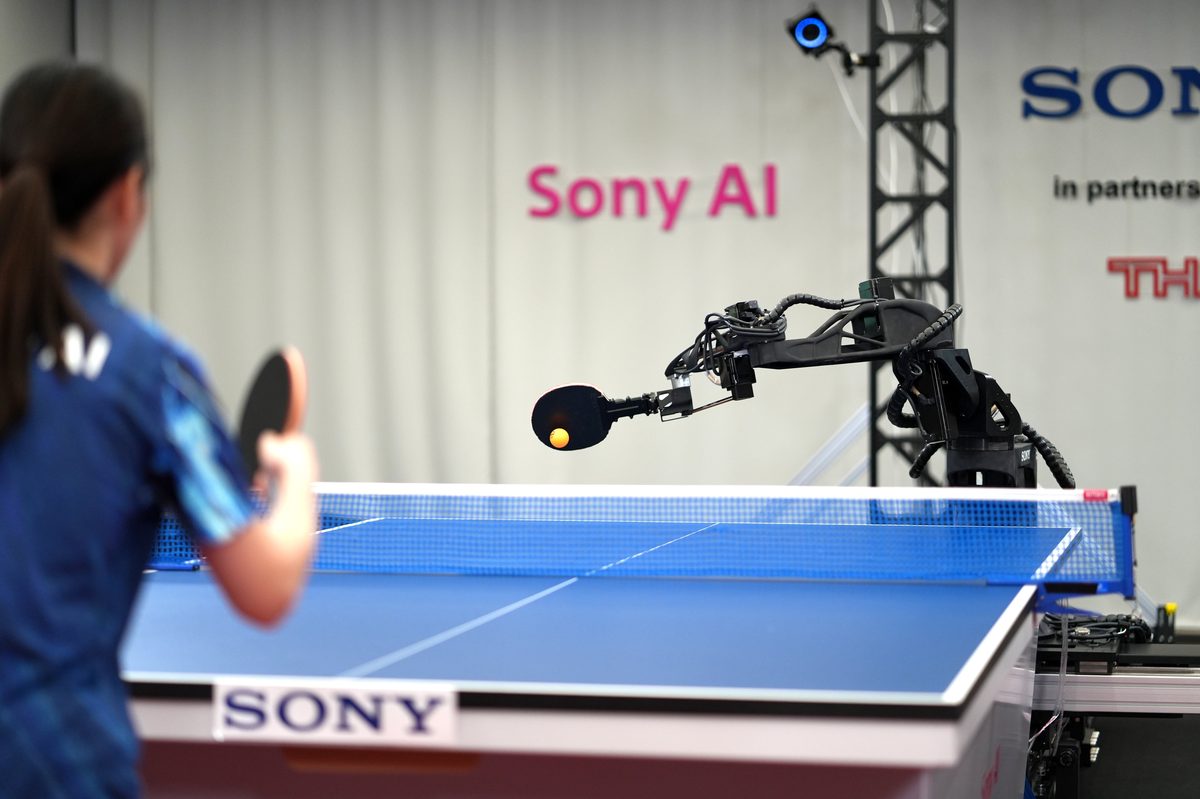
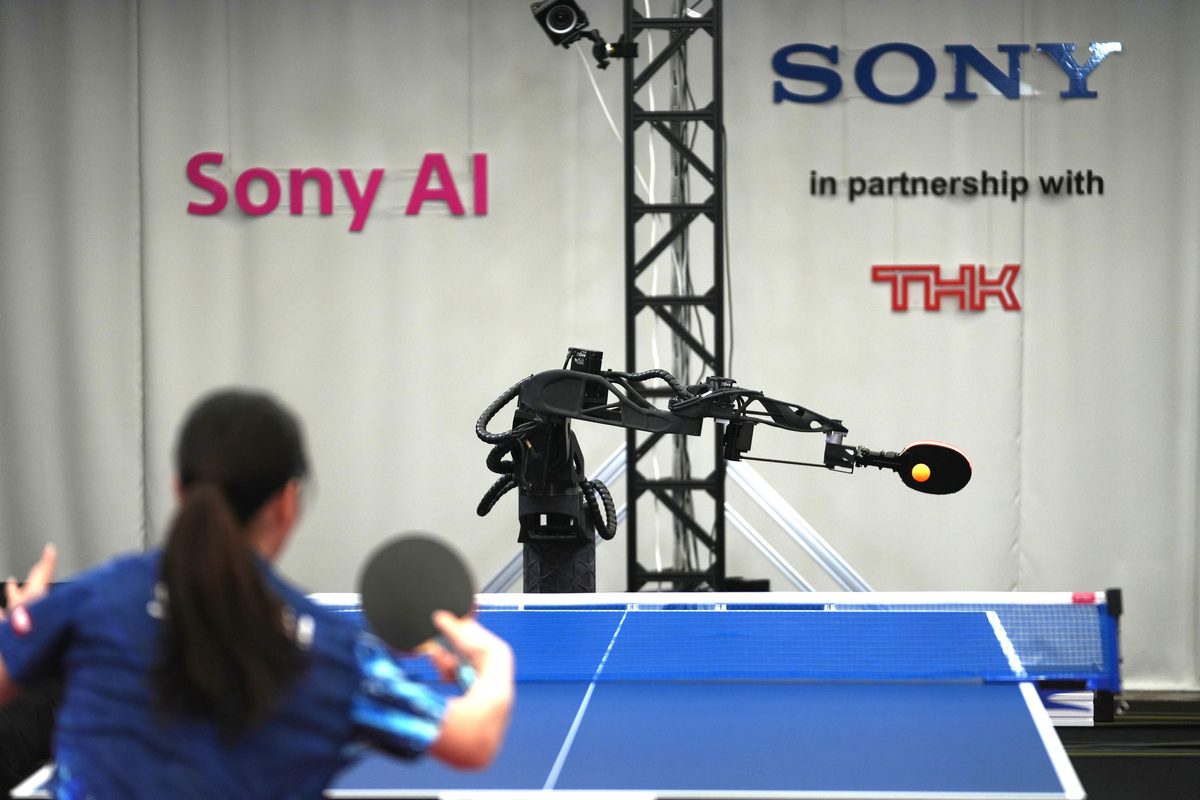
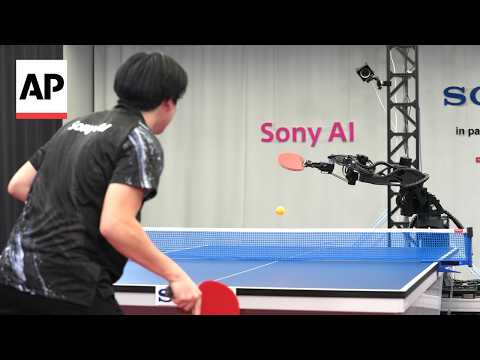
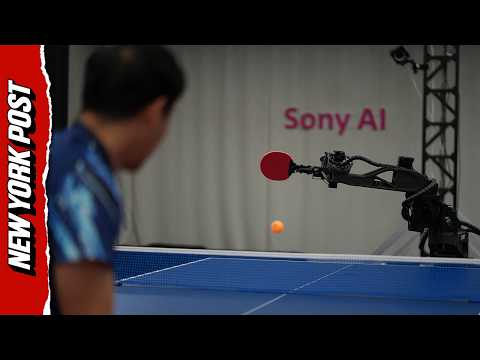
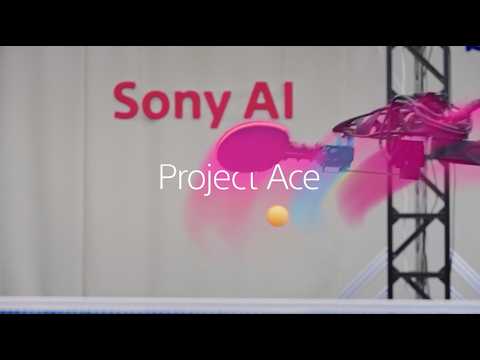
A robot just beat elite human table tennis players at their own game, under official competition rules. Sony AI's system, called Ace, returned high-speed topspin and backspin shots from professionals during peer-reviewed trials published on the cover of Nature on April 23. It is the first time a machine has reached expert-level play in a commonly played competitive physical sport.

The win is narrower than it sounds—one robot, one sport, one room. But the problem table tennis poses (perceive a spinning ball, predict its trajectory, move a heavy arm to the right place in under half a second) is the same problem industrial robots, warehouse pickers, and household machines keep failing. Ace cleared it using event-based cameras and model-free reinforcement learning, the same tool kit being pushed into factories and logistics.

Why it matters

For the first time, a robot can out-react elite humans in real-world sport—proving AI can now move in the physical world, not just answer questions.

Play on this story Voices Debate Predict

Key Indicators

1st
Robot to beat elite humans in a physical sport
No prior robotic system has reached expert-level play in a widely contested competitive sport under official rules.
8
Joints in Ace's arm
A custom high-speed manipulator designed to swing a paddle through the full range of human strokes.
~500ms
Time to perceive and return a shot
The window between opponent contact and return contact in elite rallies—Ace must decide and move inside it.
30 yrs
Since Deep Blue beat Kasparov
AI milestones have steadily moved from abstract games (chess, Go) into the messy physical world.

Interactive

Exploring all sides of a story is often best achieved with Play.

Cornelius Vanderbilt

Cornelius Vanderbilt

(1794-1877) · Gilded Age · industry

Fictional AI pastiche — not real quote.

"A machine that paddles a ball faster than any man alive — and men fret over their dignity. When my locomotives made the horse obsolete, the horse did not hold a senate hearing about it."

Simone Weil

Simone Weil

(1909-1943) · Modernist · politics

Fictional AI pastiche — not real quote.

"The machine has mastered the gesture without ever knowing the weight of defeat — and we congratulate ourselves, as though the slave who never tires is a liberation rather than a mirror held up to our own expendability."

Ever wondered what historical figures would say about today's headlines?

Sign up to generate historical perspectives on this story.

People Involved

Organizations Involved

Timeline

  1. Sony AI's Ace defeats elite table tennis players

    Milestone

    Nature publishes the Ace paper on its cover, describing the first robot to reach expert-level play in a competitive physical sport under official rules.

  2. Google DeepMind robot reaches amateur human level at table tennis

    Milestone

    A learned robot system wins roughly half its matches against intermediate human players, but loses to advanced opponents.

  3. GT Sophy beats top Gran Turismo drivers

    Milestone

    Sony AI's reinforcement-learning agent defeats champion human drivers in a simulated racing environment.

  4. OpenAI Five wins Dota 2 against world champions

    Milestone

    A reinforcement-learning team defeats OG, the reigning Dota 2 world champions, in a real-time strategy video game.

  5. AlphaGo beats Lee Sedol

    Milestone

    DeepMind's system wins 4-1 against one of the strongest Go players in history, years ahead of expert predictions.

  6. IBM Watson wins Jeopardy!

    Milestone

    Watson defeats Ken Jennings and Brad Rutter, extending machine performance into open-domain natural language.

  7. Deep Blue defeats Garry Kasparov

    Milestone

    IBM's chess engine becomes the first machine to beat a reigning world champion in a match under tournament conditions.

Scenarios

Predict which scenario wins. Contrarian picks score more — points lock in when the scenario resolves.

Log in to predict. Track your picks, climb the leaderboard. Log in Sign Up
1

Ace's techniques move from the table to the factory floor

The combination of event-based vision and model-free reinforcement learning is already the dominant research direction for next-generation industrial and warehouse robots. A high-profile Nature result accelerates adoption: tooling improves, talent concentrates, and manufacturers license or replicate the stack for tasks like high-speed sorting, agricultural harvesting, and dynamic assembly within two to three years.

Discussed by: Sony AI researchers, industrial robotics analysts
Consensus
2

Rival labs reproduce and surpass Ace within 18 months

AlphaGo was surpassed by AlphaGo Zero in under two years. Table tennis now has a clear benchmark, published methods, and a well-defined evaluation protocol. Expect competing systems from at least one Western lab and one Chinese lab by late 2027, with rapid iteration on cheaper hardware and smaller models.

Discussed by: Robotics researchers at Google DeepMind, Tesla, Figure, and Chinese university labs
Consensus
3

Expert-level sport does not generalize to everyday physical tasks

Table tennis is fast but narrow: fixed environment, fixed object, clear reward signal. The messier parts of the physical world — folding laundry, opening unfamiliar doors, handling soft or deformable objects — have repeatedly resisted the same techniques. Ace may remain a headline demo while general-purpose home and service robots stay out of reach for another decade.

Discussed by: Embodied AI skeptics, Moravec's paradox researchers
Consensus
4

Sport becomes the standard testbed for embodied AI

Kitano has argued for thirty years that competitive sport is the right forcing function for embodied intelligence. A Nature cover strengthens that case. Expect more labs to chase sport-based benchmarks — tennis, badminton, robot soccer — as funders and journals treat them as credible proxies for real-world capability.

Discussed by: Hiroaki Kitano, RoboCup organizers, academic robotics programs
Consensus

Historical Context

Deep Blue defeats Garry Kasparov (1997)

May 1997

What Happened

IBM's chess computer Deep Blue beat world champion Garry Kasparov 3.5-2.5 in a six-game match in New York. It was the first time a machine had won a match against a reigning world champion under standard tournament conditions. Kasparov accused IBM of cheating; IBM retired the machine immediately after.

Outcome

Short Term

Chess was declared 'solved' in popular coverage, though engines continued to improve for another decade. IBM's stock rose and the PR value was estimated in the hundreds of millions of dollars.

Long Term

Chess engines now dominate all humans. The result reshaped public expectations for AI and became the template for framing later benchmark wins in Jeopardy, Go, and protein folding.

Why It's Relevant Today

Deep Blue set the pattern: pick a domain humans consider a signature of intelligence, beat the best human at it, and claim a milestone. Ace follows the same playbook — but in the physical world, where the machine has to move, not just compute.

AlphaGo defeats Lee Sedol (2016)

March 2016

What Happened

DeepMind's AlphaGo beat 18-time world champion Lee Sedol 4-1 in a five-game Go match in Seoul, watched by more than 200 million people online. Experts had predicted a win of this kind was at least a decade away. Move 37 in game two, a strategy no human player had considered, became a defining moment for modern AI.

Outcome

Short Term

Google DeepMind's profile and AI funding globally surged. China accelerated its national AI strategy, citing the match explicitly.

Long Term

Reinforcement learning with deep neural networks became the dominant paradigm for game-playing AI and, increasingly, for control problems. AlphaZero and MuZero followed, generalizing the approach.

Why It's Relevant Today

AlphaGo showed that learned systems could beat experts in domains previously considered beyond AI. Ace uses the same family of methods — model-free reinforcement learning with deep networks — applied to a physical sport rather than a board game.

Google DeepMind's amateur-level table tennis robot (2024)

August 2024

What Happened

Google DeepMind published a paper on a robot arm that played competitive table tennis against humans, winning roughly 45% of matches overall. It beat beginners consistently, split matches with intermediate players, and lost to advanced players. The system used a hierarchical policy trained with reinforcement learning and real-world data.

Outcome

Short Term

Widely cited as the best robot table tennis system to date and as evidence that sim-to-real transfer was maturing.

Long Term

Established table tennis as a live benchmark for embodied AI and a direct target for follow-up work.

Why It's Relevant Today

This is the immediate precursor Ace measures itself against. The jump from 'beats amateurs, loses to pros' to 'beats elite players under competition rules' is the specific gap Sony AI is claiming to close.

Sources

(3)