

Pull to refresh
Logo
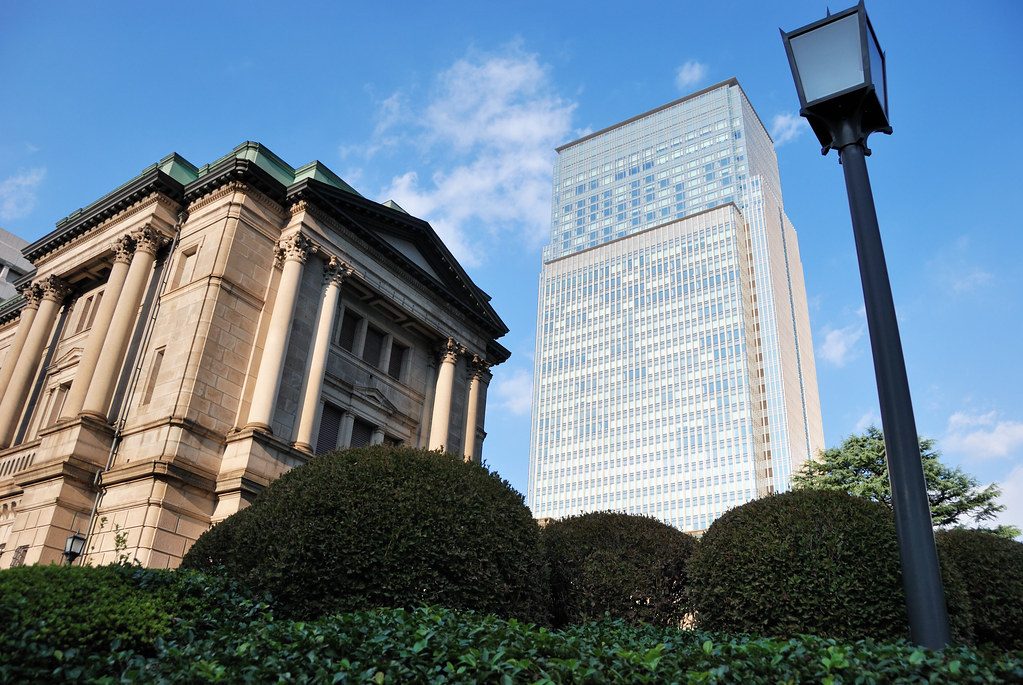
Bank of Japan's market operations track the unwinding of its easing era

Bank of Japan's market operations track the unwinding of its easing era

Money Moves

Daily statements show a shrinking tool kit — ETF purchases gone, JGB buying tapered, reserves near ¥550 trillion

August 24th, 2026: BOJ publishes daily market operations statement

Overview

Updated Aug 24

Every business day the Bank of Japan releases a two-page table showing how it managed the roughly ¥550 trillion that Japanese banks hold on deposit at the central bank. The August 24, 2026 statement is one entry in that record — a routine liquidity operation, unremarkable on its own.

The numbers gain meaning from the arc they sit inside. Since March 2024 the BOJ has retired the machinery of a decade of aggressive easing: ending negative rates and yield curve control, halting ETF and J-REIT purchases, and, in September 2025, ending new ETF lending. Each daily statement records whether the central bank still injects funds or lets reserves drain — the operational fingerprint of Japan's slow, delicate exit from crisis-era money.

Why it matters

These daily operations set the reserves that anchor Japan's short-term money rates — the frontline of the BOJ's exit from a decade of easing.

Questions about this story

Free account needed to ask — your question is kept and asked for you right after sign-up. Answers are public.

No questions yet — be the first to ask.

Key Indicators

≈¥553T (Aug 2024)
Current account balances at the BOJ
Reserves financial institutions hold at the central bank; the BOJ adjusts this level daily through market operations.
¥1.12T
Outright JGB purchases, one session (Aug 2024)
A single day's purchases after the March 2024 taper, showing the reduced but continuing role of JGB buying.
2
Crisis-era purchase programs discontinued since Mar 2024
ETF/J-REIT purchases ended March 19, 2024; new ETF lending ended September 22, 2025.
≈¥407T
Required reserves, Aug-Sep maintenance period
The cumulative minimum reserves banks must hold over the Aug 16 - Sep 15 period, well below the actual reserve pool.

Voices

Curated perspectives — historical figures and your fellow readers.

Andrew Carnegie

Andrew Carnegie

(1835-1919) · Gilded Age · industry

Fictional AI pastiche — not real quote.

"A decade of cheap money is like a fortune left idle in a man's coffers — it does no honest work until it is put back into circulation, and the wise banker, like the wise millionaire, knows the giving away must be done as deliberately as the getting. Japan is learning what I told the libraries and universities: it is harder to withdraw a gift gracefully than to bestow it."

Ever wondered what historical figures would say about today's headlines?

Sign up to generate historical perspectives on this story.

People Involved

Organizations Involved

Timeline

April 2013 August 2026

8 events Latest: August 24th, 2026 · 3 weeks ago
Tap a bar to jump to that date
  1. BOJ publishes daily market operations statement

    Latest Statement

    Routine liquidity update for August 24; current account balances held near ¥550 trillion as normalization continues.

  2. New ETF lending discontinued

    Operational

    BOJ retires another crisis-era tool, further shrinking the operational toolkit.

  3. BOJ lifts policy rate to 0.5%

    Policy

    Highest policy rate since 2008, reflecting firm wage growth and sustained inflation near 2%.

  4. BOJ raises policy rate to 0.25%

    Policy

    Second step in tightening as inflation holds above target; yen weakness pressures import prices.

  5. BOJ ends negative rates, YCC, and ETF purchases

    Policy

    The normalization pivot: rates move above zero, bond yield anchoring dropped, crisis-era asset buying retired.

  6. Yield curve control introduced

    Policy

    BOJ anchors 10-year JGB yields near zero, managing them through daily bond operations.

  7. BOJ adopts negative interest rates

    Policy

    Banks charged 0.1% on a portion of reserves, an unprecedented step for Japan.

  8. BOJ launches quantitative and qualitative easing

    Policy Launch

    Kuroda-era program pledges massive JGB and asset purchases to double the monetary base.

Scenarios

1

BOJ holds the policy rate steady through end of 2026

Likely Resolves by Dec 18, 2026

Discussed by: Most economists polled by Bloomberg through 2025; rate strategists at Nomura and Mizuho

Inflation settles near the 2% target and wage growth stabilizes, so the BOJ leaves the policy rate unchanged at the October and December meetings. JGB purchases continue at the current taper pace, and current account balances hold in the ¥550 trillion range. The daily statements remain routine — the visible sign of a patient hold.

2

BOJ hikes again by year-end 2026

Possible Resolves by Dec 18, 2026

Discussed by: Economists at UBS and some Japanese megabanks who flagged yen weakness and import-price pressure

A continued weak yen raises import costs, or wage growth runs hotter than expected, pushing inflation above target. The BOJ responds with a hike to 0.75% at either the October or December meeting. Attention shifts to whether JGB purchases are tapered further, visible in the daily operation sizes.

3

BOJ reverses course: restarts bond buying and signals prolonged easing

Unlikely Resolves by Dec 18, 2026

Discussed by: A minority view; some economists warn Japan's heavy debt load and fragile inflation could force renewed easing

Growth stalls and inflation collapses back below target, prompting the BOJ to expand JGB purchases or introduce a new asset purchase program. Current account balances would climb again. This would invert the normalization arc and likely draw criticism over fiscal dominance concerns.

Historical Context

3 moments from history that rhyme with this story — and how they unfolded.

March - July 2006

Bank of Japan's 2006 exit from quantitative easing

The BOJ ended its first quantitative easing program in March 2006 and raised interest rates from zero in July, three months later. Deflation eased but did not truly end, and the exit proved premature.

Then

Rates rose to 0.5% by early 2007 before the global financial crisis hit.

Now

Japan slid back into deflation and weak growth, leading to renewed easing in 2010 and the massive QQE program of 2013.

Why this matters now

Japan's only prior exit attempt ended in failure — the cautionary backdrop for the current, more cautious normalization.

December 2013 - September 2019

U.S. Federal Reserve taper and normalization (2013–2019)

The Fed tapered its third round of quantitative easing in late 2013 after a sharp bond selloff known as the 'taper tantrum,' raised rates from 2015 through 2018, then began shrinking its balance sheet. By 2018, tightening helped trigger a market selloff that forced the Fed to reverse course, cutting rates in 2019.

Then

Rates rose to 2.25-2.5% before the Fed reversed amid market stress in late 2018.

Now

The episode showed that unwinding crisis-era QE is politically and financially delicate, with markets reacting sharply to pace changes.

Why this matters now

The template for the BOJ's current task: shrinking a huge balance sheet and raising rates without breaking markets.

March 2023 - present

European Central Bank quantitative tightening (2023-present)

The ECB began passively shrinking its balance sheet by letting maturing bonds from its Asset Purchase Programme run off without full reinvestment, ending pandemic bond reinvestments in late 2024. Runoff has proceeded without major market disruption so far.

Then

The balance sheet declined steadily while the ECB raised rates, then began cutting in mid-2024.

Now

Demonstrates that a large central bank balance sheet can shrink through passive runoff rather than active asset sales.

Why this matters now

A second real-world case of balance sheet reduction, offering the BOJ a model for letting reserves drain gradually.

Sources

(6)