

Pull to refresh
Logo
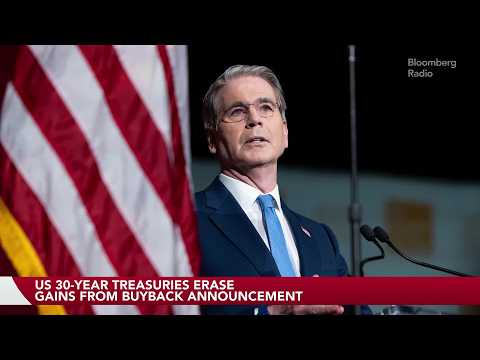
Treasury bond buyback backfires as yields jump

Treasury bond buyback backfires as yields jump

Money Moves

Treasury's $6 billion buyback fails to calm markets as yields stay high and auction demand weakens.

2 days ago: Buyback operation scheduled

Overview

Updated 2 days ago

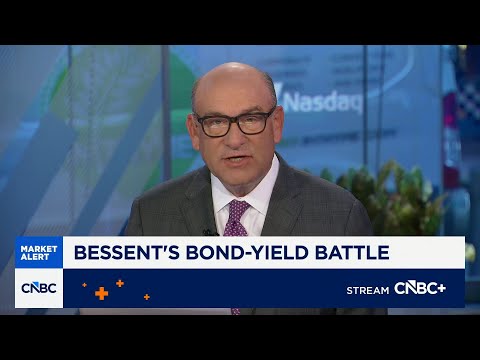
Treasury Secretary Scott Bessent's $6 billion bond buyback failed to cool the market again Thursday. The 10-year Treasury yield eased to 4.69%, barely below Wednesday's spike to 4.85%, and a $39 billion auction of 10-year notes cleared at 4.834%, the highest since 2007.

Oil closed above $100 for the first time since July, and the national debt has passed $40 trillion. Both keep pressure on long-term yields. Thursday's 30-year auction will test whether the Treasury can keep borrowing costs from climbing further.

Why it matters

Rising long-term yields push up mortgage rates and federal debt-service costs — and this intervention made them higher, not lower.

Questions about this story

Free account needed to ask — your question is kept and asked for you right after sign-up. Answers are public.

No questions yet — be the first to ask.

Key Indicators

4.69%
10-year Treasury yield
Eased from Wednesday's 4.85% spike but remains near three-year highs.
4.834%
10-year auction yield
Highest clearing yield at a 10-year auction since 2007.

Voices

Curated perspectives — historical figures and your fellow readers.

Ever wondered what historical figures would say about today's headlines?

Sign up to generate historical perspectives on this story.

People Involved

Organizations Involved

Timeline

July 2026 September 2026

7 events Latest: 2 days ago
Tap a bar to jump to that date
  1. Buyback operation scheduled

    Latest Policy

    Treasury is set to repurchase up to $6 billion of 10- and 20-year bonds in its Thursday operation.

  2. Treasury completes $6 billion buyback

    Policy

    The operation concluded at 2 p.m. ET, but the 10-year yield remained elevated at 4.69%.

  3. 30-year Treasury auction scheduled

    Market

    The Treasury auctions 30-year bonds, a key test of long-term demand after yields hit multi-year highs.

  4. Treasury's $6 billion buyback backfires

    Policy

    Treasury announces an up-to-$6 billion buyback; the 10-year yield jumps to 4.85%, the S&P 500 falls 0.6%, and the Nasdaq falls 0.8%.

  5. Brent crude tops $100 a barrel

    Market

    Oil surged after reports of strikes targeting Iranian energy infrastructure, deepening inflation fears.

  6. Treasury doubles its buyback program

    Policy

    Treasury commits to buying at least $4 billion of long bonds per operation, up from $2 billion, for September through November.

  7. Warsh press conference spooks bond markets

    Statement

    New Fed chair Kevin Warsh declined to commit the Fed to curbing inflation; long yields began a sharp climb.

Scenarios

1

Yields top 5% and Bessent's intervention fails

Possible Resolves by End of 2026

Discussed by: Bloomberg's editorial desk and Oxford Economics' Ryan Sweet

If oil stays above $100 and the Fed signals hikes, the 10-year yield breaks through 5%, the level it last flirted with in October 2023. Bessent's buybacks look cosmetic, and the Treasury scales them back or abandons the fight.

2

Buybacks steady the market; yields plateau below 4.5%

Possible Resolves by End of 2026

Discussed by: Bessent's stated aim and Ryan Sweet's caution to wait out the knee-jerk reaction

Once the initial reaction fades, repeated buybacks plus a lull in oil and inflation news let long yields drift back down. The Treasury keeps expanding the program and claims it is keeping the market in equilibrium.

3

Fed hikes rates and deepens the selloff

Possible Resolves by End of 2026

Discussed by: Analysts reading Fed July meeting minutes and Warsh's signals

The Fed concludes that energy-driven inflation is not cooling and raises the federal funds rate. That pushes long yields even higher regardless of Bessent's buybacks, and the Treasury concedes it cannot offset Fed policy.

Historical Context

3 moments from history that rhyme with this story — and how they unfolded.

September 2011 - December 2012

Operation Twist (2011-2012)

The Fed sold short-term Treasuries and bought long-term ones, aiming to push down long yields without printing money. It repeated the program in 2012.

Then

Long yields dipped modestly, then resumed their drift higher within months.

Now

Studies found the effect on yields small and temporary, cementing a verdict that duration-based interventions barely move markets against fundamentals.

Why this matters now

Bessent's buybacks are a duration-based intervention, and the 2011 experience predicts the muted, temporary effect investors are pricing in.

May - July 2013

The 2013 Taper Tantrum

In May 2013, Fed chair Ben Bernanke said the Fed could slow its bond purchases. Ten-year Treasury yields jumped roughly a percentage point in weeks, and global markets sold off.

Then

The Fed delayed tapering for months, but long rates stayed high regardless.

Now

The episode became shorthand for how a single policy signal can move long yields against an official's wishes.

Why this matters now

Warsh's July press conference played a similar role in 2026, and Bessent's response shows officials lack a quiet tool to undo the move.

September 2016 - March 2024

Japan's yield curve control (2016-2024)

The Bank of Japan pledged to cap 10-year government bond yields near zero, buying unlimited bonds to defend the line. It pushed the cap to 0.25%, then 0.5%, then 1% as markets kept testing it.

Then

The BoJ bought ever-larger volumes and kept missing its targets as yields pressed against the cap.

Now

In March 2024 the BoJ abandoned yield curve control, capping eight years of losing stands against market pressure.

Why this matters now

It is the modern case study of an official ceiling on long bond yields: authorities can delay pressure but cannot cap it forever. Bessent's buybacks are a milder version of the same fight.

Sources

(14)