


Pull to refresh
Logo
Treasury triples long-term debt buybacks as yields hit 2007 levels

Treasury triples long-term debt buybacks as yields hit 2007 levels

Money Moves

Bessent's expanded buyback fails to calm markets as 10-year yield hits 4.95%

2 days ago: Buyback operation scheduled: up to $6 billion

Overview

Updated Yesterday

The Treasury bought $5.19 billion of long-dated bonds on Sept. 10, less than the $6 billion cap it had announced the day before. The 20-minute operation targeted 10- and 20-year notes and was meant to calm a market rattled by inflation fears and a $40 trillion national debt.

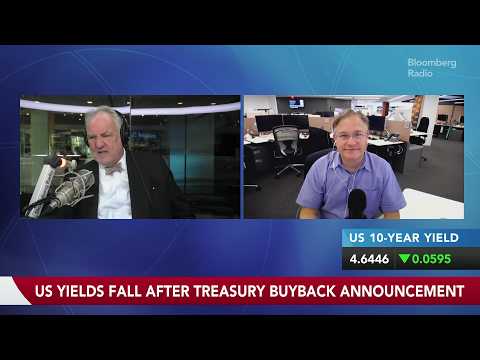
It didn't work. The 10-year yield climbed to 4.95%, its highest since 2023, and the 30-year pushed past 5.3%. Investors wanted a bigger show of force, and the selloff suggests they may keep demanding more until Bessent proves he can move the market.

Why it matters

If long-end yields keep climbing, federal borrowing costs rise, mortgage rates follow, and $40 trillion in debt gets more expensive to refinance.

Questions about this story

Free account needed to ask — your question is kept and asked for you right after sign-up. Answers are public.

No questions yet — be the first to ask.

Key Indicators

$5.19 billion
Actual Sept 10 purchase amount
Shy of the $6 billion maximum announced Sept 9. The first test of Bessent's expanded program fell short of expectations.
4.95%
10-year Treasury yield, Sept 10
Rose to its highest level since 2023 after the buyback operation concluded.
$40 trillion
U.S. national debt
Crossed $40 trillion in August, adding to supply pressure at the long end.

Voices

Curated perspectives — historical figures and your fellow readers.

Ever wondered what historical figures would say about today's headlines?

Sign up to generate historical perspectives on this story.

People Involved

Organizations Involved

Timeline

August 2026 September 2026

6 events Latest: 2 days ago
Tap a bar to jump to that date
  1. Buyback operation scheduled: up to $6 billion

    Latest Market Operation

    20-minute operation runs 1:40-2 p.m. ET, targeting 10- and 20-year notes maturing Feb 2037 to Aug 2046.

  2. Buyback operation closes: $5.19 billion purchased

    Market Operation

    Treasury bought $5.19 billion of 10- and 20-year notes, below the $6 billion cap. The 10-year yield extended its rise to 4.95% after the operation.

  3. Treasury triples buyback to $6 billion; yields keep rising

    Policy Announcement

    Bureau of the Fiscal Service sets $6 billion cap for Sept 10 operation. 10-year hits 4.841%, 30-year 5.307%.

  4. 10-year auction draws strong demand

    Market Event

    Auction saw strong investor demand despite the yield surge, per Wells Fargo's fixed income team.

  5. Bessent doubles buyback program to $4 billion

    Policy Announcement

    Treasury Secretary announces long-dated buybacks will be at least $4 billion per operation through early November.

  6. 30-year yield tops 5.33%, highest since 2007

    Market Event

    Long-term yields hit their highest level since before the 2008 financial crisis.

Scenarios

1

Treasury hikes buybacks past $10 billion per operation

Possible Resolves by Dec 15, 2026

Discussed by: RBC Capital Markets analysts, who wrote that quadruling or quintupling to $8-10 billion is 'not out of the question'

If yields keep climbing after the Sept 10 operation, Bessent faces pressure to expand again. RBC analysts note that another major shift within two weeks would signal the Aug 19 announcement was a miscalculation. A fourth expansion would push the cap to $8-12 billion per operation.

2

Buybacks anchor the long end, 10-year yield retreats below 4.5%

Possible Resolves by End of 2026

Discussed by: Wells Fargo Investment Institute's Luis Alvarado, citing strong Sept 9 auction demand as a confidence signal

Strong demand at the 10-year auction suggests investors see value at these yield levels. If buybacks provide short-term liquidity relief and oil prices and war risk stabilize, the 10-year could drift back below 4.5%. This assumes inflation readings cool in coming months.

3

Market rejects $6 billion, 30-year yield breaks 5.5%

Possible Resolves by Nov 30, 2026

Discussed by: Strive Asset Management CEO Matt Cole, who says the buyback is too small against $40 trillion in debt

Cole argues the market is 'calling a bluff' on small buybacks. If yields push through 5.5%, borrowing costs for the Treasury and consumers climb further, forcing more drastic intervention. This scenario gains force if inflation readings stay hot and oil stays above $100.

4

Treasury Holds at $6 Billion, Market Stays Unimpressed

Likely Resolves by Oct 1, 2026

Discussed by: Reuters market coverage, Strive Asset Management CEO Matt Cole

If Bessent keeps buybacks near current levels, yields may continue to drift higher. Cole's critique, that the buybacks are too small to matter, gains traction as the market proves resistant to the current level of intervention.

Historical Context

2 moments from history that rhyme with this story — and how they unfolded.

September 2011 - December 2012

Operation Twist (2011-2012)

The Federal Reserve sold short-term Treasury bills and bought long-term bonds, aiming to push down long-term yields without expanding its balance sheet. The program targeted the same part of the curve Treasury is now buying.

Then

Long-term yields fell initially, and the Fed extended the program once before ending it in late 2012.

Now

The effect faded as the economic recovery strengthened. The episode showed that targeting the long end can produce short-lived relief but rarely overrides structural factors like growth and inflation expectations.

Why this matters now

Today's buybacks are a similar attempt to manage long-term yields through targeted purchases. The 2011 precedent suggests the market may absorb the operation without a lasting change in yield levels.

July - August 2011

U.S. debt ceiling crisis and S&P downgrade (2011)

Congress fought over raising the debt ceiling until a last-minute deal. Standard & Poor's downgraded U.S. credit from AAA to AA+ on Aug 5. The national debt then stood near $14.3 trillion.

Then

Treasury yields fell sharply despite the downgrade, as investors fled to the safety of U.S. government debt.

Now

The episode showed that bond markets can defy conventional logic, pricing relative safety over headline risk. It also cost the U.S. its perfect credit rating.

Why this matters now

Today's situation is the reverse: yields are rising despite Treasury intervention. The 2011 paradox is a reminder that bond investors weigh their alternatives as much as the issuer's fundamentals.

Sources

(12)