


Pull to refresh
Logo
Apple posts record quarter as memory costs squeeze its margin forecast

Apple posts record quarter as memory costs squeeze its margin forecast

Money Moves

John Ternus's first earnings call: revenue up 12% to $114.5 billion, but December gross margin guidance of 45–46% trails analyst estimates and memory costs keep climbing

Overview

Updated 4 days ago

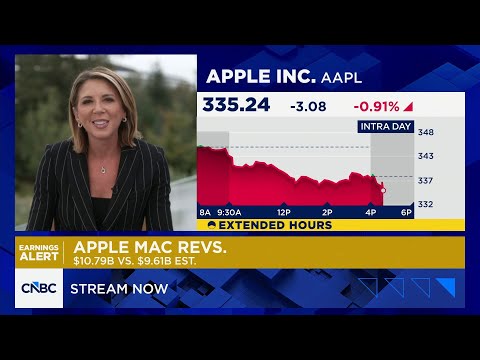
Apple sold $114.5 billion of hardware and services in the quarter ended September 26, up 12% from a year earlier, and earned $2.10 a share. Both beat analyst estimates, and iPhone revenue rose 17% to $57.6 billion.

The forecast is what moved the stock. Apple guided December-quarter gross margin to 45% to 46%, below the 46.3% analysts expected, and shares fell about 2% the next day. Chief executive John Ternus called memory pricing "unprecedented" and said costs will keep rising beyond December. Apple's purchase obligations to suppliers rose $33 billion to $89.7 billion in the quarter.

Why it matters

Apple's margin forecast shows how much the global memory shortage adds to the price of the devices people buy.

Questions about this story

Free account needed to ask — your question is kept and asked for you right after sign-up. Answers are public.

No questions yet — be the first to ask.

Key Indicators

$114.5B
Quarterly revenue
September-quarter record, up 12% year over year.
12%
Revenue growth
Year-over-year increase, against a quarter with foreign-exchange headwinds of nearly 2 points.
$2.10
Diluted earnings per share
Up 14% year over year; includes 5 cents from tariff refunds.
47.9%
Company gross margin
Includes about 1 percentage point of benefit from tariff refunds.
45–46%
December-quarter gross margin guidance
Below the 46.3% average analyst estimate, reflecting higher memory costs and the Siri AI ramp.
$89.7B
Manufacturing purchase obligations
Up $33 billion in the quarter as Apple locked in memory supply, according to its filing.
$57.6B
iPhone revenue
Up 17% year over year, despite supply constraints.
$31.6B
Services revenue
All-time record, up 10% year over year; December growth guided to 8–9%.
$14.54B
Inventory
Up from $11.09 billion, as Apple stockpiles memory components.

Voices

Curated perspectives — historical figures and your fellow readers.

Sign up to generate historical perspectives on this story.

People Involved

Organizations Involved

Timeline

June 2026 November 2026

6 events Latest: November 3rd, 2026 · 1 week ago
Tap a bar to jump to that date
  1. Shares slide as Ternus warns memory costs keep rising

    Latest Market

    Apple stock fell about 2% the day after the forecast, after dropping 4% during the earnings call. Ternus said memory pricing was "unprecedented" and would keep climbing beyond December.

  2. Apple reports record September quarter

    Earnings

    Revenue of $114.5 billion, up 12%; December gross margin guided to 45–46%.

  3. Ternus says small share of iPhone Duo units returned over displays

    Product

    In a Reuters interview, Ternus said a "very small percentage" of the foldable phones had been returned for display issues and that Apple was replacing them. He said supply remained constrained with no timeline for balancing demand.

  4. Fiscal fourth quarter closes

    Fiscal

    The quarter includes only eight days of iPhone 18 Pro sales; the iPhone Duo ships later.

  5. Ternus takes over as chief executive

    Leadership

    John Ternus succeeds Tim Cook, ending a fifteen-year run at the top.

  6. Apple raises prices across the board

    Pricing

    Apple lifts iPhone prices by $100 and raises others, citing memory supply and component costs.

Scenarios

1

Apple delivers the biggest revenue quarter in its history, inside guidance

Likely Resolves by Jan 29, 2027

Discussed by: Apple management on the earnings call; analysts polled by LSEG

Apple's own forecast calls for 7% to 10% year-over-year growth in the December quarter, which would make it the highest-revenue quarter the company has recorded. The call assumes supply constraints hold at the level management expects and that tariff policy does not change. If iPhone Duo and iPhone 18 Pro supply loosens, growth lands at the top of the range.

2

Memory costs push gross margin below the guided range

Possible Resolves by Jan 29, 2027

Discussed by: Apple's CFO on the earnings call; analysts who modeled 46.3% before guidance

Apple guided gross margin to 45% to 46%, already below consensus, and said the decline comes mainly from higher memory costs plus spending to ramp Siri AI. If memory prices keep climbing through the quarter, the company could undershoot even that range. The offsetting factor is that most tariff refunds have now been received, so that benefit will not repeat.

3

iPhone Duo backlog stretches into the spring

Uncertain Resolves by Q1 2027

Discussed by: Bloomberg, reporting that new foldable orders on Apple's site do not arrive until the end of the queue

The iPhone Duo, Apple's foldable, went on sale after the September quarter closed, so none of its revenue is in this report. Bloomberg reported that new orders face long delivery waits and that Apple has given no indication of when supply will balance with demand. A backlog that persists past the December quarter would push revenue into later periods rather than create it.

Historical Context

3 moments from history that rhyme with this story — and how they unfolded.

August 2011

Steve Jobs hands Apple to Tim Cook (2011)

Steve Jobs resigned as Apple's chief executive six weeks before his death and named Tim Cook as his successor. Cook had run operations since 1998 and had already filled in during Jobs's medical leaves.

Then

Apple's product roadmap held, and the iPhone 4S shipped in October 2011.

Now

Cook ran the company for fifteen years, building the services business and the wearables line that now anchor Apple's revenue mix.

Why this matters now

Ternus's first quarter is the first real test of whether a leadership change at Apple alters strategy, and the early signal is continuity rather than a break.

2021–2022

Global chip shortage constrains iPhone and Mac supply (2021–2022)

A worldwide shortage of semiconductors and other components forced Apple and its peers to ration production. Apple warned that supply constraints would cost it billions in revenue in a single quarter and pushed delivery dates out by weeks.

Then

Apple prioritized higher-margin models and absorbed higher component costs.

Now

The company began locking in supply further ahead and holding more inventory, a practice visible in its current stockpiling of memory.

Why this matters now

The current memory crunch is the same mechanism in a different component, and Apple's response, buying ahead and raising prices, follows the playbook it used then.

Fiscal 2019

Apple's first annual revenue decline in over a decade (2019)

Apple reported a fall in annual revenue as iPhone demand weakened, particularly in China, and the company cut its revenue forecast mid-quarter for the first time in years.

Then

Apple stopped breaking out unit sales and cut iPhone prices in some markets.

Now

The company leaned harder on services and wearables, which now supply a much larger share of revenue.

Why this matters now

It shows how Apple has historically responded when hardware growth stalls: shift the mix toward services, which set an all-time revenue record this quarter.

Sources

(13)