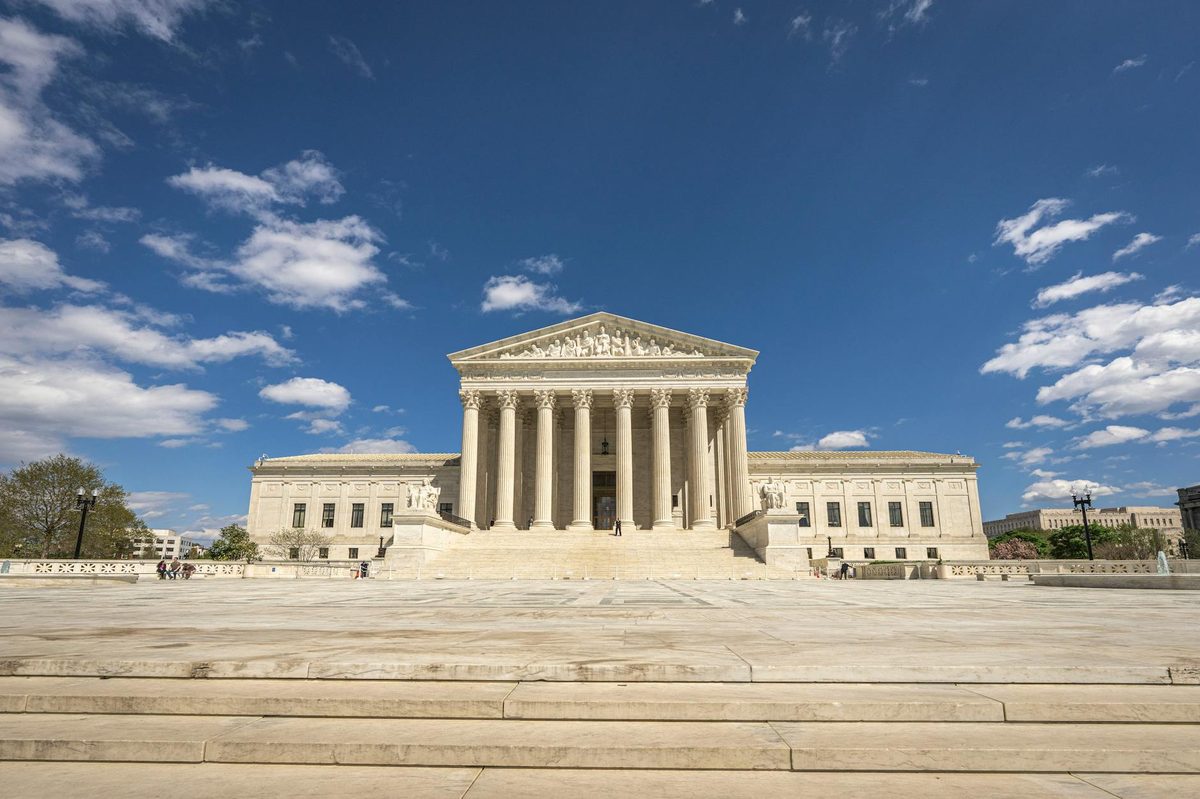
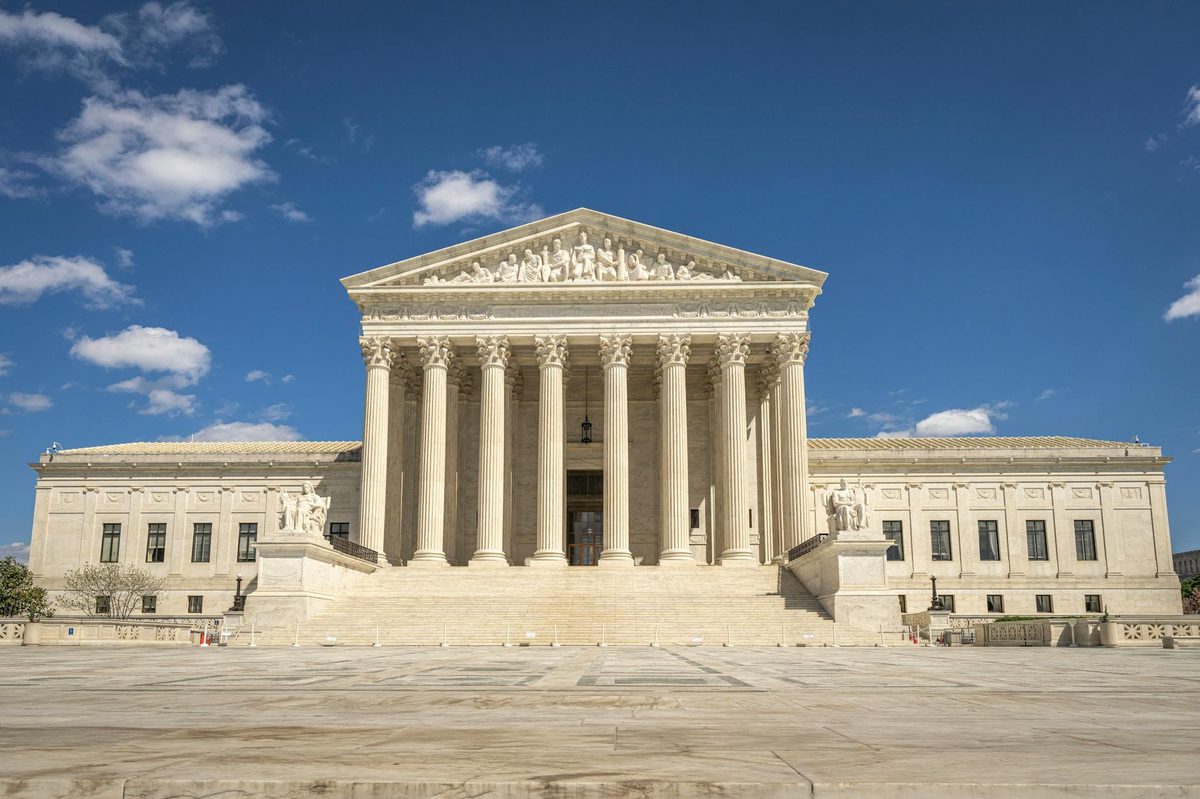
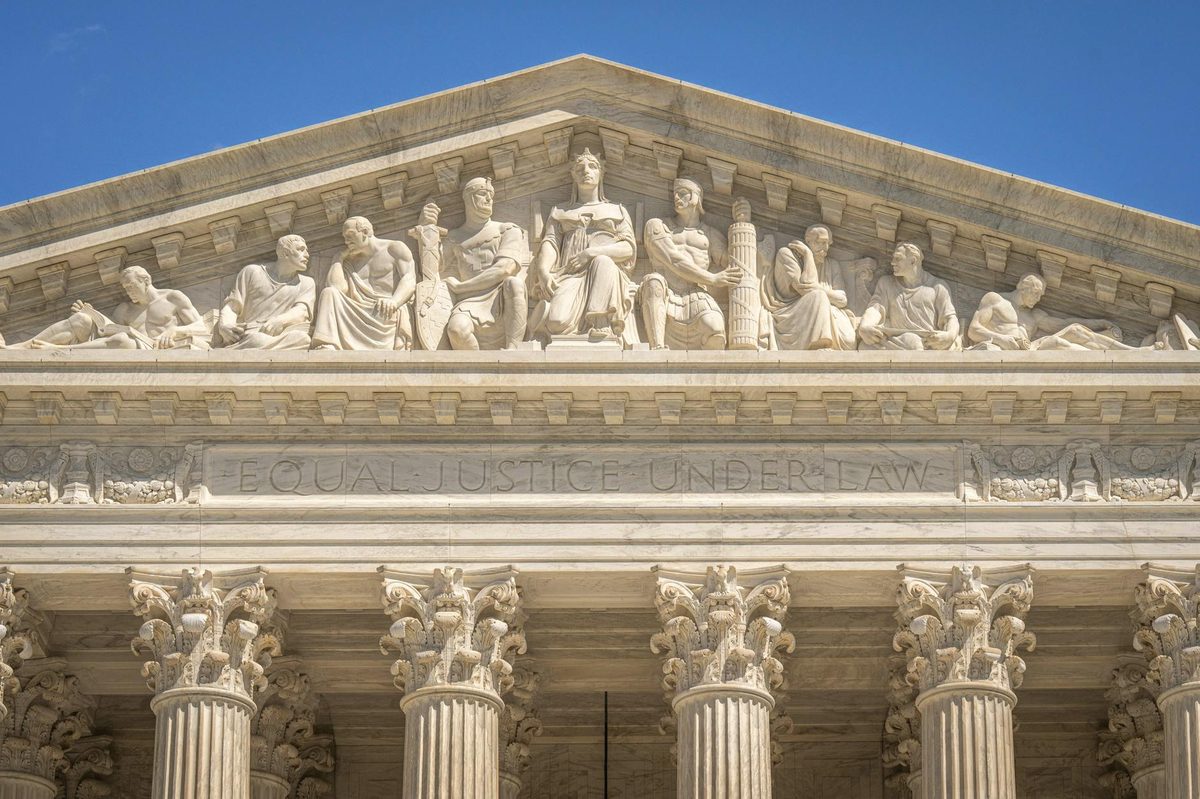
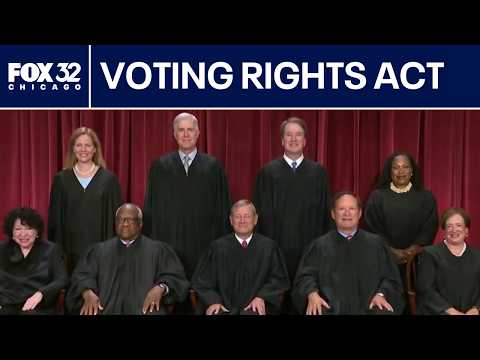
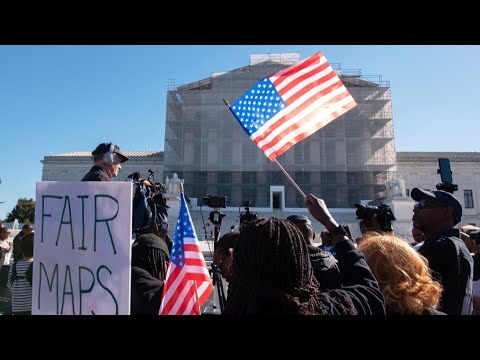
The Supreme Court ruled 6-3 on April 29, 2026, in Louisiana v. Callais. Section 2 of the Voting Rights Act of 1965, the main federal tool minority voters have used for four decades to challenge racially discriminatory maps, now requires plaintiffs to prove intentional discrimination before courts can order a remedy.
Justice Samuel Alito wrote the majority opinion; Justice Elena Kagan dissented for the three liberal justices, writing that the ruling makes Section 2 'all but a dead letter' and marks 'the latest chapter in the majority's now-completed demolition of the Voting Rights Act.' On May 4, the Court ordered its judgment into immediate effect, bypassing the usual 25-day window for rehearing requests. On May 6, it denied civil rights plaintiffs' motion to recall the ruling, making the decision final.
The redistricting wave has moved with unusual speed. Florida Governor Ron DeSantis signed a new congressional map into law on May 4, shifting the state's delegation from 20 Republicans and 8 Democrats to a projected 24 Republicans and 4 Democrats; three lawsuits challenging the map under Florida's Fair Districts amendment were filed within 24 hours. Alabama Governor Kay Ivey called a special session on May 1 to revert to the single majority-Black district that existed before Allen v. Milligan required a second one in 2023. Tennessee convened its own special session on May 5 targeting Representative Steve Cohen's Memphis-based seat for elimination. Louisiana suspended its May 16 congressional primary, leaving room for a new Callais-compliant map possibly before 2026 rather than 2028. Mississippi's special session remains set for May 20. House Minority Leader Hakeem Jeffries has directed a Democratic counter-redistricting effort in New York, though the net shift could still hand Republicans up to 19 additional House seats.
Why it matters
The ruling strips Black voters of their main legal tool to challenge discriminatory maps, opening a Republican redistricting wave before the 2026 midterms.
Questions about this story
Free account needed to ask — your question is kept and asked for you right after sign-up. Answers are public.
No questions yet — be the first to ask.
Key Indicators
24-4
Projected Florida delegation after new map
DeSantis signed the new congressional map May 4, shifting Florida's delegation from 20-8 Republican to 24-4; three lawsuits filed within 24 hours under Florida's Fair Districts amendment.
May 20
Mississippi special session date
Governor Reeves set the special session for May 20, 2026—21 days after the April 29 Callais ruling triggered the window—to redraw state Supreme Court districts.
Final
Callais ruling status
The 6-3 Callais ruling is now final: the Court granted a forthwith order May 4 making it immediately operative and denied a recall motion May 6.
4 states
States with active redistricting sessions
Florida completed its special session (signed May 4); Alabama and Tennessee convened sessions in early May; Mississippi's opens May 20.
Up to 19
House seats potentially flipped
Analysts estimate the ruling could allow Republicans to flip up to 19 majority-minority House seats through redistricting across multiple states.
Tennessee's Senate Judiciary Committee passed the proposed redistricting map on the second day of the special session, advancing the plan to eliminate the state's only Democratic congressional district for a full chamber vote.
Two more lawsuits filed against Florida map; three total within 24 hours of signing
Legal
Common Cause, the League of Women Voters Florida, and LULAC filed additional lawsuits in Florida's Second Circuit Court, bringing the total legal challenges to at least three within 24 hours of DeSantis's signing. Plaintiffs' briefs describe the map as 'one of the most extreme gerrymanders in American history' by traditional partisan-fairness measures.
Tennessee special session convenes; Republicans target Rep. Steve Cohen's Memphis seat
Legislative
Tennessee Governor Bill Lee convened a special legislative session targeting the state's only Democratic-held congressional district. Republicans proposed a new Ninth District map that would extend Cohen's Memphis-based seat south to the Mississippi border then north toward Nashville, diluting its Democratic base. Hundreds of protesters descended on the State Capitol and Republicans moved to limit public testimony.
Supreme Court grants forthwith order making Callais immediately operative
Legal
The Supreme Court granted a request to issue its Callais judgment 'forthwith,' making the ruling immediately operative and bypassing the standard 25-day window that would otherwise allow parties to seek rehearing—clearing the way for states to begin redistricting without waiting for the term to expire.
Governor DeSantis signed the new Florida congressional map into law, announcing it on X with 'Signed, sealed, and delivered.' The map reworks 21 of Florida's 28 congressional districts and targets incumbents Kathy Castor, Darren Soto, Lois Frankel, and Debbie Wasserman Schultz to create a projected 24 Republican and 4 Democratic delegation.
First lawsuit filed against Florida's new congressional map
Legal
Equal Ground Education Fund, a Black-led organization, filed the first legal challenge to Florida's new map in Leon County's Second Judicial Circuit on behalf of 18 individual plaintiffs, arguing it violates Florida's Fair Districts amendment by favoring a political party, disfavoring incumbents, and failing compactness requirements.
Jeffries directs New York mid-decade redistricting as Democratic counter-strategy
Political
House Minority Leader Hakeem Jeffries directed Rep. Joe Morelle to meet with New York Governor Kathy Hochul and state legislators about mid-decade congressional redistricting, signaling a Democratic effort to offset Republican gains from post-Callais redistricting in Florida, Alabama, and Tennessee.
Alabama Governor Ivey calls special session to revert to single majority-Black congressional district
Executive Action
Alabama Governor Kay Ivey called a special legislative session beginning May 1 to revert the state's congressional map to its pre-Milligan configuration, which contained only one majority-Black district. Federal courts had ordered a second such district in 2023 following Allen v. Milligan; the Callais ruling gives Alabama its legal justification to eliminate it.
April 2026
Louisiana Governor Landry suspends May 16 primary to allow Callais-compliant redraw
Executive Action
Louisiana Governor Jeff Landry declared an emergency and suspended the state's May 16 congressional primary, giving the legislature time to draw a new map under the intentional-discrimination standard the Supreme Court established in Callais—potentially enabling a 2026 redraw rather than the 2028 timeline initially expected.
NAACP holds emergency national town hall on Callais implications
Statement
The NAACP convened an emergency national briefing—'Louisiana v. Callais: What It Means & What We Do Next'—to outline the ruling's implications for Black voters and mobilize a response ahead of the 2026 midterms. President Derrick Johnson called the ruling 'a license for corrupt politicians who want to rig the system by silencing entire communities.'
Supreme Court issues opinions; Callais not among them
Legal
The Supreme Court released opinions on its first scheduled opinion day since the Florida special session opened, but did not rule in Louisiana v. Callais. Court watchers said a ruling with major implications is more likely in June, near the end of the term.
Florida House passes DeSantis redistricting map 83-28; Senate vote expected same day
Legislative
The Florida House approved DeSantis's congressional map on an 83-28 vote in a session lasting less than 90 minutes, with no Republican debate; the Florida Senate was expected to vote the same day, and immediate legal challenges were anticipated if the map became law.
Mississippi sets special session for May 20 as Callais 21-day trigger activates
Executive Action
With the Callais ruling in hand, Governor Reeves's pre-positioned 21-day trigger activated; the Mississippi Legislature will convene May 20 to redraw Supreme Court districts under the new intentional-discrimination standard, likely without the majority-Black district a federal court ordered in 2025.
Multi-state redistricting cascade begins; Louisiana's own map likely pushed to 2028
Political
Voting-rights groups warned the ruling clears the path for Republican-led states including Alabama, Georgia, Texas, and North Carolina to redraw maps previously blocked under Section 2; Louisiana's own congressional redraw is expected for 2028 given its May 16 primary deadline makes a 2026 revision impractical.
Hours after the House passed the DeSantis map 83-28, the Florida Senate approved it on a 21-17 party-line vote, completing legislative passage of a map projected to shift the state's congressional delegation to 24 Republicans and 4 Democrats.
Florida redistricting special session opens
Legislative
Governor DeSantis rescheduled a redistricting special session from April 20–24 to April 28–May 1. No draft map had been publicly released as the session was set to begin; Republicans aim to add two to five GOP-leaning House seats, with litigation expected immediately after passage.
Florida redistricting special session opens; committees advance DeSantis map
Legislative
Florida's special legislative session on congressional redistricting opened in Tallahassee. Committees in both chambers approved the DeSantis map the same day amid loud Democratic objections and promises of legal challenge. The session is scheduled to run through May 1.
DeSantis releases Florida congressional map targeting four Democratic seats
Legislative
Governor DeSantis unveiled a proposed map that would shift Florida's congressional delegation from 20 Republicans and 8 Democrats to 24 Republicans and 4 Democrats, directly targeting seats held by Reps. Darren Soto, Kathy Castor, Jared Moskowitz, and Debbie Wasserman Schultz.
Mississippi Democrats condemn Reeves proclamation as bad-faith compliance
Statement
Mississippi Democratic Party Chairman Cheikh Taylor publicly condemned Governor Reeves's special session proclamation. The party warned that at least 29 of Mississippi's 60 Black-majority legislative seats could be eliminated if Section 2 of the Voting Rights Act is weakened.
Mississippi proclamation announced publicly
Statement
Reeves publicly ties the special session to whatever framework the Supreme Court adopts in Callais.
Reeves signs special session proclamation
Executive Action
Governor commits Mississippi legislature to convene 21 days after the Supreme Court rules in Callais.
December 2025
Mississippi special elections ordered
Legal
District court orders special judicial elections in November 2026 under a new remedial map.
October 2025
Callais reargued on broader question
Legal
Kavanaugh probes whether Section 2 should have a time limit; Roberts defends the existing framework.
August 2025
Federal court rules Mississippi map illegal
Legal
Judge Aycock rules the 1987 Supreme Court districts violate Section 2 and orders new lines drawn.
June 2025
Court orders Callais reargument
Legal
Justices broaden the question to whether intentionally drawing a majority-Black district is constitutional.
March 2025
Callais first oral argument
Legal
Supreme Court hears initial argument on Louisiana's second majority-Black congressional district.
August 2024
Mississippi judicial districts trial
Legal
U.S. District Judge Sharion Aycock holds bench trial in the Northern District of Mississippi.
June 2023
Allen v. Milligan upholds Section 2
Legal
Supreme Court rules 5-4 that Alabama's congressional map likely violates Section 2, preserving the framework.
December 2022
Mississippi NAACP files Section 2 suit
Legal
Coalition challenges the 1987 Supreme Court district map as diluting Black voting power.
June 2013
Shelby County v. Holder ends preclearance
Legal
Supreme Court strikes down the VRA's coverage formula, ending federal preclearance of voting changes.
January 1987
Mississippi draws current Supreme Court districts
Redistricting
Three districts, each electing three justices, drawn with no majority-Black voting age population.
June 1986
Thornburg v. Gingles establishes the framework
Legal
Supreme Court sets the three-prong test still used to evaluate vote dilution claims under Section 2.
June 1982
Section 2 amended to a results test
Legislation
Congress rewrites Section 2 so plaintiffs need only show discriminatory effects, not intent.
August 1965
Voting Rights Act enacted
Legislation
Congress passes the VRA, with Section 2 banning voting practices that deny or abridge rights based on race.
Scenarios
1
Court strikes down Section 2 results test; states redraw without race remedies
Possible
Discussed by: Stanford Center for Racial Justice, Brennan Center, NAACP Legal Defense Fund
A majority adopts the broader Fourteenth or Fifteenth Amendment ruling the Court asked the parties to brief, holding that intentionally drawing majority-minority districts is unconstitutional. Mississippi's special session redraws the Supreme Court map without race-conscious adjustments, and the Aycock ruling is vacated on appeal. Similar challenges in Alabama, Georgia, South Carolina, and Texas collapse. Voting rights groups warn this would end the principal tool used since 1982 to challenge vote dilution.
2
Court narrows Section 2 with a time limit or higher proof bar
Likely
Discussed by: Quarles Law Firm analysis, Harvard Undergraduate Law Review, Constitutional Law Reporter
The Court imposes a sunset on race-based remedies (echoing Kavanaugh's question) or tightens the Gingles preconditions. Mississippi's special session draws a remedial map under a tougher standard, possibly without a majority-Black district but with adjustments to district lines. The Fifth Circuit applies the new test on remand. Plaintiffs would need to show more recent or stronger evidence of racially polarized voting to prevail in future suits.
3
Court reaffirms Section 2; Mississippi creates majority-Black judicial district
Unlikely
Discussed by: ACLU, Mississippi Center for Justice, Democracy Docket
The Court declines to reach the broader constitutional question and reaffirms the Milligan framework. Mississippi's special session draws a District 1 with a Black voting age majority, anchored in Jackson and the Delta, in time for the November 2026 special elections. Other Section 2 cases pending in the Fifth and Eleventh Circuits move forward under existing law.
4
Court splits or delays; Mississippi elections proceed under disputed map
Possible
Discussed by: SCOTUSblog, Mississippi Today
The justices fragment without a majority opinion, or punt with a remand for further factual development. The Fifth Circuit's stay continues, the Aycock remedy order is delayed, and Mississippi holds 2026 judicial elections under the 1987 map while litigation continues. A clearer ruling could come in a future term.
5
Congress passes new legislation to restore Section 2's results test
Unlikely
Discussed by: Rep. Jamie Raskin, NAACP Legal Defense Fund, ACLU, Common Cause
House Judiciary Ranking Member Jamie Raskin called the ruling 'an act of extraordinary and cynical judicial activism' and demanded Congress act immediately to restore the results test and establish nonpartisan independent redistricting commissions. With Republicans controlling both chambers, passage is considered remote in the current term, though the ruling is expected to become a major flashpoint in the 2026 midterm and 2028 presidential campaigns.
6
Democrats execute mid-decade redistricting counter-strategy in blue states
Possible
Discussed by: House Minority Leader Hakeem Jeffries, New York Democrats, California Democrats, Roll Call analysts
Following the Callais ruling, Jeffries directed New York Democrats to pursue mid-decade congressional redistricting, and California is reportedly moving five Republican-held districts leftward. If Democrats successfully execute redistricting in blue states before the 2026 elections, some Republican gains in Florida, Alabama, and Tennessee could be partially offset, though legal challenges from Republicans in those states are expected.
Historical Context
3 moments from history that rhyme with this story — and how they unfolded.
1 of 3
June 1986
Thornburg v. Gingles (1986)
The Supreme Court interpreted the 1982 Section 2 amendments and laid out a three-part test for vote dilution claims: a minority group must be sufficiently large and compact to form a majority in a district, be politically cohesive, and face white bloc voting that usually defeats its preferred candidates. The case involved North Carolina state legislative districts.
Then
Six of seven challenged North Carolina districts were struck down. Plaintiffs across the South began winning Section 2 cases against multimember districts and at-large elections.
Now
The Gingles framework became the workhorse standard for forty years of vote dilution litigation, including Allen v. Milligan and the Mississippi judicial districts case.
Why this matters now
Callais directly questions whether the Gingles framework, and the race-conscious remedies it implies, can survive under the Fourteenth and Fifteenth Amendments.
2 of 3
June 2013
Shelby County v. Holder (2013)
By a 5-4 vote written by Chief Justice Roberts, the Supreme Court struck down the VRA's coverage formula, which had required nine states (mostly in the South) to get federal approval before changing voting rules. The Court did not strike Section 5 itself but disabled it without an updated formula.
Then
Within hours, Texas announced it would enforce a voter ID law previously blocked. Other covered states moved quickly on voting changes that no longer required preclearance.
Now
Section 2 became the primary federal tool for challenging discriminatory voting practices—exactly the tool now under review in Callais.
Why this matters now
Callais could complete what Shelby began, leaving Section 2 narrowed or unavailable just as preclearance was.
3 of 3
June 2023
Allen v. Milligan (2023)
The Supreme Court ruled 5-4 that Alabama's 2021 congressional map likely violated Section 2 by packing and cracking Black voters. Roberts wrote the opinion; Kavanaugh joined and wrote a concurrence flagging concerns about the durability of race-based remedies. Alabama was ordered to draw a second majority-Black district.
Then
Alabama initially defied the order, drew another non-compliant map, and was overruled again. Section 2 challenges in Louisiana, South Carolina, and Georgia gained traction.
Now
The Louisiana remedial map drawn in Milligan's wake is the same map at issue in Callais—the ruling that preserved Section 2 produced the case that may dismantle it.
Why this matters now
The same justices who upheld Section 2 in Milligan are now reconsidering it. Kavanaugh's time-limit framing in Callais reargument signals the framework may not hold a second time.