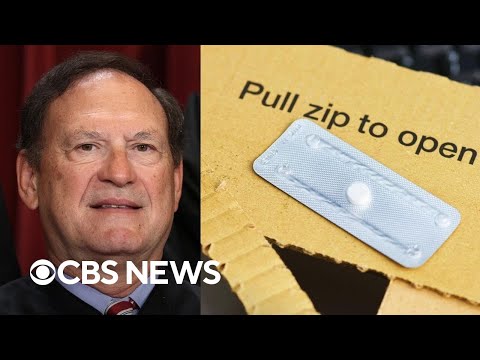
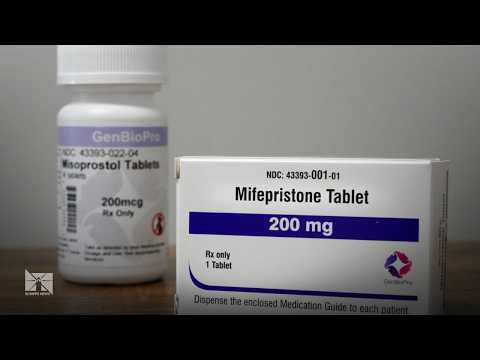
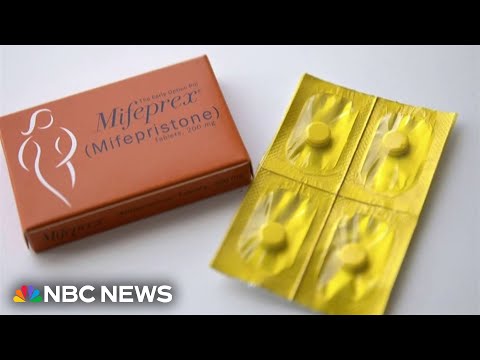
The Supreme Court has until Thursday at 5 p.m. ET to decide whether mifepristone can keep shipping by mail. Alito's May 14 stay is all that blocks a May 1 Fifth Circuit ruling ending telehealth mifepristone prescribing and mail delivery nationwide.
The Fifth Circuit acted May 1 at Louisiana's request, reinstating a pre-2021 rule requiring patients to visit a clinician in person before getting mifepristone. Mifepristone is used in roughly two-thirds of U.S. abortions.
Why it matters
If the Supreme Court lifts the stay, mail-order and telehealth mifepristone end nationwide within hours, including in states where abortion is otherwise legal.
Questions about this story
Free account needed to ask — your question is kept and asked for you right after sign-up. Answers are public.
No questions yet — be the first to ask.
Key Indicators
May 14
Stay deadline
Alito's order pauses the 5th Circuit ruling until this date while the full Court deliberates.
~63%
Share of U.S. abortions
Medication abortion's share of all U.S. abortions, per the most recent Guttmacher Institute count.
2000
Year FDA approved mifepristone
The drug has been on the U.S. market for 26 years; the rules under challenge are the 2021 telehealth changes, not the original approval.
5+ million
U.S. patients prescribed
FDA's running tally of mifepristone prescriptions since approval, used by the agency to argue the safety record is established.
3
States leading the suit
Louisiana, Missouri, and Idaho are the named state plaintiffs after a 2024 reset following FDA v. Alliance.
16 events
Latest: May 12th, 2026 · 4 months ago
Showing 8 of 16
JK to step
Tap a bar to jump to that date
Jump to
May 2026
Stay extended to May 14
LatestLegal
Alito extends the temporary pause by two days. Full Court action on the stay application expected before the new deadline.
Alito issues administrative stay
Legal
Circuit Justice for the 5th Circuit pauses the appellate ruling while the full Court considers the stay application.
Alito issues one-week administrative stay of 5th Circuit order
Legal
Circuit Justice Alito grants a one-week stay of the 5th Circuit's May 1 reinstatement order, temporarily preserving mail-order and telehealth access while the full Court considers the manufacturer applications.
Danco and GenBioPro file emergency SCOTUS appeals
Legal
Mifepristone manufacturers Danco Laboratories and GenBioPro file separate emergency stay applications at the Supreme Court, warning the 5th Circuit's ruling would cut off patient access across the country.
A three-judge 5th Circuit panel grants Louisiana's request to immediately reinstate the pre-2021 rule requiring patients to see a clinician in person before getting mifepristone, overruling the district court's April 7 pause.
April 2026
DOJ asks Supreme Court to intervene
Legal
Solicitor General Elizabeth Prelogar files emergency stay application, warning of nationwide disruption if telehealth access ends.
District court pauses case pending FDA review
Legal
The federal district court grants FDA's request to pause proceedings while the agency conducts a review of mifepristone's approval and risk protocols, with a status report due by October 7, 2026.
February 2026
5th Circuit rules for states
Legal
Three-judge panel finds FDA exceeded its authority in 2021 by dropping in-person dispensing. Original 2000 approval untouched.
October 2024
States refile the challenge
Legal
Louisiana, Missouri, and Idaho file an amended complaint in the same Texas court, citing state-law injuries to cure the standing problem.
June 2024
Supreme Court tosses original suit
Legal
Unanimous ruling in FDA v. Alliance for Hippocratic Medicine finds doctor plaintiffs lacked standing. Door left open for other plaintiffs.
April 2023
Texas judge revokes approval
Legal
Judge Matthew Kacsmaryk rules FDA's 2000 approval was unlawful. Stayed pending appeal.
November 2022
Alliance for Hippocratic Medicine sues FDA
Legal
Anti-abortion doctors file suit in Amarillo, Texas, seeking to revoke FDA's 2000 approval of mifepristone.
June 2022
Dobbs ends federal abortion right
Legal
Supreme Court overturns Roe v. Wade. State abortion bans take effect within hours; mifepristone becomes a primary access point in restrictive states.
December 2021
FDA permanently allows mail-order
Regulatory
Agency drops the in-person dispensing requirement, making telehealth prescribing and mail delivery legal nationwide.
March 2016
FDA loosens the regimen
Regulatory
Label updated to allow use through 10 weeks. Required office visits drop from three to one. This 2016 change is one of the rules now challenged.
September 2000
FDA approves mifepristone
Regulatory
FDA approves Mifeprex for ending pregnancies up to 7 weeks. Patients must get the drug in a clinic from a certified prescriber.
The full Court extends the stay through final resolution of the case. Mail-order and telehealth mifepristone keep operating nationwide while the justices hear arguments on the merits. This is the path predicted by court-watchers who note the 2024 unanimous ruling and the Solicitor General's emphasis on regulatory disruption.
2
Supreme Court lets 5th Circuit ruling take effect
Possible
Resolves by May 20, 2026
Discussed by: National Review legal commentary, Ed Whelan, plaintiffs' counsel at Alliance Defending Freedom
The justices decline to extend the stay. Within days, FDA's 2021 rule is blocked nationwide and mifepristone prescriptions can only be dispensed in person by a certified provider. Telehealth abortion providers stop shipping. This scenario assumes a majority finds the states have standing and likely success on the merits.
3
Court grants stay but signals skepticism on merits
Possible
Resolves by Q2 2026
Discussed by: Steve Vladeck (One First newsletter), Slate legal coverage
The Court extends the stay but issues a short statement or concurrence flagging concerns about FDA's procedural record. Telehealth continues for now but merits oral argument is set for the October 2026 term with a likely ruling restricting access. This split outcome buys time but signals where the case is headed.
4
Court rules states lack standing, dismisses suit
Unlikely
Resolves by Jul 31, 2026
Discussed by: Lawfare, Election Law Blog, Rick Hasen
The Court extends the stay and uses an expedited merits ruling to dispose of the case on standing grounds, finding that even state plaintiffs cannot show concrete injury from another state's residents using FDA-approved medication. FDA's 2021 rule survives. This would mirror the 2024 unanimous standing ruling but applied to state plaintiffs.
Historical Context
3 moments from history that rhyme with this story — and how they unfolded.
1 of 3
April 2007
Massachusetts v. EPA (2007)
Massachusetts and other states sued the Environmental Protection Agency for refusing to regulate greenhouse gas emissions. The Supreme Court ruled 5-4 that states had standing to sue federal agencies over regulatory inaction because they suffer concrete injuries to state interests like coastline.
Then
EPA was ordered to determine whether greenhouse gases endanger public health. The agency issued an endangerment finding in 2009.
Now
The case became the foundation for state standing to sue federal agencies over rulemaking decisions. It has been cited by both red and blue state attorneys general challenging federal rules.
Why this matters now
Louisiana's standing argument relies on the Massachusetts v. EPA framework: that states suffer cognizable injury when federal rules undercut their own laws. Whether that theory extends to FDA drug-labeling decisions is one of the open questions.
2 of 3
June 2016
Whole Woman's Health v. Hellerstedt (2016)
The Supreme Court struck down a Texas law requiring abortion clinics to meet hospital surgical standards and providers to have admitting privileges at nearby hospitals. The state argued the rules protected patient safety; the Court found they imposed an undue burden on access without medical justification.
Then
Roughly half of Texas's abortion clinics that had closed reopened or stayed open. Similar laws in other states fell within months.
Now
The decision was effectively overturned by Dobbs in 2022. The undue-burden framework no longer applies to abortion access cases.
Why this matters now
The 5th Circuit ruling in the current case revives the in-person clinical visit requirement, the same kind of access restriction Whole Woman's Health rejected in 2016. The legal framework that struck it down then no longer exists.
3 of 3
March-June 2024
FDA v. Alliance for Hippocratic Medicine (2024)
A coalition of anti-abortion doctors sued FDA seeking to revoke mifepristone's 2000 approval. The case reached the Supreme Court after a Texas district judge ruled the approval unlawful and the 5th Circuit narrowed the ruling to FDA's 2016 and 2021 rule changes.
Then
The Supreme Court ruled 9-0 that the doctor plaintiffs lacked standing because none had been forced to treat a complication from mifepristone. The case was dismissed.
Now
The ruling preserved nationwide access but explicitly left the door open for plaintiffs with a stronger injury claim. State attorneys general refiled within months.
Why this matters now
The current case is the direct sequel. The state plaintiffs were chosen specifically to fix the standing problem that doomed the 2024 challenge. The merits question, FDA's authority to ease prescribing rules, was never reached.