




Pull to refresh
Logo
Ukraine opens controlled weapons exports for first time since Russia's invasion

Ukraine opens controlled weapons exports for first time since Russia's invasion

Rule Changes

Kyiv lets defense firms sell abroad, but only to Drone Deal partners and only after the army's own orders are filled.

July 1st, 2026: Cabinet approves export mechanism

Overview

Updated Jul 2

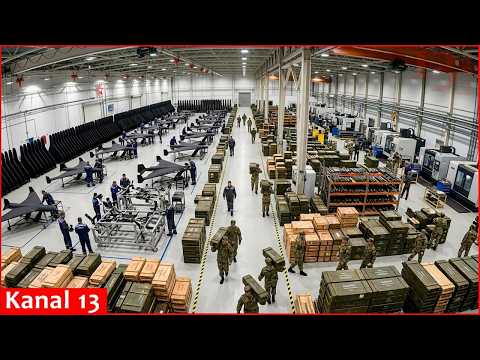
Ukraine's arms makers now build more weapons than their own government can afford to buy. On July 1, 2026, the Cabinet approved the first formal procedure to sell that surplus abroad, ending a de facto export freeze in place since Russia's full-scale invasion.

The rules let manufacturers export only after proving they can still fill state orders. A levy on each sale, 20% on finished products and 30% on components, flows into a fund for the defense industry. Kyiv wants to keep its fastest-growing wartime sector solvent.

Why it matters

Ukraine's weapons firms build more than its army can buy; controlled exports could turn that surplus into billions to fund the war.

Questions about this story

Free account needed to ask — your question is kept and asked for you right after sign-up. Answers are public.

No questions yet — be the first to ask.

Key Indicators

$50B
Defense production capacity, 2026
Ukraine's estimated arms-making capacity, up from about $1 billion in 2022.
20%
Levy on finished-product exports
Share of each finished-weapon sale routed to a state defense-industry fund; components are taxed at 30%.
27
Eligible buyer nations
Drone Deal partner countries, including 15 NATO members, cleared to buy directly from Ukrainian firms.
$12B
State arms orders, 2025
What Ukraine's military actually bought, far below what its factories can produce.
$6.8B
High-tech defense sector, 2025
Size of Ukraine's drone, missile and electronic-warfare segment last year.

Voices

Curated perspectives — historical figures and your fellow readers.

Ever wondered what historical figures would say about today's headlines?

Sign up to generate historical perspectives on this story.

People Involved

Organizations Involved

Timeline

February 2022 July 2026

9 events Latest: July 1st, 2026 · 2 months ago
Tap a bar to jump to that date
  1. Cabinet approves export mechanism

    Latest Rule Change

    Ukraine adopts its first transparent export procedure. Sales are limited to Drone Deal partners, taxed for a state fund, and blocked unless army orders are met.

  2. Denmark earmarks weapons purchases in $690M aid package

    Development

    Denmark announced its 30th military aid package for Ukraine, worth nearly $690 million. Part of the funds are earmarked for buying weapons directly from Ukrainian defense firms — purchases that will run through the July 1 export mechanism once Denmark finalizes its drone agreement.

  3. Zelenskyy tells Denmark drone deal is 'almost ready'

    Development

    Zelenskyy met Danish Defense Minister Jeppe Bruus in Kyiv and said the drone cooperation agreement was nearly finalized. Both sides also discussed joint anti-ballistic missile capabilities.

  4. US drone deal stalls as European and Gulf partnerships advance

    Setback

    Ukrainian officials told CBS News they felt a 'lack of buy-in' from senior Pentagon and White House figures. Ukraine accepted US testing terms, but no bilateral framework has been signed. The US is not a Drone Deal signatory.

  5. Drone Deal network grows

    Development

    Zelensky says close to 20 countries want drone agreements. These partners become the eligible buyer pool.

  6. Buyers line up

    Development

    Reporting shows foreign buyers waiting for Ukraine to lift its ban. Drone maker FirePoint is valued near $6 billion.

  7. Zelensky floats exports

    Statement

    The president raises reopening weapons exports as manufacturers warn they cannot survive on state orders alone.

  8. Industry outgrows the state budget

    Context

    Production capacity climbs toward $50 billion while state orders sit near $12 billion. Firms build more than Kyiv can buy.

  9. Invasion halts arms exports

    Origin

    Russia's full-scale invasion begins. Ukraine stops exporting weapons and redirects everything to its own defense.

Scenarios

1

Ukraine's arms exports top $1 billion in the first year

Possible Resolves by Jul 1, 2027

Discussed by: Defense News, United24 Media, Ukrainian Ministry of Defense

Drone Deal partners sign firm contracts and Ukrainian firms deliver at scale, with drones leading. The 20% and 30% levies fill the state fund, and Kyiv reports export revenue crossing the billion-dollar mark. This is the outcome the mechanism was built to produce.

2

Government tightens or suspends exports over front-line shortages

Possible Resolves by Jul 1, 2027

Discussed by: Kyiv Independent, Ukrainian military commentators

Critics warn that any weapon sold abroad is a weapon not at the front. If shortages of drones or missiles bite during a Russian offensive, the Cabinet could freeze approvals or narrow the eligible list. The priority-to-the-army rule gives the ministry a ready lever to pull.

3

Joint production abroad overtakes direct exports

Possible Resolves by Jul 1, 2027

Discussed by: Quwa, CBS News, Ukrainian officials

Partners prefer building Ukrainian designs on their own soil to direct purchases. Deals like the draft US-Ukraine memorandum route drone technology into joint ventures. If this path dominates, Kyiv earns from licensing and co-production rather than shipping finished weapons out.

4

Mechanism stalls with minimal actual sales

Uncertain Resolves by Jul 1, 2027

Discussed by: Defense industry analysts, Dentons

Bureaucracy, the 30-day review, priority-order proofs and re-export consent rules slow deals to a trickle. Manufacturers complain the process is too tight to attract buyers. A year in, exports remain marginal and firms still push for looser rules.

5

US sits out Drone Deal as Europe and Gulf sign first contracts

Possible Resolves by End of 2026

Discussed by: Euromaidan Press, CBS News, The Hill, Bloomberg

The US has not signed a bilateral drone framework despite months of talks. Ukraine accepted Pentagon testing terms, but senior Defense Department and White House figures haven't committed to a broader deal. Trump told Fox News in March that the US doesn't need Ukrainian drone expertise. If that holds through 2026, Europe and the Gulf lock in first-mover advantage while Washington stays on the sidelines.

Historical Context

3 moments from history that rhyme with this story — and how they unfolded.

1967 onward

Israel builds a self-reliant arms industry after 1967 embargo

France cut off arms to Israel during the 1967 war. Israel responded by building its own defense industry, from the Kfir jet to Merkava tanks and later drones and missile defense. Threat drove the buildup; exports followed.

Then

Israel reduced dependence on foreign suppliers within a decade.

Now

It became one of the world's top arms exporters, using foreign sales to fund domestic weapons development.

Why this matters now

Ukraine is following the same logic: a war-forced industry now needs export income to stay solvent and keep innovating.

2022

South Korea flips from arms importer to major exporter

Facing a nuclear-armed neighbor, South Korea spent decades building capacity for tanks, howitzers and jets. In 2022 it signed a multibillion-dollar deal to arm Poland, vaulting into the top ranks of global arms sellers.

Then

Poland deals worth tens of billions filled Seoul's order books.

Now

South Korea set a goal of becoming a top-tier arms exporter, with co-production on buyers' soil as a selling point.

Why this matters now

Ukraine's Drone Deal joint-venture path mirrors Seoul's model of pairing exports with local production abroad.

February 2022

Ukraine's pre-war export business collapses

Before 2022, Ukraine ranked around 20th among arms exporters, selling tanks and aircraft engines to buyers like China and India. The invasion ended that overnight as everything was diverted to the front.

Then

Exports fell sharply and the old customer base disappeared.

Now

A far larger, drone-heavy industry grew in its place, aimed at NATO-aligned partners rather than the old buyers.

Why this matters now

The 2026 rules do not restore the old trade; they open a new one built on wartime technology and Western partners.

Sources

(14)