
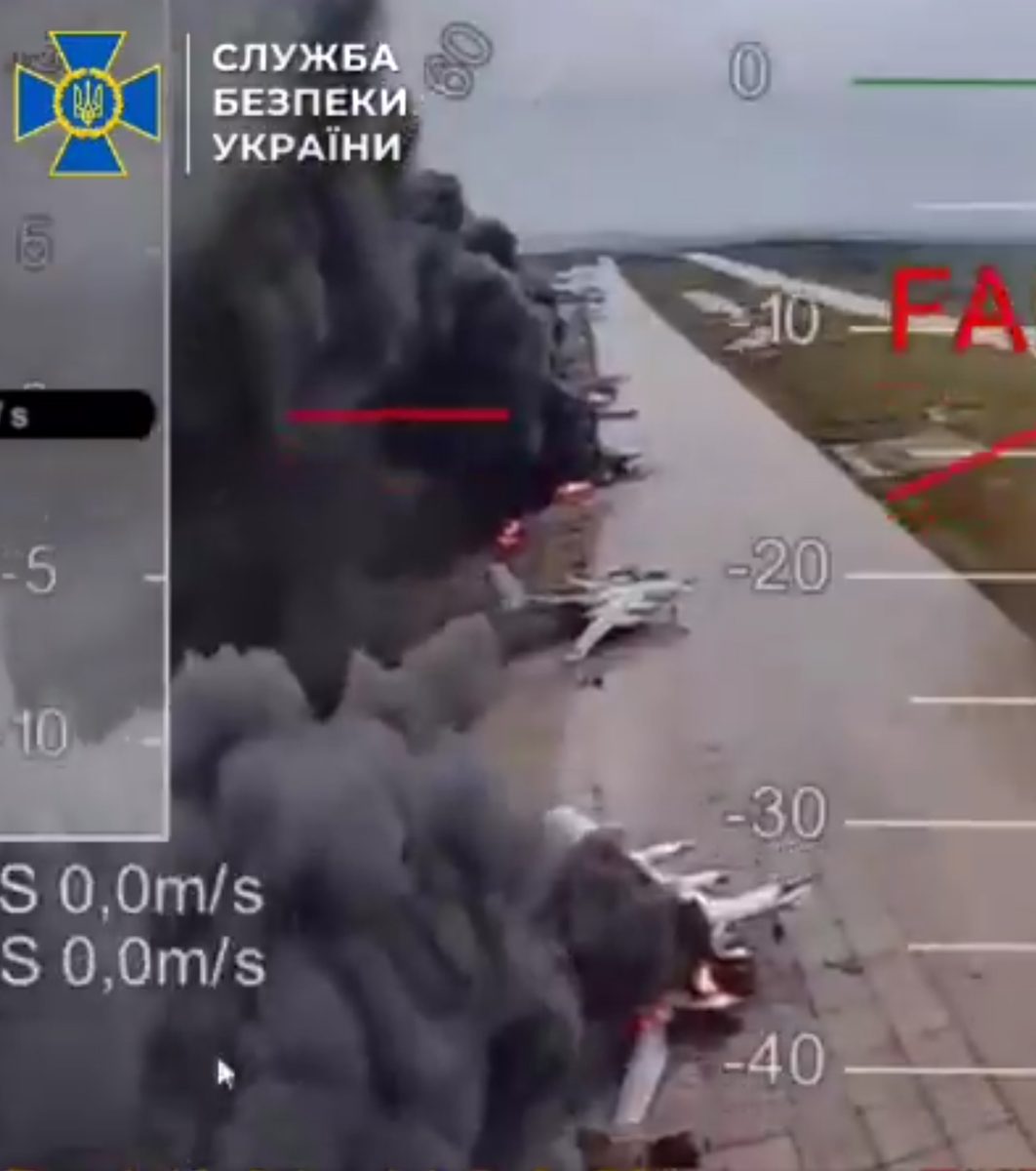
At dawn on June 1, 2025, Ukraine's Security Service pulled off the largest covert drone strike in history. One hundred seventeen drones, smuggled into Russia inside fake shipping containers and hidden in truck cabs, launched from five locations spanning five time zones. They hit five Russian air bases simultaneously, destroying or damaging 41 strategic bombers—including irreplaceable Soviet-era Tu-95s and Tu-22M3s—worth $7 billion. The unwitting truck drivers thought they were hauling prefab houses. One died in the explosions. Four were arrested by the FSB.
The operation gutted 34% of Russia's strategic cruise missile carriers—aircraft that can't be replaced because production ended when the Soviet Union fell. Seven months later, Ukraine continues the asymmetric warfare playbook Spiderweb pioneered: in early January 2026, SBU drones struck ammunition depots and oil facilities deep inside Russia almost daily. The architect of Spiderweb, Vasyl Maliuk, resigned as SBU chief in January but stayed on to run covert operations. Meanwhile, Trump administration peace negotiations advanced with a 20-point framework, but Russia rejected European peacekeepers and showed little willingness to compromise. Spiderweb proved strategic depth is dead—and Ukraine keeps proving it.