Pull to refresh
Logo
UK wage growth holds at 3.7% as real pay gains stay thin

UK wage growth holds at 3.7% as real pay gains stay thin

Money Moves

Pay rose 3.7% through August, barely ahead of 3.5% inflation. The Bank of England raised Bank Rate to 4% on November 5, and investors expect more increases in 2027

Overview

Updated 10 hours ago

UK wage growth held at 3.7% in the three months to August, the Office for National Statistics said. The Bank of England raised Bank Rate to 4% from 3.75% on November 5, its first increase in this stretch, as consumer price inflation reached 3.5% in September.

A survey of recruiters published November 9 showed hiring cooled in October while starting salaries for permanent jobs rose faster. Bank of England policymaker Clare Lombardelli said November 10 that the labour market is cooling through weaker hiring rather than more firing, and that she sees the risk to inflation tilted upward. Investors now expect at least two more quarter-point increases in 2027.

Why it matters

Inflation at 3.5% is wiping out most of a 3.7% pay rise, and a higher Bank Rate means pricier mortgages.

Questions about this story

Free account needed to ask — your question is kept and asked for you right after sign-up. Answers are public.

No questions yet — be the first to ask.

Key Indicators

3.7%
Regular pay growth, June-Aug 2026
Annual growth in average earnings excluding bonuses; steady for six consecutive three-month periods.
3.7%
Total pay growth, June-Aug 2026
Slowest since late 2020, down from 3.9% in the prior period.
3.5%
CPI inflation, September 2026
Up from 3.1% in August and further above the Bank of England's 2% target. CPIH, used for real pay, rose to 3.6% from 3.3%.
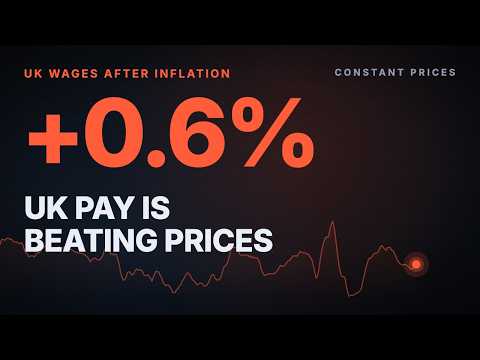
0.6%
Real regular pay growth (CPIH)
For June-August, when CPIH averaged 3.1%. With CPIH at 3.6% in September, the gap to 3.7% pay growth has nearly closed.
691,000
UK job vacancies
Down 21,000 in July-September to the lowest outside the pandemic since 2014.
3.1%
Median employer pay award
Brightmine's survey of 42 settlements covering more than 650,000 staff, three months to end-September; up from 3.0%.
4.00%
Bank of England Bank Rate
Raised from 3.75% on November 5 on an 8-1 vote. Investors expect at least two more quarter-point increases in 2027.
46.6
Permanent staff placements index, October
The Recruitment and Employment Confederation/KPMG gauge fell from 50.9, the lowest since May; readings below 50 signal contraction.

Voices

Curated perspectives — historical figures and your fellow readers.

Sign up to generate historical perspectives on this story.

Organizations Involved

Timeline

2026 November 2026

12 events Latest: Yesterday Showing 8 of 12
Tap a bar to jump to that date
  1. Lombardelli says inflation risks remain to the upside

    Latest Statement

    In a speech at the Bank of England Watchers Conference, Clare Lombardelli said the labour market is cooling mainly through weaker hiring rather than more firing. She said she sees a likely case for a further rate increase in the near term but favours moving gradually.

  2. Recruiters report weaker hiring, faster starting pay

    Data

    The Recruitment and Employment Confederation and KPMG survey put permanent staff placements at 46.6 in October, down from 50.9 and the lowest since May. Starting salaries for permanent roles rose at a faster pace.

  3. Bank of England raises Bank Rate to 4%

    Monetary policy

    The Monetary Policy Committee voted 8-1 to raise Bank Rate to 4% from 3.75%. Policymakers said the energy shock had generated enough inflation pressure in the pipeline to warrant an increase.

  4. Inflation climbs to 3.5% in September

    Data

    Consumer price inflation rose to 3.5% in the year to September from 3.1% in August, and CPIH rose to 3.6% from 3.3%, according to figures reported by Paydata. That is close to the 3.7% pace of pay growth.

  5. Median pay award edges up to 3.1%

    Data

    Brightmine's survey of 42 pay settlements covering more than 650,000 employees put the median award at 3.1% in the three months to September, up from 3.0%. It expects awards to stay at 3% in 2027.

  6. ONS: wage growth holds at 3.7%

    Statistical release

    ONS reports 3.7% annual growth in regular and total pay for June-August; real regular pay up 0.6%, unemployment at 4.7%.

  7. Greene warns pay growth may keep inflation high

    Statement

    Bank of England policymaker Megan Greene said pay growth may be settling too high, with employer surveys pointing to about 3.5% next year. She was among three members who voted for 4% in September; the committee then raised Bank Rate to 4% on November 5.

  8. Payrolled employees fall 66,000 on the year

    Data

    ONS early estimates for September 2026 put payrolled employees at 30.3 million, down 0.2% from a year earlier, a fall of 66,000.

  9. Vacancies fall 21,000 to 691,000

    Data

    Early ONS estimates for July-September show the largest quarterly vacancy fall since the start of 2026, with small firms citing labour costs.

  10. Bank of England holds Bank Rate at 3.75%

    Monetary policy

    The Monetary Policy Committee voted 6-3 to keep Bank Rate at 3.75%, with Megan Greene among three members seeking 4%.

  11. Private-sector pay growth hits post-2020 low

    Data

    Private-sector regular earnings slowed to 2.8% in the three months to June, weakest since October 2020.

  12. Regular pay growth touches 3.4% low

    Data

    Annual regular earnings growth hit a low of 3.4% before beginning a gradual pickup.

Scenarios

1

Bank of England cuts Bank Rate as pay pressure eases

Possible Resolves by Q1 2027

Discussed by: Reuters-polled economists and market analysts watching the Bank's next moves

Private-sector regular earnings continue their multi-year slowdown. With unemployment at 4.7% and vacancies falling, the Monetary Policy Committee gains room to lower Bank Rate. A cut would signal the Bank sees domestic pay pressure and inflation fading.

2

Private-sector wage growth stalls below 2.5%

Likely Resolves by May 31, 2027

Discussed by: ONS, which notes private-sector growth has slowed for several years

Continued cooling pushes private-sector regular earnings growth from the low 3% area to 2.5% or lower, confirming a broad loosening in the labour market. That would reinforce the case for rate cuts.

3

Real pay growth turns negative again

Unlikely Resolves by Q2 2027

Discussed by: Analysts watching whether inflation re-accelerates

Inflation, measured by CPIH at 3.1%, could rise faster than nominal wage growth of 3.7%. That would push real regular pay growth, already just 0.6%, below zero and squeeze household incomes for the first time since the cost-of-living crisis receded.

4

Bank of England raises Bank Rate to 4% in November

Deadline passed (Nov 5, 2026)

Discussed by: Investors polled by Reuters and MPC member Megan Greene, who voted for 4% in September

The Bank of England raised Bank Rate to 4% from 3.75% on November 5, with eight of nine Monetary Policy Committee members voting for the increase. The move followed regular pay growth of 3.7% and CPI inflation of 3.5% in September.

5

Inflation climbs above 4% before the end of 2026

Possible Resolves by Jan 20, 2027

Discussed by: Economists polled by Reuters and Bank of England Governor Andrew Bailey, who said the longer the Iran war runs the harder it will be for the Bank not to respond

CPI inflation came in at 3.5% in September, above the 3.4% economists expected. Energy costs linked to the Iran war keep pushing prices up, and a move through 4% would take inflation further from the 2% target and raise the odds of a second rate rise after November.

6

Bank of England raises Bank Rate again in early 2027

Likely Resolves by Q2 2027

Discussed by: MPC member Clare Lombardelli and investors polled by Reuters

Lombardelli said that without evidence of weaker inflation pressures there is likely to be a case for a further increase in the near term. Investors see at least two quarter-point hikes in 2027, with most 2027 pay settlements due between January and April, when inflation is expected to run above 4%.

Historical Context

2 moments from history that rhyme with this story — and how they unfolded.

2009-2014

UK post-financial-crisis pay squeeze (2009-2014)

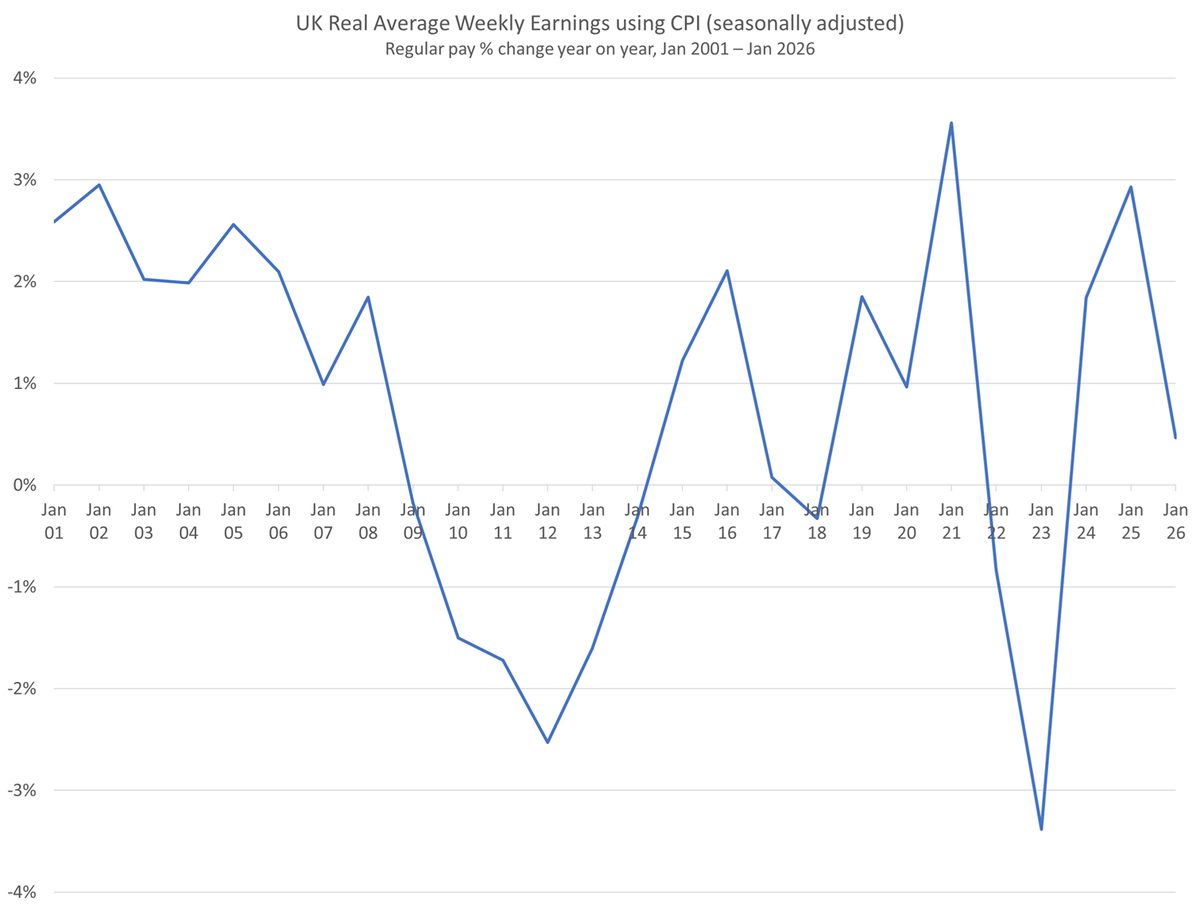
After the 2008 financial crisis, UK real wages fell for several consecutive years, the longest such decline since records began in the mid-19th century. Nominal pay grew slowly while inflation ran higher.

Then

Household incomes stagnated and the squeeze became a dominant political issue.

Now

It took nearly a decade for real pay to recover to pre-crisis levels.

Why this matters now

Shows how persistent weak real pay growth can be when nominal gains lag inflation, a pattern echoing today's thin 0.6% real gain.

2022-2023

UK cost-of-living crisis (2022-2023)

Inflation peaked at 11.1% in October 2022, the highest in four decades, while nominal wages grew around 5-6%. Real pay fell sharply through 2022 even as cash earnings rose.

Then

Workers' real incomes dropped and strikes spread across public services.

Now

Inflation fell through 2023-2024, gradually restoring real pay growth.

Why this matters now

Today's situation is a mild echo of that squeeze, with the 0.6% real gain now flattening as nominal growth steadies near 3.7%.

Sources

(17)